Images of Britain: St. Augustine's Abbey, Canterbury
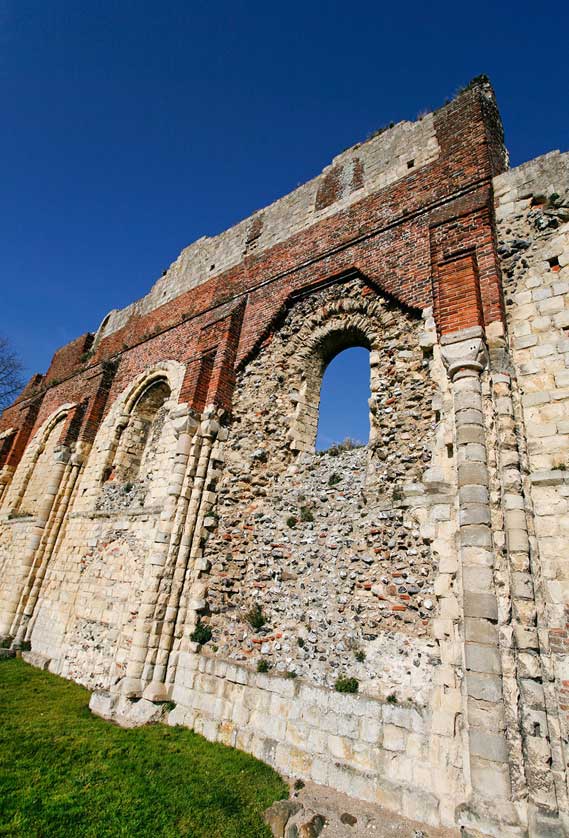
Situated outside the city walls of Canterbury yet still close to Canterbury Cathedral, St. Augustine's Abbey was founded in 597 AD by St. Augustine, the first archbishop of Canterbury. St. Augustine was sent by Pope Gregory I to convert the Anglo-Saxons to Christianity.
This great abbey, marking the rebirth of Christianity in southern England, was originally created as a burial place for the Anglo-Saxon kings of Kent. Although the building now lies in ruins, enough of the structure remains to provide a sense of the layout, and the great importance of the site is well illustrated and explained by the onsite museum and audio tours.
As the first Benedictine monastery in England, St. Augustine's Abbey was an early center of Christian learning and culture.
The abbey complex originally included a church, cloister, and other structures typical of medieval monastic establishments. The architecture evolved over the centuries, with expansions and renovations reflecting the changing styles and needs of the time.

Like many monastic institutions in England, St. Augustine's Abbey faced a period of decline and upheaval during the dissolution of the monasteries in the 16th century under King Henry VIII. The abbey was dissolved in 1538, and much of its wealth and possessions were looted and confiscated by the Crown. Parts of the abbey were also subsequently used as a royal residence.
Along with Canterbury Cathedral and St. Martin's Church, St. Augustine's Abbey, is collectively designated as a UNESCO World Heritage Site. It is managed by English Heritage.
Part of the site also now serves as boarding houses and a library for The King's School, Canterbury.
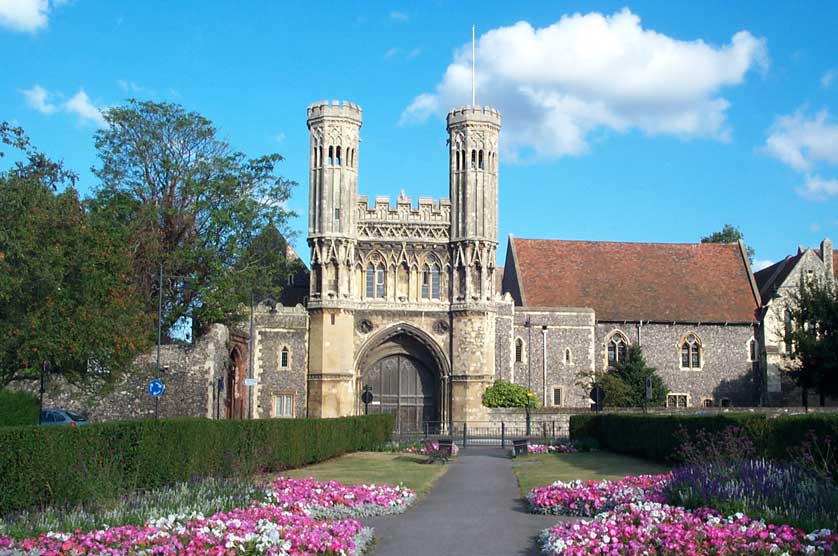
Images of Britain: St. Augustine's Abbey, Canterbury
Hotels in the UK
Book Hotels in England - Booking.com
Find Accommodation in London - Booking.com
Search Hotels in Scotland - Booking.com
Hotels in Northern Ireland - Booking.com