British Food
Grub's Up: Sampling Britain's underrated traditional cuisine
Daniel Allen
British food has a bad reputation and British eating habits are regularly lambasted by other nations, especially those nearby on the European continent. "You can't trust people whose cuisine is so bad," was French president Jacques Chirac's famous Gallic put-down in 2005.

Yet those who actually pay a visit to Britain today find that cuisine has come on leaps and bounds over the last two decades. Those who dine out are now faced with a diverse smorgasbord of traditional, cosmopolitan, locally sourced and healthy dishes that frequently titillate the taste buds and don't pile on the pounds.
Until the 1970's much of British food was admittedly vile. This can be explained as the legacy of World War II and the years of rationing that followed. Eating out was not a common experience outside the upper classes and foreign food influences were despised.
The increase in wealth and foreign travel from the 1980's onwards saw a corresponding improvement in food in the UK at a time when Indian and Chinese food in the Uk became more appreciated.
The 1990's saw the rise of the celebrity chef and emphasis on organic produce. Nowadays Britain, focused on the food-scene in London, can be considered one of the best places to eat out.
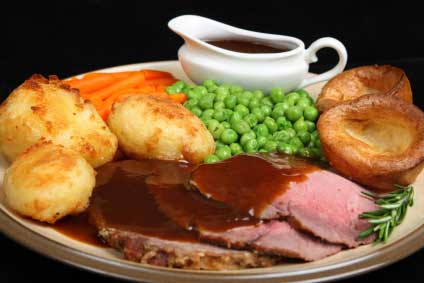
History of British Food
The history of Britain has played an important role in its food culture. The Romans introduced cherries, cabbages, peas, stinging nettles (as a salad vegetable) and of course, wine, which they tried to produce in southern England and certainly imported from home.
The road network built by the Romans also allowed for the movement of produce around the country. The Vikings brought techniques for smoking fish still seen in the cuisines of the Hebrides and Orkney Islands.
The increase in overseas trade from Tudor times onwards saw the arrival and adoption of new kinds of foods in Britain: spices from the Far East, potatoes, peppers and sugar from the Americas and Caribbean. Coffee and cocoa arrived from South America and later tea from India. Eccles Cakes are said to have started in Puritan times when rich cakes and biscuits were prohibited.

The British Empire introduced new tastes and flavours to the Home Country. Kedgeree, for instance, derives from the Indian Khichri introduced to Britain by members of the East India Company.
Contemporary Britain enables visitors to enjoy cuisines from all around the world including Chinese, Indian, French, Italian, Japanese, American, Mexican, Spanish, Thai and Turkish, reflecting the melting pot that is now the United Kingdom.
Typical British Cuisine
So what exactly is typical British cuisine? The cliche of British food is meat and two veg and traditionally British cuisine has a base of meat or fish - beef, lamb, pork, chicken and fish - served with potatoes and other vegetables. Many traditional British meals have historic origins: bread and cheese, meat and game pies, roasted and stewed meats, boiled vegetables and soups, and freshwater and saltwater fish.
Roast Beef and Yorkshire Pudding, Steak and Kidney Pie, Trifle - these are the dishes that everyone associates with Britain. But like the country of Britain which is constantly changing and evolving, so is British food, and whilst today these dishes are 'traditionally British', they are constantly being reinterpreted using different ingredients.
Here are some quintessential British dishes that are served up in restaurants and cafes across the land.
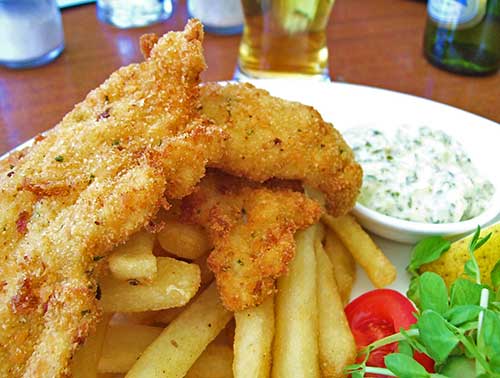
Fish & Chips
Fish and chips are an icon of British food and recognised as such around the world.
The origins of fish and chips the mid-19th century are associated with the industrial revolution and the dish remains a nutritious and cheap takeway enjoyed throughout the country.
Although the number of fish and chip shops has dropped from the levels of 1920's and 30's, the demand for the dish has remained the same. Today over 10,000 fish and chip shops provide Britain with a similar volume of fish and chips to those of the post war years.
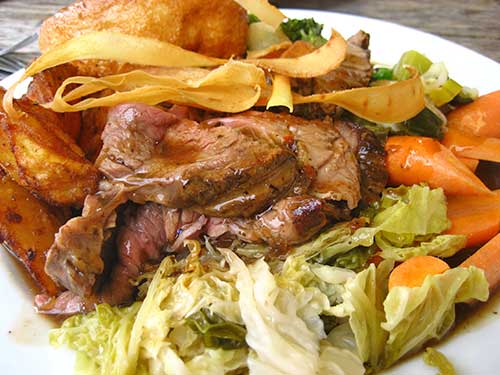
Sunday Roast
The Sunday roast is still traditionally eaten every Sunday in many English households. It includes roast potatoes accompanying a roasted joint of meat such as beef, lamb, pork, duck or chicken and assorted other vegetables, themselves generally boiled and served with a gravy or roasted with the meat in its juices, which are then used as or added to the gravy.
Sauces and jellies are chosen to complement the type of meat; mint sauce or red currant jelly for lamb; apple sauce for pork; horseradish or various mustards for beef; and cranberry sauce for turkey. Yorkshire pudding normally accompanies beef (although traditionally served in Yorkshire as a starter, from the days when meat was scarce so it was served first as a "stomach filler"); sage and onion stuffing for pork and usually parsley stuffing for chicken.
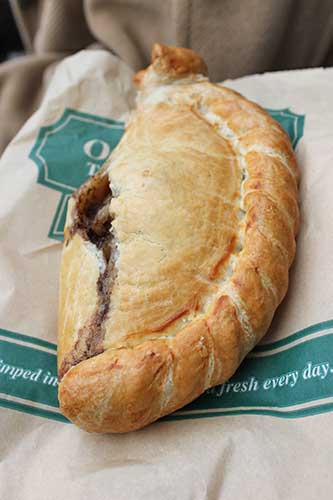
Cornish Pasties
A pasty is a baked pastry, made by placing a filling of meat and vegetables on a flat pastry circle and folding it to wrap the filling, crimping the edge to form a seal and then placing it in the oven.
The traditional Cornish pasty, by far the most famous in England, is filled with beef, sliced or diced potato and onion, seasoned with salt and pepper, and is baked.
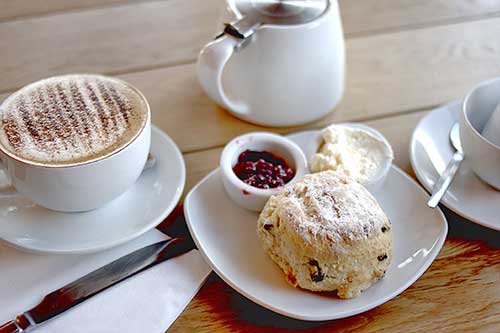
Scones
Nothing says English tea time more than a scone. An English scone is a cake made of flour, butter and milk. A scone is halved, and eaten spread with butter and jam (or jam and clotted cream as a cream tea). Scones often contain raisin and are lightly sweetened.
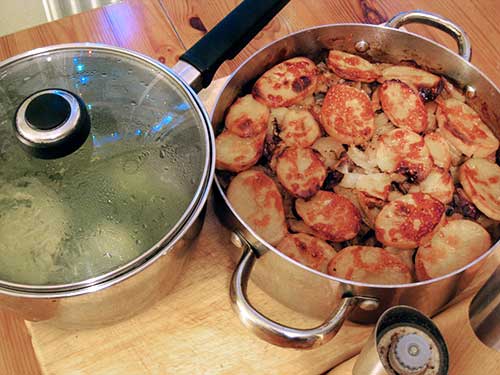
Lancashire Hotpot
One of the most famous dishes from northwest England, Lancashire hotpot is a traditional dish made from lamb or mutton and onion, topped with sliced potatoes. It is then left to bake in the oven all day in a heavy pot and on a low heat. The perfect meal for a wet winter's day.
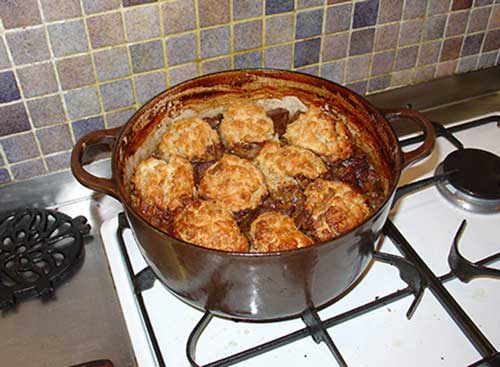
Steak & Kidney Pie
Another British stalwart, this is a savoury pie filled principally with a mixture of diced beef, diced kidney (often of ox, lamb or pork), fried onion, and brown gravy. The gravy typically consists of salted beef broth flavoured with Worcestershire sauce and black pepper, and thickened with flour. The gravy may also contain ale or stout.
Cheese
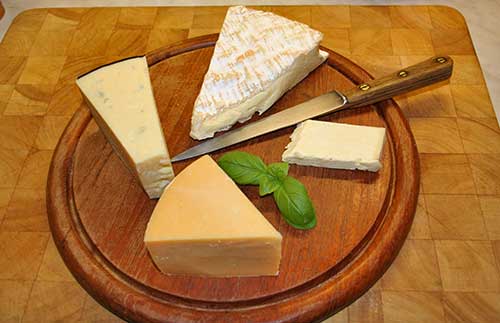
According to the English Cheese Board states there are over 700 varieties of English cheese. English cheese is generally hard, and made from cows' milk. Cheddar cheese, originally made in the village of Cheddar, is by far the most common type, with many variations. Tangy Cheshire, Sage Derby, Lancashire Cheese, Red Leicester, creamy Double Gloucester and sweet Wensleydale are some traditional regional varieties. Cheddar and the rich, blue-veined Stilton have both been called the king of English cheeses.
The top 10 favorite foods (and drinks) of Britain
1) Bacon sandwiches
2) Roast dinners
3) A cup of tea
4) Fish and chips
5) Yorkshire pudding
6) Full English breakfast
7) Cornish pasties
8) Strawberries and cream
9) Crumpets
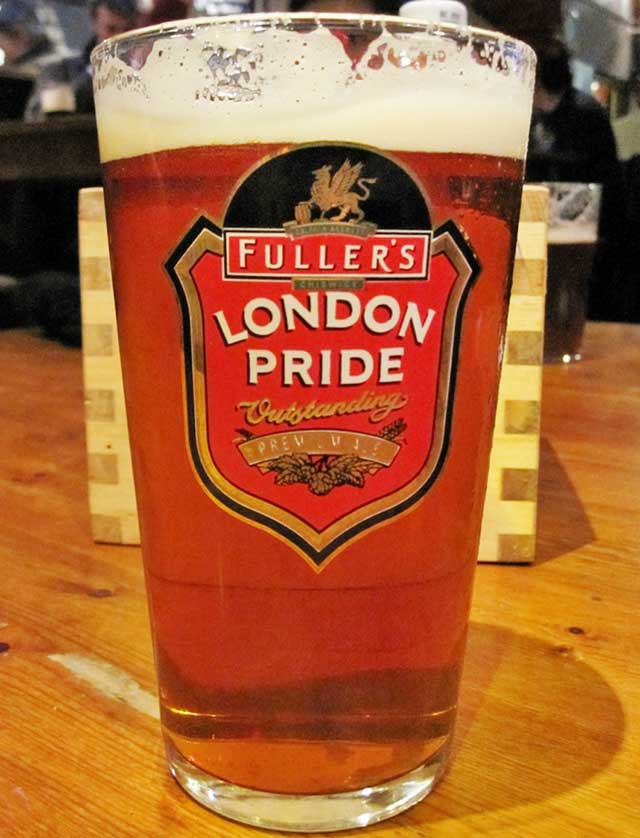
10) Beer
Related