Lake District
Wild at Heart: Explore the rugged beauty of England's Lake District
Daniel Allen
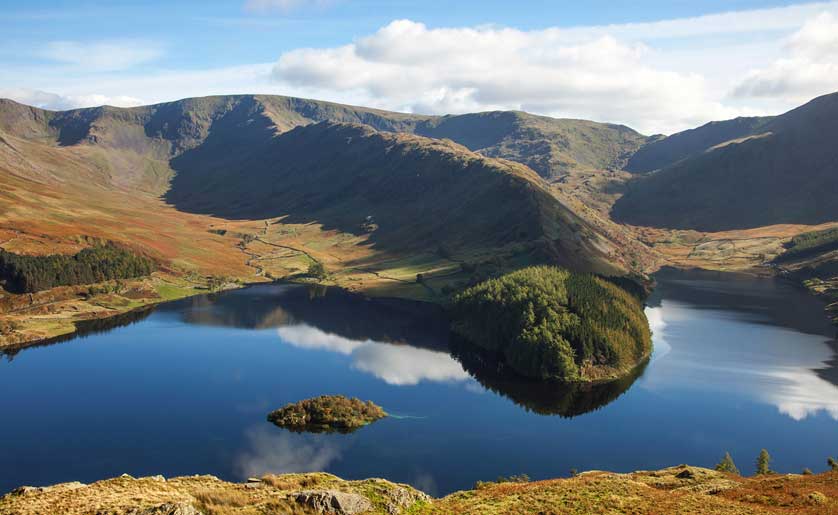
England's largest national park, the Lake District is England's only true mountain region. Covering 885 square miles, the Lake District contains England's biggest natural lake (Windermere), England's deepest lake (Wastwater) and England's highest mountain (Scafell Pike). Although it is England's most densely populated national park, there are no cities, large towns or major road routes.
Attractions in the Lake District
An incredibly picturesque, alpine-like region of lakes, mountains and valleys - interspersed with quaint villages, hideaway pubs, whitewashed farms and rustic hotels - the Lake District is England's most high profile destination for outdoor pursuits.
Millions of visitors come each year to hike, bike and cruise the waters. There's also plenty of culture on offer, with the lake land literary trail connecting the celebrated museums, houses and sites associated with such luminaries as William Wordsworth, Beatrix Potter and Arthur Ransome.
More than anything, the Lakes are great for families and children. Whether it's exploring ancient stones, riding vintage railways, cycling forest trails, picnicking in the meadows, or encouraging the kids up their first peak, there's no better place in Britain to appreciate the great outdoors in all its natural splendour.
Seasons & Walking in the Lake District
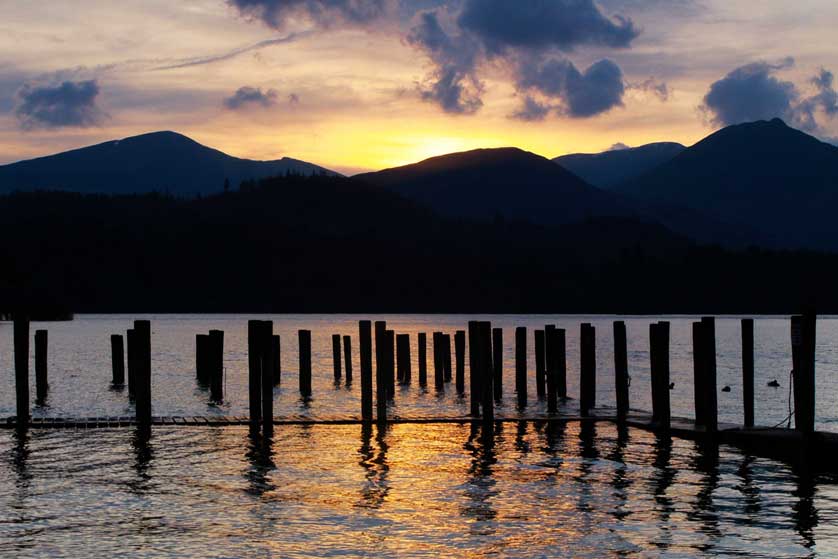
Summers are crowded in the Lake District. There are few roads and those are narrow and wind through valleys and mountain passes so traffic can be a real problem during July and August. Go, if you can, in spring or autumn, when the color of the landscape is at its best.
Winter also has its charms - there is little snow, except on the highest ground and the lakes don't usually freeze. Steamers on Lake Windermere and Ullswater cruise all year round. Bear in mind that winter fell walking is only for well equipped walkers with plenty of experience, and some of the higher road passes can become blocked with snow and ice in winter.
Essential items for travel in the Lake District include sturdy, well-worn boots, good waterproofs (ideally Gore-Tex or equivalent), plenty of food and water and a detailed walking map; a compass is very useful, but only if you actually know how to use it. Take a mobile phone in case of emergencies, but don't rely on being able to get a signal.
The Lake District National Park has walks for people of every ability, from ambles around lakes to fairly demanding hikes. In fact, with so many spectacular walks on offer, it's a tough job narrowing the list down. If in doubt, head to one of the numerous tourist information centres for advice. Ambleside makes a good base for hikes - the tourist centre has a good selection of trail leaflets and guidebooks.
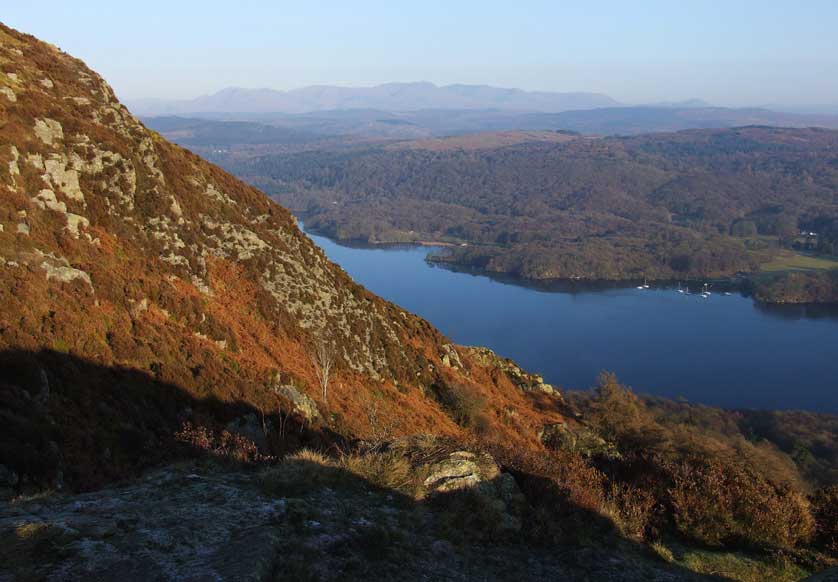
Lake District Peaks
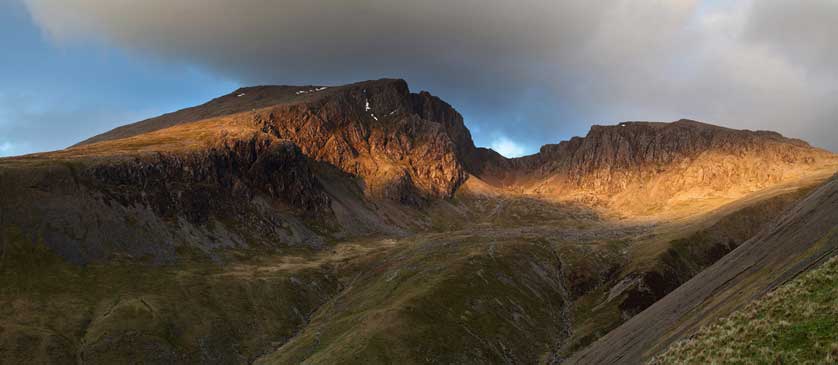
If there's one peak everyone wants to tick off their list, it's Scafell Pike, England's highest mountain at 3,209 feet. The mountain is well within the reach of most walkers, but it's a long climb to the top, and can be tricky to navigate in bad weather, so save it for a pleasant day.
From the hikers are rewarded with a wonderfully wild vista across the valley of Wasdale. This is a round trip of about seven miles from the car park at Wasdale Head, so expect to spend at least six hours on the mountain.
After Scafell Pike, Helvellyn (3,117 feet) is the next on most peak-baggers' list. It's famous (or infamous) for its twin ridges, Striding Edge and Swirral Edge, carved out by glacial action during the last ice age.
There are some considerable drops and steep sections involved, and at one or two points you'll be climbing hand over hand, so it's not for the faint hearted. The most popular routes start in Glenridding or Patterdale and cover between eight and 10 miles depending on which trail you take.
Keswick
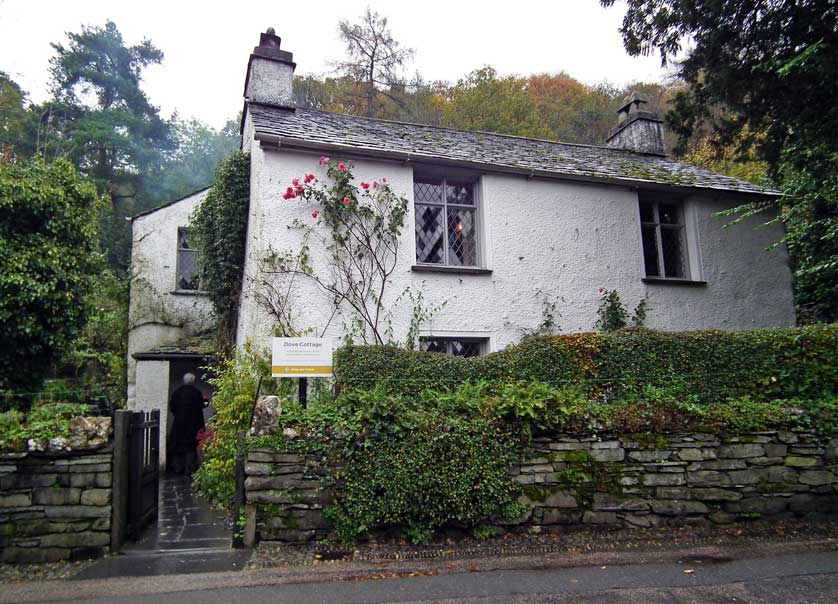
Another must-visit attraction is William Wordsworth's Dove Cottage. This quaint whitewashed home near Grasmere was Wordsworth's first home in the Lake District, where he stayed between 1799 and 1808. Now owned by the Wordsworth Trust, the cottage is full of memorabilia, including the poet's ice-skates, his passport, a pair of his reading glasses and a portrait of one of his favourite dogs, Pepper, given to him as a present by Sir Walter Scott.
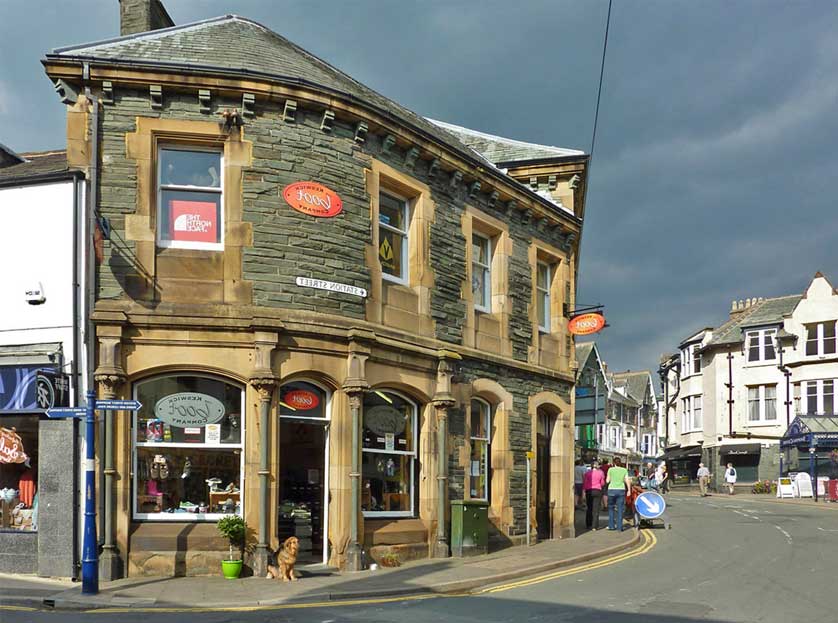
Standing on the shores of Derwent Water, the market town of Keswick makes a good base for exploring the northern Lake District, particularly the delightful Borrowdale to the south of town, or the heights of Skiddaw (3053ft) and Blencathra (2847ft), which loom over the town to the north.
Granted its market charter by Edward I in 1276 - market day is Saturday - Keswick was an important wool and leather centre until around 1500, when these trades were supplanted by the discovery of local graphite. Keswick went on to become an important pencil-making town - the fascinating Cumberland Pencil Museum (now the Derwent Pencil Museum) across the river tells the whole story.
Lake District Railways
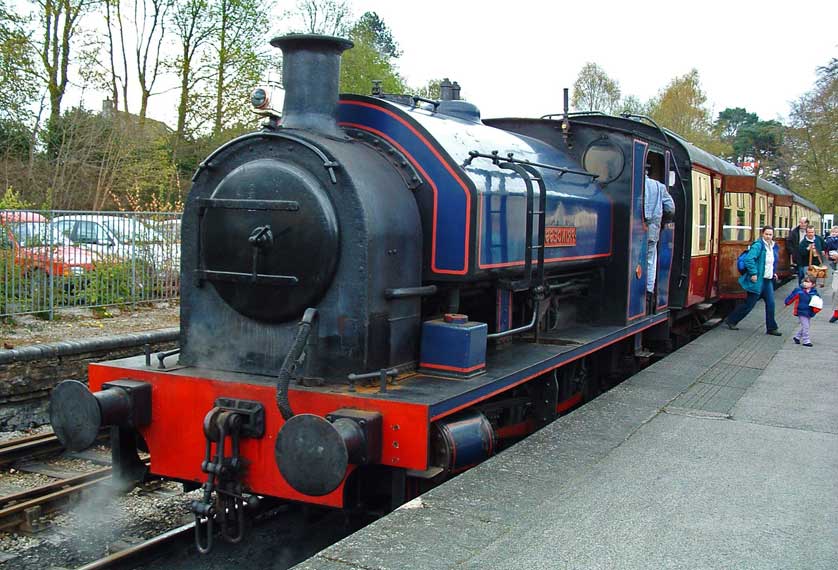
Running from Haverthwaite via Newby Bridge to Lakeside at the southern end of Windermere, the Lakeside and Haverthwaite Railway is another popular attraction, especially with children.
Running along part of former branch line of the Furness Railway which closed to all traffic in 1967 (passenger traffic ceased two years earlier), the line reopened as a heritage railway in 1973.
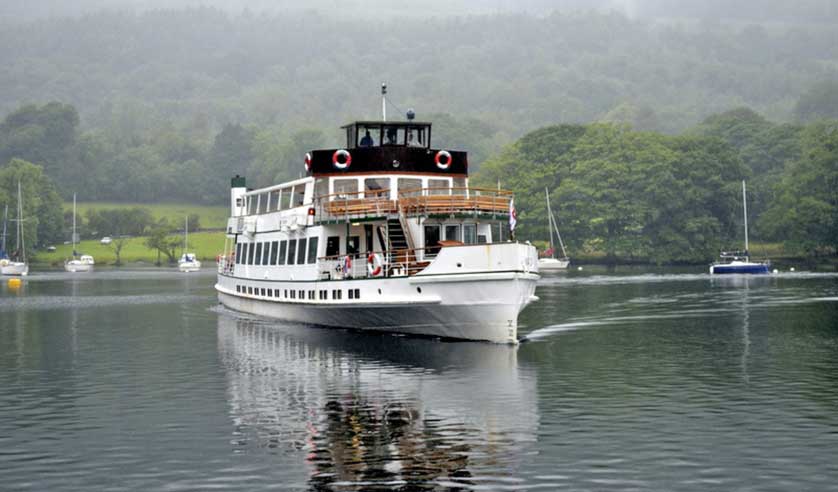
Today the railway continues a train-boat connection first established in 1868, with passengers able to combine a steam railway trip with a cruise along Windermere There are between five and seven trains a day depending on the season, handily timed to correspond with the cruises.
Access - getting to the Lake District
Lancaster is a main railway station to the south of the Lake District whereas Carlisle is the major rail station to the north.
Carlisle Station
Virgin Trains have connections with London Euston in London with one service via Birmingham to Carlisle.
First TransPennine Express has services to Manchester Airport, Edinburgh Waverley Station in Edinburgh and Glasgow Central Station in Glasgow from Carlisle.
First ScotRail has trains to Glasgow via Dumfries from Carlisle.
Northern Rail has trains to Whitehaven, Barrow-in-Furmess, Preston, Leeds, Whitehaven and Newcastle.
Lancaster Station
Lancaster Station has trains to Carnforth, Leeds, London Euston, Crewe and Birmingham New Street with Virgin.
TransPennine has connections to Manchester Airport in Manchester, Edinburgh Waverley Station in Edinburgh, Glasgow Central Station in Glasgow, Scotland and Windermere
Northern Rail has trains to Morecambe, Barrow-in-Furmess, Heysham, and occasionally to Buxton in Derbyshire.
It's definitely worth renting a car if you want to get to some of the more off-the-beaten track places in the Lake District.
Accommodation
The Lake District has some superb places to stay. Around Lake Windermere choose from the Windermere Manor Hotel, a three-star property set in 3 acres of tree-lined gardens, the four-star Beech Hill Hotel & Spa which offers indoor heated swimming pool, a sauna, a steam room and outdoor spa pool or the Windermere Hotel with views over Lake Windermere or the town center.
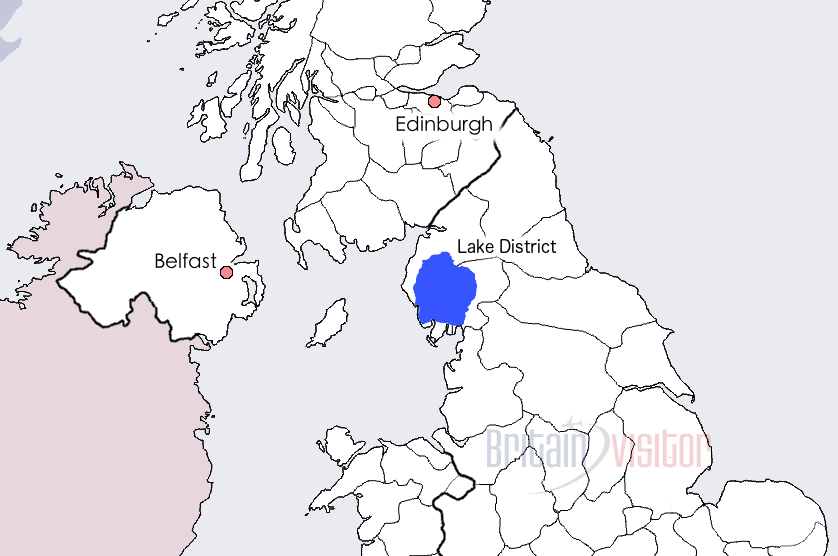
Map
Hotels in the North West of England
Book Hotels in Blackpool - Booking.com
Find Hotels in the Lake District - Booking.com
Search Hotels in Liverpool - Booking.com
Hotels in Manchester - Booking.com
Book Hotels in the UK - Agoda.com