Oxford Guide
Oxford is a city in south central England and is the county town of Oxfordshire. Oxford has a population of around 150,000, but the Oxford metropolitan area has a population of 244,000. In terms of population, Oxford is also one of the UK's fastest growing cities.
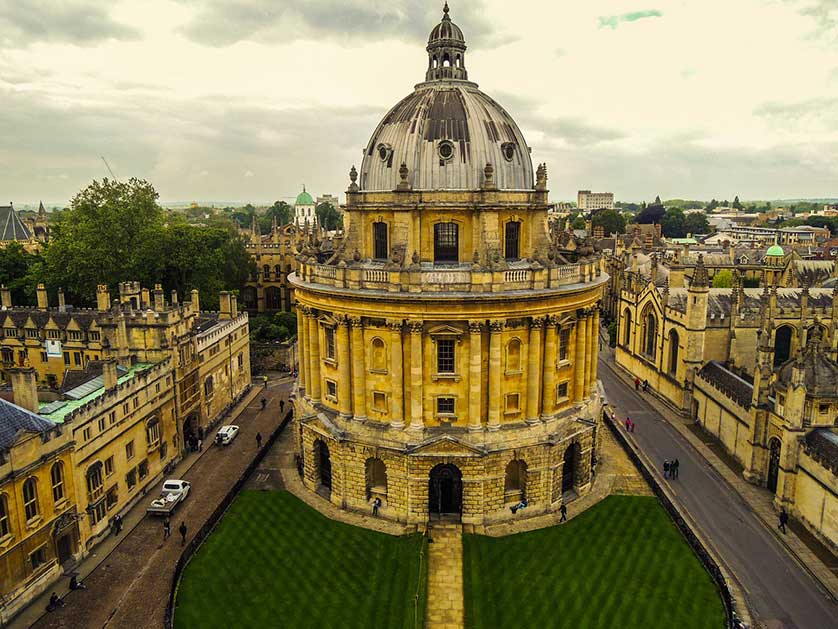
Oxford's diverse economic base includes industries such as automobile manufacturing, education, publishing as well as information technology and science-based businesses. Oxford is well-known worldwide as a university town and home to the University of Oxford, the oldest university in the UK. Buildings in Oxford include examples of every English architectural period since the arrival of the Saxons, and Oxford has been called the "city of dreaming spires".

Oxford History
Oxford was originally settled in Saxon times and was then known as Oxenaforda, meaning "Ford of the Oxen". In fact, Oxford began with the establishment of an oxen crossing in the early 900's AD. During that century, Oxford became an important military outpost between the kingdoms of Mercia and Wessex and was raided by Danes on several occasions.A century or so later, Oxford was heavily damaged during the Norman Invasion of 1066.
The University of Oxford is first mentioned in records from the 12th century AD. The earliest colleges at Oxford were University College (1249), Balliol (1263) and Merton (1264).
In 1642, during the English Civil War, the court of Charles I was housed at Oxford after the king was expelled from London. Oxford later surrendered to Parliamentarian forces after the Siege of Oxford of 1646. Oxford also housed the court of Charles II during the Great Plague of London in 1665–66.
Oxford Attractions
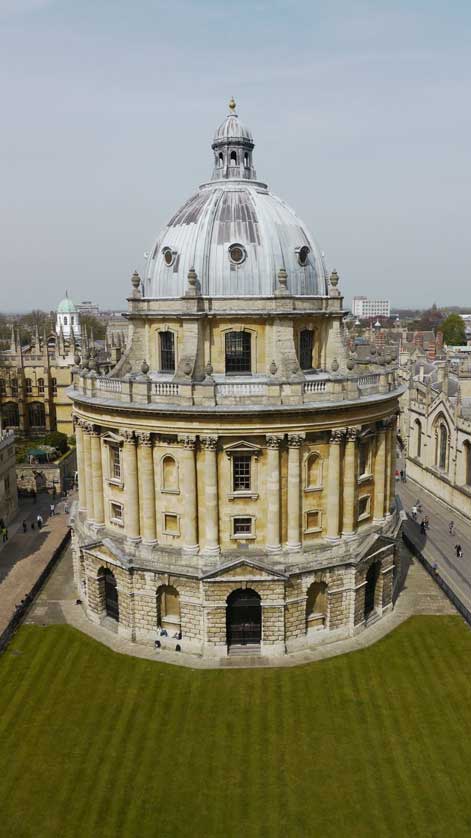
Oxford's attractions are centered around its famous university. The University of Oxford is the oldest university in the English speaking world and one of the most famous and prestigious in the world. The University of Oxford hosts 38 autonomous colleges, which together form a federation making up the university. Most of the colleges are open to entrance fee paying tourists during specified dates and times.
The Ashmolean Museum (its full name is the Ashmolean Museum of Art and Archaeology) is the world's first university museum. The Ashmolean's first building was built between 1678–1683 to house the curiosities Elias Ashmole gave Oxford University in 1677. The museum was reopened in 2009 after a major remodeling.
Another attraction is Christ Church Cathedral, which is the cathedral of the diocese of Oxford. The cathedral is also the chapel of Christ Church College.
The Pitt Rivers Museum is immediately adjacent to the natural History Museum through which you enter. The museum was established in 1864 by Augustus Pitt Rivers, an army officer as well as ethnologist and archaeologist. His collection of 22,000 objects formed the core of the original museum, though the museums collection now includes a staggering 500,000 objects. Like the Natural History Museum it is very much a "classic" museum with glass display cases filling the space to its limits.

Keble College is one of the newest of the colleges at Oxford University, being founded in 1870. It is, however, one of the larger with about 800 students, undergraduate and postgraduate. Keble was founded as a theological college with roots in the Oxford Movement, a campaign attempting to reintroduce Catholic elements into the Anglican Church, sometimes referred to as Tractarians. The design was by architect William Butterfield (1814-1900), also a member of the Oxford Movement. Whereas the college buildings of Oxford had been built primarily of stone, he went with brick and built in Victorian Gothic style.
Blenheim Palace, built between 1705 and 1724, is also near Oxford. Blenheim Palace was originally conceived as a gift from a grateful nation to John Churchill, the first Duke Of Marlborough, for his victory over the French and Bavarians at the Battle of Blenheim.
Oxford Shopping
Oxford's High Street, in the centre of the city, is one of its treasures. The High Street is lively and hosts a number of Oxford's finest restaurants, jewelers , fashion outlets and antique dealers. The High Street is also the location of the Oxford University shop as well as St Mary’s church.
Cowley Road and St Clements are roads at the bottom of the High Street in Oxford. These roads are littered with wonderful places to eat and drink and are the centre of the Oxford music scene. This area also hosts a large number of interesting shops and boutiques.
Little Clarendon Street is a short shopping street in central Oxford which has a variety of shops and cafes which make it a particularly trendy and bohemian place.
Oxford Hotels
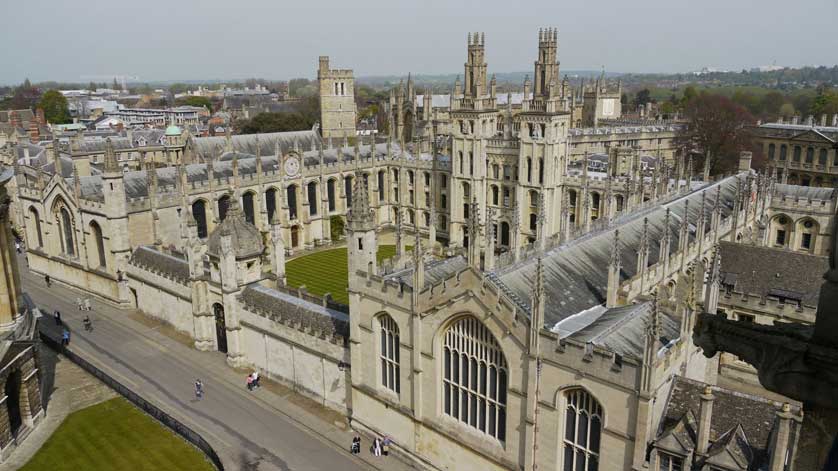
The visitor to Oxford can choose from a full range of options to suit every budget. These range from hostels such as Central Backpackers or Oxford Backpackers to luxury accommodation such as the Oxford Spires Four Pillars or The Randolph. A wide variety of Bed and Breakfasts as well as value hotels are also an option.
See a list of hotels in Oxford.

Oxford Access - Getting To Oxford
Oxford is served by London Oxford Airport, in nearby Kidlington.
Oxford has 5 park and ride sites with bus links to the city centre: Pear Tree (bus 300), Redbridge (bus 300), Seacourt (bus 400), Thornhill (bus 400) and Water Eaton (bus 500).
There is frequent coach service between Oxford and London, including the X90, which is operated by the Oxford Bus Company. The Oxford Bus Company also runs services to Heathrow and Gatwick airports. The bus station at Gloucester Green is used mainly by the London and airport buses. National Express coaches and other long-distance buses including route X5 to Milton Keynes and Cambridge also use the station.
Oxford railway station is about 1 km west of the city centre. The station is served by many routes, including CrossCountry services to places as far away as Manchester and Edinburgh. First Great Western operates the station and offers services to London Paddington as well as other destinations such as Worcester.
The Oxford Ring Road surrounds the city centre and close suburbs. The main roads to and from Oxford are the A34 - which connects the North and Midlands to the port of Southampton, the A40, the A44 – which begins in Oxford and extends past Evesham to Worcester, Hereford and Aberystwyth, the A420 – which also begins in Oxford and leads to Bristol by way of Swindon and Chippenham. Oxford is also served by the M40 motorway, which connects London to Birmingham.The M40 comes no closer than 16 km away from the city centre, but it meets the A34 to the north of Oxford.
Blenheim Palace is located just off the A44 in Woodstock, Oxfordshire.
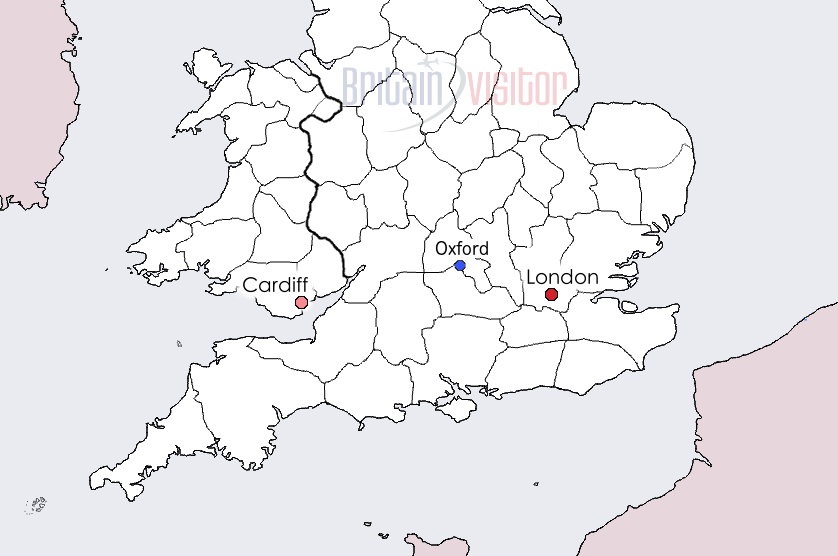
Map
Oxford Articles
Hotels in the UK
Book Hotels in England - Booking.com
Find Accommodation in London - Booking.com
Search Hotels in Scotland - Booking.com
Hotels in Northern Ireland - Booking.com