British Culture: Britain's Best Gardens
How Does Your Garden Grow? Sample the flower power of Britain's best public gardens
Daniel Allen
The green-fingered British love their gardens like no other nation, with more green spaces open to the public than anywhere else.
The most productive period in the country's garden history was the eighteenth century, when the majority of the original landscape gardens were conceived and created. While London may be the "greenest city in the world", most of Britain's greatest gardens require travel outside the capital. Here are some of the finest of Britain's gardens (check websites for exact locations, admission prices and opening times).
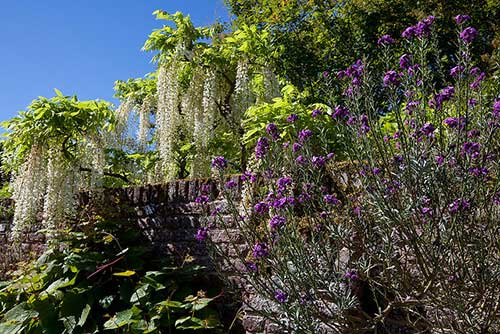
Sissinghurst, Kent
The garden at Sissinghurst Castle in the Weald of Kent is owned and maintained by the National Trust and is among the most famous gardens in England. Sissinghurst was created by husband and wife Vita Sackville-West and Sir Harold Nicolson, and today remains a verdant testament to their long, if slightly unconventional marriage.
The gardens at Sissinghurst were first opened to the public in 1938 under the National Gardens Scheme for just two days a year - now they draw around 150,000 visitors each year. The garden has various individual gardens which resemble rooms in a house, with hedges acting as walls. The particularly stunning White Garden is a mix of plantings using only white flowers and greenery.
nationaltrust.org.uk/sissinghurst-castle-garden
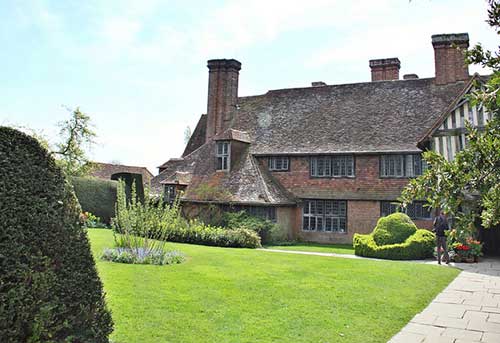
Great Dixter, East Sussex
Great Dixter, former home of master gardener and prolific gardening writer, the late Christopher Lloyd, was built in 1450 and boasts one of the largest surviving timber-framed halls in the country, complete with antique furniture and a needlework collection.
Famous British architect Sir Edwin Lutyens was employed to restore the house and gardens in 1910. Planted up by Lloyd with great innovation and creativity, they now boast a variety of clipped topiary, wild meadow flowers, mixed borders, ponds and the colourful Exotic Garden.
greatdixter.co.uk
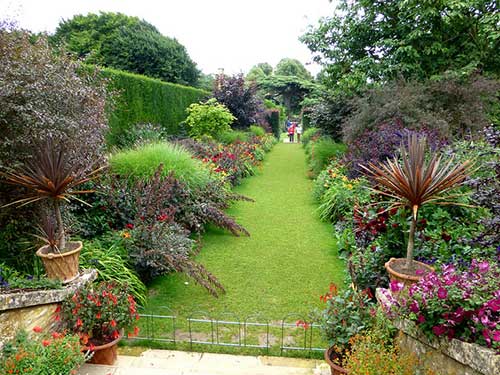
Hidcote Manor Garden, Gloucestershire
Visit one of Britain's greatest gardens and experience for yourself the fulfilment of a quiet American's English dream. Situated in the heart of the beautiful Cotswold region, the Hidcote Manor house and garden boast panoramic views across the Vale of Evesham.
A famous arts and crafts garden, Hidcote was created at the turn of the twentieth century by talented American horticulturist Lawrence Johnston, an enthusiastic gardener with a strong artistic background. Johnston used yew, holly and beech hedges to define a series of "rooms", which thanks to their innovative planting remain stunning throughout the year. If it was located closer to London, Hidcote's gardens would be just as famous as Sissinghurst.
nationaltrust.org.uk/hidcote
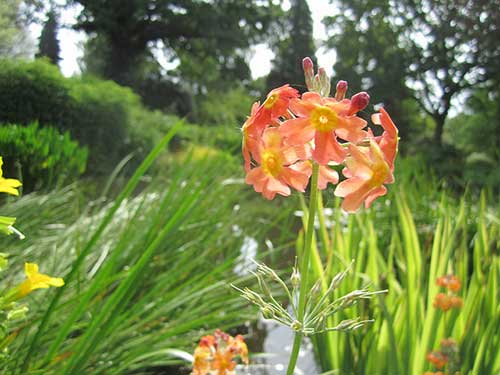
The Beth Chatto Gardens, Essex
Beth Chatto's Gardens on the outskirts of Colchester are worthy of a visit at any time of the year. With construction starting in 1960, they were originally famous for their extensive dry garden, and now boast large herbaceous borders, huge sweeps of lawns, and a beautiful lake. The garden centre sells plants found in the garden and staff are very helpful. There is a also lovely conservatory which serves teas and snacks.
bethchatto.co.uk
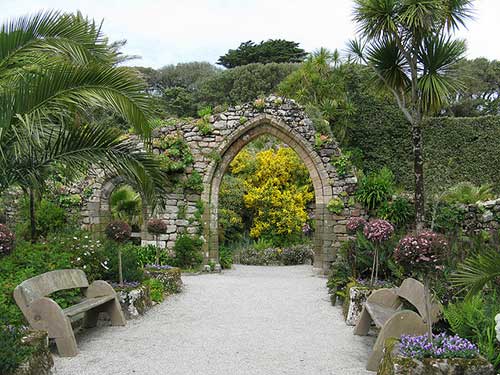
Tresco Abbey Garden, Isles of Scilly
Many people know south-west England's Isles of Scilly because of the sub-tropical Tresco Abbey Garden. Described as a Kew Gardens without glass, it boasts myriad exotic plants, many of which would be impossible to grow on the Cornish mainland, less than 30 miles away. Even in winter there are more than 300 plants in flower here. The tropical garden boasts more than 20,000 species of plants from all around the world.
tresco.co.uk
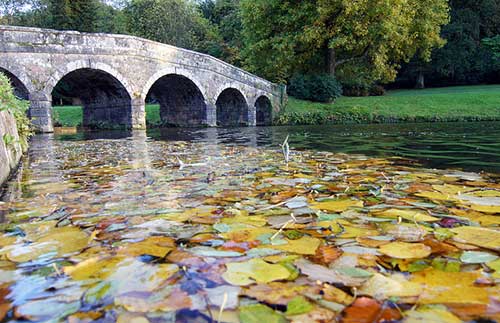
Stourhead, Wiltshire
Nestled in its own private valley, Stourhead in Wiltshire features one of the world's most elegant landscape gardens. An ornamental lake is a main feature of the design, while the lake side is dotted with classical temples and rare trees. The Hoare family history can be explored in Stourhead House, the estate's country mansion, boasting a unique library, beautiful furniture and precious works of art.
nationaltrust.org.uk/stourhead
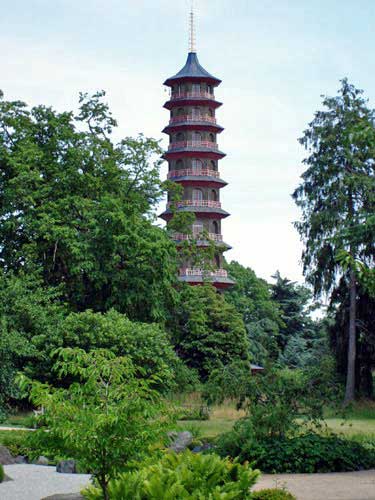
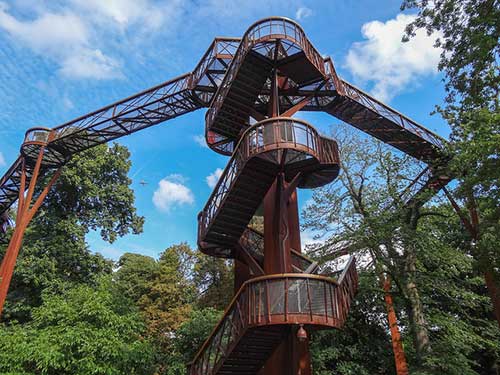
Kew Gardens, London
Of all the world's famous gardens, Kew boasts the largest collection of living plants. With tree canopies, numerous glasshouses, a Chinese pagoda, four cafes and restaurants, art galleries, a serene lake and water lily ponds, this is the perfect location for a green day out in London.
Founded in 1840 from the exotic garden at Kew Park in the London Borough of Richmond-upon-Thames, Kew is now home to more than 30,000 different kinds of plants. The herbarium - also one of the largest in the world - has over seven million preserved plant specimens. The library contains more than 750,000 volumes, while the illustrations collection contains more than 175,000 prints and drawings of plants.
kew.org

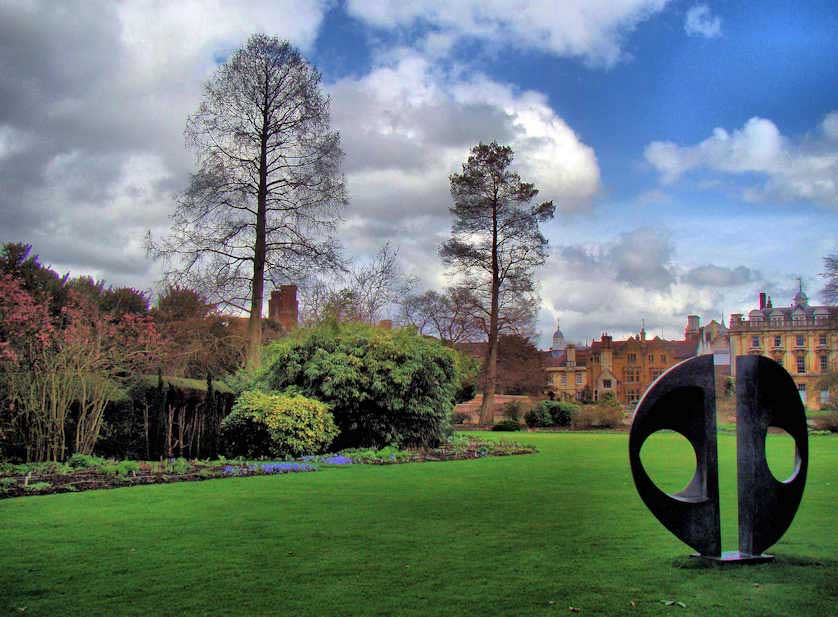
Clare College Gardens
The jewel in the crown of The Backs in Cambridge is considered to be the gardens of Clare College. On the east side of the river behind Old Court are a pair of walled, formal gardens, the Masters Garden and the Scholars Garden. Across Clare Bridge lies the biggest and the best of the gardens, the Fellows Garden.
Built after the construction of the Clare Bridge in 1840, the Clare College Garden was well established by the end of the 17th century, but the current gardens are very much the creation of one man, Professor Nevill Willmer, who redesigned the gardens in 1947, though the basic layout and elements of the earlier garden still remain.
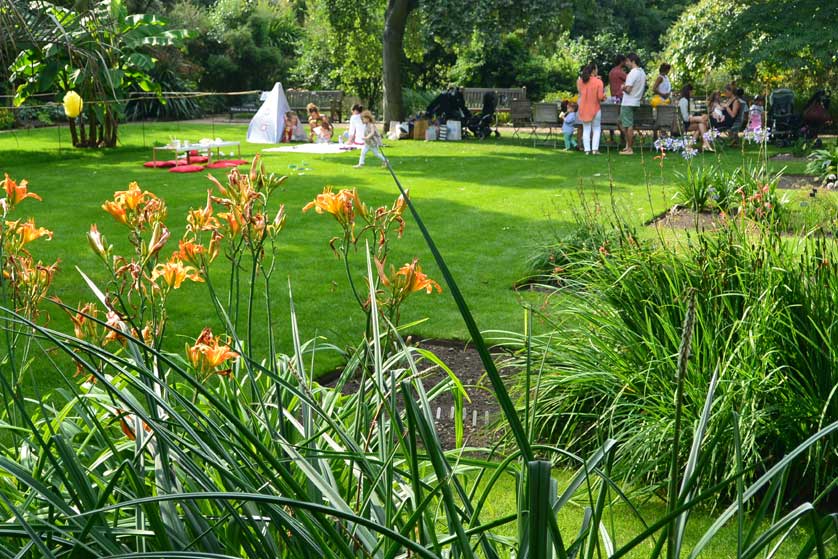
Chelsea Physic Garden
Chelsea Physic Garden, located in one of the most affluent areas in London near the River Thames, is an historic garden with a long history. It was established in 1673 as the Apothecaries' Garden for training students to identify and use medicinal plants, making it the second oldest botanical garden in Britain, after the University of Oxford Botanic Garden, in Oxford, founded in 1621.
Hans Sloane, previously a student at the Chelsea Physic Garden, was to purchase an area of land containing the garden and lease it back to the Worshipful Society of Apothecaries of London at a minimal rent. Chelsea Physic Garden holds a number of remarkable "firsts" in the history of botany and plants. It has the oldest garden devoted to alpine plants, the largest fruiting olive tree in Britain and world's northernmost grapefruit growing outdoors.
The Chelsea Physic Garden became a registered charity in 1983 and opened its doors to the public.

Chatsworth House Gardens
Chatsworth in Derbyshire is one of England's favourite stately homes. A single visit usually takes in both the house and gardens. However, many people return to Chatsworth to enjoy just the gardens themselves, especially in summer during the school holidays.
The gardens at Chatsworth House are as old as the house itself and date back to when Bess of Hardwick, the wife of the Earl of Shrewsbury, built her Tudor mansion here in 1549. The property has undergone numerous renovations over the centuries and the gardens we see and enjoy today are a mix of different styles and periods of history.
Altogether the gardens cover 105 acres and are surrounded by a wall in parts. Little remains of the initial Elizabethan garden except for Queen Mary's Bower, so called after Chatsworth's most tragic house guest - Mary Queen of Scots.
The first Duke of Devonshire extended the gardens in the late 17th and early 18th century. Much more remains from this period including the popular Cascade and Cascade House, designed in the Baroque style by Thomas Archer (1688-1743). The rectangular Canal Pond, the Seahorse Fountain and the Willow Tree Fountain also date from this period of development.

Blenheim Palace Gardens
The formal gardens at Blenheim Palace include the lovely water garden. Other gardens include The Italian Garden (no access), The Secret Garden, The Rose Gardens and The Pleasure Gardens.
Visitors to Blenheim Palace can use the free train service to move between the main entrance to the palace and The Pleasure Gardens.
One element of The Pleasure Gardens is a Butterfly House where the visitor may have a close encounter with the inhabitants and The Cascade - a large ornamental water feature by Capability Brown. The flow of the River Glyme over the spectacular cascade is augmented by pumps.
Another popular feature is the Marlborough Maze - one of the largest hedge mazes in the world.
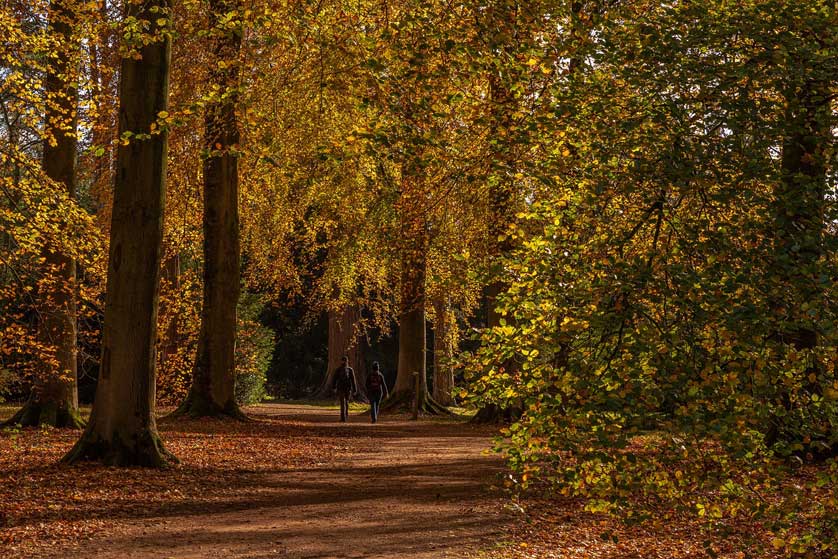
Westonbirt The National Arboretum
Westonbirt The National Arboretum is located in Gloucestershire in the Cotswolds roughly midway between Cirencester and Bristol near Tetbury. It is just off the A433 running between the two towns.
Managed by Forestry England, this beautiful 600-acre woodland offers tranquil walks along 27 km of marked paths among hundreds of species of trees and shrubs in addition to various special events during the year.
The arboretum was established in the early 19th century by the immensely wealthy businessman and local MP Robert Stayner Holford and later by his son George Lindsay Holford.
The National Arboretum comprises around 15,000 trees and shrubs from 2,500 species gathered from around the world.
There are two distinct areas at Westonbirt, The Old Arboretum, the original collection of rare and exotic trees from around the world and Silk Wood, a traditionally managed woodland dating back to the 13th century.
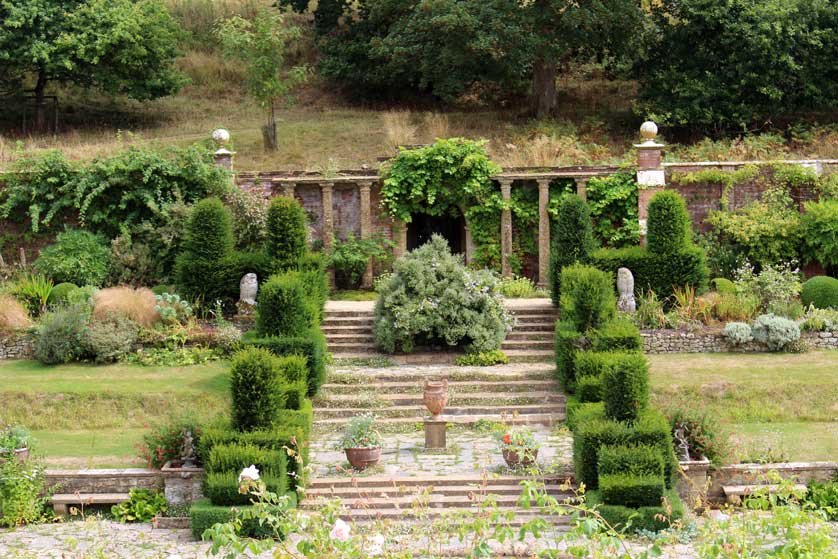
Mapperton House & Gardens
Mapperton House & Gardens in Beaminster, Dorset has one of England's finest gardens. Indeed, in 2020 it won Christie's House & Garden of the Year Award.
45 miles west of Exeter on the A30 and A35, Mapperton is also within easy reach of Colyton, Honiton, Seaton and Lyme Regis. The Italianate garden was laid out in the 1920s to provide work for men from the local area who had returned from World War I. A wild garden was added later in the 1950s.
A tranquil, pleasant and unhurried place, Mapperton is definitely worth your time if in the area.
Read More
National Trust Properties in South West England
Royal Horticultural Society at Wisley
Hotels in London
Book Hotels in London - Booking.com
Find Luxury Hotels in London - Booking.com
Budget Hotels in London - Booking.com
Find Hotels in England - Booking.com