Castles in the UK: A-Z Listing of Castles in Britain
A B C D E F G H I J K L M N O P Q R S T U V W X Y Z
See a listing of castles in Britain.
Britain's castles are a distinctive feature of the British landscape.
Often dramatically situated, sometimes haunted and now often used as film and TV locations, Britain's castles were built as symbols of power and also to defend their hinterlands from attack.
Packed with history, no trip to the UK would be complete without visiting one of Britain's spectacular fortresses.
Best British Castles - our selection of the top 10 castles in Britain are here.
A
Alnwick Castle - The seat of the Duke of Northumberland, Alnwick Castle was first built following the Norman Conquest, in 1096. The castle was expanded and improved during the 14th century to serve as a strong fortress on the Anglo-Scottish border.
Appleby Castle - is a 12th century castle in Appleby-in-Westmorland overlooking the River Eden.
Ardvreck Castle - A marvellously scenic ruined fortress in a magnificent location under the brooding bulk of Quinag, Ardvreck Castle was the traditional seat of the MacLeods of Assynt. The castle was constructed by Angus Mor III in the late 15th century. The site chosen for the castle was an easily defensible one on a small promontory of land jutting out into Loch Assynt. The promontory is sometimes cut off by high water, leaving Ardvreck on its very own island.
Auckland Castle - aka Auckland Palace, Bishop's Castle or Bishop's Palace, is located in the town of Bishop Auckland in County Durham.

B
Balmoral - is a large estate house in Royal Deeside, Aberdeenshire, Scotland, owned by Queen Elizabeth II and her usual summer residence. The original castle was purchased in 1852 by Prince Albert, the husband of Queen Victoria. It was subsequently demolished and the present royal palace built in its wake. Balmoral is within the Cairngorms National Park.
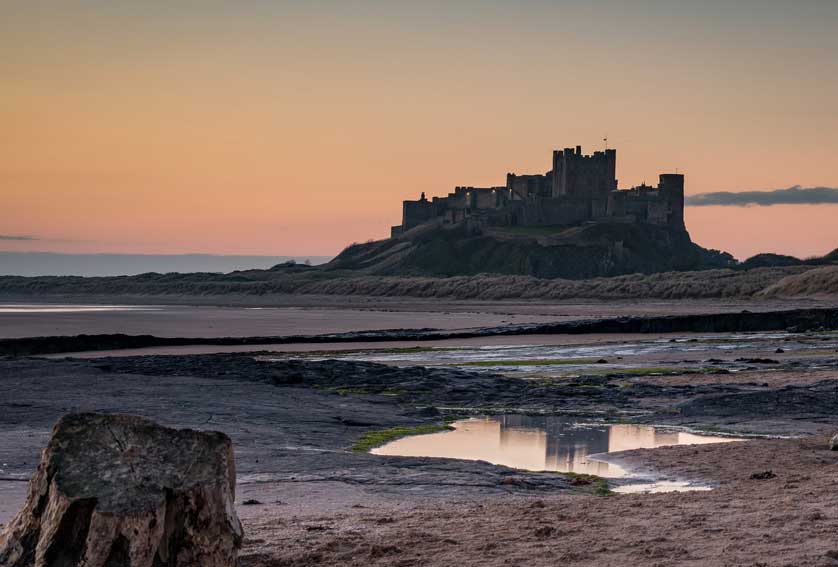
Bamburgh Castle - is a restored castle in Bamburgh, Northumberland. Originally Norman, it was purchased by the wealthy Victorian industrialist William Armstrong in 1894. The much decayed structure was largely demolished and the castle-mansion we see today rose in its place. The building is still owned by the Armstrong family.
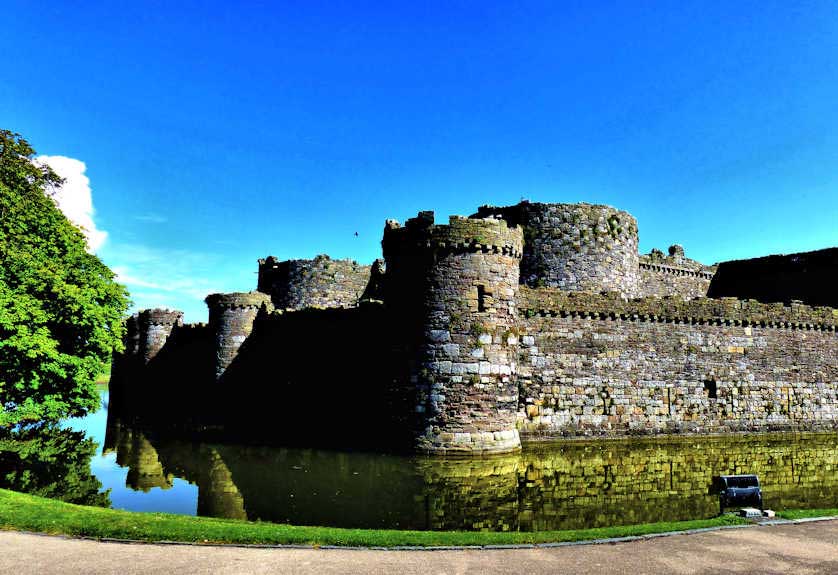
Beaumaris Castle - on Anglesey was the last of the great castles constructed by Edward I in the late 13th century to consolidate his control of Wales. Like the castles at Conwy, Caernarfon and Harlech, Beaumaris Castle is a UNESCO World Heritage Site.
Beeston Castle - southeast of Chester was built in the 1220s by Ranulf de Blondeville, the 6th Earl of Chester, (1170-1232), on his return from the Crusades.
Blair Castle - is located in Perthshire, Scotland and is the ancestral home of the Clan Murray.
Bodiam Castle - looks almost too romantic to be true. Nine miles north of Hastings, Bodiam Castle, was begun in 1385 by Sir Edward Dalyngrigge to protect the area from possible French raids. Built on a square plan with rounded turrets at the corners and a moat, Bodiam was a state of the art defensive structure when completed but was rendered uninhabitable by Parliamentary forces during the English Civil War. Largely neglected since, the castle was partially restored by Lord Curzon, a former Viceroy of India. Bodiam Castle passed to the National Trust on Curzon's death in 1925.
Bolsover Castle - in Derbyshire is a 17th century castle built over the ruins of an earlier Medieval fortress.
Broughty Castle on the banks of the River Tay in Broughty Ferry, Dundee, dates from the late 15th century.
C
Caenarfon Castle - Caernarfon Castle (Castell Caernarfon) as seen today was begun in 1283 by the English King Edward I and completed in 1330. The castle in Caernarfon is one of the finest and most historic of British castles.
Caerleon Fortress Baths - as part the Roman fortress of Isca, the Romans built a bath house and exercise facility. The ruins of that facility can be seen by visitors at the excellent Roman Baths Museum in Caerleon, south Wales.
Cadbury Castle - is strongly associated with the Arthurian legend. An Iron Age fort was located on the limestone hill which lies 5 miles north east of Yeovil.
Caerphilly Castle - unlike many other 13th-century Welsh castles, was not built by King Edward I in his effort to suppress the Welsh lords. Rather, Gilbert 'the Red' de Clare, a powerful Norman nobleman built it as a response to a dispute between himself and the Prince of Gwynedd, Llywelyn the Last.
Cardiff Castle - is one of Wales' leading historical sites. Located in central Cardiff, the capital of Wales, the castle has a 2,000 year history.
Carisbrooke Castle - located in the village of Carisbrooke, near Newport, on the Isle of Wight. King Charles I was imprisoned at Carisbrooke Castle in the months leading up to his trial and subsequent execution in 1649.
Carlisle Castle - historic castle close to Hadrian's Wall built by William II in 1093.
Carrickfergus Castle - 12th century castle in County Antrim, Northern Ireland.
Castle Apartments at Cardiff Castle - from 1866 AD, the 3rd Marquess of Bute employed the architect William Burges to transform the Castle Apartments at Cardiff Castle. Inside the Gothic house, he created lavish interiors using murals, stained glass, marble, gilding, and elaborate wood carvings. Each room has its own theme including the Mediterranean, Italian, and Arabian decoration.
Castle Drogo - near Chagford and Drewsteignton in Dartmoor, was the last castle to be built in England. Designed by Sir Edwin Lutyens, who built much of British New Delhi in India, and the Cenotaph in London, Castle Drogo was constructed, mostly in granite, between 1911-1931.
Chirk Castle - located in the county of Wrexham in North Wales, just across the border from England, Chirk Castle is in fact just 200 meters from Offa's Dyke, the ancient defensive wall built probably in the 8th century along the border of the old kingdom of Mercia. From its hilltop vantage point it has commanding views over the Ceiriog Valley to the south.
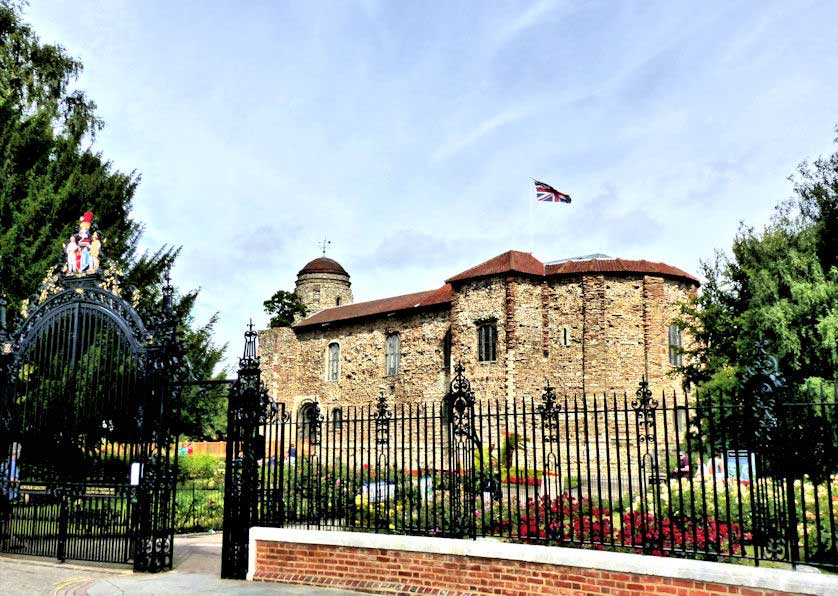
Colchester Castle - a good place to begin exploring Roman Colchester in Essex is at the town's primary landmark, Colchester Castle. It is know a Grade I listed building. Built more than a millennia after the Roman settlement of Colchester, the Norman keep, the largest in all Europe, was built upon the foundations of a big Roman temple, some of which can still be seen.
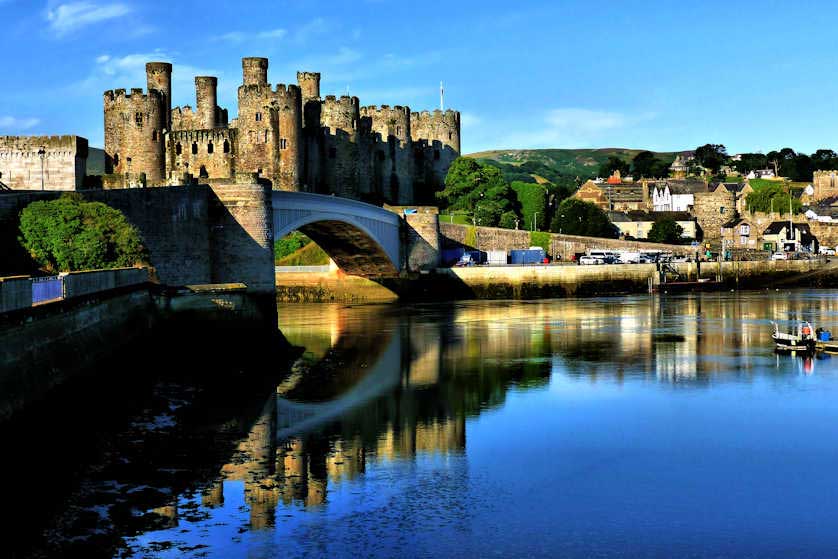
Conwy Castle - located on the banks of the River Conwy near its mouth, Conwy Castle is an impressive 13th-century castle and fortified town. It is part of the UNESCO World Heritage Site of Castles and Town Walls of King Edward in Gwynedd, that also includes Beaumaris Castle, Caernarfon Castle, and Harlech Castle.
Corfe Castle - lies in Dorset and was originally built by William the Conqueror in the 11th century. It is one of the National Trust's most popular sites, visited by thousands of people every year. Located on a hill top, there are great views of the surrounding countryside.
Culzean Castle is a dramatic clifftop masterpiece on the Ayrshire coast overlooking the the Firth of Clyde and an 18th-century architectural gem designed by Robert Adam. It also has a historic connection to U.S. President Dwight D. Eisenhower who stayed four times including once as U.S. President in 1959.
D
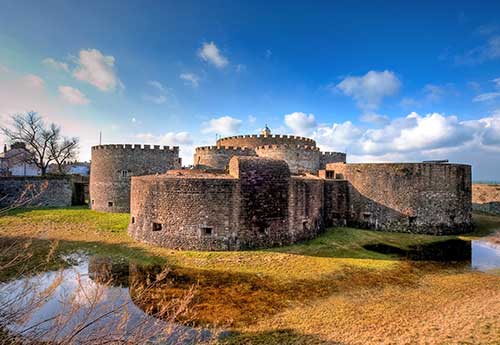
Deal Castle - located in East Kent in the south east of England the castle is along with nearby Walmer Castle, a major attraction of this part of the Kent coast.
Devizes Castle - was built in 1080 AD by Osmund, Bishop of Salisbury. This wooden castle burnt down in 1113 and was rebuilt in stone around 1120 by Roger, Bishop of Salisbury.
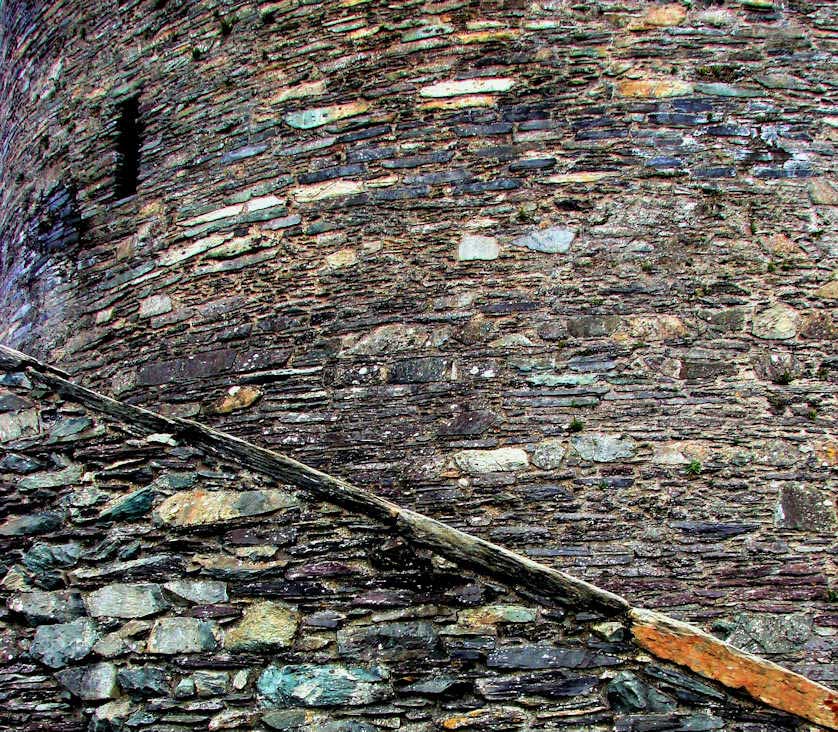
Dolbadarn Castle - though not much remains of Dolbadarn Castle, a 13th century Welsh fortress, its dramatic and desolate location as well as its cylindrical keep make it evocative enough to have been the subject of a painting by Turner as well as numerous other artists.
Donnington Castle - a ruined medieval castle, just north of Newbury.
Dover Castle - in the port town of Dover in Kent is England's largest castle and one of its most important and historic fortresses. The castle as we know it today was begun during the reign of Henry II (1133-1189) with improvements to the castle occurring at regular intervals thereafter including during the reign of Henry VIII and during the Napoleonic Wars when Dover Castle's strategic importance as the "key to England" was recognised. The first and only underground barracks for troops were built here during the wars with Napoleon's France.
Duart Castle - on the Isle of Mull has a long and somewhat turbulent history. It is now back in the hands of the Maclean clan and was restored in 1912 after lying empty for well over a century. There's a dungeon, the courtyard, a tearoom and wonderful views from the battlements. The castle can also be hired for "exclusive weddings" and other events.
Dunstanburgh Castle - grand, ruined fortress on the Northumberland coast. Perched high on a cliff near the fishing village of Craster in Northumberland, Dunstanburgh Castle is now largely ruined. Dating back to the fourteenth century, Dunstanburgh Castle was protected by cliffs and the sea. Dunstanburgh Castle was first built by Thomas, Earl of Lancaster, an important baron in the 14th century with later modifications by John of Gaunt. Damaged during the War of the Roses, Dunstanburgh gradually fell into disrepair and decay. Dunstanburgh makes for a mysterious sight as you walk from either of the villages of Craster or Embleton.
Dunnottar Castle - a castle now in ruins on the northeastern coast of Scotland near Stonehaven.
Dunrobin Castle - this spectacular, fairy tale castle is located on the outskirts of Golspie and allows visitors to discovery the history of the Clan Sutherland and the local community. The site also boasts a falconry centre and picturesque gardens.
Dunster Castle - was the residence of the Luttrell family for over 600 years. In fact, a castle has stood on the site for over 1000 years, since Norman times.
Dunvegan Castle - the ancestral seat of the MacLeod clan on the Isle of Skye.
Durham Castle - is a Norman castle in Durham, northern England, now part of University College, Durham.
E
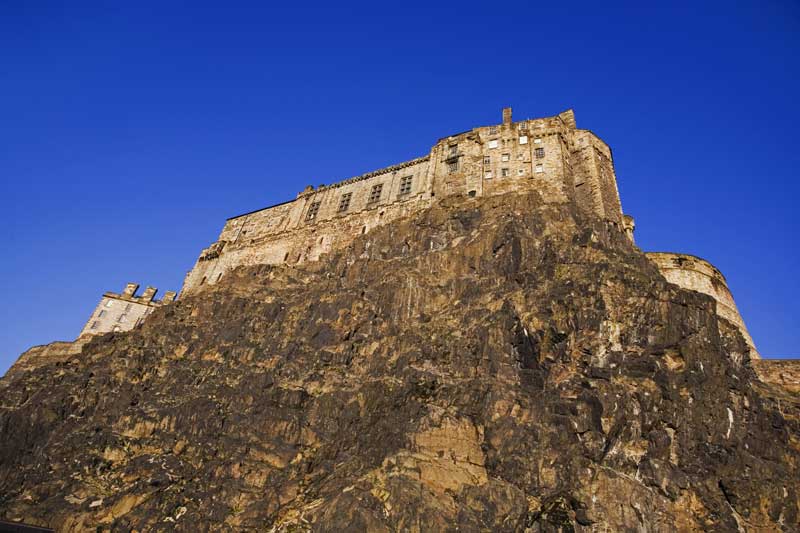
Edinburgh Castle - peers down on the city of Edinburgh from its perch on an extinct volcano. The history of Edinburgh Castle is bound up with the history of the Scottish nation and as such Edinburgh Castle is the most popular attraction in the country.
Edlingham Castle - a small, ruined castle near Alnwick in Northumberland.
Eilean Donan Castle - is one of the most photographed castles in the UK, and an icon of the Scottish Highlands. Though in a remote location, the castle sees throngs of visitors who come to capture the beauty and grandeur of this picturesque fortress and its majestic surroundings.
F
Farleigh Hungerford Castle - located 9 miles south east from Bath in the Frome Valley on the Somerset/Wiltshire border. The castle ruins are a Grade I listed building.
Framlingham Castle - castle with a long and diverse history in Suffolk now owned by the National Trust.
G
Glamis Castle - famous as the place of King Malcolm's murder in Shakespeare's Macbeth and the home to the Earls of Strathmore and Kinghorne.
Grosmont Castle - along with Skenfrith Castle and White Castle, Grosmont was built of earth and timber before 1100 AD by the Normans to control the lands they had conquered in North Gwent. In 1201, the three castles were granted to Hubert de Burgh, a powerful Marcher lord under King John, who proceeded to rebuild Grosmont in stone between 1201 and 1230.
H
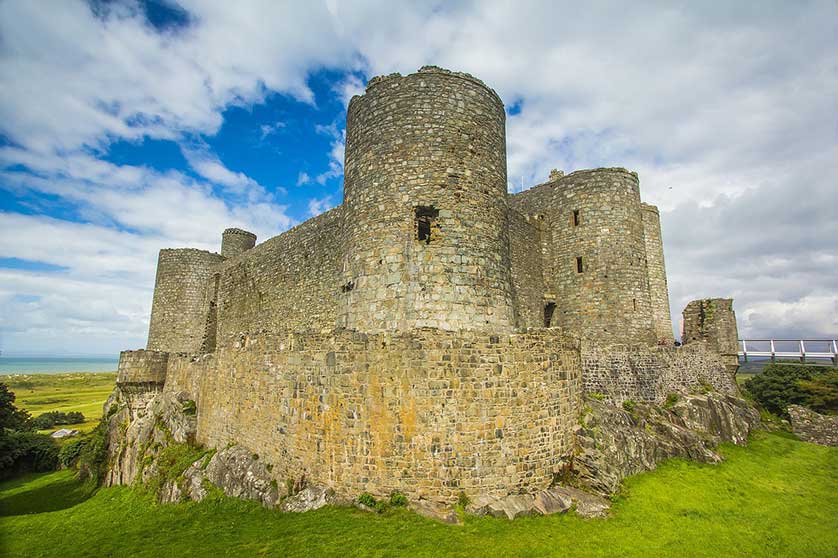
Harlech Castle - built by the invading English king Edward I between 1282 and 1289. The castle was captured by Owain Glyndŵr in 1404 and retaken by the English in 1409. Harlech Castle was fought over in both the War of the Roses and the English Civil War. The castle is a UNESCO World Heritage Site along with Beaumaris, Conwy and Caernarfon.
Hastings Castle - overlooks the English Channel in Hastings, Sussex and first dates from the Norman invasion of 1066. It was rebuilt in stone in 1070.
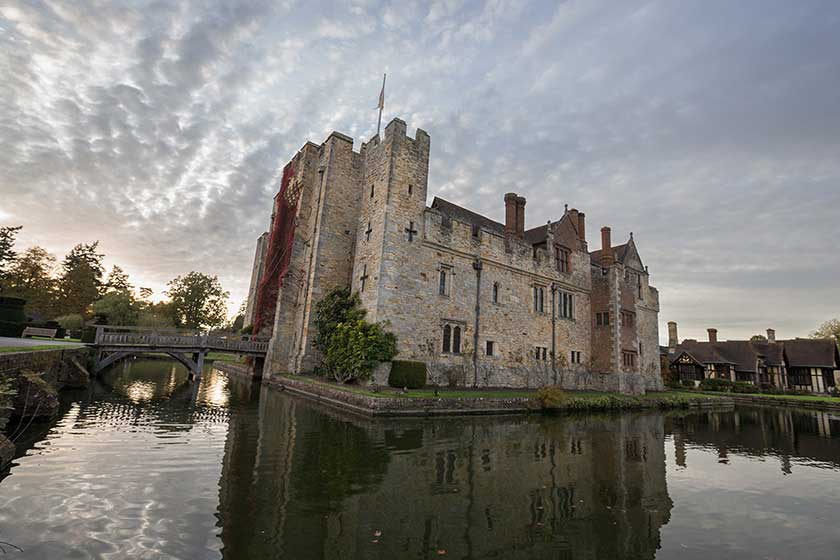
Hever Castle - dating back to the 13th century and located just 30 miles (50 km) southeast of London, moated Hever Castle is one of England's prettiest and most popular castles.
Huntingdon Castle - only earthworks remains of this once 11th century fortress.
I
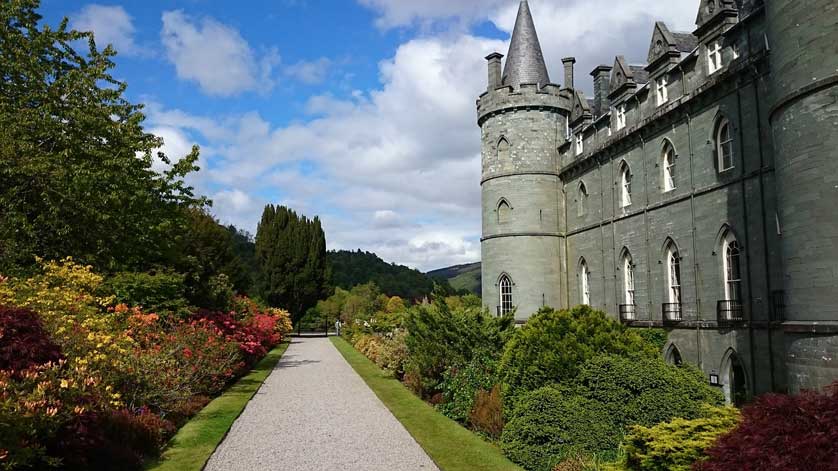
Inveraray Castle - a Gothic-Revival country house on the shore of Loch Fyne near Inveraray in Argyll, western Scotland.
Inverness Castle - a castle has stood on this site on a cliff overlooking the River Ness in Inverness, Scotland, but the present castle in red sandstone is 19th century.
Isel Hall - this fortified manor house in the Lake District has seen many changes over the years. The oldest part is the pele tower which dates from around 1400.
J
K
Kendal Castle - dates from the 12th century and was the home of the Lancaster family who were Barons of Kendal. The castle is associated with the Parr family including Queen Catherine Parr, the sixth wife of King Henry VIII.
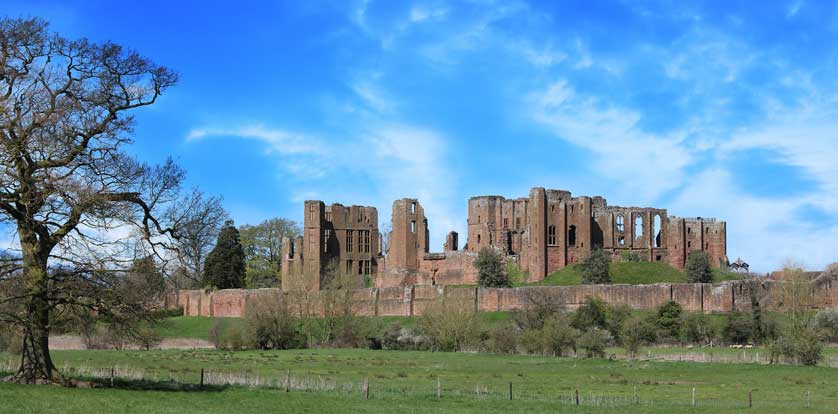
Kenilworth Castle - has a surprising amount of history associated with it. Kenilworth, though not a particularly well known castle, being somewhat overshadowed by the nearby Warwick Castle in Warwick, is definitely worth a visit.
Kidwelly Castle - ruined Norman castle in Wales.
L
Lancaster Castle in Lancaster, north west England, served as a prison until as late as 2011.
Launceston Castle - a Norman fortress in Launceston, Cornwall, the partially ruined structure dates from soon after the Norman Conquest but the stone keep and walls are from later.
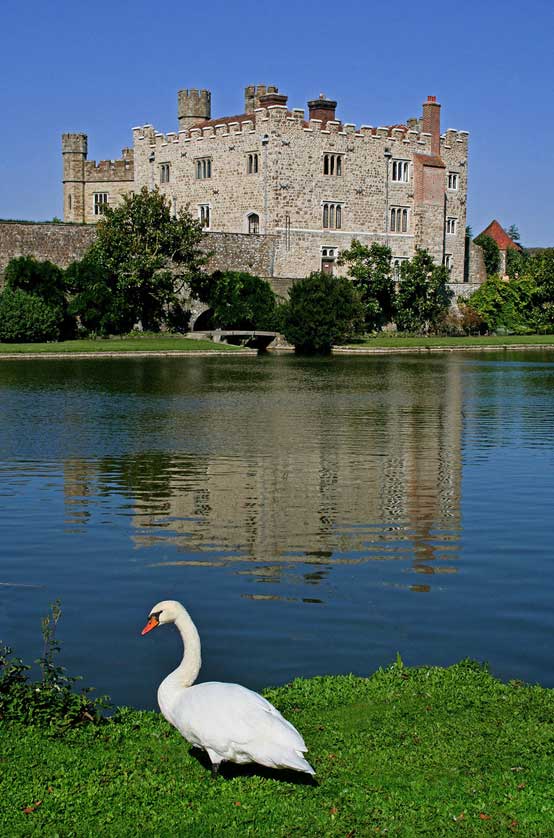
Leeds Castle - is sometimes described as the "loveliest castle in the world" and is a favourite destination of one day tours for tourists from London.
Lewes Castle - lies in the town of Lewes in East Sussex. It dates from after the Norman Conquest and is constructed in local limestone and flint.
Lindisfarne Castle - Lindisfarne Island is home to the castle which was built in the 16th century using stone from a former priory.
Lumley Castle - a courtyard castle in Chester-le-Street and now converted into a hotel - the Lumley Castle Hotel.

M
Maiden Castle - near Dorchester in Dorset, is the UK's largest Iron Age fort, and one of the largest ancient earth works in Europe.
Manorbier Castle - Norman castle near Tenby in Wales.
Monmouth Castle - probably started out in the 11th century AD as a wooden fortress surrounded by an oval ditch. In 1067, William Fitz Osbern had been granted the lordship of Hereford and used Monmouth Castle as a base to subdue the adjacent Welsh districts of Archenfield and Gwent.
N
Nottingham Castle - in the centre of Nottingham is built on a rocky outcrop called Castle Rock overlooking the River Trent. The castle has been the scene of various important historical incidents over its long 1,000 year history.
O
Oakham Castle - situated in Rutland, Oakham Castle is the Great Hall of a much fortified Norman manor house.
Oxford Castle & Prison - the historic city of Oxford is known primarily for its university colleges, but is also home to the remains of a little known Norman castle.
P
Pendennis Castle - small but its location is just about perfect for its purpose which is coastal defense. It has been called one of the finest example of a post-medieval promontory fort in the country.
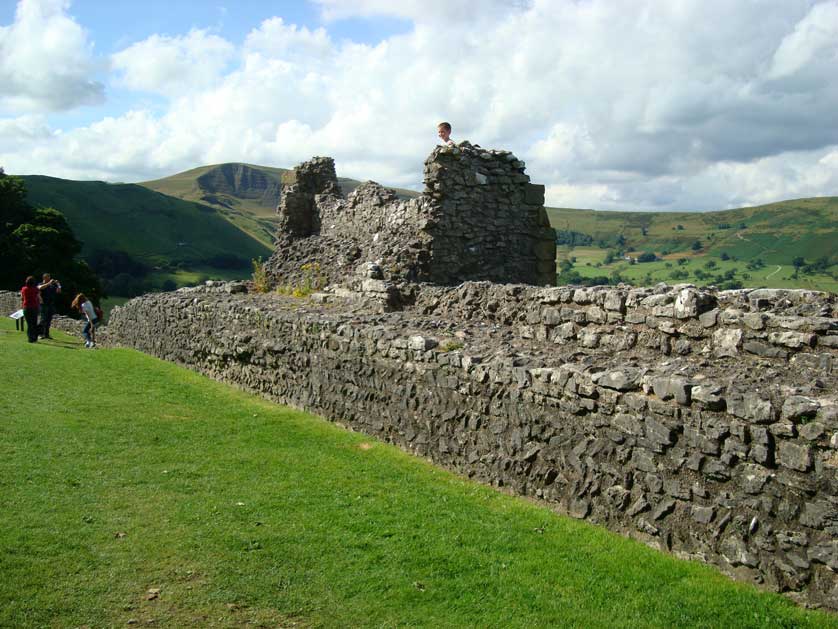
Peveril Castle - overlooks the picturesque town of Castleton in the Derbyshire Peak District and affords wonderful views over the surrounding countryside and the town below.
Porchester Castle - is a Medieval fortress built within the walls of the Roman Saxon Shore fort of Portus Adurni.
Powderham Castle - located in the Exe Estuary south of Exeter, is one of the south west's finest castles.
Q
R
Raby Castle - a 14th century Medieval castle near Staindrop in County Durham.
Raglan Castle - is a fairly magical place. Begun in the 1430's for show rather than battle, Raglan Castle held out for 13 weeks against Oliver Cromwell's forces during the English Civil War. The parliamentary forces then proceeded to demolish the castle which left it in its present state.
Rougemont Castle - was built on "red hill" thus the name from the Norman French. The castle was built by William the Conqueror after a rebellion in Exeter in 1068 AD. The castle is the site of the last four witchcraft-related executions in the history of England.

S
Scalloway Castle in Scalloway in the Shetland Islands was built by forced labour between 1599 and 1607. It was carefully positioned to control the safe anchorage and the fertile farmlands to the north. It was occupied for less than a century and is now roofless, although the stark ruins still dominate the skyline. It remains one of only two castles built in Shetland.
Scotney Castle in Kent is an English country house with formal gardens set within a large estate of over 750 acres.
Scottish Castles - a listing of Scotland's best castles.
Sham Castle - was erected in 1762 by Ralph Allen, entrepreneur, philosopher, and one time Postmaster of Bath. The construction of the Sham Castle was intended to improve the view from Ralph Allen's townhouse.
Shrewsbury Castle - in Shrewsbury, Shropshire in the West Midlands is a red sandstone castle dating originally from the Norman period.
Skenfrith Castle - the Great Tower of the castle was the castle's main residence and stronghold. The Great Tower was built to a height that allowed archers on its battlements to shoot over the outer walls.
Stirling Castle - a mostly 15th and 16th century castle and one of the largest in Scotland. The castle and the surrounding area are important in the establishment and independence of the Scottish nation. The castle was long associated with the Scottish royal family.
St Michael's Mount - though not as well visited as its namesake across the Channel, Mont St. Michel, St Michael's Mount is just as iconic. A small, tidal island topped with a castle and chapel, located about 500 meters offshore from the village of Marazion, St Michael's Mount can be seen from every point on the sweeping arc of Mount's Bay.
T
Tintagel Castle - ruined 13th century castle in Cornwall built by Richard of Cornwall (the second son of King John) in the 1230s and associated with Arthurian legend.
Totnes Castle - near Totnes in Devon is a largely 14th century fortress and a fine example of a Norman motte and bailey castle.
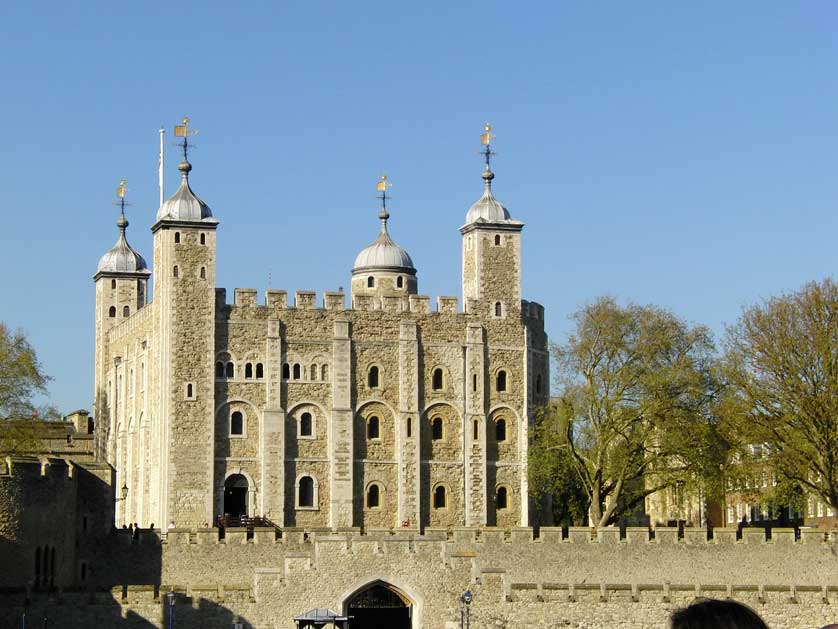
Tower of London - Her Majesty's Royal Palace and Fortress, a.k.a. the Tower of London, is a historic castle on the north bank of the River Thames in central London.
Trematon Castle - overlooks Plymouth Sound near Saltash in Cornwall.
U
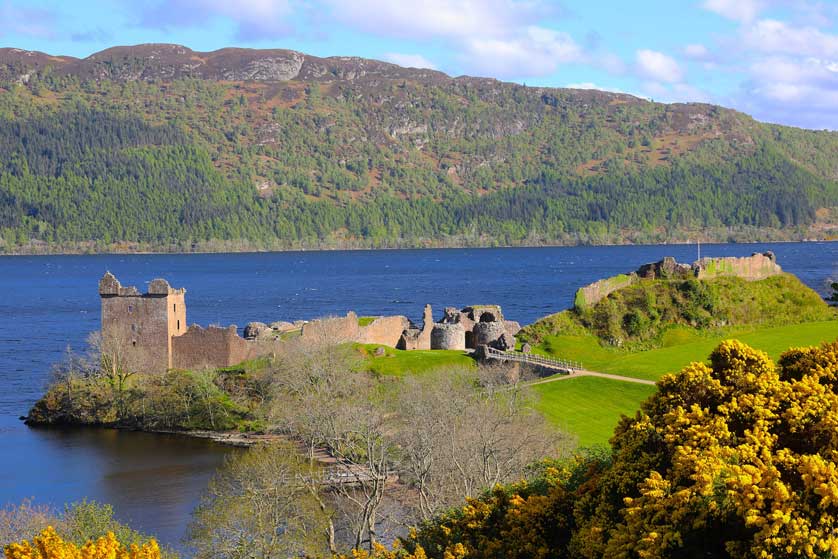
Urquhart Castle - ruined 13th century castle on the shores of Loch Ness in Scotland. It is now one of the most visited in Scotland after Edinburgh Castle and Stirling Castle. Sightseers arrive by bus or on boat tours of Loch Ness from Inverness.
V
W
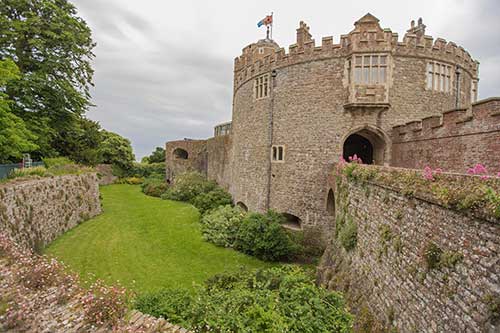
Walmer Castle - was built by Henry VIII between 1539 and 1540 as an artillery fortress to protect England from overseas invasion from France.
Warkworth Castle - ruined 12th century castle in Northumberland.
Warwick Castle - is advertised as 'Britain's Ultimate Castle'. The castle is a historic site as well as an amusement park (Knight's Village) so bring the kids for a fun and educational day out.
Welsh Castles - a listing of some of the finest castles in Wales.
White Castle - gets its name from the white rendering which once covered its outer walls.
Windsor Castle - has the distinction of being the largest occupied castle in the world as well as being the longest occupied palace in Europe. Since 1917 Windsor has been the family name of the Royal Family, and the castle keep is central in the family crest.
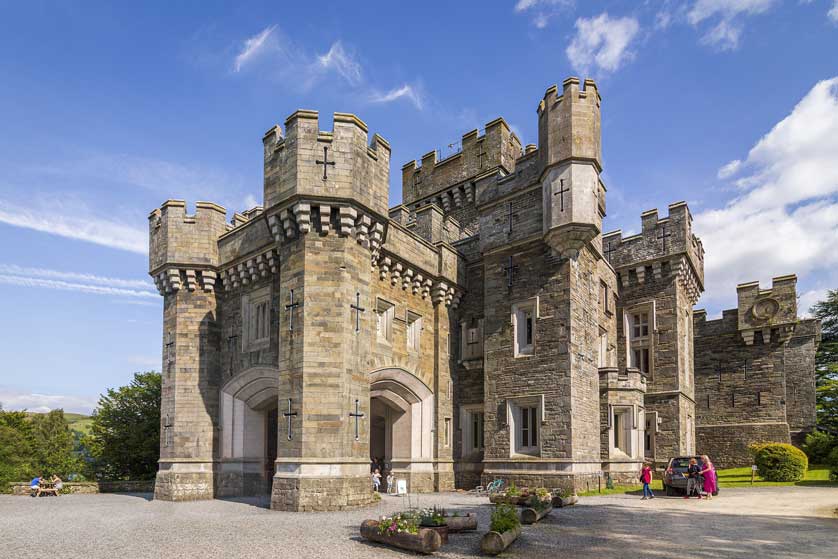
Wray Castle - Victorian neo-Gothic castle in Cumbria in the Lake District in Cumbria now owned by the National Trust. The castle dates from 1840 and the grounds include part of the shoreline of Lake Windermere.
X
Y
Z
Top 10 Most Visited UK Castles
Hotels in the UK
Book Hotels in England - Booking.com
Find Accommodation in London - Booking.com
Search Hotels in Scotland - Booking.com
Hotels in Northern Ireland - Booking.com