London Chinatown
Big Fun in Little China
Daniel Allen
Chinatown in London, U.K., is in the borough of Westminster. It is Europe's largest Chinatown, and is centred on Gerrard Street in London's West End.
In the corner of a busy Chinatown restaurant London native Matthew Adams takes another icy pull from his imported Qingdao beer. On the table a bubbling bowl of chilli-laden broth continues to fill the air with steam, but for now at least, one man's craving for authentic Sichuan food has been sated. "I have a serious hotpot addiction," Adams admits, wiping perspiration from his brow. "If I don't get my Chinese spice at least once a week I get withdrawal symptoms."
Eating Out in Chinatown
For many years, chowing down on kung pao chicken or prawn crackers from the local takeout was as close as most Londoners came to sampling Chinese culture. In the heart of the West End, London's Chinatown was little more than a ragtag collection of all-you-can-eat buffets and low-end grocery stores. Neither very authentic nor very contemporary, it was, much like the fortune cookie, an ageing Western take on a clichéd Eastern theme.
Chinese haute cuisine
Luckily for Adams, and other fans of Chinese haute cuisine, times are changing. Inspired by the dramatic success of the Beijing Games in 2008, London's residents have increasingly embraced all things Chinese. Whether you're looking for authentic Chinese shopping or just a bite to eat, Chinatown now rewards visitors with good, flavours and experiences unavailable anywhere else in the UK. A host of new Chinese restaurants have recently open their doors, and Chinese cultural events are scheduled to take place throughout 2014.
History of Chinatown
London's Chinese community is one of the oldest in Europe, dating back to the mid-1880's, when seamen from China settled in East London to escape their cramped dockside lodgings. The first area in London known as Chinatown was located in the city's Limehouse area, when Chinese people set up businesses to cater to the sailors' needs. Much of the area was damaged by bombing during the Second World War, although a number of elderly Chinese still choose to live in this area today.
By 1950 there were still only 2,000 Chinese in Britain. Some settled in Liverpool, while others remained in the capital where they sought new opportunities to make a living. Returning British soldiers from the Far East were eager to taste more of the delicious Chinese cuisine they had encountered on their tour of duty, which led to more Chinese restaurants opening outside of London's East End. This commercial development laid the foundations for modern day Chinatown.
Nowadays there are over 250,000 Chinese people living in the UK, and an impressive network of Chinese schools and community centres help Chinese Londoners pass on their cultural identity from one generation to the next. Still, it's one thing to preserve your own culture, it's quite another to get other people of a different background to understand and appreciate it.
Chinatown Arts Space
Now, thanks to the Beijing Olympics, and the efforts of people like David Tse Ka Shing, all that is changing. Tse Ka Shing is creative director of the Chinatown Arts Space (CAS), started in 2003 by a group of British East Asian artist who wanted to drive the development of East Asian performing and visual arts in London. Over the last couple of years CAS has organized many high profile events, and was heavily involved in last year's "China in London" event.
"Together with all at CAS, I decided it was time to help re-brand Chinatown," says Tse Ka Shing. "For a long time the area was just known for food and shopping. Now a younger generation of Chinese and other East Asians in London want to express themselves, and this involves promoting all manner of art forms, from dance and drama though to sculpture and song writing."
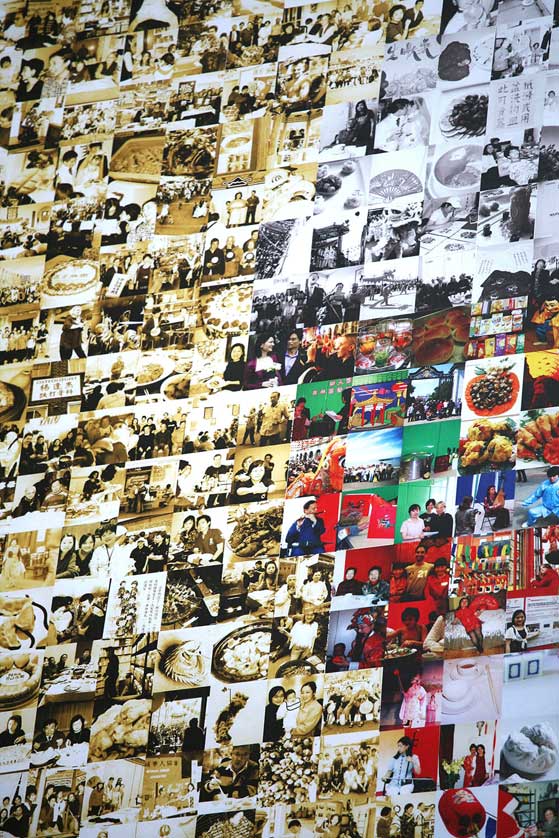
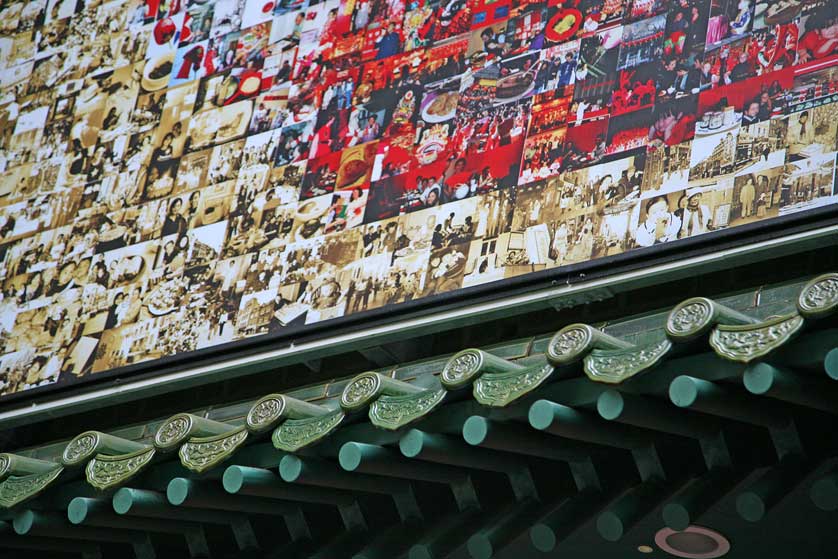
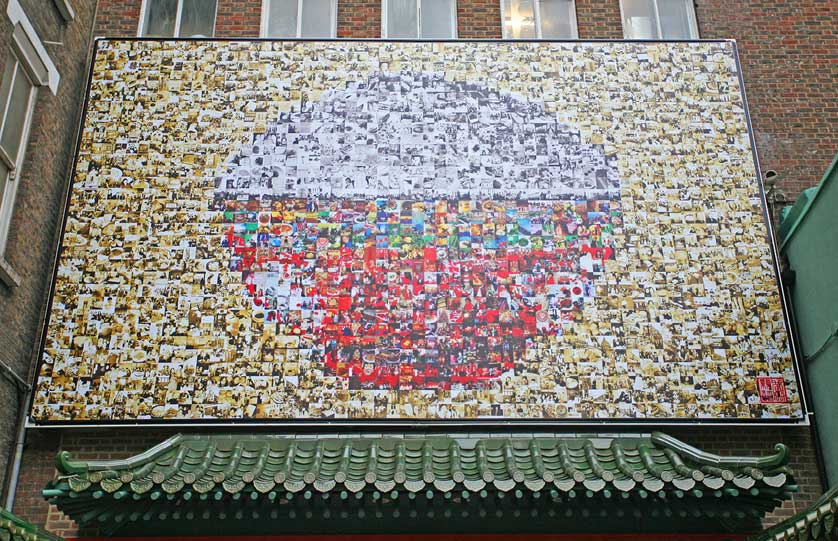
Most recently CAS has overseen the installation of Chinatown's first public art work, a giant mural by Hong Kong-born architect and designer Wing Kei Wong. Her design, entitled 1888, is a huge mural of a simple bowl of rice that will be on show in Chinatown's Horse and Dolphin Yard for the next two years.
During the mural's creation, Wing Kei asked members of the local community to contribute 1888 photographs of Chinatown's past and present, which were all then incorporated into the final design. The mosaic therefore represents a giant puzzle that pieces together the lives, history, stories and experiences of the community who live and work in Chinatown - as rice is a constant feature of this diverse community, the rice bowl is intended as a symbol of cultural unity.
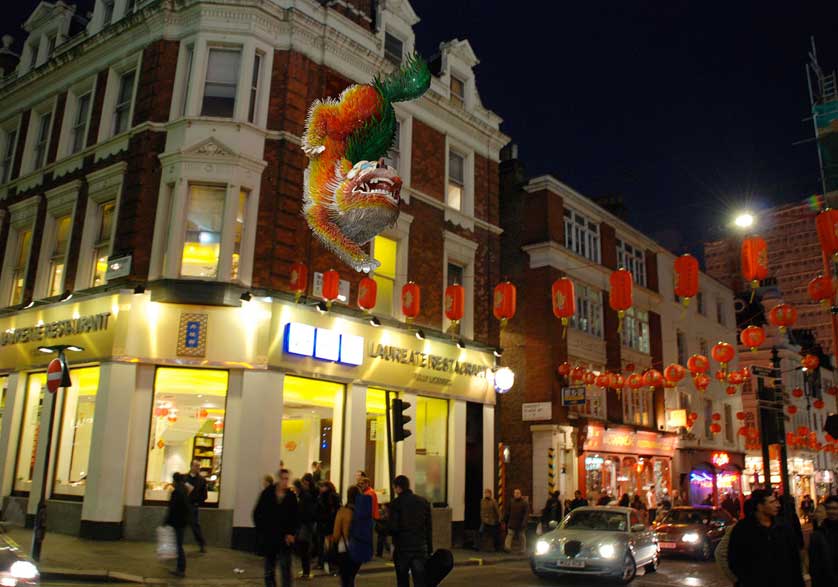
In April a second art work, a 3-meter long sculpture of a Chinese lion, was erected at one entrance to Chinatown. Designed by a Taiwanese artist Tsai Hsiao-chi and her Japanese partner Kimiya Yoshikawa, this piece hangs from the wall of a building on bustling Wardour Street, and has become a new attraction in Chinatown since its public unveiling. Giving the sculpture a contemporary twist it is made from thousands of individually laser-cut pieces of coloured Perspex, which are meant to represent the variety of Chinese and other East Asians living in the UK.
Tsai, 28, says that lion statues are usually placed at the entrance of Asian temples or palaces, serving as guardians and bringing good luck. "The work is intended to convey a sense of welcome and hospitality," she explains, "But is also meant to stand guard over the neighbourhood." Westminster Mayor Louise Hyam recently commented that "the lion has given Chinatown a new landscape and will make it the most noted Chinatown in the world".
The Lion sculpture is the fifth and final installment of the CAS-organized Five Circles Festival, a series of five groundbreaking contemporary exchange events in rap music, film and music, contemporary dance, visual public arts and education.
CAS works closely with Yellow Earth, a London-based British East Asian touring theatre company funded by Arts Council England. The company, which tours nationally and internationally, was established in 1995 by five Chinese and other Asian performers to raising the profile and standing of British East Asian theatre.
Yellow Earth also runs the UK's only international East Asian play reading festival, Typhoon, at Soho Theatre; as well as a new writing scheme, Yellow Voices, with partners Birmingham Rep, Soho Theatre and the Young Vic. The company also runs a scheme with the Young Vic that develops emerging British East Asian directors called Yellow Stages.
The company has an extensive Education and Outreach programme, recently working with 5,000 schoolchildren at the British Museum on The First Emperor exhibition. It runs a variety of East Asian workshops and panel discussions, and provides a regular casting service for Chinese and other Asian actors.
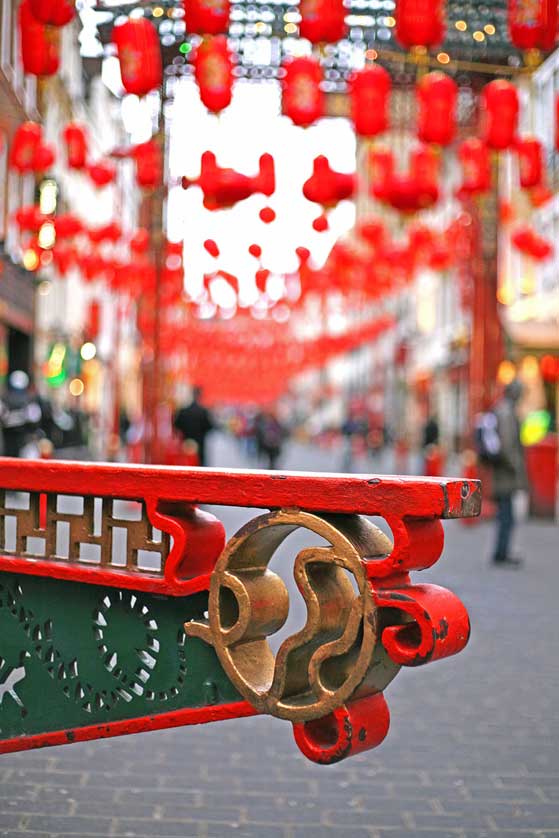
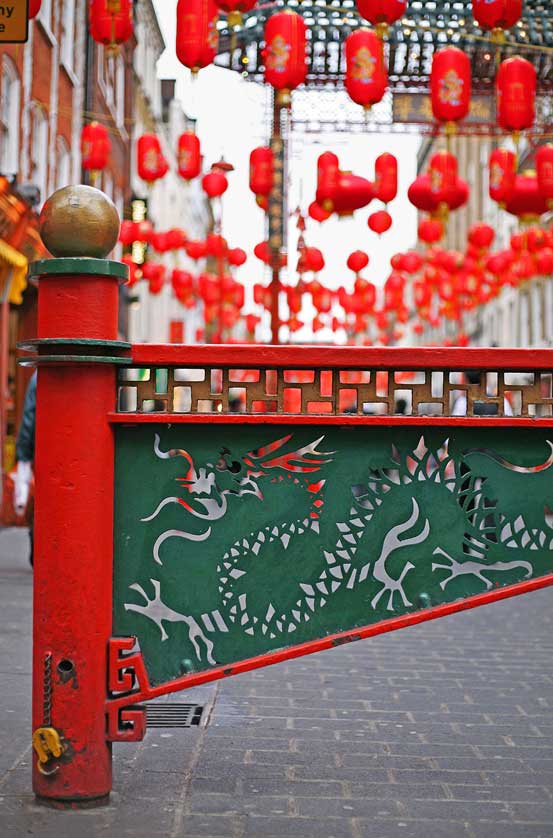
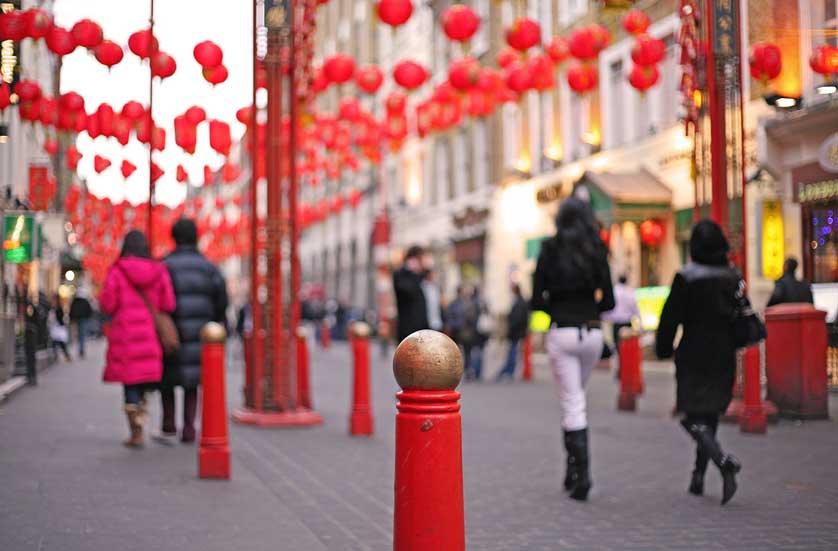
The addition of Chinese-themed artwork isn't the only Chinatown beautification project. As a result of stakeholder consultation, a recent two million pound Chinatown revamp saw the addition of a new screen garden, golden lanterns, a timber pagoda, and replicas of ancient Chinese dragon statues to guard its nine entrances.
"The aim is to make Chinatown seem more authentic, taking its inspiration from Chinese cities such as Beijing, and should result in London's Chinatown being given even more of a Chinese feel," says Robert Davis, Westminster City Council's Deputy Leader. "It is vital that we work with the local community to develop design ideas that build on the area's heritage, and reflect the cultural identity of the Chinese community who first made this unique area of the West End their home in the 1950's."
Of course, people make places as much as pagodas, and keeping London's Chinese community involved in Chinatown's development has been vital. This was acknowledged by Suzannah Kwok, LCCA's vice president, when she spoke to BBC London recently. "We've engaged some of the younger members of the Chinese community in London Chinatown; some of the BBCs (British-Born Chinese) have got involved. This is positive because in order for Chinatown to move forward we need to embrace the younger generation coming through as well as respecting the elders."
David Tse Ka Shing agrees with Kwok's sentiments. "A younger generation of Chinese people in London want to express themselves. They can really contribute to the multicultural vitality of this city, with Chinatown as a base."
As part of London's Thames Festival in September, Tse Ka Shing and CAS are working on "Piccadilly Revisited", a project based on the 1929 silent black-and-white movie "Piccadilly" starring Anna May Wong, Hollywood's first ever Chinese star. A fresh interpretation on a classical theme, it neatly sums up the capital's new take on Chinese culture in 2009.
Chinese New Year Celebrations
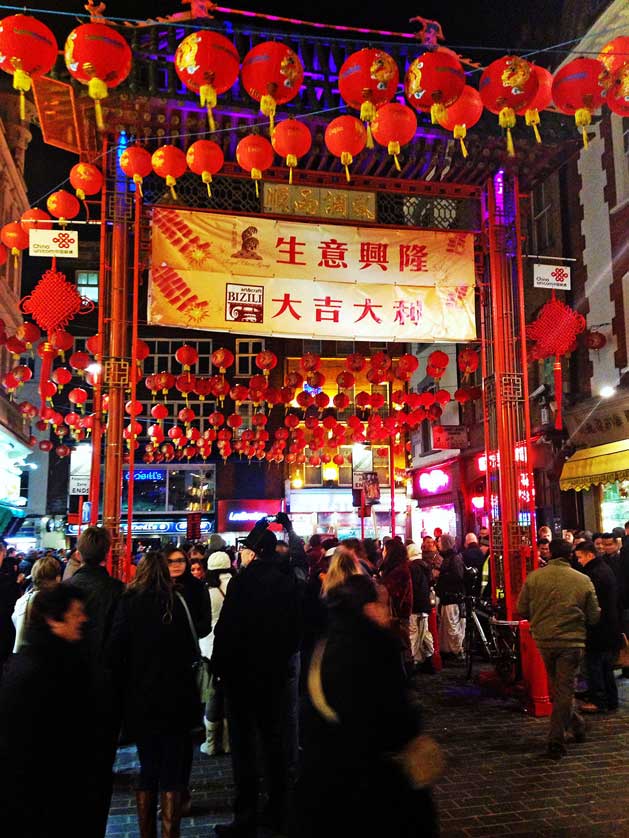
Chinese New Year took place this year on January 31, but for London the main Chinese New Year celebrations, marking the Year of the Horse, take place on Sunday, February 2.
As usual, London's Chinese New Year celebrations are set to be the biggest outside of Asia and hundreds of thousands of people are expected to descend on the West End to mark the occasion.
Events begin at 10 am, with a colourful New Year's Parade that passes along Charing Cross Road and Shaftesbury Avenue before reaching Chinatown. An official opening ceremony at midday in Trafalgar Square will then be followed by various performances. Expect to see acrobatics, traditional dance, theatre and song recitals by artists visiting from China especially for the occasion. A second stage on Shaftesbury Avenue will provide a platform to local performers and up-and-coming acts.
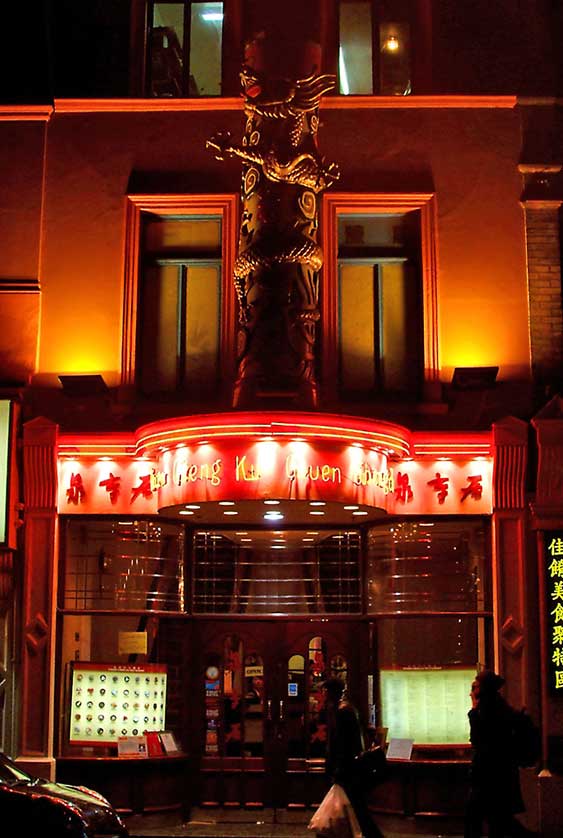
Chinatown Restaurants
Budding chefs can find Chinese vegetables and authentic Eastern ingredients at Chinese supermarkets, while tired shoppers can relax at a reflexology specialist or investigate traditional Chinese medicine. Meanwhile, if you have an appetite for sushi or Sichuan, satay or stir fry, Chinatown has almost eighty restaurants offering cuisine from across the Far East.
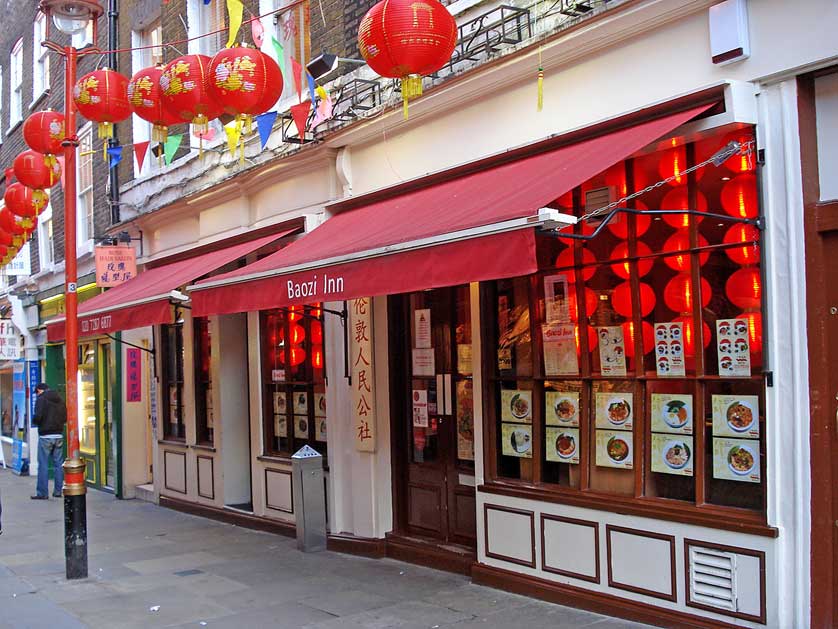
Baozi Inn
25 Newport Court
Tel: +44 (0)20 7287 6877
Great Beijing and Sichuan street food in a kitsch send-up of a Beijing hutong circa 1952, complete with colourful plastic vegetables. The best reason to visit Baozi Inn is not the Beijing-style buns but the Sichuan street food prepared by the restaurant's chef, who hails from Chengdu. Delicate dragon dumplings in fiery oil, spicy flowering bean curd, dan dan noodles and Sichuan beef noodles are all favourites with regular patrons.
Leong's Legend
4 Macclesfield Street
Tel : +44 (0)20 7287 0288
If you're after a taste of Taiwan but don't fancy travelling halfway around the world, Leong's Legends is the place to go. One of the most authentic Taiwanese experiences you'll get outside of the island itself, this restaurant specialises in regional dishes like Wind Shelter Bay Crab, Three Cups Chicken and oysters wrapped in egg. Drop by for dim sum at lunchtime and you won't be disappointed.
Chinatown Hotels
Chinatown in London has the full range of accommodation options, all providing the guest with access to many of London's best sights and sounds due to their central location. The following is a list of recommended accommodation options for a stay in or very near London's Chinatown, from the luxurious to the value-for-money.
The W London is a luxury, glossy-veneered futuristic presence in the heart of Chinatown, overlooking Leicester Square. "Normal Gets You Nowhere" says a sign on the wall, which sums up the W London approach. The hotel is as sumptuous as it is modern. The boldly contemporary décor is uniquely British, combining the cutting edge with the best of tradition. The guest rooms are impeccably designed in a clean, very up-to-date style combining silvery stately utilitarian lines with wood-finished, tasteful warmth. The room and hotel amenities are extensive: huge-screen TVs in each spacious room, air-conditioning, and, in many rooms, even a tumble dryer. Outstanding staff service.
The Radisson Blu Edwardian, Hampshire is in a stately red brick building on London's Leicester Square. The interior is fully refurbished and retains that grand atmosphere in a delightfully British lounge way. And with more than a hint of the exotic here and there. Relax with all the comforts today's traveler could ask for. Rooms are large, impeccably designed, furnished and decorated. Luxury marble bathrooms, smart TVs with dozens of multilingual channels, Egyptian cotton bed linen, a mini bar, in-room safe, iron and trouser press, tea and coffee making facilities are just a few guest room features. There is a 24-hour fitness room, a restaurant, and a lounge bar. Superb value for money.
The Z Hotel Piccadilly is a very affordable accommodation just minutes' walk from London's Chinatown. Each modern, compact room has its own 48-inch TV with free movie and Sky Sports channels, free Wi-Fi, and plenty of room under the comfortable bed for luggage. Each room has its own shower room and toilet. This spotlessly clean hotel gets outstanding marks for its staff friendliness, helpfulness and general hospitality - and, of course, top marks indeed for its ideal location, close to Chinatown and almost everything London has to offer the visitor.
Related Chinatown Resources
More on the Chinatown Arts Space: www.chinatownartsspace.com
More on the Yellow Earth Theatre: www.yellowearth.org
More on Chinatown: www.chinatownlondon.org
Hotels in London
Book Hotels in London - Booking.com
Find Luxury Hotels in London - Booking.com
Budget Hotels in London - Booking.com
Find Hotels in England - Booking.com
London Offers
London Attractions Tickets - Tiqets.com