List of UNESCO World Heritage Sites in the UK
England
- Blenheim Palace

Blenheim Palace is a country house located in Woodstock, Oxfordshire, England. Blenheim Palace is the residence of the Dukes of Marlborough and was originally built as a gift to John Churchill, the 1st of that line.
Blenheim Palace is the only non-royal country house in England, which holds the title of palace. The architect Sir John Vanbrugh built the palace in a rare English Baroque style.

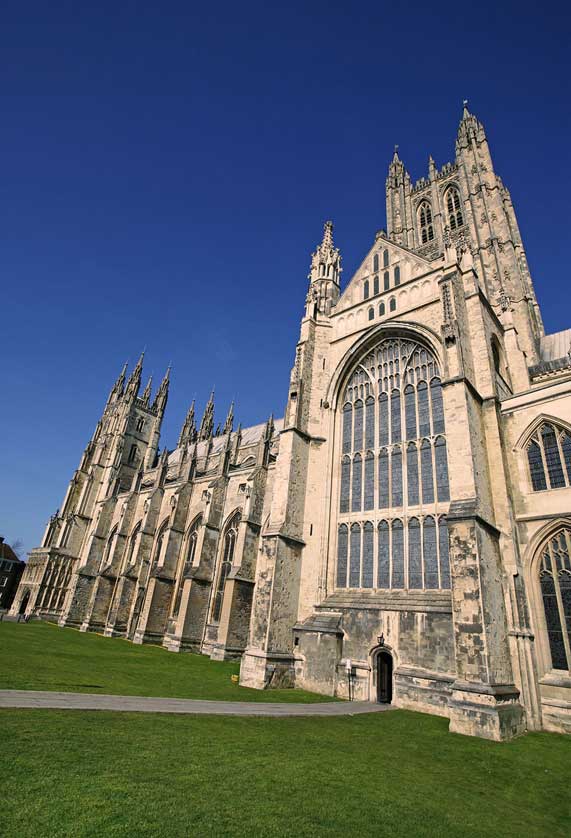
- Canterbury Cathedral, St Augustine's Abbey and St Martin's Church
St Martin's Church, the oldest church in England, was built during the early stages of the Anglo-Saxon England's conversion to Christianity. St Martin's Church in Canterbury is England's oldest parish church in modern use.
Canterbury Cathedral is famous for being the cathedral of the Archbishop of Canterbury, the leader of the Church of England. The cathedral's architecture is done in a Romanesque and Gothic style.
- City of Bath
The Romans founded the city of Bath as a spa sometime during the AD 60s. They built public baths and a temple on the hills surrounding hot springs in the valley of the River Avon. The city is located in Somerset County in South West England. During the Georgian era in the 18th century, the city became a popular spa town, leading to the construction of Georgian architectural masterpieces such as the Royal Crescent and the Circus. Bath has a dual designation as part of the 11 Great Spas of Europe listing along with such cities as Baden-Baden in Germany, Karlovy Vary in the Czech Republic and Vichy in France.

- Cornwall and West Devon Mining Landscape
The Cornwall and West Devon Mining Landscape is a World Heritage site consisting of mining landscapes built during the Industrial Revolution in South West England. Devon and Cornwall possessed major tin and copper producing industries in the 18th and 19th centuries. At their industrial peak, they were producing two thirds of the world's copper.
The technologies developed during this time including underground mining and arsenic production were made use of worldwide. The landscapes of Cornwall and West Devon were greatly altered due to the deep-lode mining for copper and tin. The pioneering techniques that constructed the region's mines, foundries, ports and harbours is honoured with UNESCO World Heritage status.

- Derwent Valley Mills
Derwent Valley Mills, situated along the River Derwent in Derbyshire, is a World Heritage site in which the modern factory system was born and developed. For example, workers' housing and machinery including the water frame were developed here in the 18th century.
This new factory system enabled factories to spin cotton continuously with increased efficiency. These technological developments played great roles in the Industrial Revolution. The mills, workers' houses and factories have been carefully preserved and are open to public view. The World Heritage site includes Belper, Cromford, Milford, and Darley Abbey, and 838 listed buildings in total: mills, workers' housing, and related structures. The Cromford Canal, Cromford and High Peak Railway and Lombe Mill (now the Museum of Making) are also part of the site. Masson Mills were in continuous operation from 1783 until 1991 making them the oldest continuously operating mills in the world.
- Dorset and East Devon Coast
The Jurassic Coast reaches 96 miles in length and stretches from Orcombe Point in East Devon to Old Harry Rocks in East Dorset. The entire length of the Jurassic Coast can be walked along on the South West Coast Path. Dinosaur fossils such as the first complete Ichthyosaur skeleton have been found along this coastline. Moreover, there are many interesting land formations including arches, coves and limestone folding on this site.

- Durham Castle and Cathedral
Durham Castle and Durham Cathedral are prime examples of English Norman architecture from the 11th and 12th centuries. Although Durham Castle was built originally to impress on Northern England the extent of the Norman kings' power, it is currently occupied in its entirety by University College, Durham. The castle is now a working building, which provides residence for over 100 students.

- Ironbridge Gorge
Ironbridge Gorge includes a variety of mines, factories, workers' houses and transport infrastructures that were created during the Industrial Revolution. Ironbridge Gorge is formed around the River Severn in Shropshire, England. The site derives its name from the famous iron bridge, which was the first cast-iron bridge made in history. Early industrialists favored the site because of its abundance of raw materials such as: iron ore, coal and limestone.
- Jodrell Bank Observatory
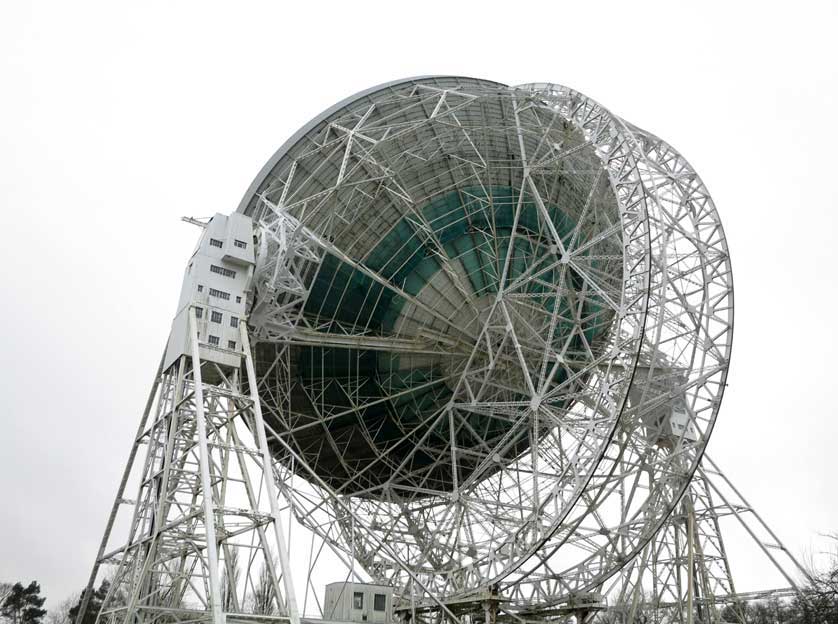
The Jodrell Bank Observatory near Goostrey in Cheshire, south of Manchester, is the site of the Lovell Telescope and the Jodrell Bank Discovery Centre. The Lovell Telescope is named after Sir Bernard Lovell (1913-2012), the physicist and radio astronomer from Manchester University who established the telescope in 1957. At the time it was the largest steerable dish radio telescope in the world. Presently it is the third largest with a diameter of 76.2 meters. It is a Grade I Listed Building and was added to the UNESCO list in 2019.
- Lake District
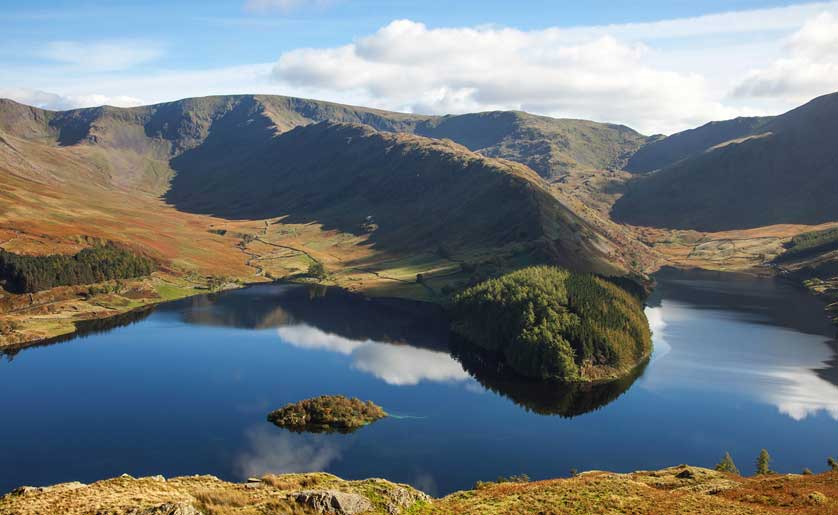
The Lake District is located in the north west of England. The Lake District is England's largest national park, and England's only true mountain region. Covering 885 square miles, the Lake District contains England's biggest natural lake (Windermere), England's deepest lake (Wastwater) and England's highest mountain (Scafell Pike). Although it is England's most densely populated national park, there are no cities, large towns or major road routes. The Lake District's inclusion on the UNESCO list has faced opposition from activists who point out the extensive, subsidized sheep farming in the area prevents the regrowth of forests and is bad for the environment.
- Liverpool Maritime Mercantile City
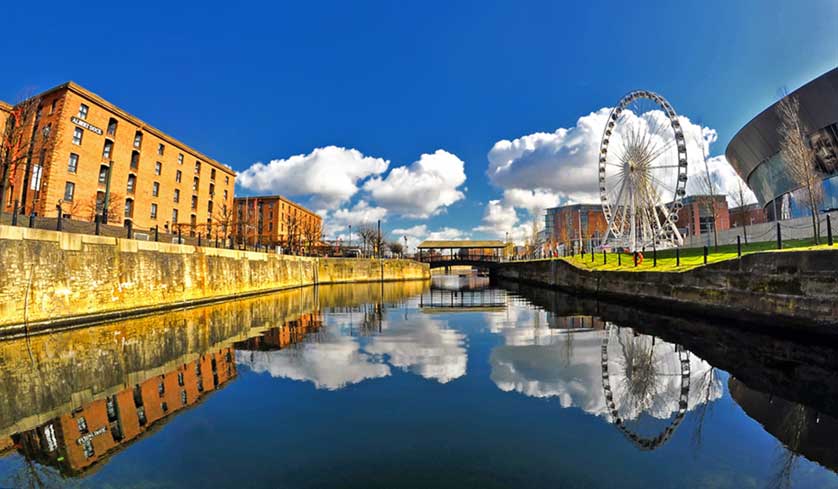
The World Heritage Site of Liverpool Maritime Mercantile City can be divided up into six main sites. The six sites are located in the city center and include the Pier Head, Albert Dock, William Brown Street, and other famous city landmarks. Pier Head is comprised of three majestic buildings lined up along the Liverpool waterfront. These 'Three Graces', comprising of the Royal Liver Building, the Cunard Building and Port of Liverpool Building, make Pier Head one of the most recognizable skylines in the world.
* Liverpool was stripped of its World Heritage status in July 2021 after a UN committee found recent, modern developments threatened the cultural value of the city's waterfront.
- Maritime Greenwich
Maritime Greenwich is located in Greenwich, Greater London in England. One of the first examples of Palladian architecture in the United Kingdom can be seen here as well as the works of famous architects such as Christopher Wren and Inigo Jones. Moreover, the site is well known for the Royal Observatory, which played a great part in the historical development of astronomy and navigation.

- Royal Botanical Gardens, Kew
The Royal Botanical Gardens, located in southwest London, comprise of 121 hectares of gardens and botanical glass houses. The gardens were designed by Charles Bridgeman, William Kent, Capability Brown and William Chambers. There are more than 30,000 different kinds of plants and preserved plant specimens in the The Royal Botanical Gardens' greenhouses.
- Saltaire
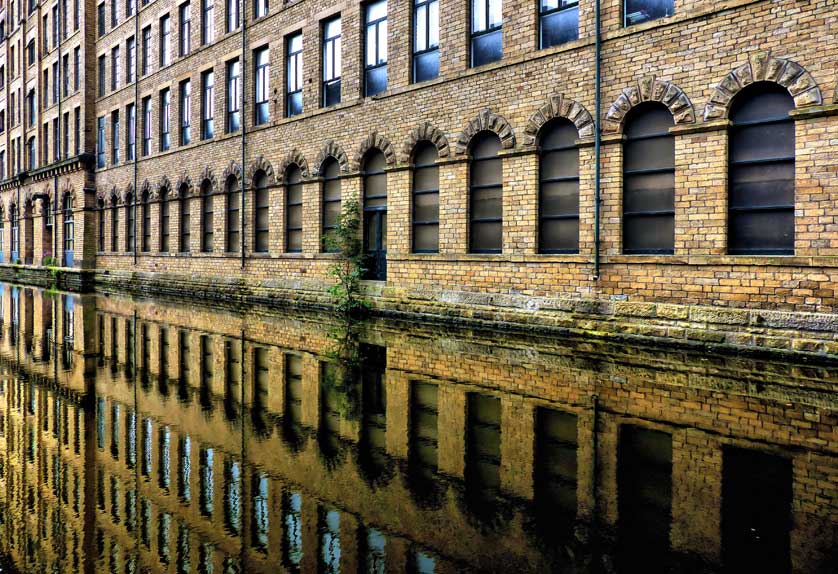
Saltaire, founded by Titus Salt in 1851, is located in the City of Bradford, West Yorkshire in England. Saltaire is a Victorian model workers' village, which exemplifies 19th century paternalism. Salt provided his workers with stone houses, wash houses, bath houses, hospitals, schools and a library. Therefore, the village of Saltaire shows a great development in the history of 19th century urban planning.
- Stonehenge, Avebury and Associated Sites
Stonehenge, located in Wiltshire, is a prehistoric monument built somewhere between 3000 BC and 2000 BC. Stonehenge is the remains of a ring of standing stones set within earthworks. Since the culture that produced Stonehenge left no written records, the purpose of the stone circle is still under speculation.
Stonehenge may have been used to predict celestial events such as eclipse, solstice and equinox, which may have been important to the original inhabitants' religion. Avebury is a Neolithic henge monument comprising of three stone circles located around the village of Avebury.

- Studley Royal Park including the Ruins of Fountains Abbey
Studley Royal Park, located in North Yorkshire, includes an 18th century landscaped garden, large Cistercian ruins and a Jacobean mansion designed by William Burges. The landscape garden is an outstanding example of the development in garden design in the 18th century. Fountains Abbey, built in 1132, is one of the best-preserved Cistercian monasteries in England.
- Tower of London
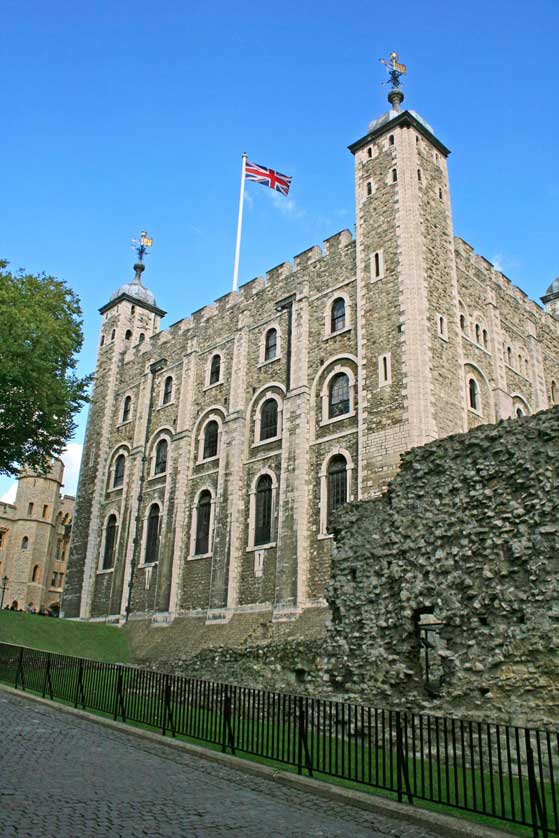
The Tower of London, built in 1066 by William the Conqueror, is located on the north bank of the River Thames in Central London. The Tower of London was built as a part of the Norman Conquest of England and represented the power of the Norman military. The tower served as a prison from 1100 to 1952, although that was not its original purpose. Henry III and Edward I expanded the tower in the 12th and 13th centuries when it was used as a royal residence. The Tower of London is presently one of the most historically significant buildings in England.
- Westminster Palace, Westminster Abbey and Saint Margaret's Church
Westminster Palace, located in central London, is the meeting place of the House of Commons and House of Lords. These are the two houses of parliament in the United Kingdom.
Westminster Abbey is the traditional place of coronation and is also the burial site for recent British royalty. The abbey, originally a church, was founded at Thorn Island during the 7th century. King Henry III began building the present church in the Gothic style in 1245.
Famously, the coronations of both King Harold and William the Conqueror were held at Westminster Abbey.
The Church of St Margaret dates back to the 12th century and is the parish church of the Palace of Westminster (Houses of Parliament).
Scotland
- Frontiers of the Roman Empire
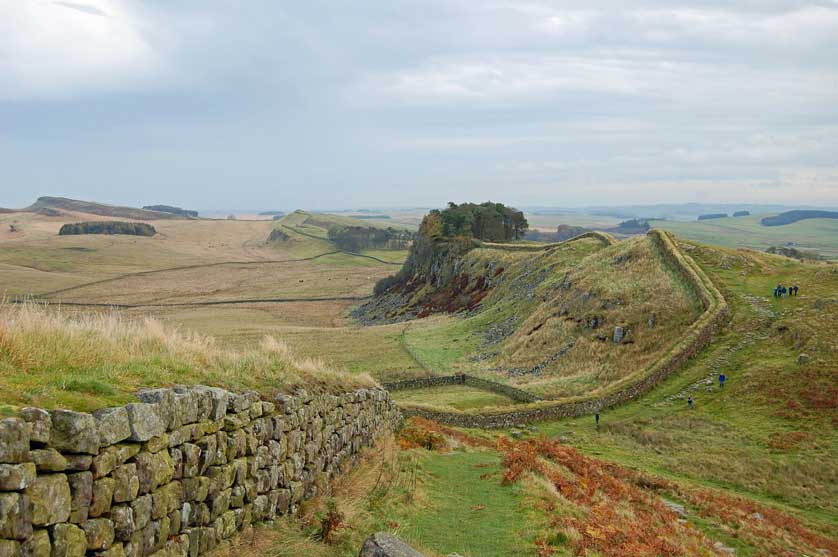
A border defense system called limes was used on the frontiers of the Roman Empire during the 2nd century. The frontier, reaching over 5,000 km in length, ranged from Antonine's Wall in the north to Trajan's Wall in Eastern Europe. Hadrian's Wall (in England) was built in order to protect the Romans from 'barbarians' to the north. A large portion of the wall is still intact due to conservation efforts of people such as John Clayton, who bought up land containing sections of the wall in the mid-19th century.
- Heart of Neolithic Orkney
Heart of Neolithic Orkney consists of four different Neolithic monuments found on one of the islands of Orkney, Scotland. The first of these four monuments is Maeshowe. It is a chambered cairn and passage grave whose central chamber is positioned to light up during the winter solstice.
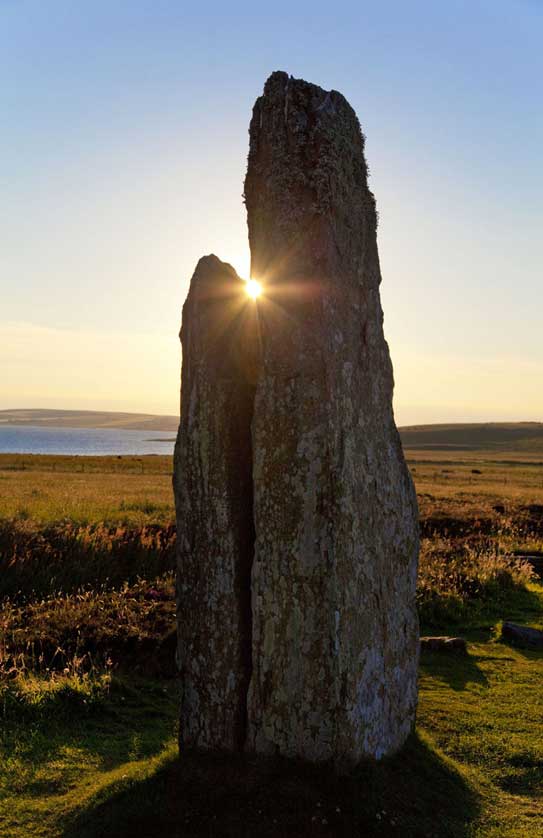
Secondly, there are the four Standing Stones of Stenness, used for traditions and rituals related to the Norse gods. Thirdly, there is the Ring of Brodgar that is composed of 60 stones arranged to form a henge monument. Lastly, the Skara Brae is Northern Europe's best-preserved Neolithic village.
- New Lanark
New Lanark is a village situated in New Lanark, South Lanarkshire in Scotland. David Dale established the village in 1786 as a desirable location for building cotton mills and workers' housing. The waterfalls of the River Clyde were used to power the town's mills. The workers were provided for with food, hot water, electricity and housing. New Lanark became a symbol of utopian socialism under the ownership of Robert Owen in the 19th century and became a successful business.
- Old and New Towns of Edinburgh
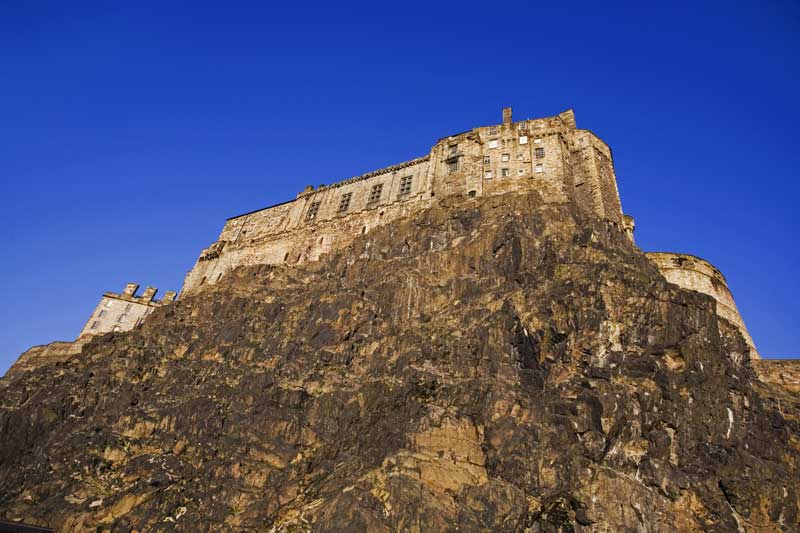
The Old and New Towns of Edinburgh are located in the center of Edinburgh, the capital of Scotland. The Old Town of Edinburgh was founded in the Middle Ages whereas New Town was built between 1767 - 1890.
The architecture and layout of the two towns shows the great contrast between medieval and modern periods. In Old Town, medieval street plans and many Reformation-era buildings have been preserved. New Town, on the other hand, retains architecture from the Georgian and neo-classical era.
- St Kilda
St Kilda is an isolated group of islands located in the North Atlantic Ocean. A small population, which never exceeded 180 people, may have permanently inhabited the islands until the year of 1930. Various architectural monuments such as the medieval village and stone circle remain as proof of human inhabitance. There are a wide variety of important seabird species on St Kilda, which include Northern Gannets, Atlantic Puffins and Northern Fulmars.

- Forth Bridge
The Forth Bridge spans the estuary of the Forth River outside Edinburgh in Scotland and is the world's longest multi-span cantilever bridge. It is now the second longest single cantilever bridge after Quebec Bridge in Canada. The Forth Bridge opened in 1890 and carries railway passengers and freight. It was designed by English engineers Sir Benjamin Baker and Sir John Fowler and carries the Edinburgh to Aberdeen railway line across the Forth. Altogether the bridge is 8,094 feet (2,467 meters) in length.
Wales
- Blaenavon Industrial Landscape
Blaenavon is a town and World Heritage Site situated in southeastern Wales. It is a prime example of industrial landscape created in the 19th century when Wales was the world's leading iron and coal exporter. The World Heritage Site includes quarries, public buildings, workers' housing and a railway.
- Castles and Town Walls of King Edward in Gwynedd
During Edward I of England's reign, a series of castles and town walls were built in order to gain control over English colonies in Wales. These castles are considered to be the greatest examples of 13th-14th century military architecture in Europe. The UNESCO World Heritage Site includes the four castles of Beaumaris, Conwy, Caernarfon and Harlech. The castles' structures are highly unique in the way that they combine 13th century military architecture with a central plan.

- Pontcysyllte Aqueduct and Canal
Pontcysyllte Aqueduct connects the Llangollen Canal over the valley of River Dee in Llangollen near Wrexham to northeast Wales. It is the longest and highest aqueduct in Britain and was built in 1805. The aqueduct was made through innovative use of cast and wrought iron.
- Slate Landscapes of Snowdonia
Added to the UNESCO World Heritage list in 2021, the Slate Landscapes of Snowdonia in Gwynedd are a unique environment in the British Isles. The slate quarries of the area are said to have "roofed the world" in the 19th century. Slate from this area of North Wales was used on the Houses of Parliament in London and Copenhagen City Hall in Denmark for example, and was exploited from around 1780 to 1940. In peak years about 500,000 tonnes of slate a year was quarried.
Northern Ireland
- Giant's Causeway and Causeway Coast
The Giant's Causeway, located in Northern Ireland, was created due to volcanic activity during the Tertiary period. The causeway is made up of tall columns protruding out of the ocean. The tallest of these columns reach the height of approximately 12 meters. There are approximately 40,000 connected basalt columns in Giant's Causeway.

South Atlantic Ocean
- Gough and Inaccessible Island
Gough Island is a volcanic island that is situated in the South Atlantic Ocean. Inaccessible Island is an extinct volcano island formed mainly of dissected plateaus reaching 450 meters above ocean level. Both Gough and Inaccessible Island are protected wildlife reserves and provide homes for various species of endemic land birds and seabirds. Gough Island has been certified as an Important Bird Area (IBA) due to its significance in being a breeding site for sea birds such as the Northern Rock-hopper Penguins.
Pacific Ocean
- Henderson Island
Henderson Island, located in the South Pacific Ocean, is an uninhabited raised coral atoll. A great variety of endemic land birds, insects and gastropods inhabit Henderson Island. The island's ecosystem is unusual in that it has been little affected by humans in the past. The island is ill suited for agricultural purposes and has a very limited fresh water supply. Ten plants and four animal species have been found which are native to the island.
Bermuda
- Historic Town of St George and Related Fortifications
The Town of St. George is located in Eastern Bermuda. This town is where Sir George Somers's crew landed in 1609 after being ship wrecked at a reef nearby. Some of these men remained behind to retain British claim on the island. The town, established since 1612, is the longest surviving English town in the New World.
Related
UNESCO World Heritage Sites in New Zealand
UNESCO World Heritage Sites in China