British "Foreign" Food
Feast from the East: Britain's cosmopolitan cuisine is now a gourmand's dream
Daniel Allen
When it comes to cuisine Britain has long been regarded as the poor man of Europe - after all, jellied eels, blood pudding and mushy peas rarely elicit the same level of fondness as moules marinieres, spaghetti carbonara or paella. Despite these unsavory stereotypes, however, contemporary British cuisine is anything but unpalatable.
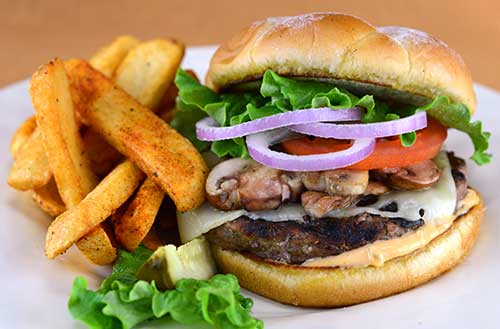
In fact, British cuisine has long been diverse and multicultural - a veritable smorgasbord of eclectic styles and flavours that reflects a long history of foreign influences. When the Normans invaded England they brought with them spices from their trading contacts with the east: cinnamon, ginger, mace, nutmeg, pepper and saffron. Sugar first came to England with the Normans too, and was also considered a rare and expensive spice.
During Victorian times hearty British fare was mixed with exotic spices from all over the Empire. In fact, over the years the British have learned a lot from their colonies about cuisine. From forays in China they developed an addiction to tea (re-exporting the habit to India), and from India they adopted curry-style spicing, developing a line of spicy sauces including ketchup and Worcestershire sauce.
In fact, it would be fair to say that curry itself has now become a national British dish that rivals fish and chips and Sunday roasts in popularity. Over the past 50 years, dining out on Indian food has gone from an occasional, exotic treat to a weekend tradition. It has become so entwined in the British national psyche that "curry nights" could easily be considered a British trait.
Indian Food
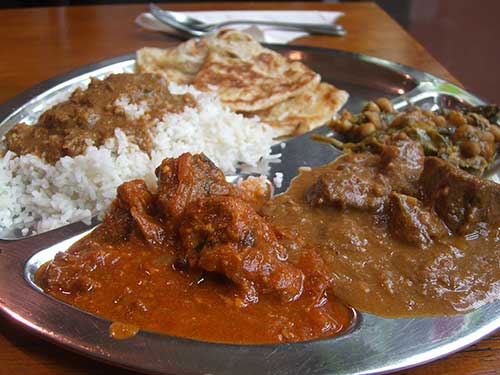
The Indian food industry in Britain is one of the major success stories of the second half of the last century. Indian food is one of the biggest industries in the UK, worth a reported $5 billion a year, with 15,000 Indian restaurants dotted across the British Isles.
London now boasts more Indian restaurants than Mumbai or Delhi according to The Times of India, while Britain is currently home to the largest Indian restaurant in the world - Aakash in West Yorkshire - which can seat up to 750 people. Gymkhana, a London-based Indian restaurant, was voted the best restaurant in Britain in 2014.
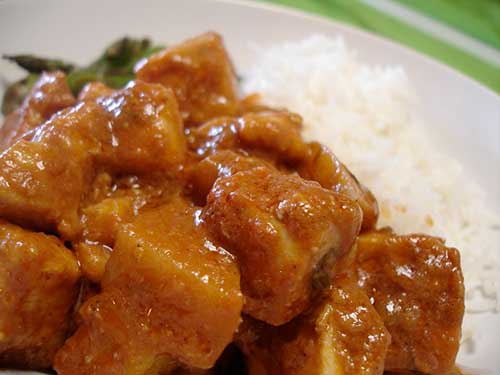
Strangely enough, many of Britain's Indian restaurants are not actually "Indian" at all. In the south of Britain, especially around London, the majority of the owners are from Bangladesh. In Birmingham, Pakistani owners predominate, and up north in Manchester and Bradford, curry restaurants are mostly Kashmiri Pakistani and North Indian. In Glasgow, most Indian restaurants are run by Punjabis.
Many of the curries on Indian restaurant menus were even invented in Britain. The Balti supposedly comes from Birmingham; the Jalfrezi from Bradford; and the Chicken Tikka Masala from Glasgow. Brick Lane in East London is a good place to try one of these home grown dishes though each establishment serves their own unique variation.

Chinese Food
While curry continues to outrank pizza and fish and chips in the British popularity stakes, Chinese food has also become one of the country's favourite cuisines. In a recent survey 39% of British people said they preferred Chinese food, followed by Indian, British, Italian and Thai.
The same survey revealed that Brits are more and more choosing international cuisine over British food - eating "non-British" food three times a week. Asian food is especially popular - sushi and noodles now rivalling spaghetti and potatoes. Half of those people surveyed responded that traditional British meals: cottage pie, fish and chips, sausages and mashed potato were simply not interesting enough.
Chinese stir-fry, with vegetables and noodles, is apparently now the most frequently cooked meal in Britain. The Food Network UK survey found 1 in 5 British people eat the stir-fry at least once a week, with over two-thirds saying a large part of its appeal was its easiness to prepare compared to traditional British cuisine. Other top ten Asian favourites currently eaten at homes across Britain include sweet and sour chicken, Thai green and red curry, king prawns and Szechuan noodles.
Those opting to dine out on Chinese might be surprised to learn that in a recent survey not one London-based Chinese restaurant made it into the top 10. Here is the list in full (based on reviews submitted by customers):
Top 10 UK Chinese restaurants
1. The Golden Horses, St. Helens
2. The Lady Jade, Liverpool
3. Michael Wan's Mandarin Cantonese Restaurant, Blackpool
4. Coconut Tree Noodle Bar, Herne Bay
5. Hoya's Cantonese Restaurant, Heywood
6. Maple Tree, Marple, Stockport
7. China Red, Guernsey
8. The Zen Restaurant, Lytham St. Annes
9. Wings Chinese Restaurant, Southend-on-Sea
10. Oriental Delight, Wirral
Italian & Spanish Food
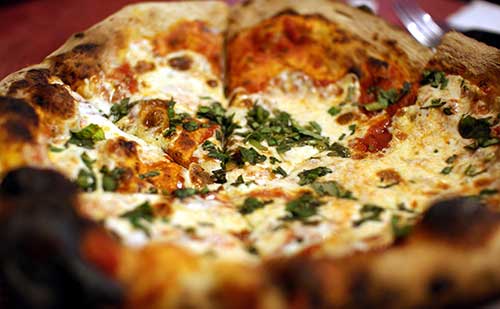
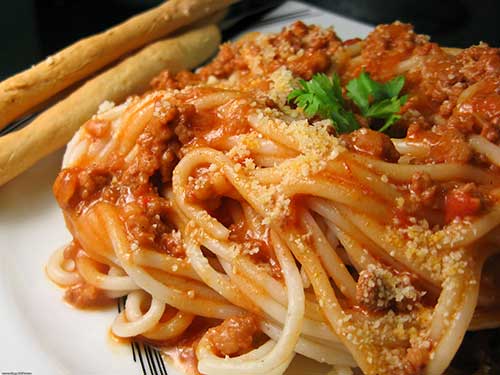
In terms of European cuisines Italian is perennially popular in Britain, with numerous pizza and pasta chains present in virtually every high street from Scotland to the Home Counties. Spaghetti Bolognese has long topped the favourite foreign food list of many a Briton. Popular Italian restaurant chains are continuing to rake in the profits as it seems Brits can't get their fill of pizza and pasta.
Spanish Food
Spanish cuisine is also catching up with Italian in the popularity stakes, as British diners have recently embraced a more informal eating style.
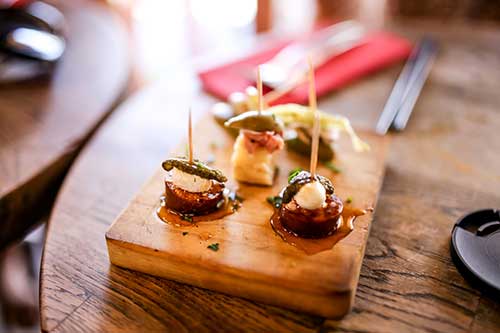
Favourite Spanish dishes include pimientos padron (fried, salted green peppers); patatas bravas (potatoes in a spicy tomato sauce); chorizo frito al vino (chorizo in red wine); champinones al ajillo (garlic mushrooms); pollo con salsa (chicken with sherry sauce) and gambas pil pil (king prawns and chilli butter).
The last twenty years have changed the way the British view their food, and British cuisine, derided for so long overseas, can now said to be among the best in the world (in many areas).
The mix of traditional British fare with foreign cuisines, ranging from Chinese to Thai and French to Italian has been central to this change in attitudes. Those who dine out in Britain today only face one problem - not what to eat, but how to sample everything on offer.