Bath Sightseeing
Few cities in Britain compare to Bath in the beauty stakes. An enticing mix of gorgeous Georgian architecture, beautiful parks and waterways, top notch restaurants and relaxing spas, this compact and hilly travel destination in southwest England recently celebrated its 25th anniversary as a UNESCO World Heritage Site.
Bath History
Two millennia after its natural hot springs first enchanted the Romans, Bath again became the epitome of high society, architecture and fashion, with novelist Jane Austen - who moved to the city in 1800 - its greatest literary resident. While it may still resemble a set from Persuasion, which Austen based in Bath, there's nothing fictional about the city's contemporary elegance. Set in rolling countryside, just over 100 miles west of London, this is the perfect destination for a short (and romantic) weekend break.
After the Roman era, Bath's second moment in the sun came in the eighteenth century, when the town became a hugely popular resort for royalty, aristocracy, gamblers and dandies. In between "taking the waters" at the city's Pump Rooms and attending colourful parties, Bath's Georgian tourists indulged in all manner of social intrigues. It was at this time that local entrepreneur Ralph Allen and his team of father-and-son architects, John Wood the Elder and Younger, constructed fabulous landmarks such as the Circus and Royal Crescent.
Bath Architecture
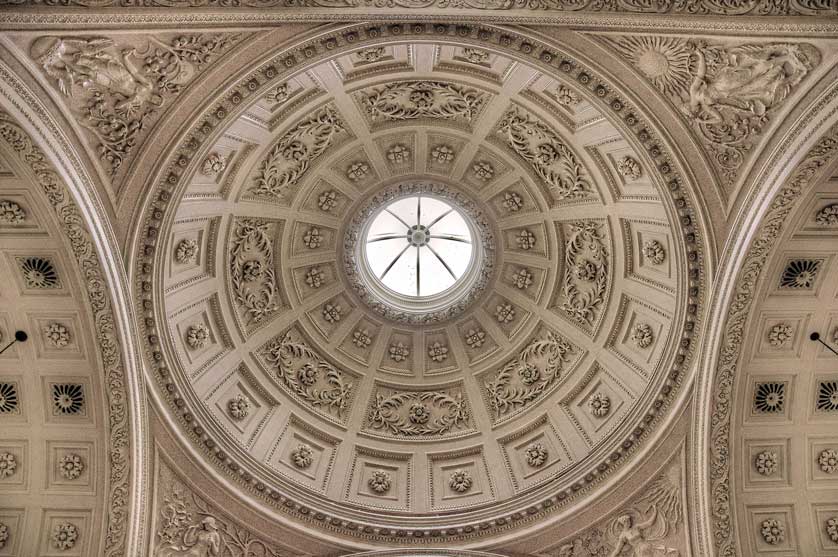
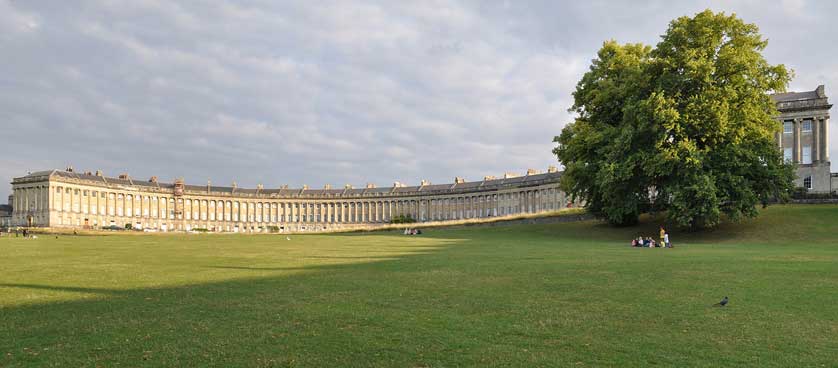
Almost all of Bath is a coherent and attractive harmony of warm, honey-coloured limestone terraces. When it comes to Georgian architecture, it doesn't get any more impressive than the Royal Crescent, an arc of majestic townhouses overlooking the verdant expanse of Royal Victoria Park. Designed by John Wood the Younger (1728–82) and constructed between 1767 and 1775, the houses appear perfectly symmetrical from the outside, but the owners were allowed to customize the interiors to their own whims and fancies.
Alongside the iconic Royal Crescent, Bath also features another impressively rounded landmark - The Circus. Originally known as The King's Circus, this remarkable structure consists of three curved segments of listed townhouses, arranged in a circular shape.
The Circus was designed by John Wood the Elder, an architect also responsible for the nearby Queen Square. Unfortunately John Wood the Elder didn't live to see his plans become reality, as he died just before construction began in 1754. His son, John Wood the Younger, completed the building in 1768.
Wood apparently took the Roman Colosseum as inspiration for his design, although the Circus faces inwards. The grassy area in the centre was once a reservoir that supplied water to the surrounding houses, although it eventually became a garden for residents in the 1800's. And famous residents the Circus has had - Thomas Gainsborough rented a property here from 1759 to 1774, while Nicholas Cage has also graced the Circus with his presence in more recent times.

Bath Historic Centre
The historic centre of Bath is compressed into a small area north and west of a curve in the River Avon, with the Abbey, Roman Baths and Pump Room at the heart.
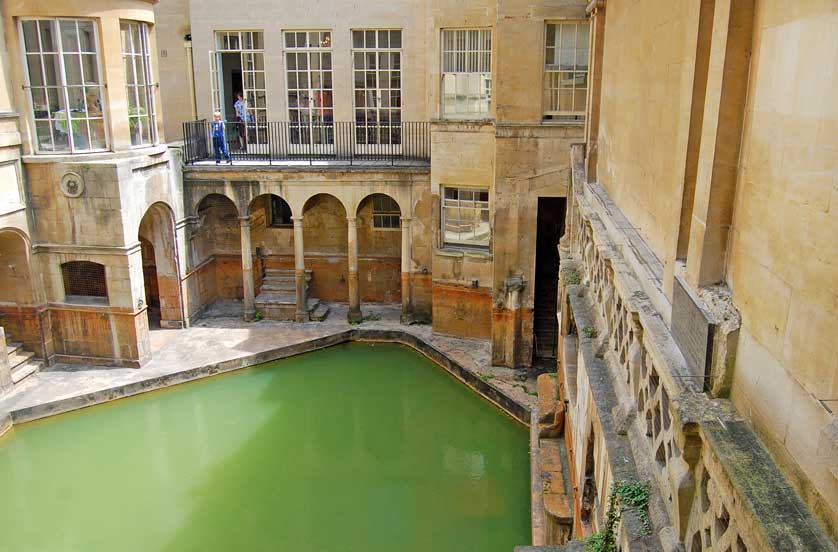
A trip to the Roman Baths - the very feature that made Bath the city it is today - is pretty much mandatory. Almost certainly the finest ancient Roman site to be found anywhere in Britain, it also houses remains of the Temple to Sulis Minerva and lots of Victorian statues. Visitors can also see the ruins of the old bath houses and listen to a great audio tour by famed travel writer Bill Bryson.
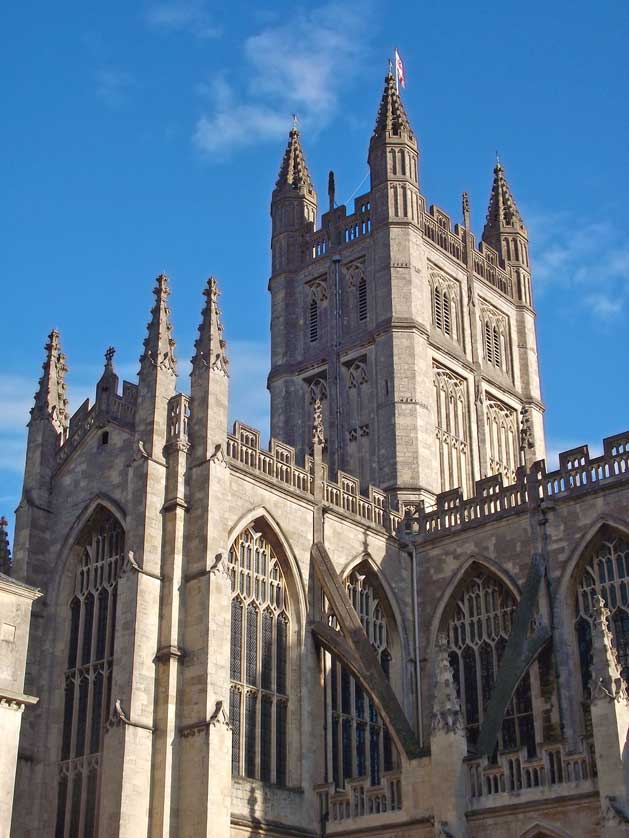
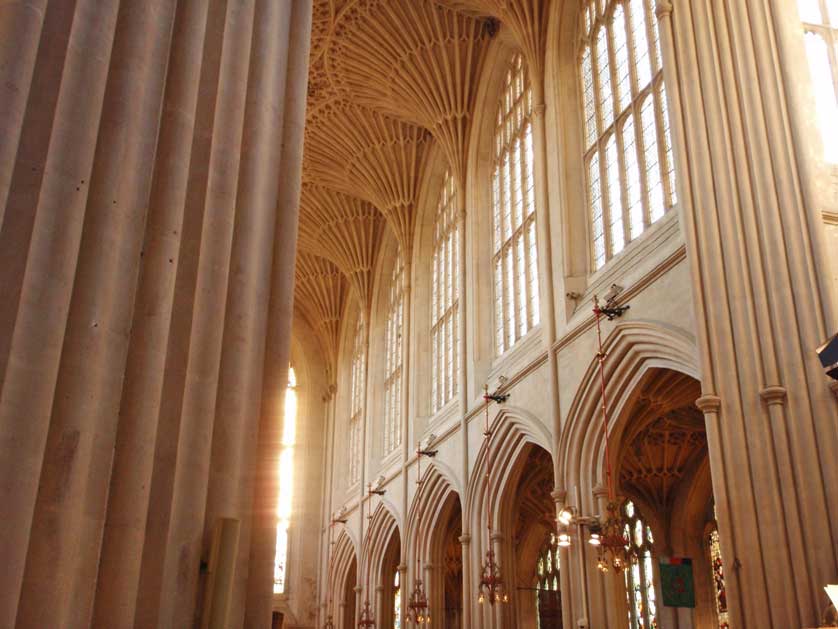
Next to the Baths stands the medieval gem of Bath Abbey, on a site where the first king of England, Edgar, was crowned in AD 973 (in an Anglo-Saxon monastery that preceded the Abbey). In 1973 current British Queen Elizabeth II visited Bath Abbey for a service to mark 1000 years since the coronation of Edgar; look out for the stone commemorating this royal visit in the floor of the Abbey by the lectern.
The Abbey's most striking feature is the west facade, where angels climb up and down stone ladders, commemorating a dream of the founder, Bishop Oliver King. inside lies a huge vaulted Gothic interior and ornate stained-glass windows. Take a Tower Tour for splendid views.
Situated next to main street entrance to the Roman Baths is the Grand Pump Room, where visitors can sample the waters from the warm spring which fills the baths. This beautiful listed building also houses a restaurant where afternoon tea is very popular. Music in the restaurant is provided by the Pump Room Trio - the longest established resident ensemble in Europe - or by a pianist.
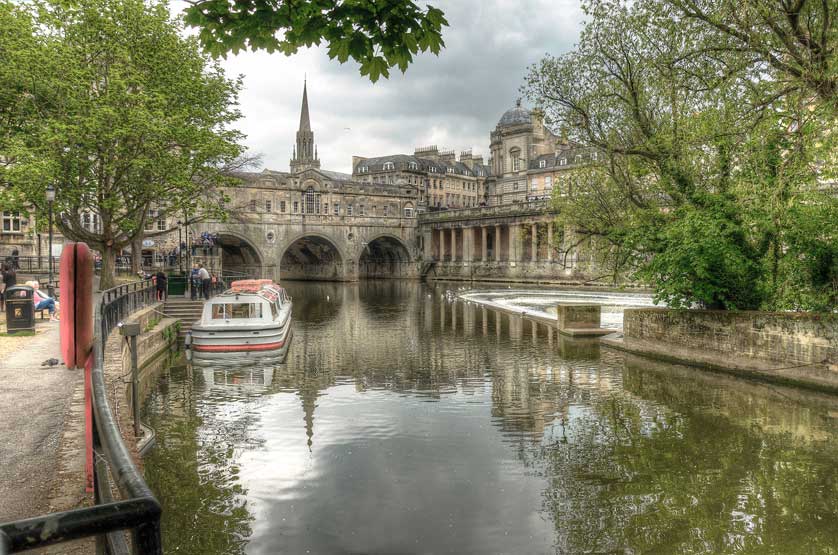
Apart from the curved and panoramic crescents, Bath's other architectural highlights include Pulteney Bridge, where visitors can pause to shop while crossing the River Avon. Close to one end of this beautiful span lies lies the Holburne Museum, housing some beautiful British eighteenth and early nineteenth century paintings, including works by Turner, Gainsborough and Stubbs, and an eclectic collection of antique curios.
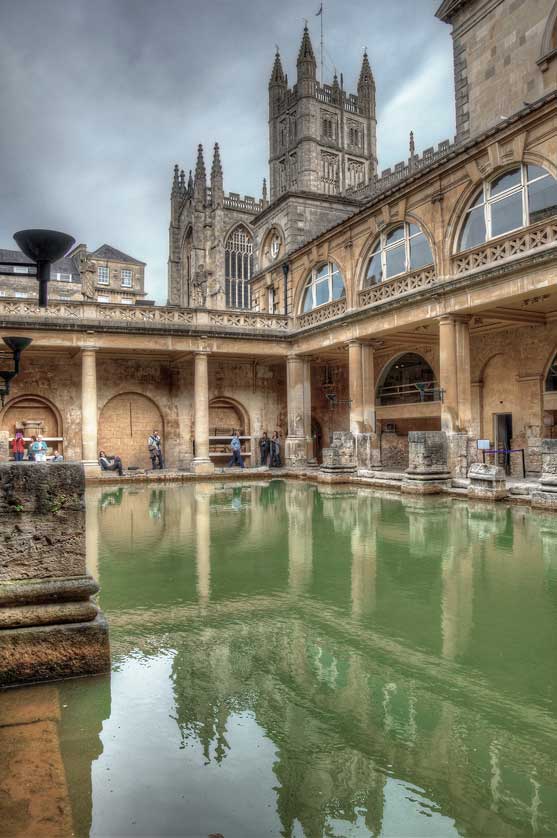
Bath Restaurants & Cuisine
has also had a long tradition of providing hospitality. Almost every type of international cuisine is present in the city, with Chinese, Thai, French, Italian and Indian being particularly well represented, along with some particularly good seafood restaurants. As for fine dining, The Bath Priory wins rave reviews for its Michelin-starred cuisine, but for more informal eating the city's many gastropubs offer great value. A spot of afternoon tea in The Pump Room restaurant or at Sally Lunn's, the oldest house in Bath, makes the perfect way to break up a busy day on one's feet.
But Bath's food scene is not just about restaurants. The 2007 and 2008 Taste of Bath Festivals were held in Victoria Park under the Royal Crescent, and the 2010 Bath Festival of Food and Drink was held in the same location. A regular Farmers Market is held in the former Green Park Station building on Saturdays, and there are occasional Continental Markets in Queen Square.
Many visitors choose to round off their day with one of the big productions at the 200-year-old masterpiece that is Bath's Theatre Royal, or catch something a little more avant garde at its more contemporary sibling, the Ustinov Studio.

Bath Access - Getting To Bath
Bath is located not far off the M4 motorway coming west from London. Bath is also easily accessible via the A4 from Bristol.
Bath's main railway station is Bath Spa on Dorchester Street with rail links to Bristol Temple Meads Station and some services on to Weston-super-Mare and Taunton. Trains from Bath Spa Station connect to London Paddington Station via Swindon, Reading and Chippenham.
South West Trains run a limited service to London Waterloo via Salisbury and Basingstoke from Bath Spa
First Great Western and South West Trains have services to Bradford-on-Avon (15 minutes). First Great Western runs services to Cardiff and Portsmouth Harbour and to Gloucester and Weymouth. Other services run south west via Bristol to Taunton, Exeter St David's Station in Exeter, Dawlish, Teignmouth, Newton Abbot, Torquay and Paignton.
An early morning CrossCountry service runs to Glasgow Central Station in Glasgow, Scotland via Bristol, Birmingham, Sheffield, Leeds, Newcastle and Edinburgh.
There are National Express bus links from Bath to Heathrow Airport from Bath Bus Station. The X39 bus connects Bath with Bristol.
Compare prices and rent a car in Bath

Bath Related
Some recommended places to stay in Bath include the three star Holiday Inn Express Bath, the four star Hilton Bath City Hotel, and the superb, luxury five star The Gainsborough Bath Spa.
Compare and book a hotel in Bath
Maps
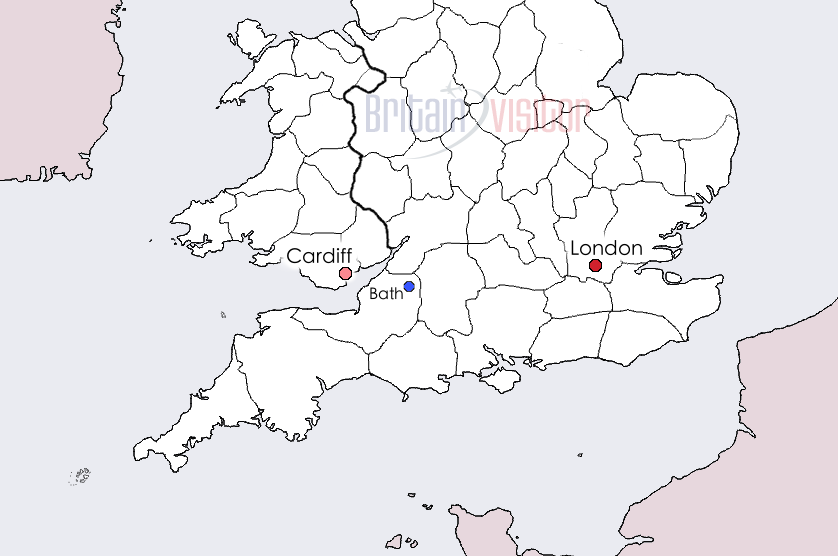
Hotels in the South West of England & Wales
Book Hotels in Bath - Agoda.com
Find Hotels in Bradford on Avon - Booking.com
Search Hotels in Cardiff - Booking.com
Recommended Hotels in Exeter - Agoda.com
Book Hotels in Salisbury - Agoda.com
Hotels in London - Booking.com
Hotels in England - Booking.com
Bath Hop-On Hop-Off Sightseeing Bus (Open Top)
The Hidden Cotswolds and The Making of England Day Tour from Bath