Shetland Islands
Islands on the Edge: Explore the wild wonders and Nordic heritage of Scotland's Shetland Archipelago
Daniel Allen
Situated closer to the Norwegian coast than the Scottish capital Edinburgh, the dramatically beautiful Shetland Islands were ruled by the Vikings for over 500 years, and many locals claim descent from Scandinavian raiders.
From language to archaeology, the archipelago's rich Nordic heritage makes a trip here as exotic as it is exciting.
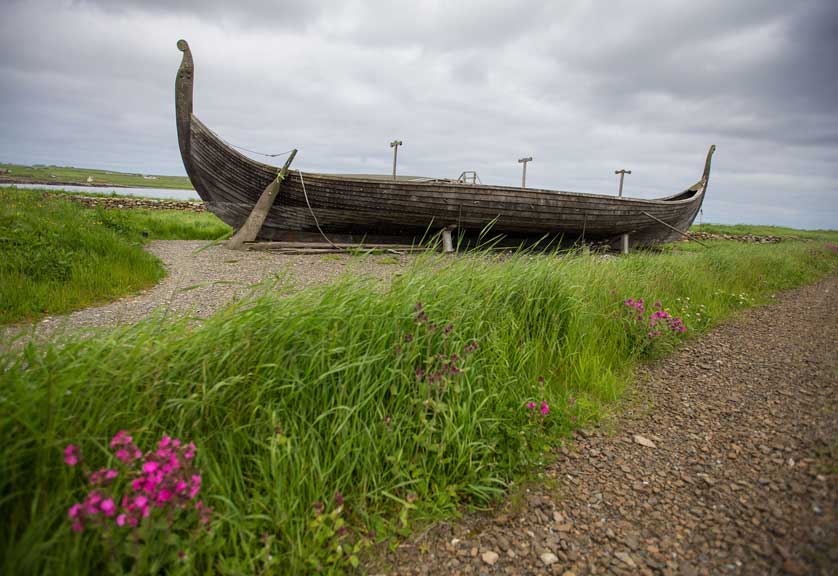
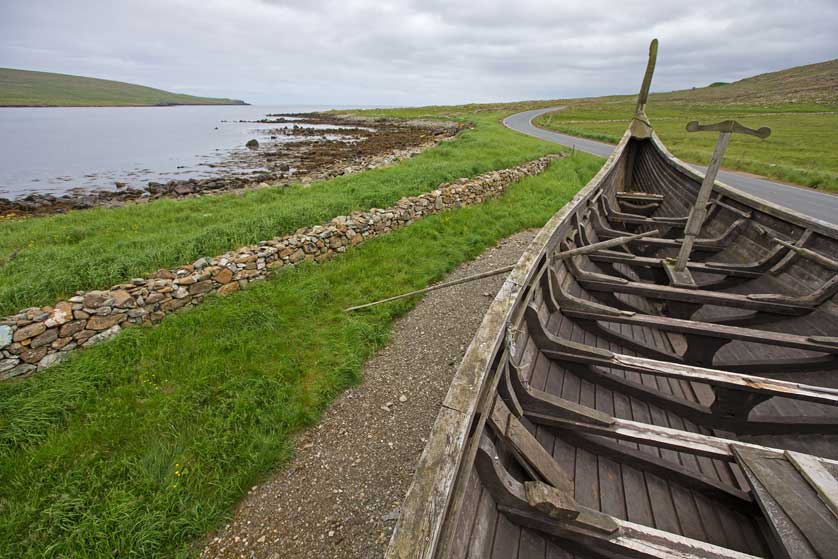
The Vikings
The Vikings ruled Shetland for over five hundred years, from their arrival around 735 CE to the archipelago's handover to the Scots in 1468 CE.
Today their influence is found everywhere, from food and place names to language and local festivals. Shetland's comparative isolation in the North Atlantic has given islanders a strong sense of place and a belief in their own unique cultural identity and traditions.
Music, dance, story-telling, traditional crafts, festivals - all are strong and all play an important role in modern day Shetland life.

Shetland Geography & Weather
The Shetland Archipelago boasts 100 islands - just 15 of them inhabited - while nowhere is more than 5 kilometres from the sea.
With bountiful offshore waters warmed by the Gulf Stream, there are approximately 900 miles of coastline to explore, while the resident population of around 23,000 provide visitors with a genuinely warm welcome.
While Shetland can be visited at all year round, the weather during the winter months can be wet and cold. From May to September there are some good spells of dry, sunny weather, but it's the "simmer dim" - the twilight which lingers through the small hours at this latitude - that makes Shetland summers so memorable.

Lerwick
Shetland's main island - known as "Mainland" - presents a hilly and windswept landscape saturated with green and glittering blue. Brilliant white sand beaches alternate with earth-tone pebbled coves sparkling with sea glass.
Along the perimeter and out to the more northern islands of Unst and Yell, great headlands rear up as if to fight the relentless power of the sea, and in that clash are born towering sea stacks and vertiginous cliffs studded with seabird colonies.
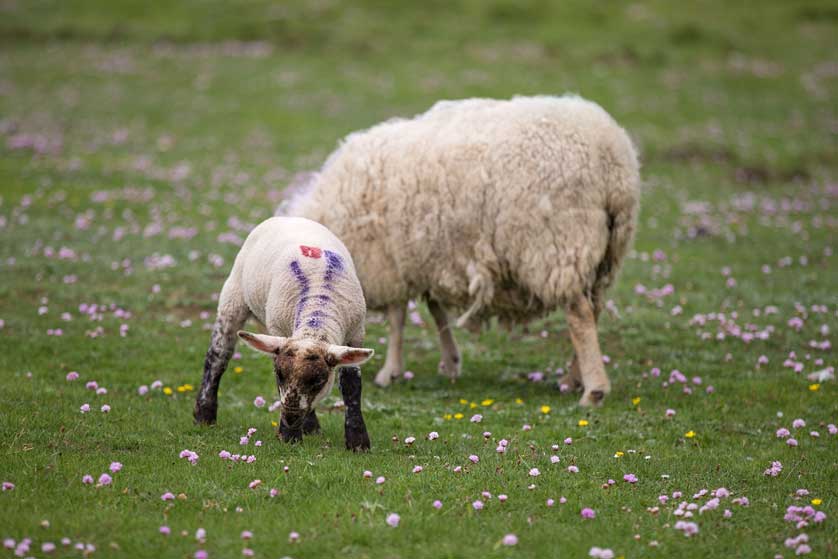
Few trees mar the sculpted shape of the Shetland landscape, its grasses kept short - and therefore intensely verdant - by more than 300,000 sheep. The rolling hills are punctuated only by often dramatic rock formations, and everywhere there are vistas of the moody North Sea.
As the capital of the Shetland Islands, Lerwick is the most northerly town in the United Kingdom.
Located on the east coast of the Shetland Mainland, it dates back to the seventeenth century. Originally founded as a seaport dependent on the herring fishery, the economy of this town is now based around fishing and the North Sea oil industry.
With the greatest range of accommodation, most visitors to Shetland choose to base themselves in Lerwick. On the outskirts of the town, West Hall Bed & Breakfast consistently wins rave reviews. Set in a stunning location, this former Sheriff's house has a long history, with fantastic beach views and delicious breakfasts that include Shetland sausages, smoked haddock and eggs from the hotel's hens.
While the fastest route to Shetland is to fly in to Sumburgh Airport about 30 kilometres to the south, there is also an overnight ferry to Lerwick from Aberdeen. It's definitely worth renting a car on arrival - more than any other place in Scotland you'll need it to get the most out of your exploration.
Shetland Museum and Archives
The best place to start any journey into Shetland's heritage and culture is the Shetland Museum and Archives. Set on waterfront of Lerwick in a restored nineteenth-century dock, the building tells Shetland's story from its geological beginnings to the present day.
More than 3,000 artefacts from both the museum and archives collections are displayed together for the first time. Highlights include boats suspended in mid-air, world-famous textiles and a recreation of a typical eighteenth century house.
The museum supports a network of heritage and cultural sites throughout the isles, offering a real taste of Shetland. This includes local community museums; nature reserves; annual culture and heritage festivals; and some of the best-preserved archaeological sites in Europe.
Jarlshof
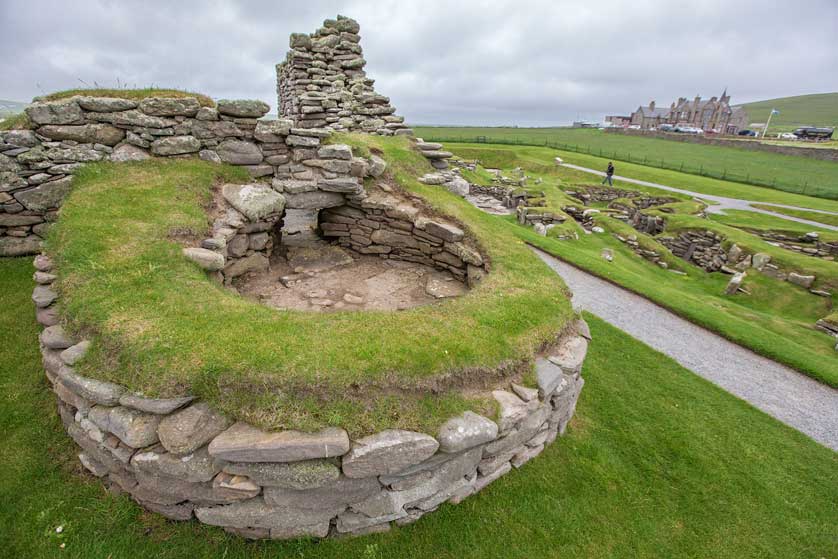
The most famous of these is Jarlshof, near the southern tip of the Shetland Mainland, a multi-period complex whose oldest remains date back to the Bronze Age and the early Iron Age. There was also a strong Viking presence at Jarlshof and some items from this defining period in Shetland's history are in the care of the Shetland Museum.
Officially described as "one of the most remarkable archaeological sites ever excavated in the British Isles", Jarlshof came to light a hundred years ago when violent storms exposed massive stonework under a grassy mound above the sandy beach at the West Voe (fjord) of Sumburgh. There are six main levels, from a Stone Age hut perhaps 4,000 years old, through an Iron Age "broch" (tower) to a sizeable Viking village and medieval farmstead. Various artefacts are on show at the on-site visitor centre.
Mousa Broch
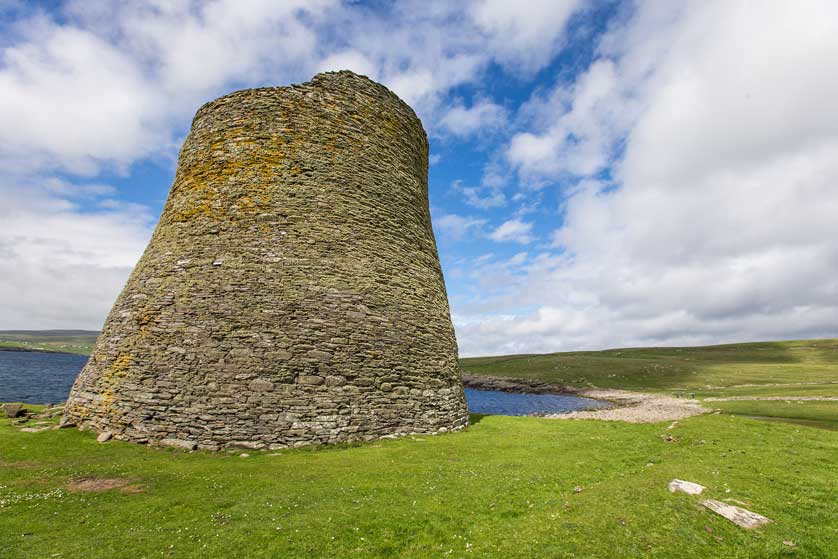
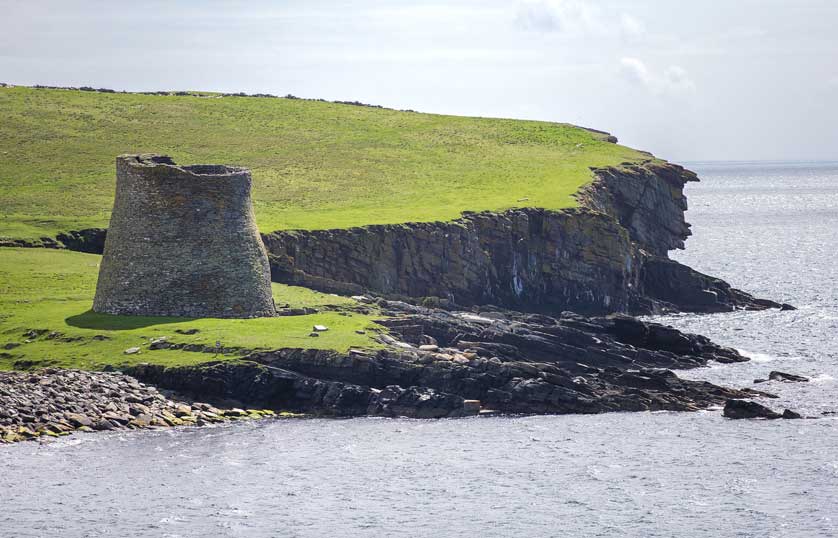
Located on a small island off the east coast of southern Shetland, close to Lerwick, Mousa Broch is another of Shetland's cultural and archaeological highlights. The finest surviving example of a 2000 year old Iron Age tower, Mousa Broch was one of about 120 built throughout the archipelago as times became more troubled.
Mentioned in Shetland's historical chronicles as an eloping lovers' hideout, Mousa Broch is one of the wonders of European archaeology, and is the tallest standing broch left in the world. Mousa can be visited by ferry between mid-April and mid-September, weather permitting, with the short crossing taking about 15 minutes.
Croft House Museum
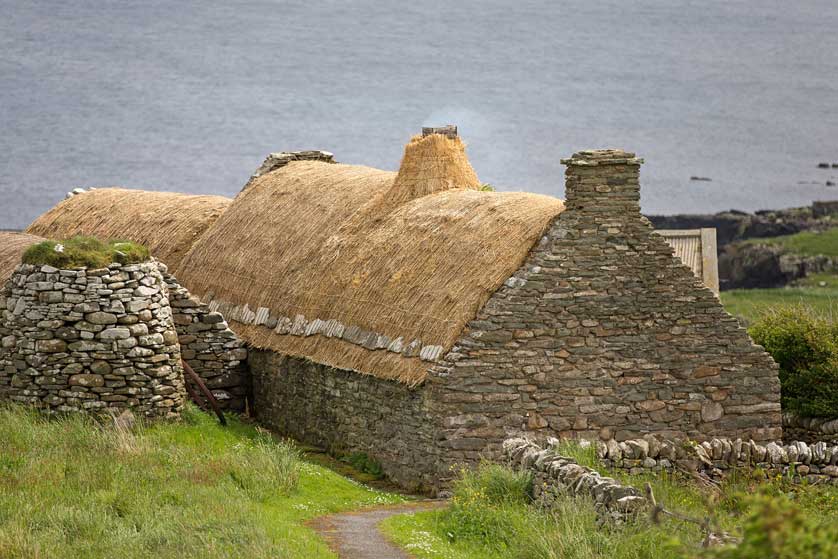
A visit to Mousa Broch can be combined with a trip to see the Croft House Museum, housed in a preserved mid-nineteenth century croft house near the village of Dunrossness. This particular house was lived in right up to the late 1960's. A typical crofting family unit included grandparents, parents and children. The sea, not the land, was the family's main provider - the crofter was a fisherman, seaman or whaler, while his wife and family worked the land in his absence.
Croft houses evolved over many centuries and were extremely well adapted to handle Shetland's temperamental weather conditions. The house was normally split into two rooms: the "ben end" was the bedroom, while the kitchen was at the "but end". The house, barn and the byre were all accessible under one roof.

Scalloway
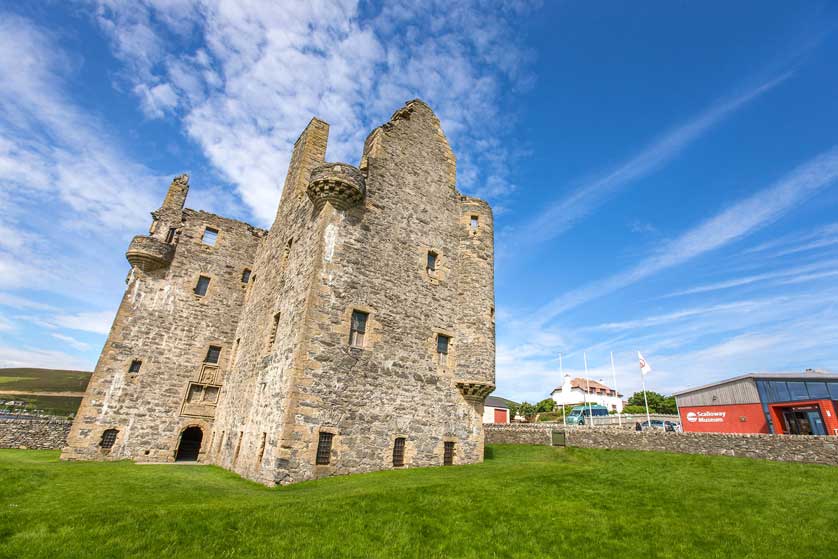
Also a stone's throw from Lerwick is the busy fishing port of Scalloway, which was Shetland's capital in the seventeenth century. This picturesque and surprisingly leafy village is shielded from Atlantic gales by the rugged isles of Trondra and Burra, and its sheltered harbour has long been a place of refuge for ships on the archipelago's wild Atlantic coast.
Overlooking Scalloway Harbour is the Earl Patrick Stewart's Scalloway Castle, built by forced labour in 1599. It was carefully positioned to control the safe anchorage and the fertile farmlands to the north. It was occupied for less than a century and is now roofless, although the stark ruins still dominate the skyline.
Unst
The most northerly island in Scotland, Unst is only 20 kilometres by 8 kilometres, and is home to about 700 people. Reached via a 5-minute ferry ride from Yell, it boasts beaches of white powdery sand, steep cliffs, panoramic views of the ocean, and a wealth of wildlife and flowers.
The iconic Shetland pony also comes from Unst, although they can now be found dotted across the archipelago. These small and sturdy horses are bred on the island and many of them are prize-winners throughout the Shetland Islands. Small ponies have lived on Shetland for at least 2000 years, and archaeological finds dating back to the Bronze Age show they have been in domestic use since that time.
Many visitors to Unst choose to base themselves in the village of Brae in the north of the Mainland, where the Busta House Hotel makes a great place to stay. With parts of the hotel dating back to the sixteenth century, some rooms have four-poster beds, while there are great views over nearby Busta Voe. The excellent restaurant serves up a range of locally sourced food.

Access
Closer to the Arctic Circle than London, the islands of Shetland have been a vital staging post for Vikings, Hanseatic traders, merchant sailors and itinerant fishermen from faraway lands. Yet somehow, this same archipelago remains off the map of British consciousness.
Those who with the adventurous spirit to journey this far, however, will discover an archipelago that remains vivid in the memory long after any visit.
The fastest route to Shetland is to fly in to Sumburgh Airport about 30 kilometres to the south of Lerwick (FlyBe has regular flights from a range of Scottish cities), although there is also an overnight ferry to Lerwick from Aberdeen (www.northlinkferries.co.uk). It's definitely worth renting a car on arrival - more than any other place in Scotland you'll need it to get the most out of your exploration. Both FlyBe and Easyjet fly routes up to Scotland from London airports. The Shetland Islands are 80 km north east of Orkney.
Map

Book Hotels in Edinburgh - Booking.com
Find Hotels in Glasgow - Booking.com
Search Hotels in Orkney - Booking.com
Hotels in The Shetlands - Booking.com
Search & Book Hotels in Scotland - Booking.com
Hotels in Edinburgh - Agoda.com