Britain is old. Its streets carry centuries of stories. And for millions of readers around the world, those streets aren't just history - they're the settings of books they grew up loving. The literary locations in Britain are unlike anything else on earth. They bring fiction to life in ways no museum exhibit ever could.
221B Baker Street: The World's Most Famous Address
London's Baker Street is busy, loud, and thoroughly modern. But one address stops tourists cold. Many learned about Baker Street from Sherlock Holmes. And yes, Sherlock Holmes still regularly tops the most-read lists on FictionMe and a number of other reading services. And how many other FictionMe authors were inspired by this work? No one can count.
The Sherlock Holmes Museum sits at 221B Baker Street-a Victorian townhouse frozen in time, dressed as though the great detective just stepped out for a moment. Over 70,000 visitors come here every year. Inside, you'll find Holmes's pipe, his violin, Dr. Watson's notebooks. It feels authentic. That's the point.
Edinburgh and the Birth of a Wizard
J.K. Rowling wrote the early Harry Potter chapters in Edinburgh cafés, famously at The Elephant House on George IV Bridge. She was a single mother, short on money and heat, writing at tables where the coffee stayed hot longer than her flat did.
The café now draws fans from every corner of the world. Its bathroom walls are covered in handwritten tributes to Harry, Dumbledore, and Rowling herself. Strange, touching, and a little overwhelming.
Platform 9¾ and the Power of Pretend
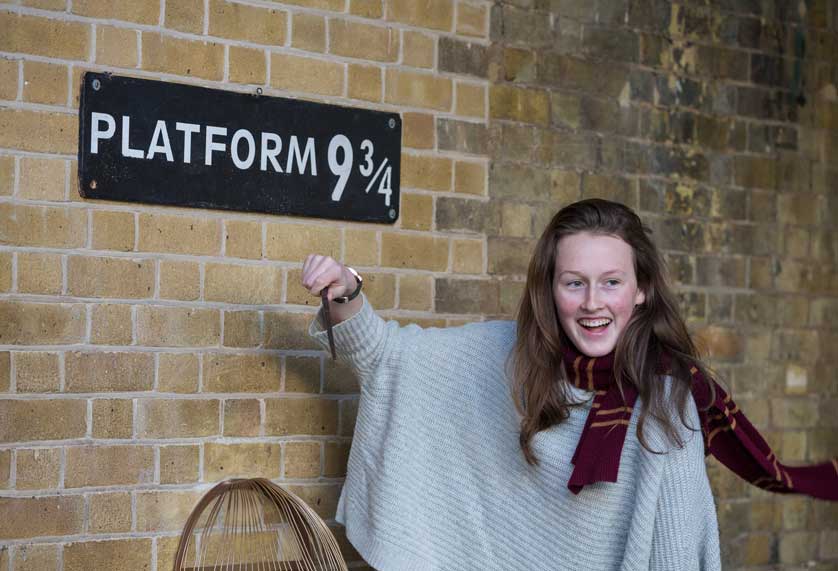
King's Cross Station in London hosts one of the most photographed spots in the city. A trolley, half-disappeared into a brick wall. A sign reading Platform 9¾. A queue of grinning adults and children, scarves on, wands ready.
It sounds silly. It isn't. The literary locations in Britain that bring fiction to life often work precisely because they ask you to believe, just for a second. And most people do.
The Lake District: Beatrix Potter's Real World
Head north, away from city noise. The Lake District is green and quiet and enormous. Beatrix Potter lived here for decades, writing about Peter Rabbit in fields she could see from her window.
Hill Top Farm, near Sawrey, is now a National Trust property. Around 75,000 people visit annually. The vegetable garden where Mr. McGregor chased Peter is still there - small, tidy, and entirely convincing.
Haworth: The Brontës and the Moors
Few literary locations in Britain feel as raw as Haworth. This small Yorkshire village is where Charlotte, Emily, and Anne Brontë grew up, wrote, and mostly died young. If your reading app has at least a few of their books, you should visit. Even if you're not familiar with their work and are nearby, try to get the app on Google Play, read a couple of books, and then visit Haworth. You'll thank them later. The parsonage where they lived is a museum today.
But the real draw is the moor behind it. Walk out past the church and the graveyard and the village falls away fast. Suddenly you understand Wuthering Heights. The wind, the emptiness, the strange beauty - it stops being a setting and becomes the whole point.
Stratford-upon-Avon: Shakespeare's Birthplace
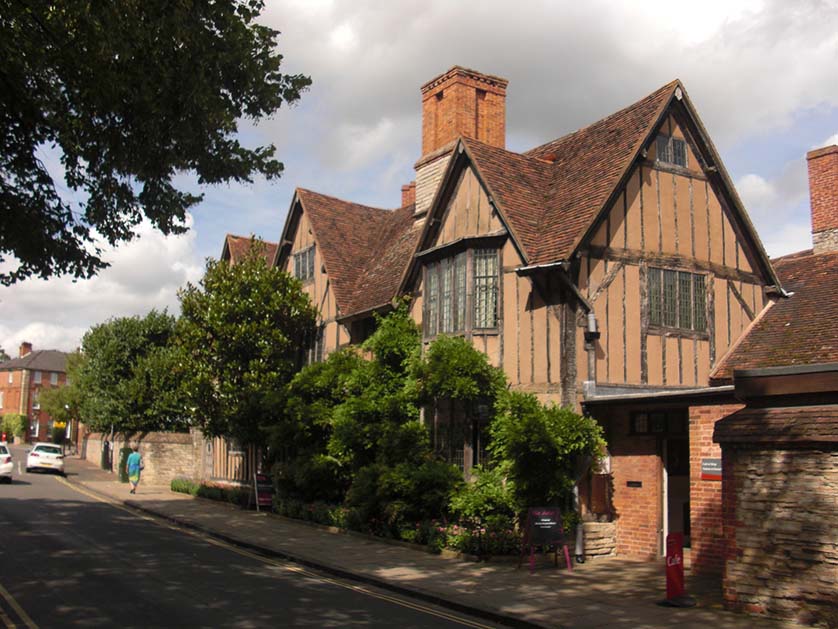
Shakespeare was born here in 1564. That fact alone makes Stratford-upon-Avon magnetic. His birthplace on Henley Street is the most visited literary heritage site in Britain, drawing roughly 700,000 visitors per year.
The house is timber-framed, low-ceilinged, dark inside. You stand in the room where he was supposedly born and feel the weight of what came after. Hamlet. King Lear. The Tempest. All from here.
Oxford: Dreaming Spires and Dark Materials
Oxford is its own category entirely. C.S. Lewis and J.R.R. Tolkien both taught here. Philip Pullman set his His Dark Materials trilogy here, in a version of Oxford that's recognizable and strange at once.
The Bodleian Library, the covered market, the golden stone of the colleges - all of it shows up in fiction again and again. Christ Church's great hall inspired Hogwarts' dining room. Oxford doesn't just inspire writers. It becomes them.
Cornwall and Daphne du Maurier Country
Drive down to Cornwall and the landscape changes completely. Cliffs, sea, mist, isolation. Daphne du Maurier wrote Rebecca here, took her gothic atmosphere straight from Menabilly - the house she rented for years and half-worshipped.
Fowey, the town she loved most, now hosts an annual du Maurier festival. Thousands gather each spring to walk coastlines she described and discuss books she finished decades ago. The coast still looks like the novel. It probably always will.
Why These Places Still Matter
Tourism research consistently shows that literary tourism is one of the fastest-growing segments in British travel. Visitors who come specifically for book-related locations spend, on average, 30% more time in a destination than standard tourists. They read plaques. They walk slowly. They ask questions.
These aren't just landmarks. They're arguments for the power of storytelling - proof that words written in cold rooms by struggling writers can outlast everyone who doubted them, and make strangers cross oceans just to stand somewhere and feel close to a character who never existed.
Britain as One Big Library
The literary locations in Britain that bring fiction to life are spread across every corner of the country. From Yorkshire moorland to London platforms to Scottish cafés. You don't need a single itinerary to follow them. You need a sense of curiosity - and maybe a good book in your bag.
Britain reads. Britain writes. And Britain, better than almost anywhere else, remembers.