London: William Morris Gallery
William Morris Gallery, Walthamstow, London
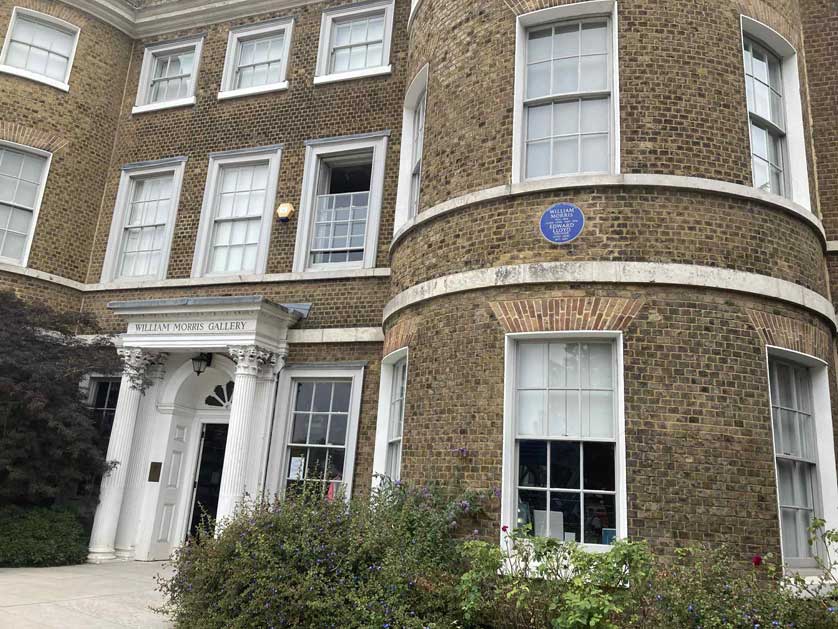

The William Morris Gallery in Walthamstow in east London, is one of the city's hidden gems. Housed in what was once Morris' childhood home, it is dedicated to the life, work, and legacy of William Morris (1834-1896), the famous British designer, poet, and social activist.
The gallery’s collection spans both the Arts and Crafts Movement and the Aesthetic Movement, both of which Morris played a key role in shaping. In 2012, the gallery underwent a major renovation to enhance the visitor experience and further showcase the beauty of Morris’s work.
History
The William Morris Gallery is housed in Water House, a building that holds its own significant historical value. The house was originally built in 1740 and has had a varied history. By the late 19th century, it became the home of William Morris’s family, after they moved there in 1848 when Morris was a young man of just 14. Morris's father, William Morris Sr., a wealthy merchant, rented the house, and young William spent part of his formative years here.
In 1950, Water House was turned into the William Morris Gallery. Since then, it has served as a museum dedicated to showcasing Morris's extensive body of work, from textiles and wallpapers to his socialist ideals, and his love for medieval craftsmanship.
Collection
The gallery is divided into several thematic sections, each providing insight into different aspects of Morris's life and career. Some of the most notable exhibits include:
1. Meet The Man; The Early Years of Morris; Starting Out
The gallery's introductory section focuses on Morris's early life and education, his initial passion for art, and his relationship with key figures such as Edward Burne-Jones, Dante Gabriel Rossetti, and John Ruskin. The Pre-Raphaelite Brotherhood, of which Morris was a founding member, is explored in this section. Visitors can see some of his earliest works, including watercolors, sketches, and early poems. It also touches on his architectural influences and how these informed his design philosophy.
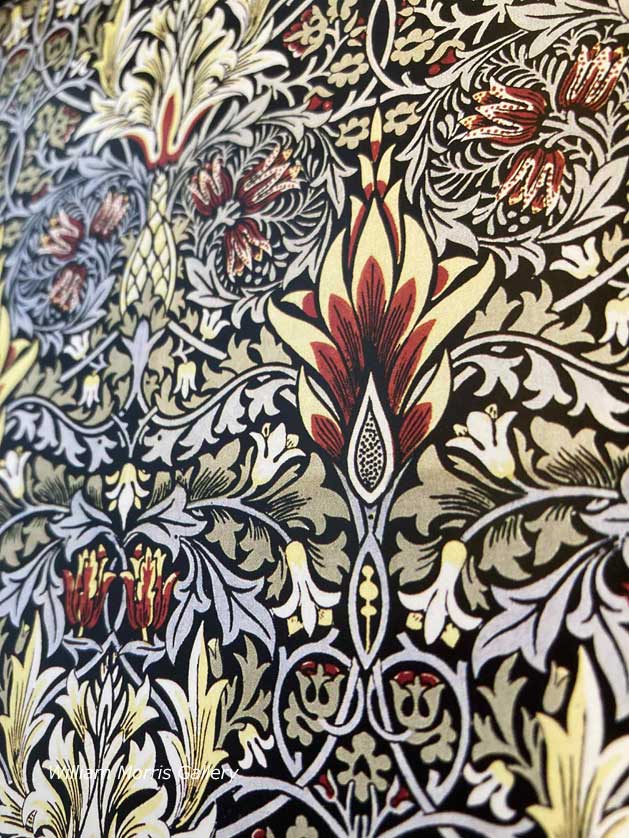
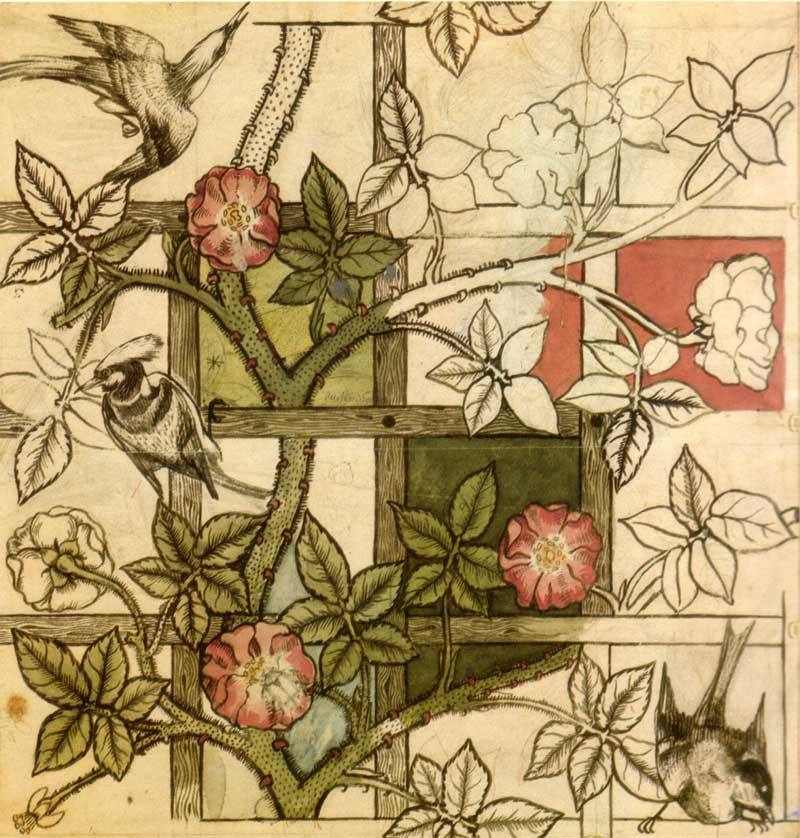
This section of the gallery is one of the highlights. Morris's iconic textile and wallpaper designs are famous for their detailed, intricate patterns, and use of natural motifs. Visitors can view his most well-known designs like: "Strawberry Thief" (1883): A pattern featuring birds stealing strawberries, one of Morris's most popular fabric and wallpaper designs. "Acanthus" (1875): A delicate design inspired by the acanthus plant, a recurring motif in Morris's decorative arts. "Trellis" (1864): A pattern that features climbing plants intertwined with delicate trelliswork.
These designs were groundbreaking in their time, as they combined medieval craftsmanship with modern design ideas, emphasizing the beauty of nature and the handmade.
2. Morris & Co
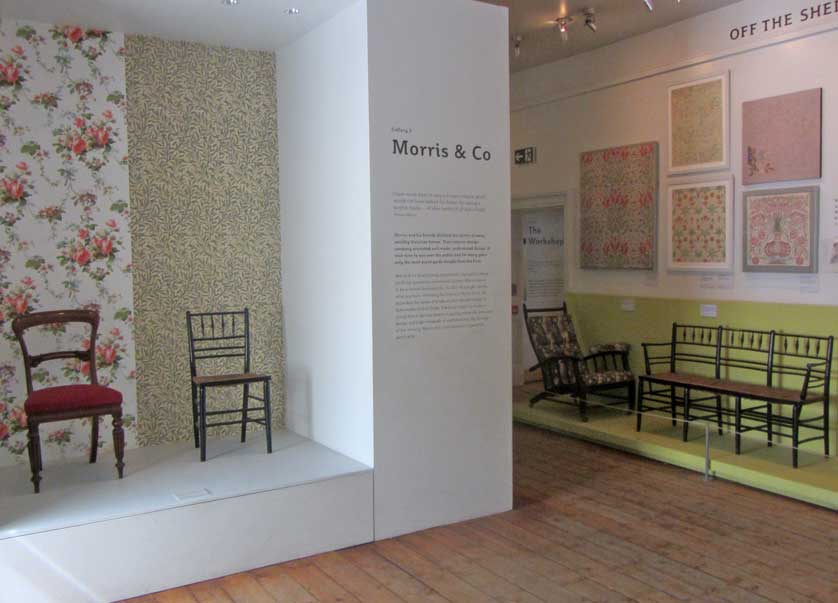
Morris & Co. was the company founded by Morris in 1861, where he and his collaborators created furniture, textiles, wallpapers, and decorative arts. The company's products were popular with the British aristocracy, and its work played a key role in popularizing the Arts and Crafts Movement. This section focuses on the work produced by the company and how it promoted the ideals of beauty, quality, and craftsmanship. Visitors can learn about the techniques Morris used in his workshops, as well as see various original fabric samples, stained glass, and decorative objects produced by the company.
The Workshop; The Shop; The Ideal Book
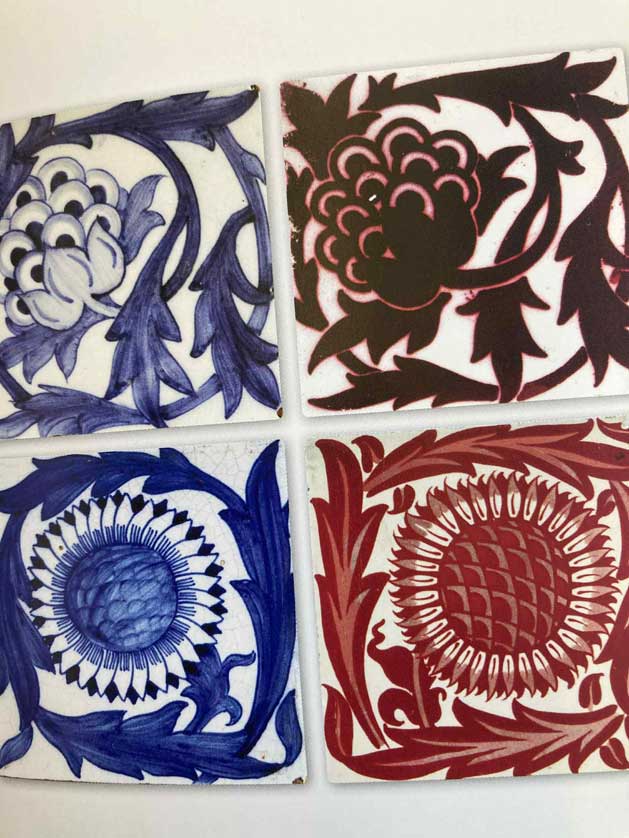
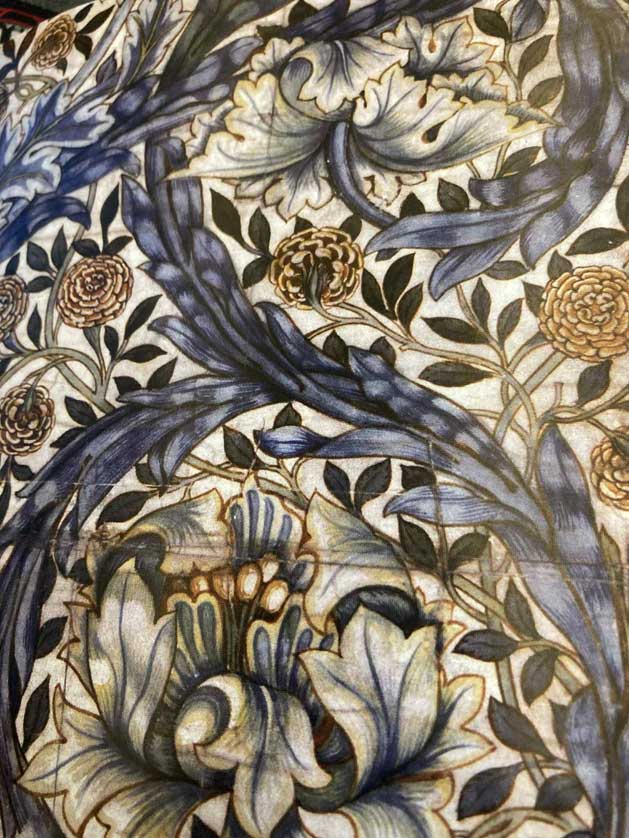
The Worlshop takes its inspiration from the Morris & Co. workshops at Merton Abbey, offering a glimpse into how craftsmen and apprentices created the celebrated printed cottons, carpets, tapestries, and stained glass. The Shop gallery transports the visitor back to 1877 and the Morris & Co Oxford Street shop. There are wall hanging, furniture and paintings from this period on show. The Ideal Book gallery delves into Morris's passion for writing, showcasing many of his poems, including The Earthly Paradise. Younger visitors can also dress up as characters from the Beauty and the Beast story, which is illustrated on a tile panel designed by Morris's close friend, Edward Burne-Jones. In the final decade of his life, Morris established a private press and became a renowned book designer. The gallery displays original designs alongside books from the Kelmscott Press. Visitors can even leaf through a replica of the press's masterpiece, the Kelmscott Chaucer.
Socialism; Fighting for a Cause
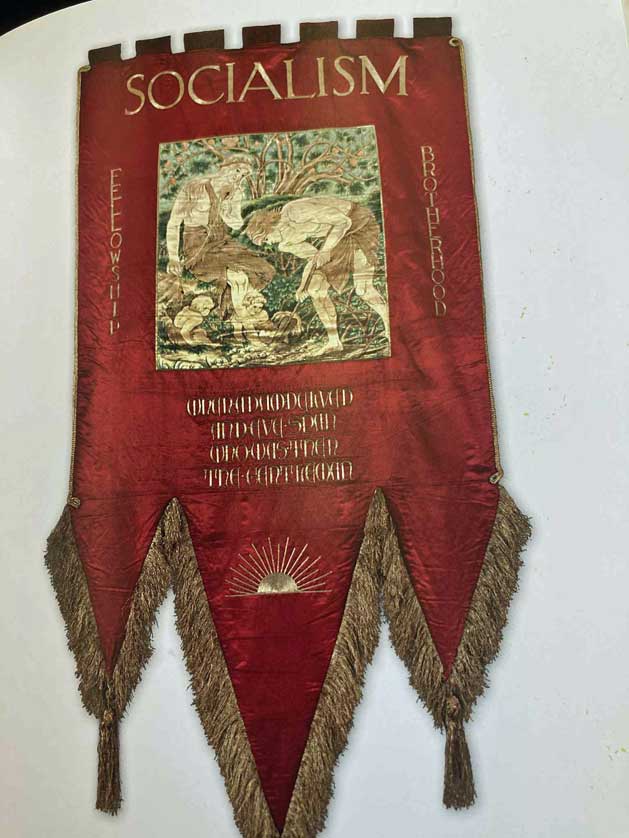
William Morris was also an influential socialist and wrote extensively about political reform. He believed in the importance of art and design for everyone, not just the wealthy, and his political beliefs were often intertwined with his creative work. This section highlights his writings, his commitment to workers' rights, and his efforts to challenge industrial mass production. Visitors can explore some of his key books, including his famous News from Nowhere (1890), a utopian novel that critiques Victorian society and imagines a socialist future. Morris's socialist ideals were just as important as his work as a designer, and this section of the gallery reflects his commitment to creating a world in which art and beauty were accessible to all.
The Frank Brangwyn gallery is dedicated to Morris' apprrentice Frank Brangwyn (1857-1956). In the 1930s, he generously donated a significant portion of his collection to the people of Walthamstow, including many of his own paintings, prints, and decorative artworks. A rotating selection of these pieces is displayed in the gallery for visitors to enjoy.
As well as the permanent collection, the gallery regularly hosts temporary exhibitions that explore different aspects of Morris's work, his influence on design, and how his ideals shaped the arts in both the 19th and 20th centuries. Past exhibitions have explored topics like Morris's influence on modern interior design, the evolution of his artistic techniques, and his global influence on arts and crafts.
The Grounds: Lloyd Park
The park was once the garden and grounds surrounding Morris's childhood home, a place that helped inspire his lifelong love of nature. Just behind the house, a beautiful William Morris-style garden features many of the plants that appear in the artist's designs.
Also nearby is the free Vestry House Museum dedicated to the local history of Waltham Forest. Fellowship Square is also less than 10 minutes on foot from the gallery. Once the Waltham Forest Town Hall, Fellowship Square offers state-of-the-art fountains and music displays.

Further Information & Access - how to get to William Morris Gallery
William Morris Gallery
Lloyd Park, Forest Road
Walthamstow, London E17 4PP
Tel: 0208 496 4390
www: wmgallery.org.uk
Admission is free; hours are Tuesday to Sunday 10 am to 5 pm.
The nearest tube station is Blackhorse Road on the Victoria Line.
From here it is 20 minutes on foot or take a 123 bus. Blackhorse Road Station is also on the Suffragette Line (Gospel Oak to Barking Riverside) of the London Overground.
Also close to William Morris Gallery is the Forest Road / Bell Corner bus stop. The following buses stop here: 34, 97, 215, 275, 357, 675.
The Bell Walthamstow is a good London pub nearby.
Hotels in London
Book Hotels in London - Booking.com
Find Luxury Hotels in London - Booking.com
Budget Hotels in London - Booking.com
Find Hotels in England - Booking.com
London Offers
London Attractions Tickets - Tiqets.com