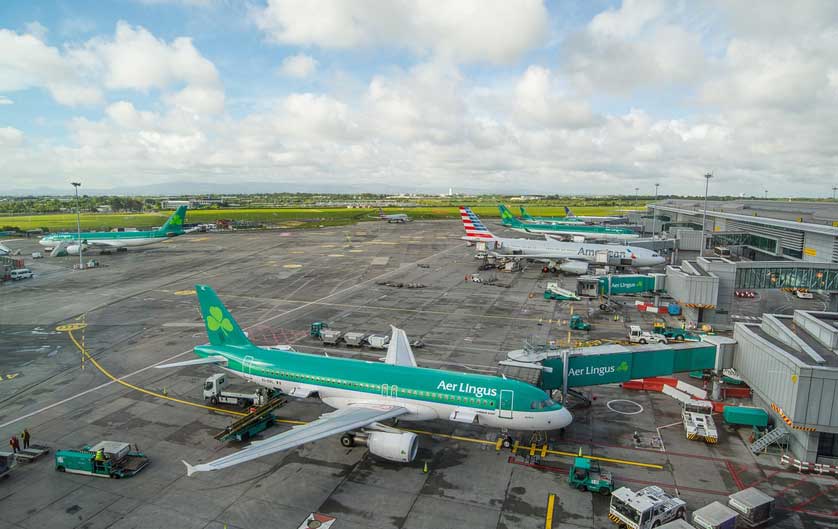
Dublin to Manchester takes about an hour in the air. It is one of the busiest routes in Europe, and for Irish travellers it has always felt closer to a domestic hop than an international trip.
Most of that still holds. The Common Travel Area predates both countries joining the European Union, survived Brexit intact and was reinforced by a bilateral agreement in 2019.
A few things have shifted this year, though, and one of them has been catching people out at the gate.
The Rule That Changed in February
Since 25 February 2026, airlines, ferry operators and rail carriers have been required to run permission to travel checks before boarding. The system is automated, and it looks for a document it recognises.
Irish citizens remain exempt from the Electronic Travel Authorisation and need no visa. What has changed is that the exemption now has to be provable at check in, which in practice means a valid Irish passport.
Dual citizens are the group most affected. Anyone holding Irish citizenship alongside another nationality can no longer obtain an ETA at all, so a foreign passport without a certificate of entitlement will not get you on the plane.
What Travels With You and What Does Not
Your rights do travel. Irish citizens can live, work, study and access healthcare in Britain without applying for anything, a position closer to that of British citizens than to any other nationality.
Your subscriptions and accounts are a different matter, because most digital services are licensed by territory rather than by customer. Streaming catalogues change, some apps behave oddly, and a few services will not open at all.
Gaming accounts follow the same logic. An Irish casino online holds permission to serve customers in Ireland, while Britain runs an entirely separate regime under its own Gambling Commission, so what you can reach depends on where the operator is licensed rather than on where you happen to be standing.
Larger operators hold licences on both sides and carry across without fuss, though smaller ones often do not. Worth checking before you travel rather than at the airport. All of it is 18 plus either way, with account limits and self exclusion available in both jurisdictions.
Money, Roaming and Customs
Sterling is the obvious one. Contactless works everywhere and cash is increasingly rare, so most visitors never handle a note at all.
Mobile roaming is no longer guaranteed. Some Irish networks still include Britain in their bundles and others reintroduced charges after Brexit, so check your plan before you fly rather than after the bill arrives.
Customs allowances now apply in both directions, which surprises people who remember the days of simply walking through. Duty free limits on alcohol and tobacco are worth a glance if you plan to bring anything back.
On the Road
Driving is the easiest transition in Europe. Both countries drive on the left, use the same three pin plugs and speak the same language, so there is no adapter to buy and no side of the road to relearn.
Speed limits are the catch. Ireland posts in kilometres per hour and Britain in miles per hour, and an Irish licence remains valid throughout.
So Is There Much Difference?
Practically nothing has changed about your right to be there. What has changed is the paperwork the carrier wants to see before letting you board.
Bring the passport even for a two day trip, check your roaming, and expect your phone to behave slightly differently. Current guidance on entry requirements is published by the Home Office and updated as the scheme develops.
Everything else is much as it always was, and our travel guide covers where to go once you have landed.