Watts Chapel, Compton, Surrey
Wonderful Watts
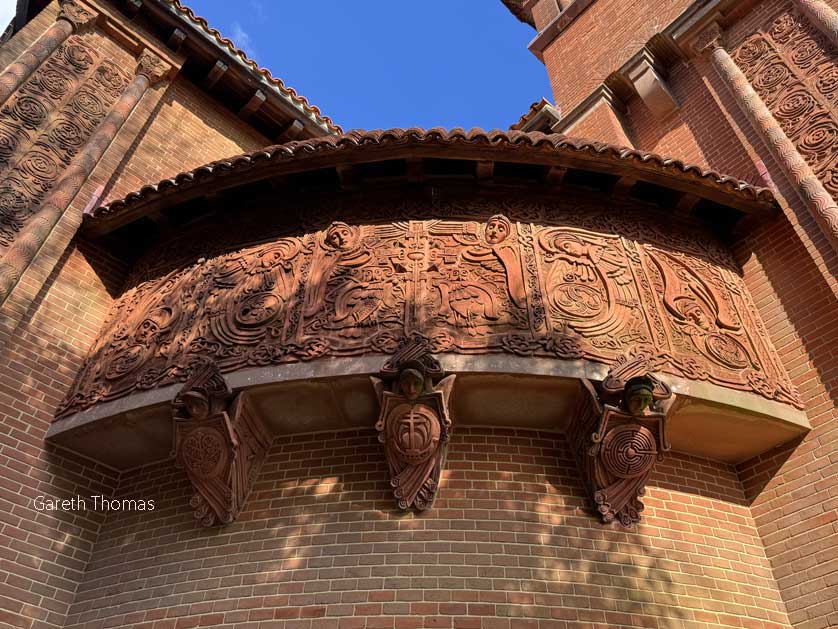
Tucked away in the picturesque village of Compton, Surrey, Watts Chapel (also known as Watts Cemetery Chapel or Mortuary Chapel) is one of England's most extraordinary examples of the Arts and Crafts movement.
Combining imaginative architecture, intricate craftsmanship and profound spiritual symbolism, this remarkable building offers visitors a unique glimpse into the artistic vision of Victorian Britain.
Designed by artist and designer Mary Seton Watts, the chapel is distinguished by its richly decorated terracotta exterior and its atmospheric, elaborately painted interior. More than simply a place of remembrance, it is a celebration of creativity, community and the human spirit.

The Vision of Mary Seton Watts
Mary Seton Watts, the artist and second wife of celebrated Victorian painter George Frederic Watts, conceived and created the chapel between 1895 and 1904.
Her vision was inspired by a desire to create a place of comfort and reflection for the bereaved. Drawing on a wide range of artistic traditions, she developed a distinctive design that blends Celtic Revival, Art Nouveau, Romanesque and Egyptian influences into a harmonious and deeply symbolic whole.
The result is a building unlike almost any other in England, reflecting Mary's belief that art, spirituality and everyday life should be closely connected.

A Chapel Built by the Community
One of the most remarkable aspects of Watts Chapel is the role played by the local community in its creation.
Mary established classes at her home in Compton, teaching local villagers the skills needed to model clay and work with terracotta and gesso. More than 70 local people contributed their time and craftsmanship to the project.
This collaborative approach embodied the ideals of the Arts and Crafts movement, which celebrated handmade work, traditional skills and the dignity of craftsmanship.
The project also helped inspire the founding of the Compton Potters' Arts Guild, leaving a lasting artistic legacy in the village.

The Intricate Terracotta Exterior
The chapel's exterior is its most immediately striking feature. Almost every surface is adorned with elaborate terracotta relief carvings, creating an extraordinary tapestry of patterns, figures and symbols.
The decorative motifs draw on Celtic traditions, ancient beliefs and universal spiritual themes, including hope, liberty, renewal and the continuity of life.
As you approach the building, take time to look closely at the carvings. Their intricate detail rewards careful observation, revealing the extraordinary skill of the local craftspeople who helped bring Mary's vision to life.
The chapel's unusual shape and richly ornamented surfaces make it a particularly fascinating destination for architecture lovers, photographers and anyone interested in decorative arts.

Inside the Chapel: A World of Spiritual Symbolism
Stepping inside Watts Chapel reveals a dramatic contrast with the terracotta exterior. The circular, tent-like interior is decorated with gesso relief work and painted ornamentation, creating an intimate and contemplative atmosphere.
At the centre of the design is a magnificent Tree of Life dome, surrounded by symbolic imagery that includes seraphs, angels of light and darkness, and other spiritual figures.
The colours, patterns and decorative forms combine to create an immersive artistic experience. Rather than relying on conventional religious imagery alone, Mary drew on a broad range of spiritual and mystical traditions to express ideas about life, death, hope and eternity.
The interior is also notable for its experimental approach to wall decoration, making the chapel an important work in the development of Arts and Crafts interior design.
Visitors are encouraged to take their time, allowing the intricate details and symbolic compositions to reveal themselves gradually.
A Place of Remembrance
Despite its artistic significance, Watts Chapel remains a working parish cemetery chapel. Its original purpose as a place of mourning and reflection continues to shape the visitor experience.
Both Mary Seton Watts and George Frederic Watts are buried in the cemetery, adding a deeply personal dimension to the site.
The chapel's thoughtful symbolism and carefully considered design transform it into a place where art and remembrance come together. Its atmosphere is peaceful and reflective, offering visitors an opportunity to pause and appreciate the lives, beliefs and creative achievements associated with it.
Watts Chapel and the Artists' Village
Watts Chapel forms part of the wider Watts Gallery Artists' Village, a cultural destination celebrating the lives and work of Mary and George Frederic Watts.
Other important places to explore include:
- Watts Gallery - Discover the paintings and artistic legacy of George Frederic Watts, one of the leading Victorian artists.
- Limnerslease - Visit the historic home associated with Mary and George Frederic Watts and learn more about their creative lives.
- The surrounding village of Compton - Enjoy the peaceful Surrey setting that inspired the chapel's community-led creation.
Together, these sites offer a richer understanding of the couple's artistic ambitions and their lasting influence on the local area.

Visitor Information and Access
Down Lane
Compton
Guildford GU3 1DN
Tel: 01483 810235
www: wattsgallery.org.uk
Hours: Open daily from 10 am to 5 pm. Closed Christmas Eve, Christmas Day and Boxing Day.
The number 46 bus runs directly from Guildford's Friary Bus Station (Stand 5) to Watts Gallery in Compton. Services operate hourly between 9 am and 6 pm, Monday to Saturday, with a journey time of approximately 10 minutes.
Guildford, Farncombe and Godalming railway stations are all within easy reach of Watts Gallery. From the station, you can continue by taxi or on foot, or take a direct bus from Guildford town centre.
Take advantage of the National Rail 2-for-1 admission offer by presenting two valid train tickets and the relevant voucher on arrival.

Woking Hotels
Nearby Woking offers some good places to stay in the area. The new 100 metre-high Hilton opened in 2021, to add to the existing large hotels in the centre - DoubleTree by Hilton, Premier Inn and Travelodge.
Addison House and the Woking Hotel are two smaller central options and Gorse Hill is an elegant Edwardian alternative, as is the Talbot Inn in Ripley, a coaching inn with 500 years of history.
There is a good selection of serviced apartments for staying in too.
See here for a listing of accommodation in Woking to suit all budgets.
Hotels in London
Book Hotels in London - Booking.com
Find Luxury Hotels in London - Booking.com
Budget Hotels in London - Booking.com
Find Hotels in England - Booking.com
London Offers
London Attractions Tickets - Tiqets.com