Portraits & Paintings at Hardwick Hall, Derbyshire

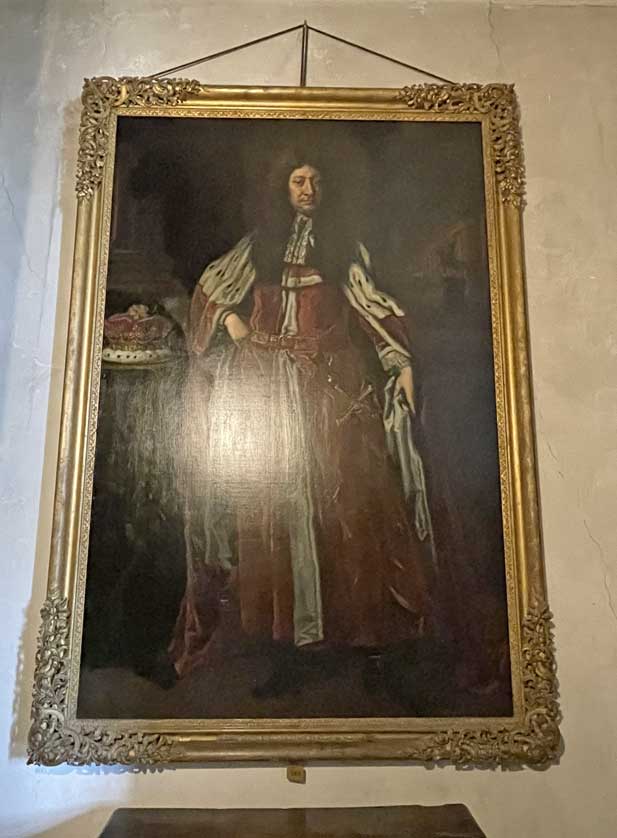
Hardwick Hall in Derbyshire is home to over 200 paintings, mostly portraits, making it one of the oldest collections of paintings in Britain still in situ, other than parts of the Royal Collection.
The portrait above shows Queen Elizabeth I wearing a dress decorated with sea monsters and is attributed to Nicholas Hilliard, more famous for his miniatures of Elizabeth and her court. The painting may have been commissioned by Bess of Hardwick to decorate her house and affirm her allegiance to the queen.

There are several portraits of Elizabeth of Hardwick herself in the house as well as paintings that make reference to her.
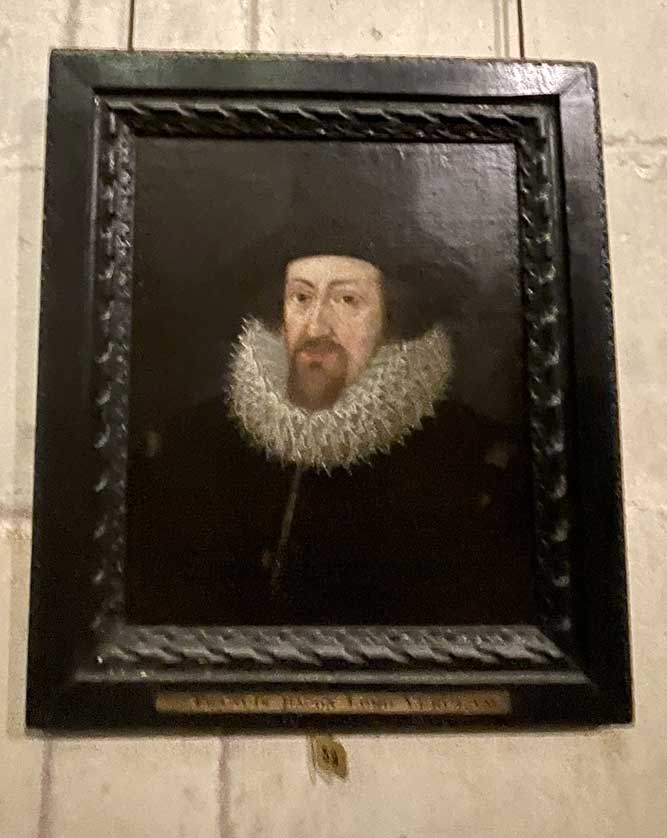
Legal advisor to Queen Elizabeth I in later life Sir Francis Bacon served as Attorney-General in 1613, was made Lord Keeper of the Great Seal in 1617 and Lord Chancellor in 1618.
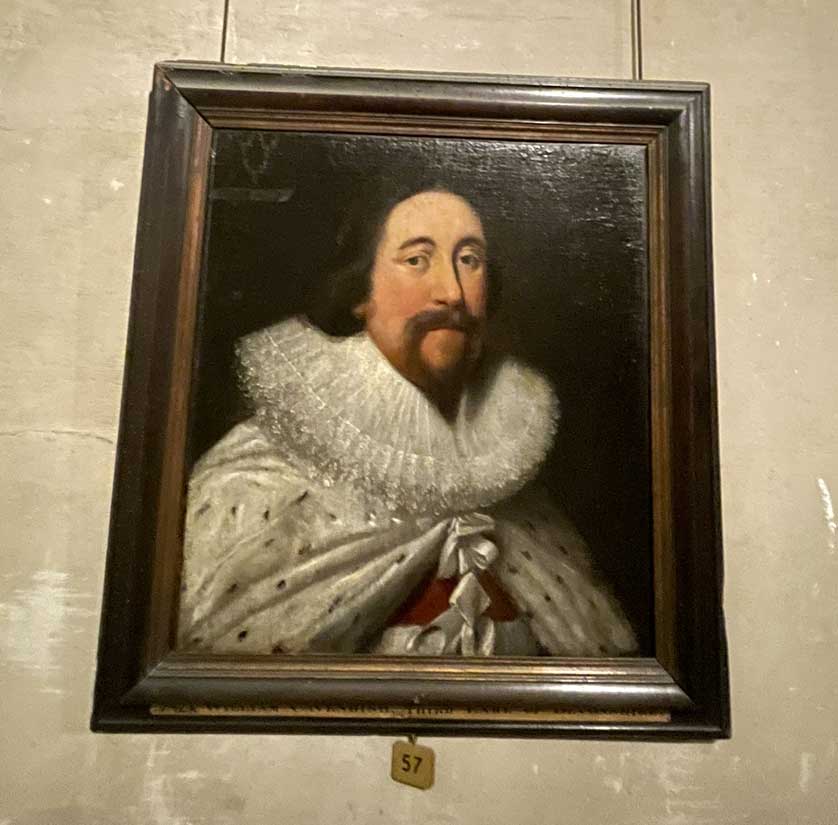
William Cavendish (1590-1628) was the son of William Cavendish, 1st Earl of Devonshire, the second son of Sir William Cavendish and Bess of Hardwick. MP for Derbyshire, he later sat in the House of Lords. He supposedly died of over-indulgence at the young age of 35.
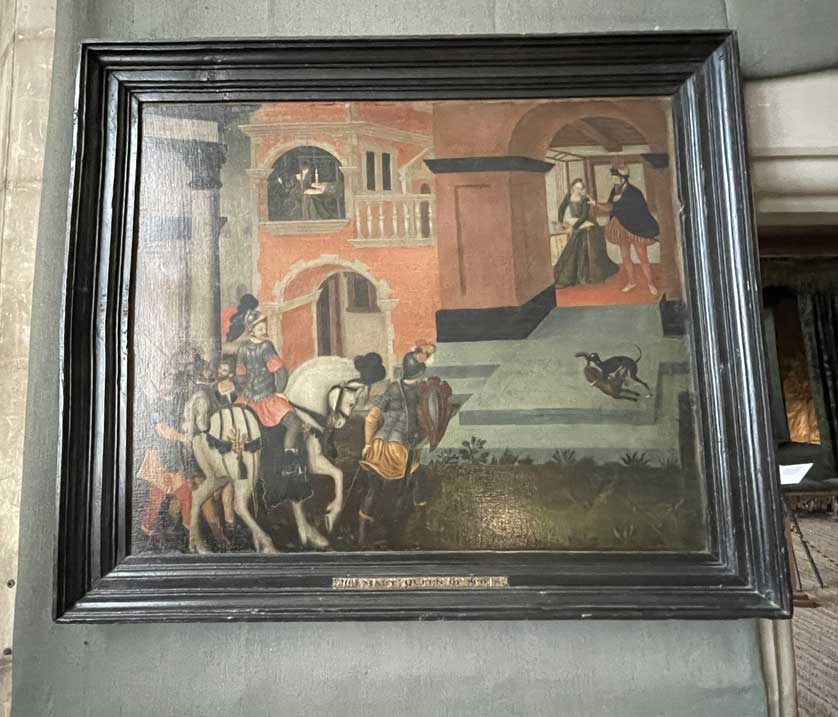
The painting above makes reference to Bess of Hardwick as the virtuous wife to the frequently absent Earl of Shrewsbury working diligently at her embroideries. The maintenance of Mary Queen of Scots under house arrest her husband the Earl of Shrewsbury placed a strain on and eventually led to the breakdown of their marriage. Bess also named her youngest daughter with Sir William Cavendish, Lucretia.


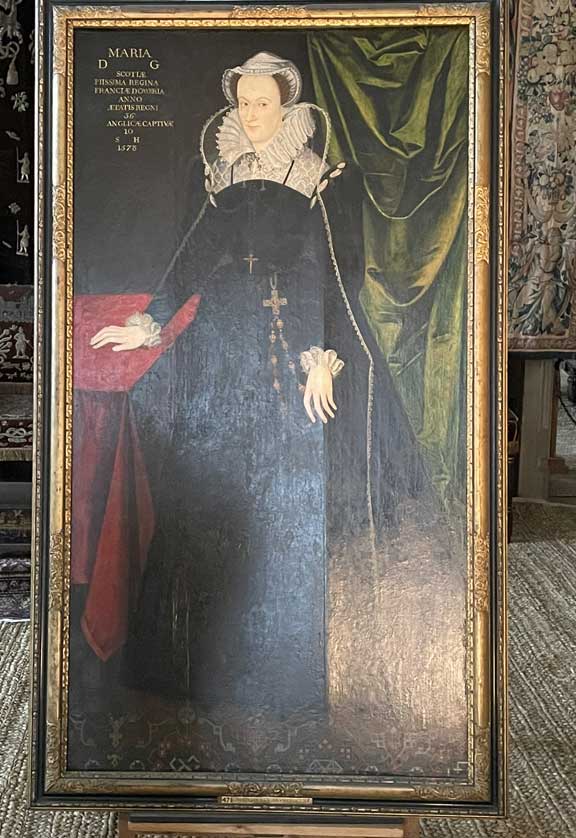
Bess was with Mary Queen of Scots at Chatsworth House during which time they worked on the Oxburgh Hangings together. Mary Queen of Scots did not spend any time at Hardwick Hall as the house was not complete when Mary was executed in 1587. However, a 'myth' prevails that she was and there is even a 'Mary Queen of Scots bed' in the house, though it dates from the 19th century.
Mary, Queen of Scots, faced imprisonment and eventual execution in England due to her complex political and dynastic significance. After being deposed in Scotland in 1567 and seeking refuge in England in 1568, Mary became a prisoner of her cousin, Queen Elizabeth I, who viewed her as a legitimate threat to the English throne.
Mary's Catholic faith made her a focal point for plots by English Catholics and foreign powers to overthrow Elizabeth and restore Catholicism to England. Over the course of nearly 19 years of imprisonment, Mary was implicated in several conspiracies, including the Babington Plot of 1586, which sought to assassinate Elizabeth and place Mary on the throne.
This ultimately led to her trial and execution for treason in 1587 at Fotheringhay Castle in Northamptonshire. Her death, carried out by beheading, was a significant moment in the struggle between Protestant and Catholic forces in 16th-century Europe, cementing Elizabeth's position and furthering the decline of Catholic influence in England.
Images of Britain: Portraits & Paintings at Hardwick Hall, Derbyshire
Hotels in the UK
Book Hotels in England - Booking.com
Find Accommodation in London - Booking.com
Search Hotels in Scotland - Booking.com
Hotels in Northern Ireland - Booking.com