British Stately Homes: Hardwick Hall
Hardwick Hall, Derbyshire
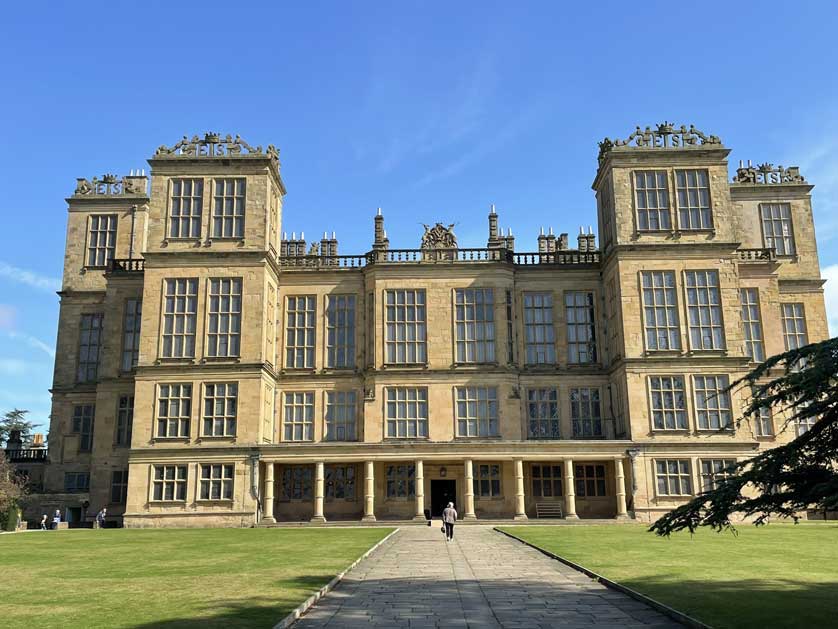
Hardwick Hall was built in the 1590's by Bess of Hardwick (1527-1608), the Countess of Shrewsbury, one of the Elizabethan period's wealthiest and most powerful women.
Bess of Hardwick began her Elizabethan pile in her early sixties and the house, with its huge area of window space, has survived the passing of time remarkably well.
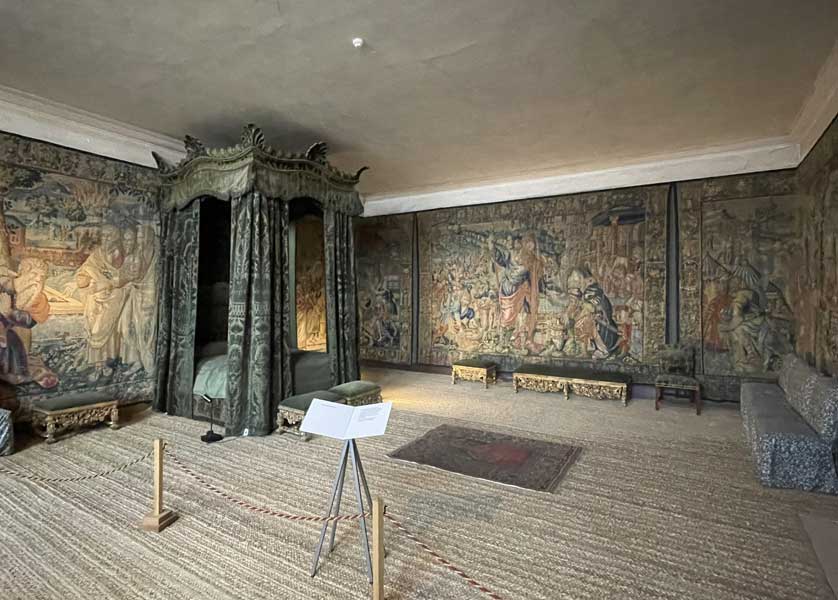
The superb Elizabethan stately home or prodigy house looks out over the verdant Derbyshire countryside while inside is a treasure trove of Tudor Period furniture, plaster work, chimney pieces, paintings and tapestries.

Bess of Hardwick
Bess of Hardwick, born Elizabeth Hardwick in around 1521, was one of the most influential and wealthy women in Elizabethan England. She rose from relatively modest beginnings to become a prominent figure at court, largely through a series of strategic marriages.
Her first marriage at the age of 16 to Robert Barlow (or Barley) brought her limited wealth, but her subsequent marriages to twice-widowed Sir William Cavendish, Sir William St. Loe (Captain of the Guard to Queen Elizabeth I), and George Talbot, the wealthy and powerful 6th Earl of Shrewsbury, significantly elevated her social standing and financial power.
Each marriage augmented her wealth and influence, allowing her to amass vast estates and properties, including the construction of Hardwick Hall, a symbol of her architectural ambition and social status. Bess was not only a savvy estate manager but also a patron of the arts, and her legacy is closely tied to her ability to navigate and thrive within the male-dominated world of Tudor politics and society.
Beyond her financial and architectural achievements, Bess of Hardwick was deeply involved in the political and social affairs of her time. Her marriage to the Earl of Shrewsbury placed her at the center of court intrigues, most notably as the custodian of Mary, Queen of Scots, during her long captivity in England. Bess was together with Mary for prolonged periods in 1569, 1570, and 1571 at Chatsworth House where the pair worked on the needlework Oxburgh Hangings together.
This role as minder of Mary put significant strain on her marriage to the Earl of Shrewsbury (George Talbot) and further entangled her in the dangerous politics of the Tudor court. Despite these challenges, Bess maintained her influence, leveraging her connections to secure advantageous marriages for her children and solidify the power of the Cavendish family, which would go on to become the Dukes of Devonshire.
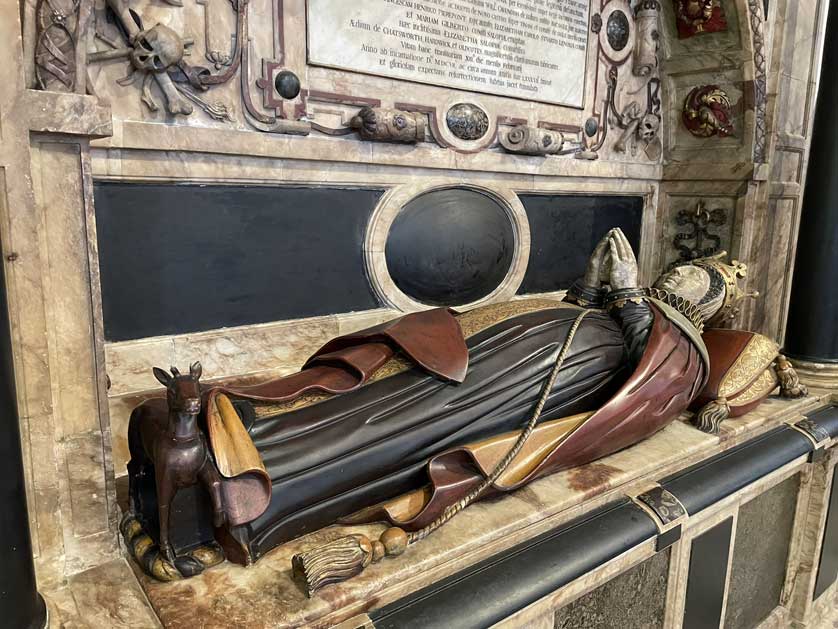
A tomb effigy of Bess of Hardwick lies in Derby Cathedral in Derby and below it a crypt containing the remains of members of the aristocratic Cavendish family.
In the alabaster effigy Bess is depicted in a coronet and robes with hands clasped in prayer. Above her is a Latin inscription with details of her life, husbands and numerous building projects including Chatsworth House and Hardwick Hall.
History of Hardwick Hall
Following the breakdown of Bess' 4th marriage to the megarich Earl of Shrewbury, she began to make plans to vacate their mansion at Chatsworth House which she had built in 1549.
Bess fled Chatsworth in 1584 and returned to her ancestral lands at Hardwick. here she first built Hardwick Old Hall in Italianate style on the site of her father's medieval manor house.
Before the Old Hall was even complete, Bess began the New Hall, employing the architect, Robert Smythson for the job. Smythson designed a number of manor houses during the period including Wollaton Hall, Burton Agnes Hall and Longleat House in Wiltshire.
The two buildings were meant to complement each other but the Old Hall is now an empty shell open to the elements.
Known as a 'prodigy house' Hardwick was intended to showcase Bess' wealth and status. Her initials 'ES' appear in openwork on the towers of the building.
What to See at Hardwick Hall
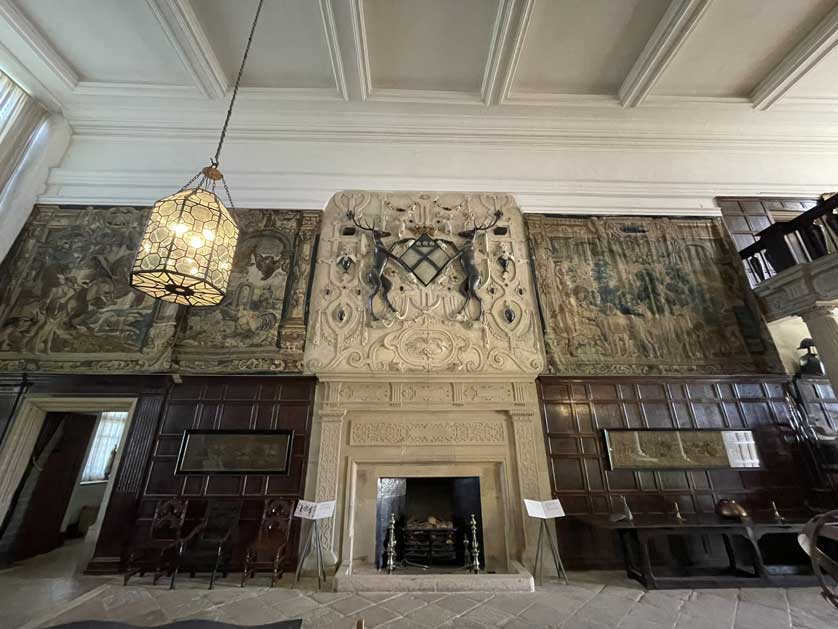
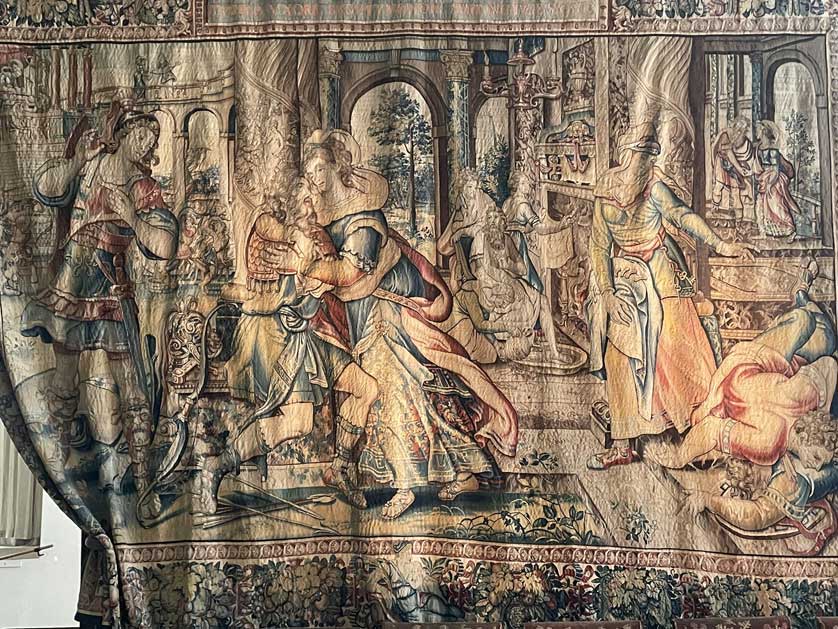
Highlights of Hardwick Hall include the Gideon Tapestries, a very large collection of paintings and some historically important pieces of furniture.
The Gideon Tapestries are a set of 13 tapestries that line the Long Gallery at Hardwick Hall. They tell the biblical story of Gideon, a judge and military leader of Israel, and his victory over the Midianites. The huge Flemish tapestries, 6 meters in height and more than 70 meters in length, have been completely restored following a 24-year project by the National Trust.

The property is also home to over 200 paintings, mostly portraits, making it one of the oldest collections of paintings in Britain still in situ, other than parts of the Royal Collection. There are several portraits of Elizabeth of Hardwick herself in the house as well as paintings that make reference to her.


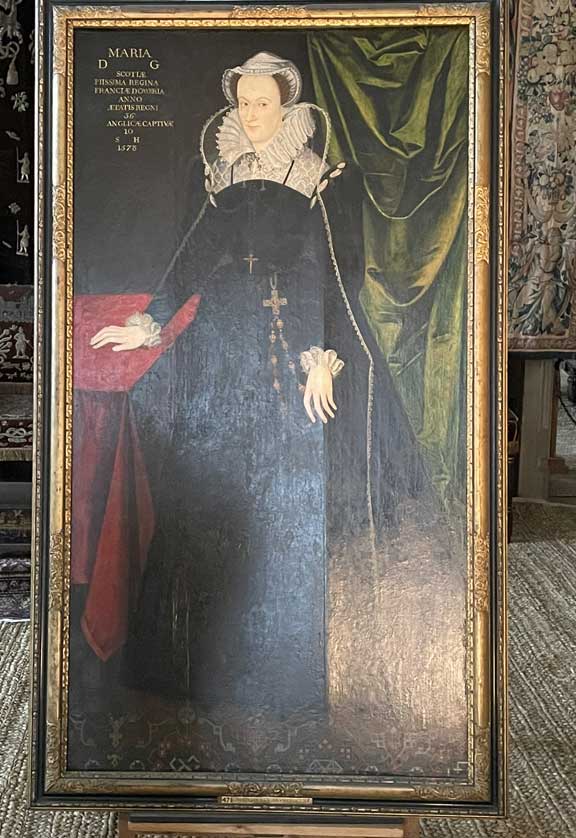
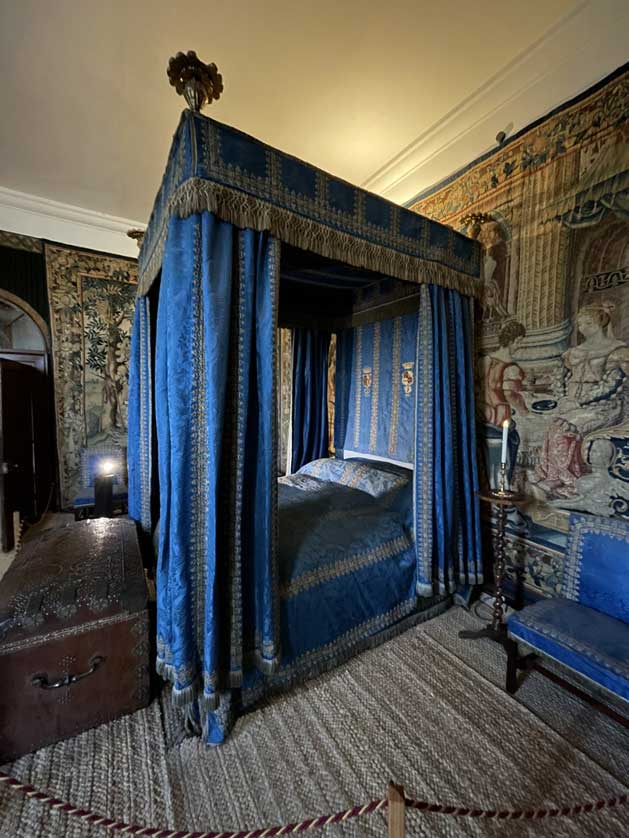
There are also portraits of other important figures of the age including Elizabeth I, Francis Bacon and Mary Queen of Scots. Bess was with Mary Queen of Scots at Chatsworth House during which time they worked on the Oxburgh Hangings together. Mary Queen of Scots did not spend any time at Hardwick Hall as the house was not complete when Mary was executed in 1587. However, a 'myth' prevails that she was and there is even a 'Mary Queen of Scots bed' in the house, though it dates from the 19th century.
The Sea-Dog Table is a piece of furniture of historical significance at Hardwick Hall. It dates from around 1570 and was made in Paris for Bess of Hardwick and George Talbot, (6th Earl of Shrewsbury). The table was originally displayed at the couple's other stately home, Chatsworth House, until Bess and Talbot's marriage broke down, and Bess moved the piece to Hardwick Hall.

Made from walnut, tulipwood, fruitwood with marble inlay, the legs of the table are four sea-dogs, mythical beasts with a dog's head, wings and dolphin tails. It dismantles into 17 pieces and could thus be easily placed in any of the vast manor house's rooms. The sea dogs are also a reference to the English privateers and adventurers of the age - Francis Drake, John Hawkins and Walter Raleigh.
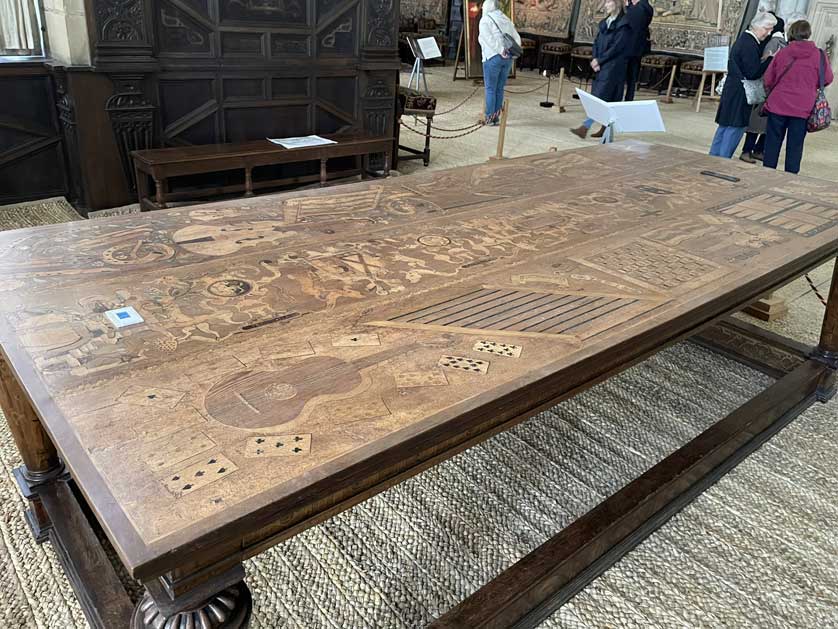
The Aeglentyne (Eglantine) Table is one of the rarest surviving pieces of furniture in England. It most likely dates from 1568 and was made in London to commemorate Bess of Hardwick's fourth marriage to George Talbot, 6th Earl of Shrewsbury and the marriages of their children. The table in the High Great Chamber is made of a variety of woods - ash, deal, fruitwoods, limewood, and walnut. It depicts various Elizabethan musical instruments as well as games such as backgammon and playing cards in mostly actual size. It is 90 cm (35 inches) tall, 302 cm (119 inches) long and 129 cm (51 inches) wide. The name of the table comes from the eglantine rose (sweet briar rose) part of the Hardwick coat of arms.
Access - Getting to Hardwick Hall
The house is situated on a slight hill between Chesterfield and Mansfield.
Hardwick Hall (nationaltrust.org.uk)
Doe Lea, Derbyshire, S44 5QJ
Tel: 0124 68504
Opening times vary according to the season. Consult the website above for full details.
Admission For House and Garden
Adults 19 GBP, Child 9.50 GBP
National Trust members visit and park for free.
Access
Without a car the house is somewhat difficult to get to by public transport.
The nearest station to Hardwick Hall is Chesterfield which has rail connections to London St Pancras. There are also trains to Derby Station, Sheffield Station, Leicester, Nottingham, Manchester Piccadilly in Manchester and Leeds.
From Chesterfield Station take a taxi or catch the Pronto bus from Chesterfield coach station.
By car the house is 8 miles southeast of Chesterfield via the A6175. Leave the M1 at exit 29, and follow the brown signs.
Nearby
Other places to see within easy reach of Hardwick by car include Bakewell (10 minutes), Matlock, the Hope Valley, Peveril Castle, Pavilion Gardens in Buxton (25 minutes), Haddon Hall, Castleton, Eyam Hall, Eyam Stocks and the outdoor sports resort of Hathersage.
Gallery
Hotels in the UK
Book Hotels in England - Booking.com
Find Accommodation in London - Booking.com
Search Hotels in Scotland - Booking.com
Hotels in Northern Ireland - Booking.com