The Iconic Thames Bridges of Central London
London Bridges
Jake Davies

Since London's founding by the Romans, the River Thames has been its main thoroughfare and for a long time its heart, and yet at the same time it is a physical barrier that divides the city in two.
The city grew up on the north bank and only gradually spread further south, needing ferries and bridges to do it.
Taking one of the many boat cruises along the river, or walking along the south bank of the river along the Thames path, you will see many of the most famous sights the city has to offer, and you will also experience the many iconic bridges which crisscross the water.
Heading downstream in central London, these are the bridges you will encounter.

Albert Bridge, London
Albert Bridge traverses the River Thames in London between Chelsea on the north bank and Battersea on the south bank.
The now iconic bridge dates from the late 19th century and has an interesting history.
Originally designed and constructed by Rowland Mason Ordish in 1873, Albert Bridge was originally a toll bridge. Unfortunately it was neither a commercial success, nor structurally sound.
As a result the bridge was purchased by the government of the day in 1879 and had to be strengthened with steel chains by Sir Joseph Bazalgette, the Board of Works' Chief Engineer and the man responsible for creating the sewer system in central London.
The structure had already acquired the nickname, "The Trembling Lady" as it tended to shake. Signs are still visible warning troops from the former Chelsea Barracks to break step as they crossed the bridge.
Later in the 1970's the bridge was strengthened again by the Greater London Council (GLC). The GLC also imposed weight limits for vehicles.
The bridge is 220 metres long and 12 metres wide. Its distinctive paint work in various pastel shades is meant to make the bridge more visible to river traffic in bad weather. At night the bridge is illuminated by 4,000 low voltage LED lights which makes for a pleasing sight.
Tower Bridge and Albert Bridge are the only Thames road bridges not to have been replaced since they were first constructed.
Vauxhall Bridge, London
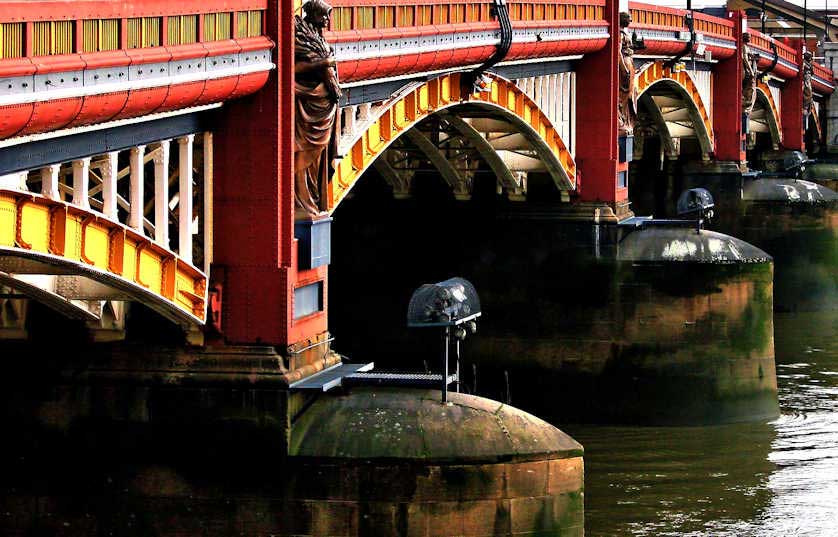
The Vauxhall Bridge was opened in 1906 and is a bridge for vehicles and pedestrians. It is a steel arch bridge with granite deck, it has five spans and a total length of 809 feet.
It was the first bridge in central London to carry trams. Following complaints that the bridge lacked any decoration, eight monumental statues, each weighing 2 tons, were installed on the 4 piers in 1907.
Only visible from the banks of the river or from boats, they represent Agriculture, Architecture, Engineering, Pottery, Science, Fine Arts, Local Government and Education.
Vauxhall Bridge replaced an earlier bridge originally named Regent Bridge but soon renamed Vauxhall Bridge. It replaced a ferry and opening in 1816 it was the first iron bridge across the Thames. By 1898 it had deteriorated and was dismantled.
Lambeth Bridge
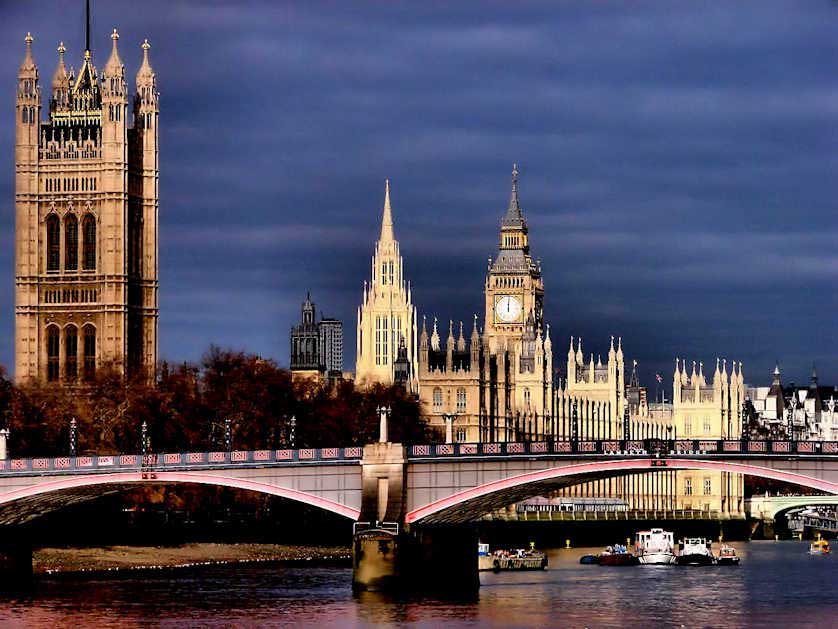
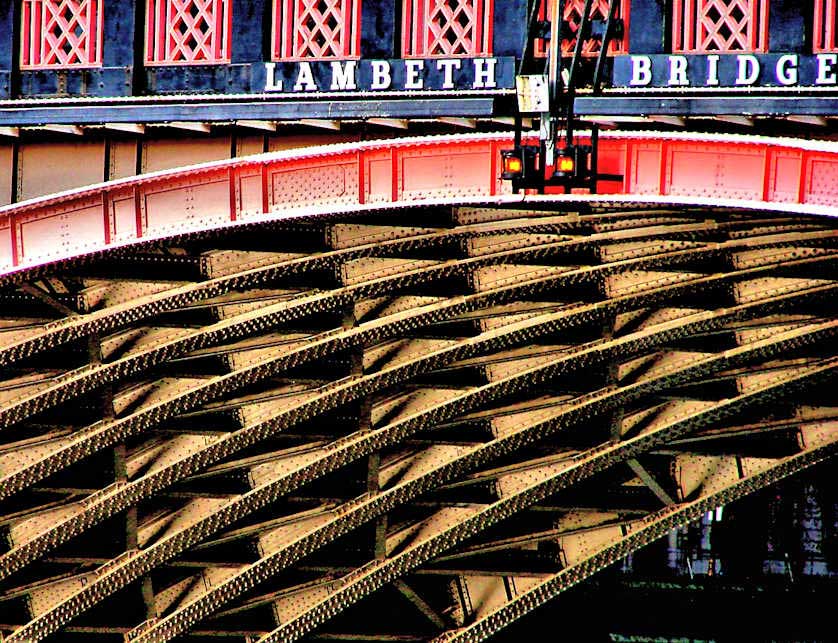
Opened in 1932 by King George V, Lambeth Bridge is a five-span steel arch bridge resting on concrete piers faced with granite.
It is 776 feet long and the largest span in the middle is 165 feet. It carries road traffic and pedestrians and its primary colour is red to symbolize the red leather seating in the House of Lords which is close to the bridge's western side.
The next bridge downstream, Westminster, is primarily green reflecting the seating in the House of Commons.
The bridge was built by Dorman Long & Co. who also built the Tyne Bridge in Newcastle and the Sydney Harbour Bridge.
A horse ferry operated at this point for centuries but was replaced by a suspension bridge in 1862, however it was deemed unsafe and generally avoided by horse-drawn traffic because of its steep approach, so was dismantled.


Westminster Bridge
Opened in 1862, Westminster Bridge is the oldest road-carrying bridge still standing across the Thames in central London.
It is a seven-spanned, cast-iron, arch bridge built in 1862 and stretching 820 feet.
The Gothic detailing of the bridge was designed by Charles Barry, who designed the Palace of Westminster.
A bridge had been built here in 1750 to relieve the congestion on London Bridge, but it began to subside and so was replaced.

The Hungerford Bridge and Golden Jubilee Bridges
Though actually three bridges, they are all connected to the same piers and so appear as one.
The original Hungerford Bridge was designed by the great Isambard Kingdom Brunel and built in 1845 as a suspension bridge for pedestrians.
In 1859 the bridge was bought by the railway company that had just built Charing Cross Station and they replaced Brunel's footbridge with a nine-span, wrought iron, lattice girder bridge to carry the railway but that also carried a narrow pedestrian section.
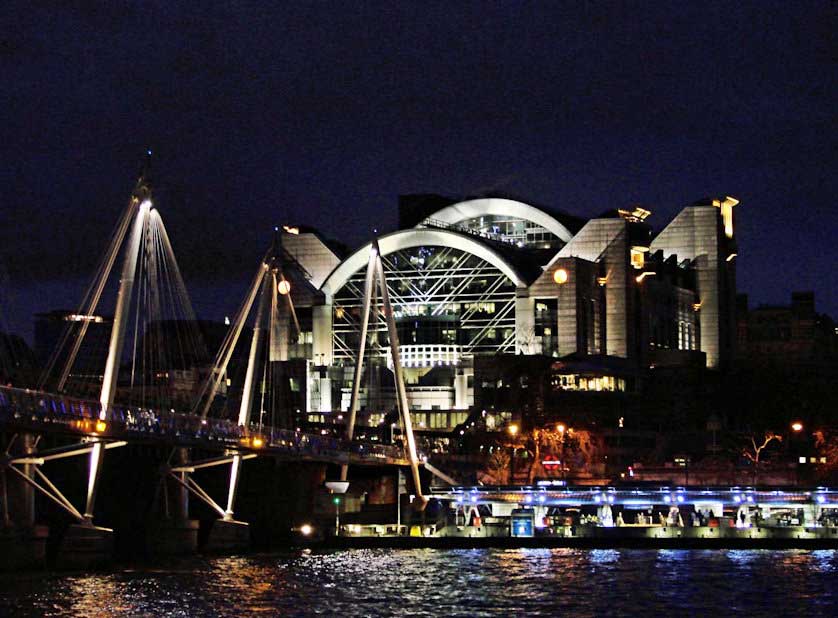
The Golden Jubilee Bridges replaced the original walkway with much wider walkways on either side and were opened in 2002 and named after the Queen's Golden Jubilee.
They are of a complex design involving cable-stays and are attached to the same piers as the railway bridge.
Construction was made difficult by the need to keep the rail lines open. They are now the busiest pedestrian bridges across the Thames.
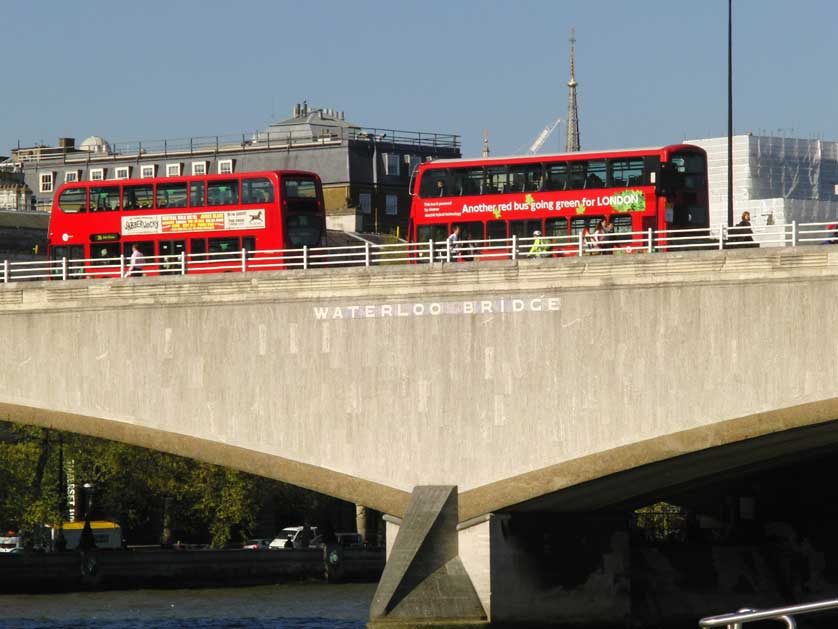
Waterloo Bridge
Built in 1942, Waterloo Bridge is a box girder type bridge for road and foot traffic and is 1,230 feet long.
Built on a curve in the river it is said that the views from the bridge are the best ground-level views in London.
The current bridge replaces a granite, nine-span bridge built in 1817.

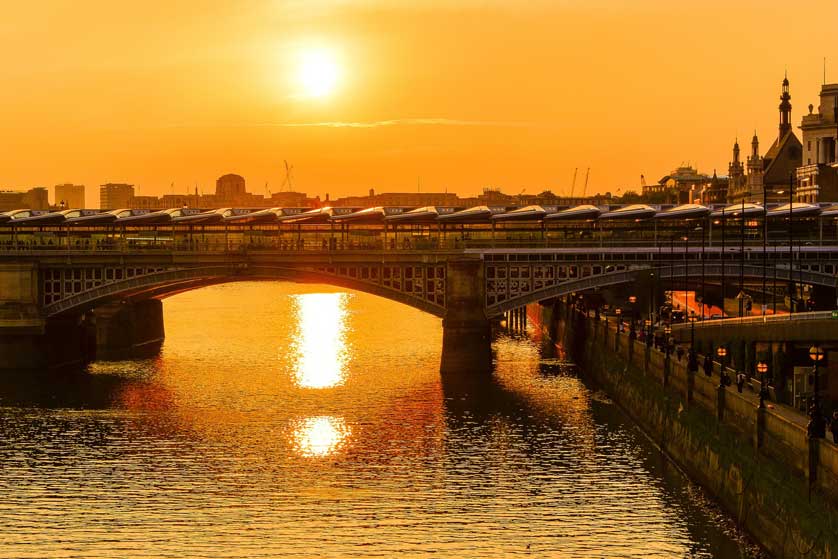
Blackfriars Bridge
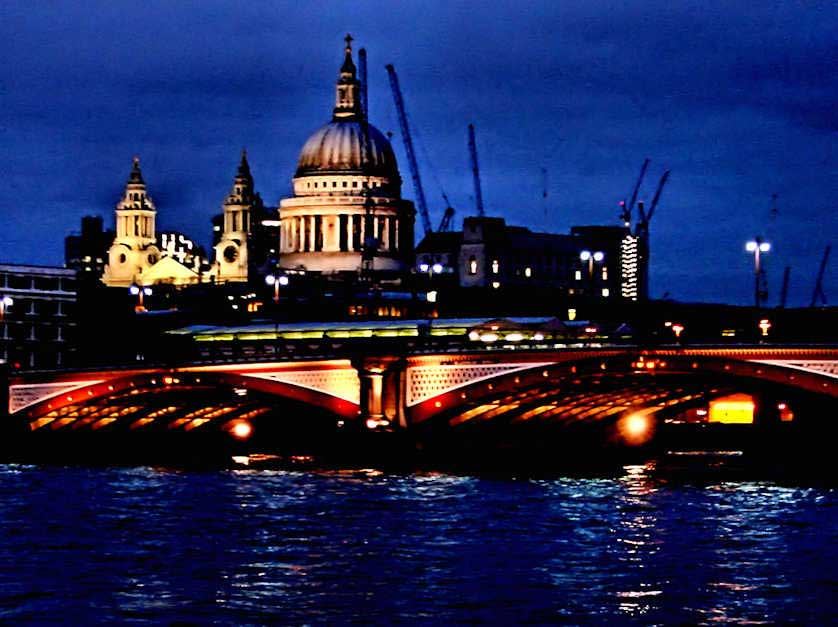
Opened by Queen Victoria in 1869, Blackfriars Bridge is 923 feet long and has 5 wrought iron arches.
It replaced an earlier bridge opened in 1769 constructed of nine Portland stone arches.
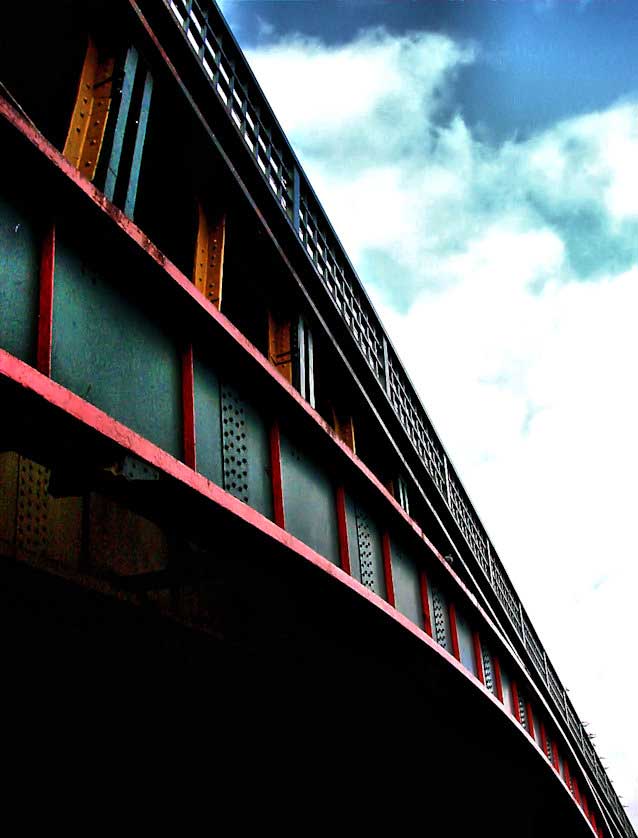
Blackfriars Railway Bridge
The original Blackfriars Railway Bridge was designed by the same architect who designed the adjacent road bridge and had the same arches and pier spacing so that the two bridges mirrored each other.
It was dismantled in 1924 after it became too weak to carry modern trains, however the red pillars still remain today between the two Blackfriars bridges.
The current Blackfriars Bridge was built in 1886 and was called St. Paul's Railway Bridge. It is an arch bridge constructed of wrought iron. It has now been covered with a roof of solar panels making it the largest solar bridge in the world. The platforms of Blackfriars Station are built into the bridge with entrances on either bank of the river.
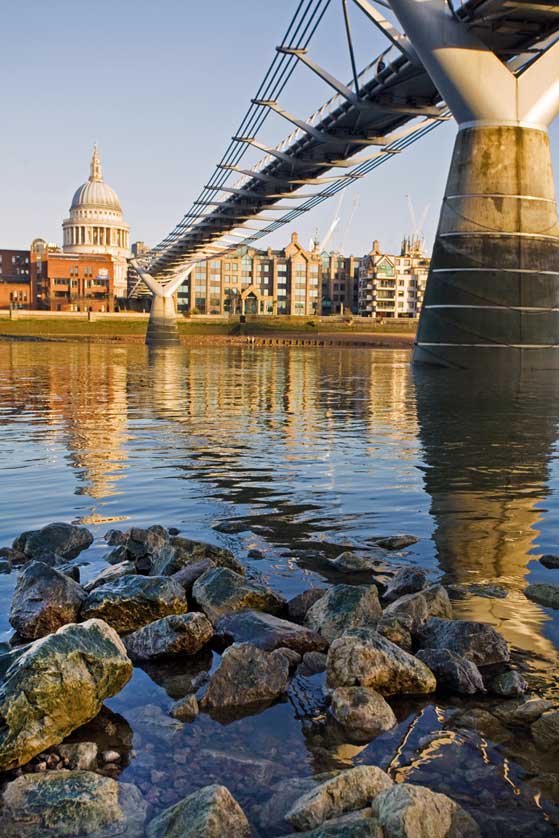
Millennium Bridge
Opened in 2000 to mark the second millennium, The Millennium Bridge is a suspension bridge for carrying pedestrians and is 1,066 feet long.
It was closed for two years after only two days to make alterations to correct the sway of up to 70 mm.
The entrance to the bridge on the South Bank is close to Shakespeare's Globe and the Tate Modern. The Golden Hinde and Southwark Cathedral are a short walk east of Southwark Bridge.
For many more photos and more details please see our full article on the Millennium Bridge (London Millennium Footbridge).
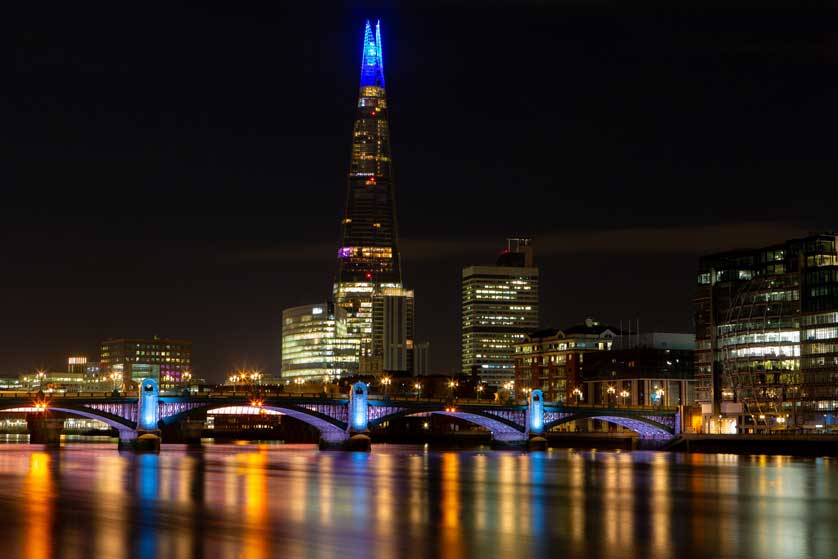
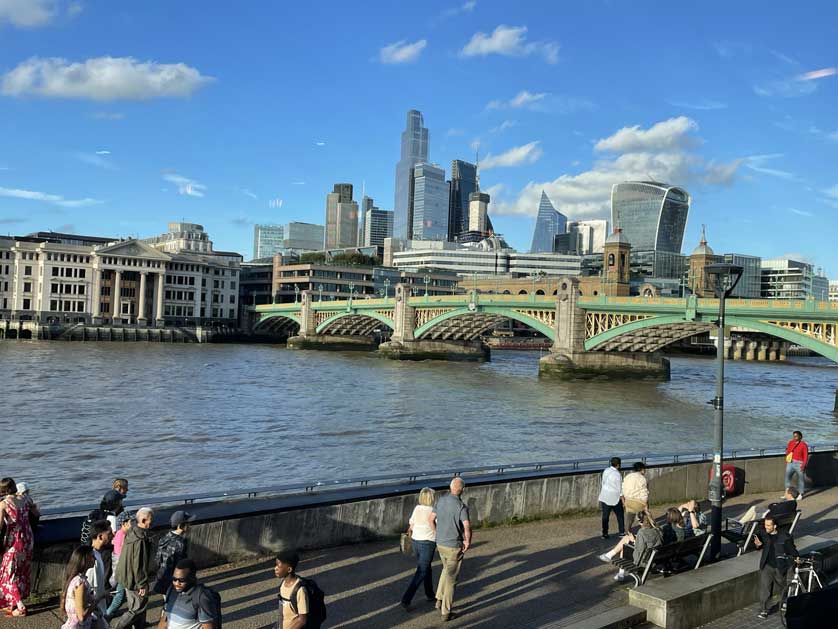
Southwark Bridge
A steel-arch bridge with five spans, Southwark Bridge is a road bridge 800 feet in length. Under normal circumstances it is the least-traveled road bridge in central London.
Southwark Bridge opened in 1921 to replace an earlier bridge that was not wide enough for modern times. The former bridge was built in 1819 and had three cast-iron spans. Notably the central span of 240 feet was the longest ever cast-iron span built at that time.

Cannon Street Railway Bridge
Cannon Street Railway Bridge was built in 1866 to carry the railway to Cannon Street Station on the north bank of the Thames, it is a steel arch bridge with five spans.
The railway bridge was designed by Sir John Hawkshaw (1811-1891), consulting engineer on the Severn Tunnel and the builder of the sewerage system in Brighton!
London Bridge
By name, London Bridge is probably the most well known of the Thames bridges as there have been bridges at this site for almost 2,000 years, with one named in the famous nursery rhyme, London Bridge is Falling Down.
The Romans built a wooden bridge across the river here about 50AD, and numerous other wooden bridges were built over the subsequent centuries.
Perhaps the most famous London Bridge, and the one most probably the subject of the nursery rhyme, was built in the early tears of the 13th century.
Constructed of stone and with a drawbridge to allow ships through, the wide bridge became crowded with shops and houses, probably more than 200 of them.
In the 18th century all the buildings were removed to make the bridge safer and easier to maintain.
In 1831 a new bridge was built adjacent to the old one which was demolished after the new bridge opened. The new bridge was built of stone with five arches, although Telford had proposed a single span iron bridge which proved to be too costly.
This new London Bridge became incredibly busy with 8,000 pedestrians and 900 vehicles crossing every hour in 1896.
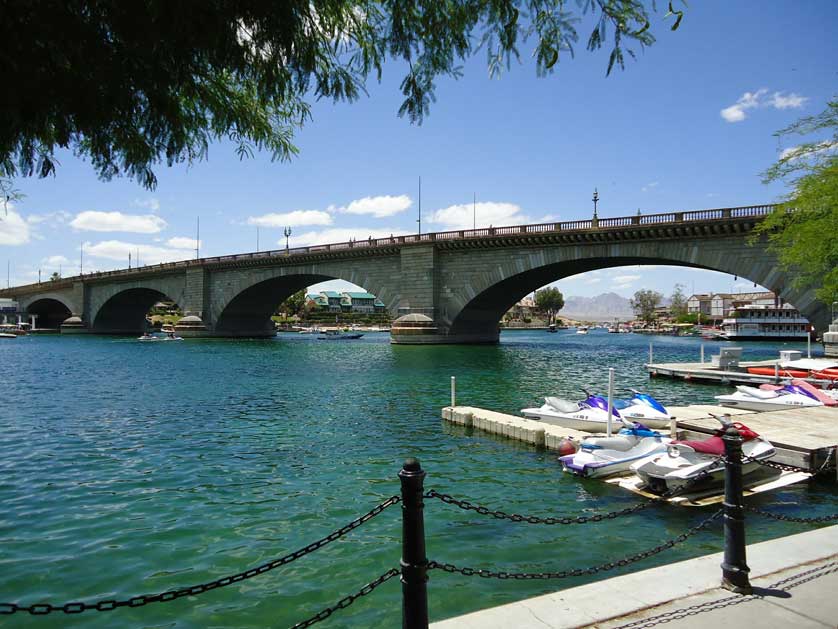
When it was discovered how fast the bridge was sinking it was decided to replace it. In 1968 an American businessman, Robert McCulloch, bought the bridge and had it dismantled and shipped to Lake Havasu in Arizona where it was reconstructed and still stands today.
The current London Bridge opened in 1973 and has three spans constructed out of pre-stressed concrete box girders.

Tower Bridge
Probably the most iconic sight of London, Tower Bridge has featured in countless movies to make clear that the setting is London. It is a part suspension and part bascule bridge and opened in 1894.
Tower Bridge gets its name from the nearby Tower of London. Construction of Tower Bridge began in 1886 and the bridge opened in 1894.
The bridge consists of two bridge towers (65 metres tall) connected at the upper level by two horizontal walkways. The towers are 61 metres apart with the bridge 240 metres long in total.
The towers are clad in Cornish granite and Portland stone.
Tower Bridge has become an iconic symbol of London. It is painted blue and white, its original colors. The bridge is illuminated at night.
South Quay Footbridge
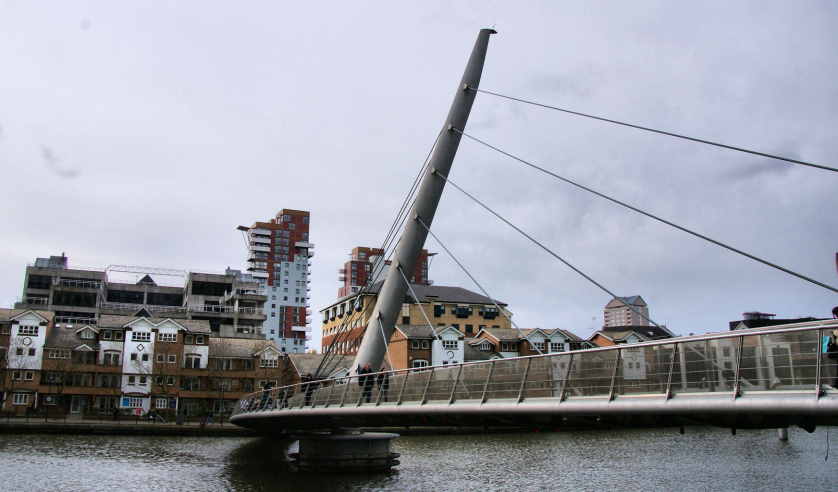
South Quay Footbridge in Canary Wharf in London is a pedestrian bridge that spans South Dock in this financial and commercial district of the city. The bridge connects South Quay and Herons Quay. WilkinsonEyre designed the S-shaped, 180-meter cable-stayed bridge which can open for shipping. The floor of the bridge is clad with British oak. The bridge affords great views of Canary Wharf on a clear day. The area is also a favorite location for film directors. On the northern bank of South Dock are Heron Quays DLR Station and Canary Wharf Tube Station on the Jubilee Line of the London Underground.
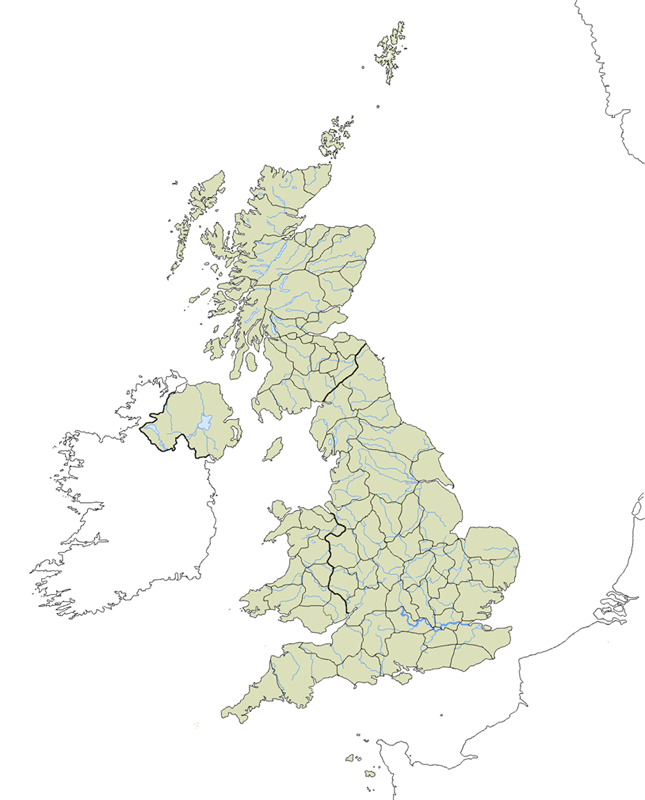
Map of the Major Rivers in Britain
Bridges Related
Hotels in London
Book Hotels in London - Booking.com
Find Luxury Hotels in London - Booking.com
Budget Hotels in London - Booking.com
Find Hotels in England - Booking.com
London Offers
London Attractions Tickets - Tiqets.com