Clare College Gardens & The Backs, Cambridge
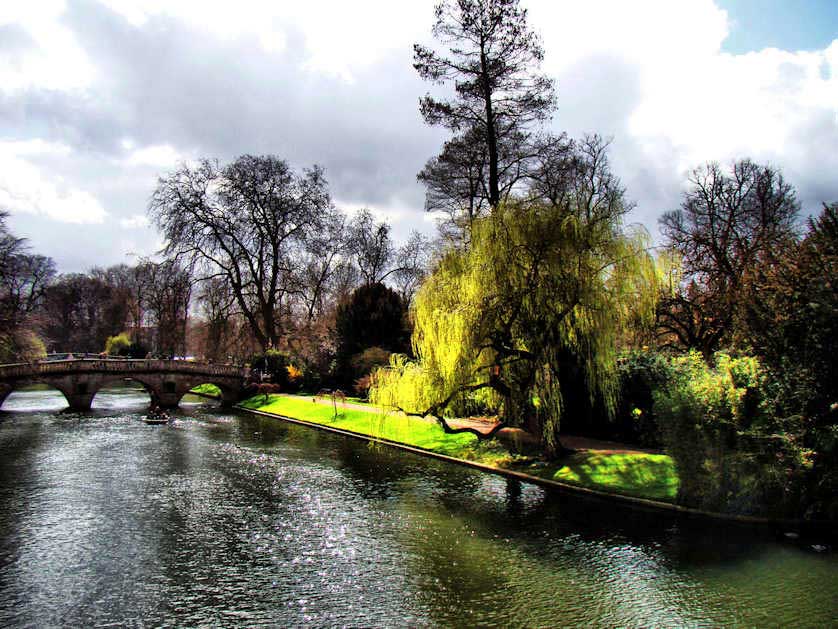
The Backs is the name given to the land on either side of the River Cam behind many of the colleges of the University of Cambridge.
The colleges owned the land and historically much of it was pasture and orchard though nowadays most of serves as lawns and gardens.
Definitions vary somewhat, but it is generally considered that the land and river frontage of the colleges of St. John's, Trinity, Trinity Hall, Clare, King's, and Queens' encompass the Backs.
This would include the Bridge of Sighs to the north, the Mathematical Bridge to the south, and Clare Bridge, the oldest in Cambridge, in the middle.
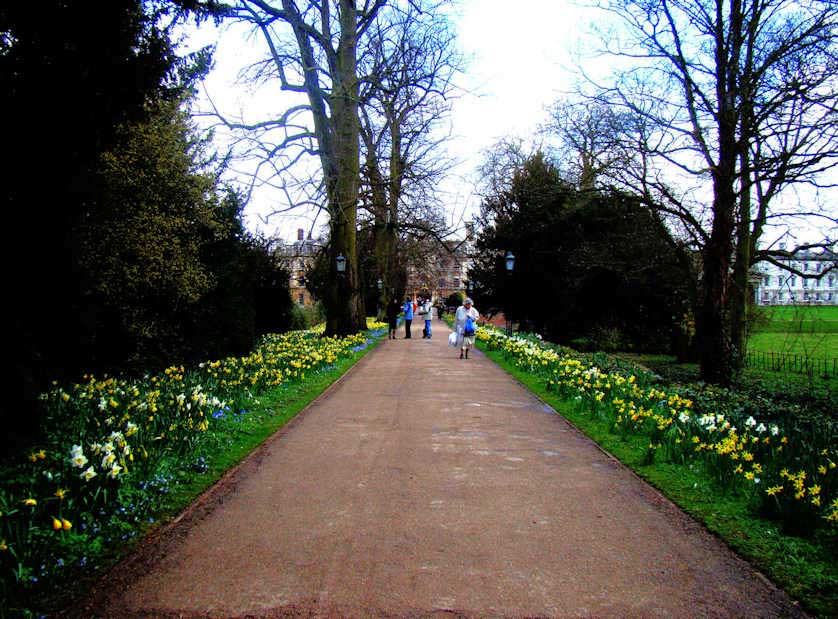
This is considered some of the most picturesque scenery in England and is appreciated by the many visitors who hire a punt on the river, but is also enjoyed on foot.
Gardens
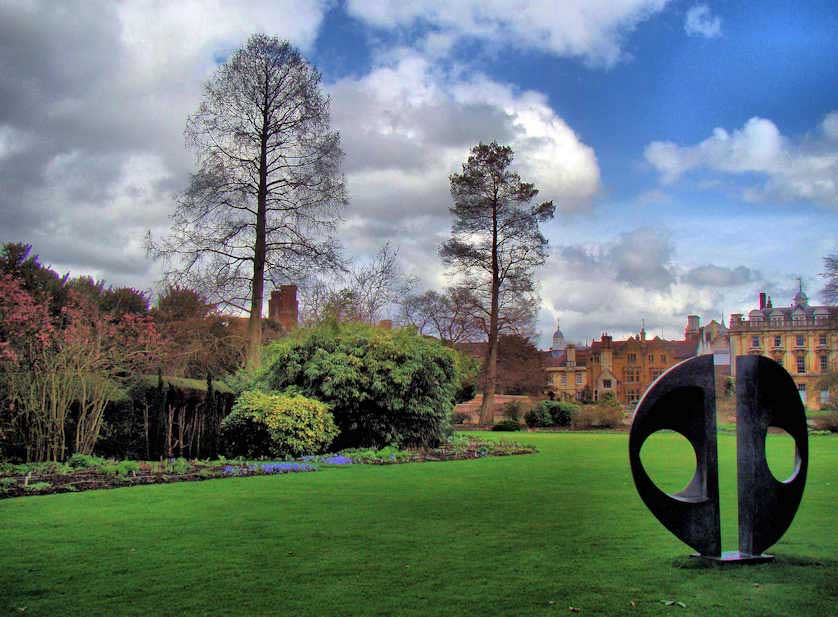
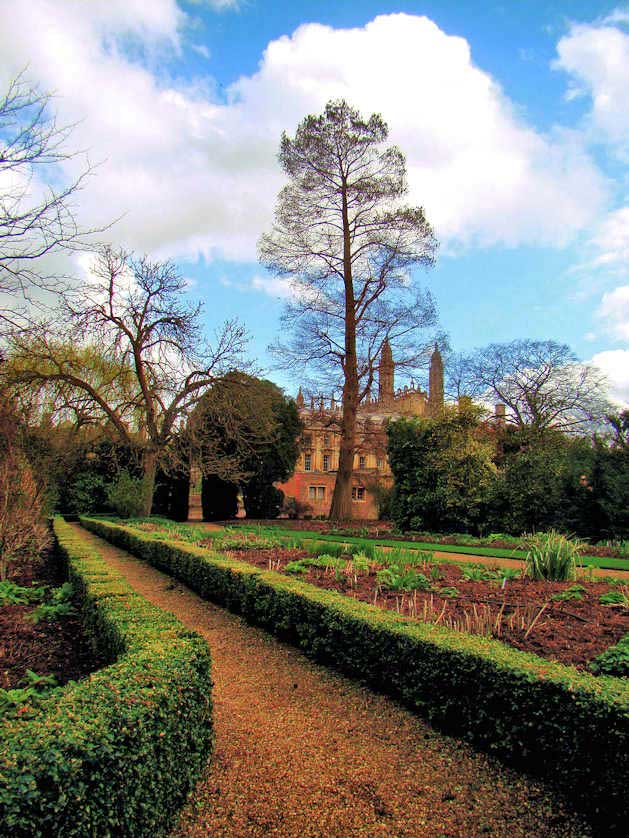
The jewel in the crown of The Backs is considered to be the gardens of Clare College. On the east side of the river behind Old Court are a pair of walled, formal gardens, the Masters Garden and the Scholars Garden. Across Clare Bridge lies the biggest and the best of the gardens, the Fellows Garden.
Built after the construction of the Clare Bridge in 1840, the garden was well established by the end of the 17th century, but the current gardens are very much the creation of one man, Professor Nevill Willmer, who redesigned the gardens in 1947, though the basic layout and elements of the earlier garden still remain.
Nevill Willmer
Willmer was a Fellow of Clare College and a physiologist. He did a lot of research on colour vision and perception, and this led to some striking color combinations in the choices of flower plantings.
He was also an accomplished amateur landscape painter and conceived of the gardens as a set of landscape paintings to be viewed from a series of vantage points.
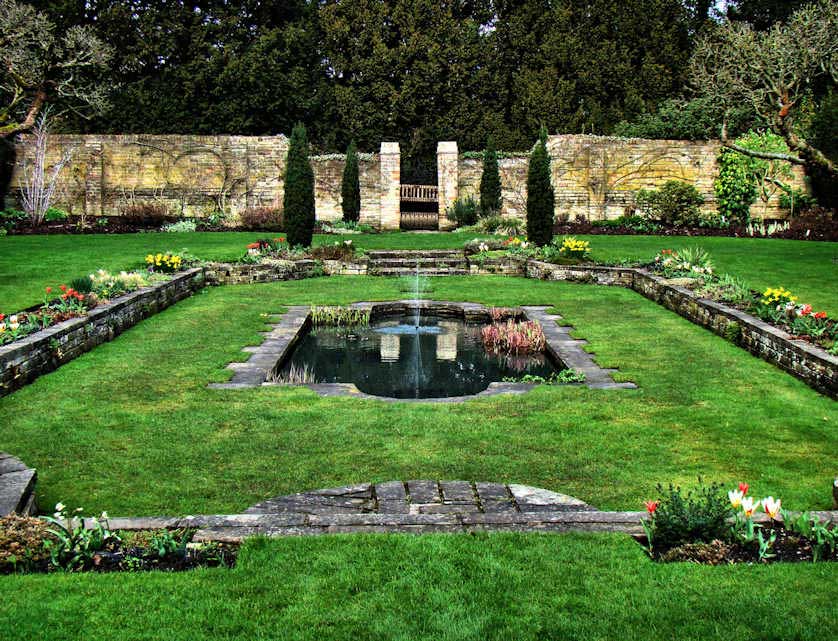
He was also influenced by the Arts & Crafts Movement Gardens. Perhaps the most well known section is the sunken garden with its lily pond. His inspiration for this was a trip to Pompeii in Italy.
A later addition to the gardens are the sub-tropical gardens which include banana trees.
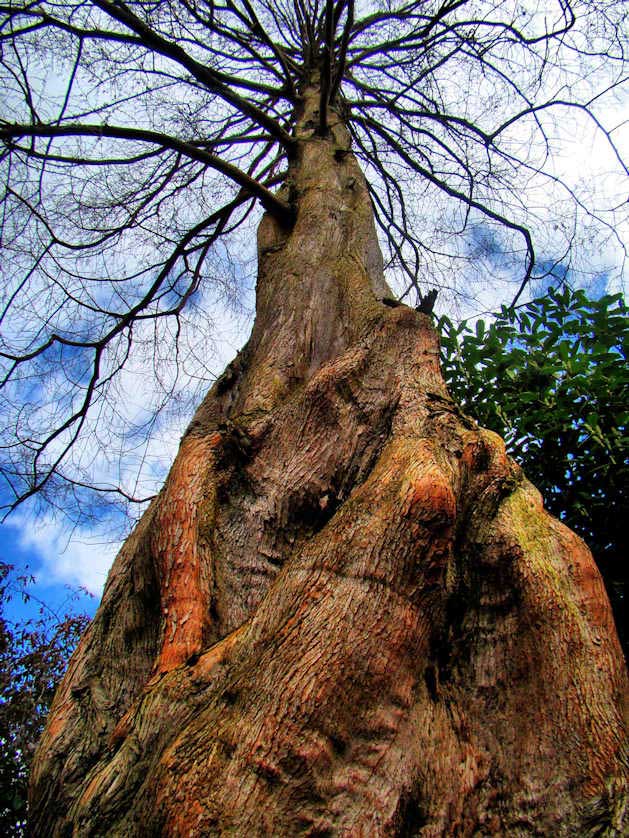
There are many large, old trees around the gardens, most of which pre-date Willmer, but a notable one is the Dawn Redwood, planted in 1948 from a seed brought back from an expedition to China. It now stands 25 meters tall and is a registered Champion Tree.
The gardens are normally open to the public in the summer months and are free to enter, but because of current renovations to the college will be closed until 2023. The gardens can of course be viewed from a punt on the river.
Nearby
Cambridge is best explored on foot, by bicycle or on the river in a punt. Other attractions in town are the University Botanical Gardens, the Fitzwilliam Museum on Trumpington Street, the Museum of Archaeology and Anthropology on Downing Street, the Scott Polar Research Institute (Polar Museum) on Lensfield Road and the Whipple Museum of the History of Science on Free School Lane.
Other popular colleges for tourists are King's College, Clare College and Trinity College.
The Bridge of Sighs at St. John's College is a well-known bridge in the town, perhaps the most famous of all the bridges in Cambridge. The Mathematical Bridge is a wooden footbridge over the River Cam in Cambridge that connects two parts of Queen's College.


Hotels
If you wish to stay in Cambridge there are several good options. These include the three-star Holiday Inn Express Cambridge, the three-star ibis Cambridge Central Station and the four-star Ramada Cambridge, a 20-minute drive from the centre.
Hotels in Cambridge
Cambridge Accommodation - Booking.com
Book Hotels in England - Booking.com