British Nature: Freshwater Network - Canals
Britain's Canals
Mark Brazil
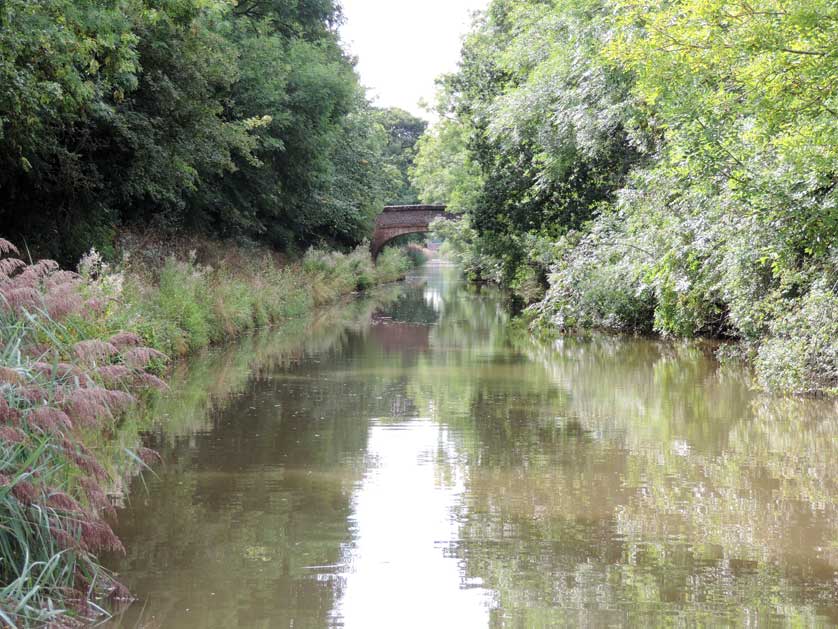
In an archipelago frequently drenched in rain, freshwater in many forms is rarely far away. Standing water is abundant and to be found in natural habitats from upland lakes and tarns to lowland lakes and meres, in addition to which are numerous man-made ponds, lakes and reservoirs. Flowing water too comes in many forms, from rushing upland streams and rivers, to sluggish lowland rivers. Bridging a gap between forms of freshwater are the canals.

Freshwater Habitat
Canals are not quite standing water as is found in lakes and ponds, nor are they really flowing water as found in streams or rivers. This man-made network of linear, river-like water features rarely carries flowing water, so they resemble standing water, yet where they link rivers together they do indeed flow. However we define them, canals are a key freshwater habitat in Britain and their associated canal-side vegetation and towpaths offer fine country walking.

History
The canals we see today, used primarily for recreational boating, are a legacy of nearly 2,000 years of construction. The very first were built here by the Romans who used them for irrigation and water transport; but canals came into their own for the large-scale transport of goods thanks to the industrial revolution of the 18th and 19th centuries. Their use then revolutionised the movements of raw materials and products to markets, which otherwise could only travel by way of a poor network of badly-surfaced roads.


Encounters with Nature
Since falling into decline in the early 20th century (until the rise of recreational use since the 1960s) many of Britain's canals have been abandoned and become silted making then unnavigable.
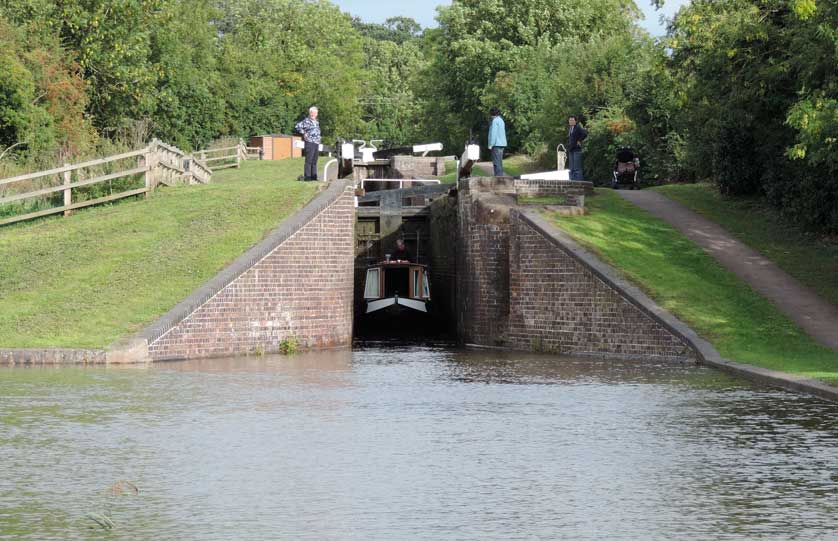
That very decline, from commercial industrial-scale use to languid backwaters, has meant that the nation's network of canals, along with the associated linear and patchy habitats beside them that include marginal wetland vegetation, scrub and woodland, means that they serve as corridors of partly natural habitat stretching across the country and penetrating both agricultural and urban landscapes. In short, they offer a wonderful way to explore the British countryside, by boat or on foot, and with opportunities for encounters with nature along the way.

Birds
A walk beside a rural canal in spring time offers opportunities to see hedgerows of hawthorn and other species in full bloom, while birds such as Common Whitethroat and Willow Warbler may be heard singing from canal-side scrub and woodland.
Mallard are a common species in standing water, and Moorhen may also be spotted, nodding their heads and flicking their tails as they head for cover in canal-side vegetation. Dragonflies abound in summer, while my winter favourite canal bird is the Common Kingfisher.
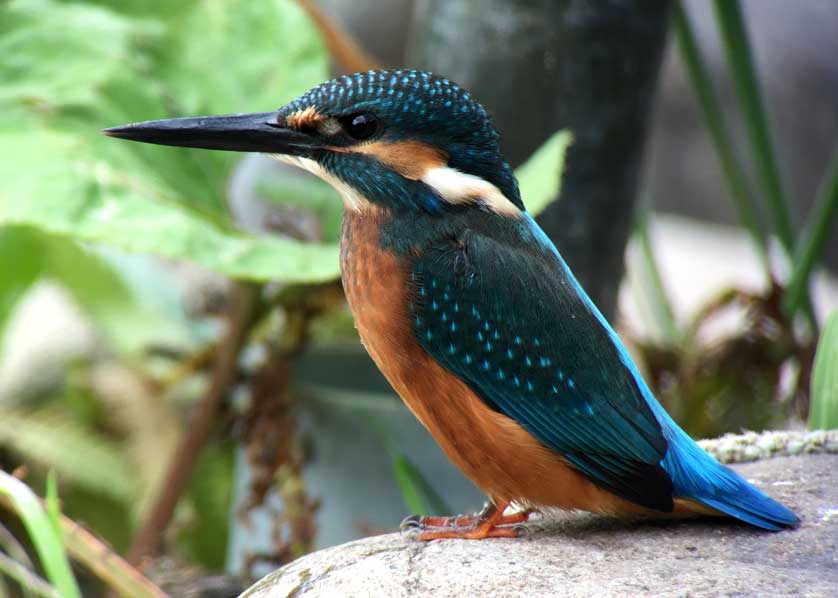
On short, drab winter days, when the sky is leaden, the water the colour of pewter, and the towpath brown with mud, few things lift the spirit like the lightening flash of blue that signals a passing kingfisher. They typically pass at such high speed that they are retained only as a retinal blur, a blue streak across the mind's eye as if seeing an opening crack into another brighter and more colourful dimension. The lucky observer may witness exactly where the kingfisher's fast direct flight, low over the water of the canal, ends. Once perched on a canal-side branch or post, the 'brilliant bolt of blue' is transformed.
Common Kingfisher
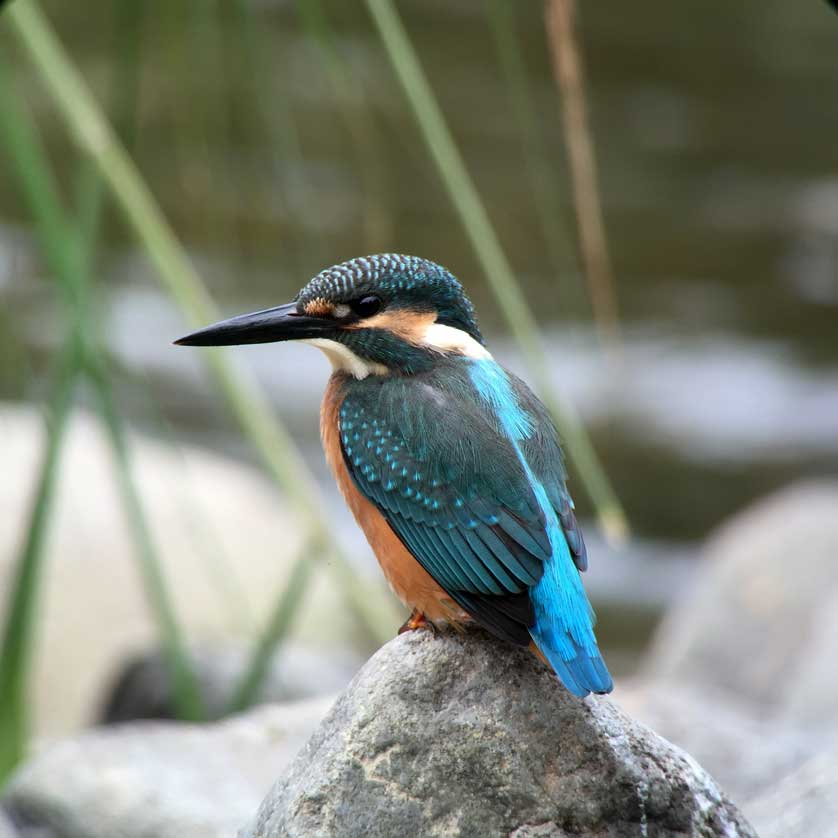
In close up, the Common Kingfisher is a long-billed, large-headed, short-tailed and short-legged bird. As it bobs and turns, its orange underparts and orange white and blue face are revealed. It is as likely to dash off once more as it is to remain, yet occasionally one will sally out over the water, hover briefly, its wings blurring into space blue, as it hangs its head and bill as it peers directly downwards. A sudden plunge, a splash, and moments later the bird appears once more on its perch, this time perhaps battering a tiny fish senseless in preparation for eating, or looking around as if sheepish at having missed its prey.
Mute Swan
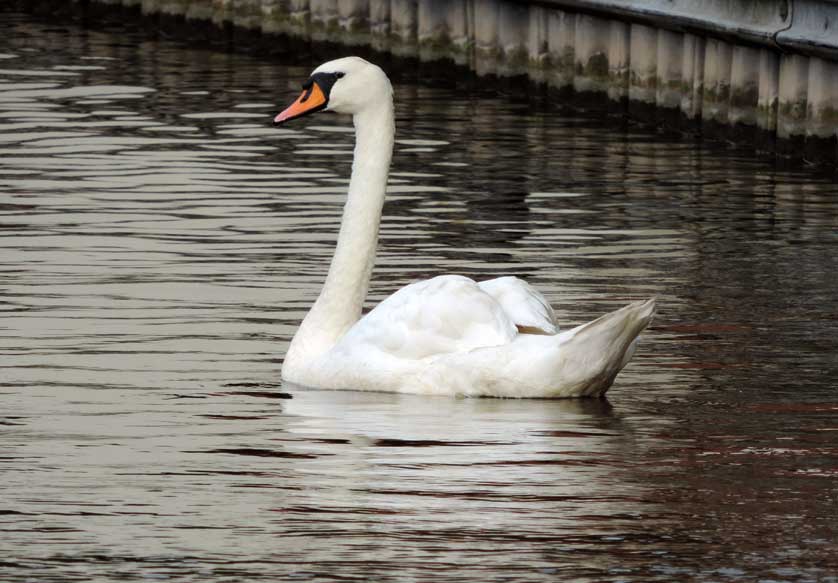
Kingfishers are not the only species to look for on a canal-side walk. Watch for Britain's largest flying bird, the stately Mute Swan as it ploughs its way through the water with its wings raised high over its back.
Don't be surprised if you startle away a Grey Heron from its silent and watchful stand-and-wait fishing spot. Keep a sharp eye for movement at the water's edge and perhaps you will be fortunate enough to spot a Water Vole. And in summer watch for flowering plants and their attendant butterflies, and perhaps even the rather scarce Floating Water-Plantain, a delightful white-petalled aquatic plant.
Exploring the British countryside by way of the canal network is a way of experiencing nature as well as seeing the infrastructure of a once great transportation system - the bridges, locks, canal-side pubs offering drinks and meals, as well as the wildlife.
Gallery


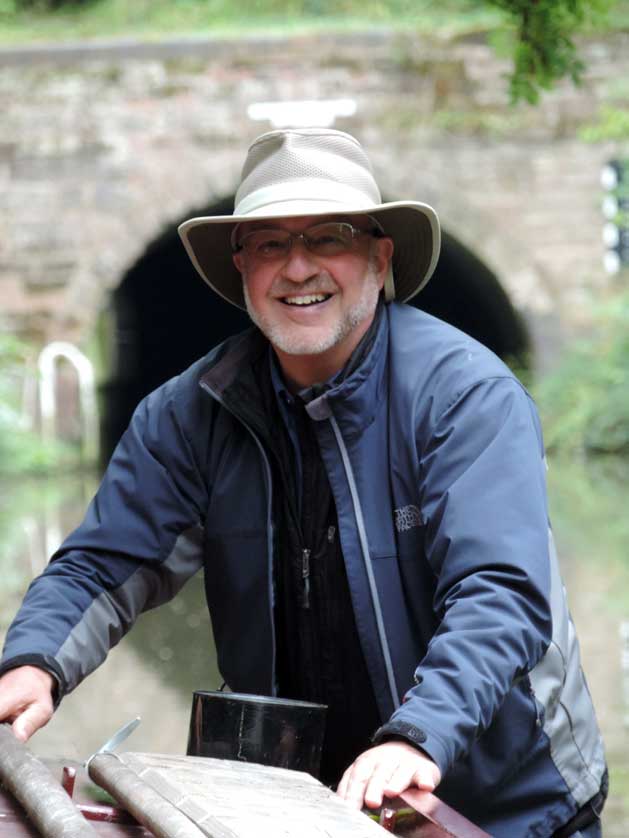
Mark Brazil, naturalist, author and expedition leader, grew up in the landlocked county of Worcestershire, but has lived in Staffordshire, Stirlingshire, Hertfordshire and Norfolk.
Among his favourite places he include the coasts and offshore islands of Britain, especially the remote isles of Scotland. Between leading international expeditions he currently resides in east Hokkaidō, Japan. His most recent book Wild Hokkaidō: A Guidebook to the National Parks and Other Wild Places of Eastern Hokkaidō was published in summer 2021.
Hotels in Britain
Book Hotels in Edinburgh - Booking.com
Find Hotels in Glasgow - Booking.com
Search Hotels in Orkney - Booking.com
Hotels in The Shetlands - Booking.com