UK Museums: Natural History Museum, London
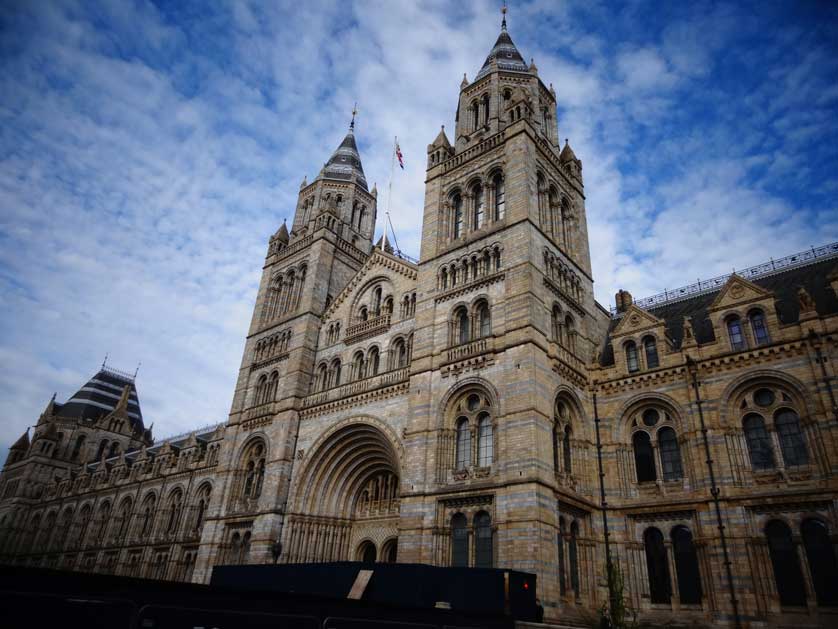
Natural History Museum, Kensington, London
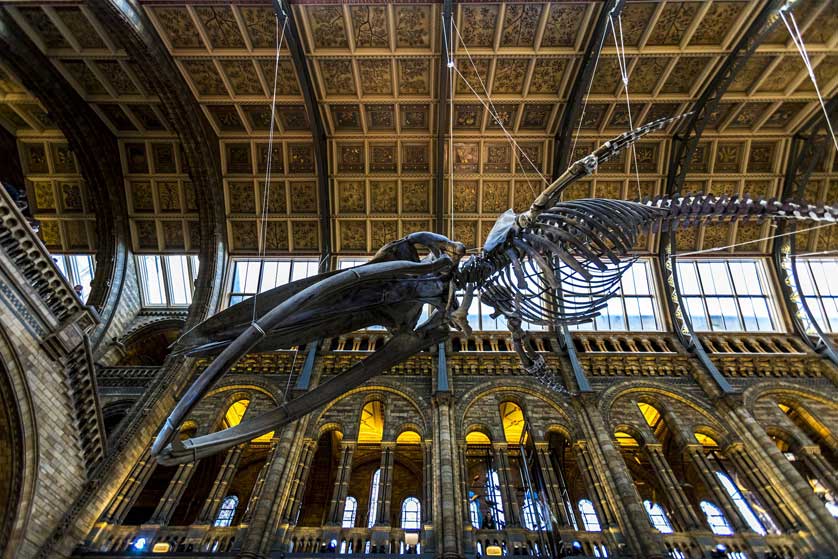
The Natural History Museum in London is a must see destination for people of any age but especially for those with kids.
With free entry, the vast exhibition spaces are home to more than 80 million items and visitors will have no trouble finding more than enough to see and do on a half day or even multi-day visit.
In 2025 the Natural History Museum overtook the British Museum as the most popular tourist attraction in the UK.
History
Originally the Natural History department of the British Museum, the department's collections outgrew its space and a new building was called for.
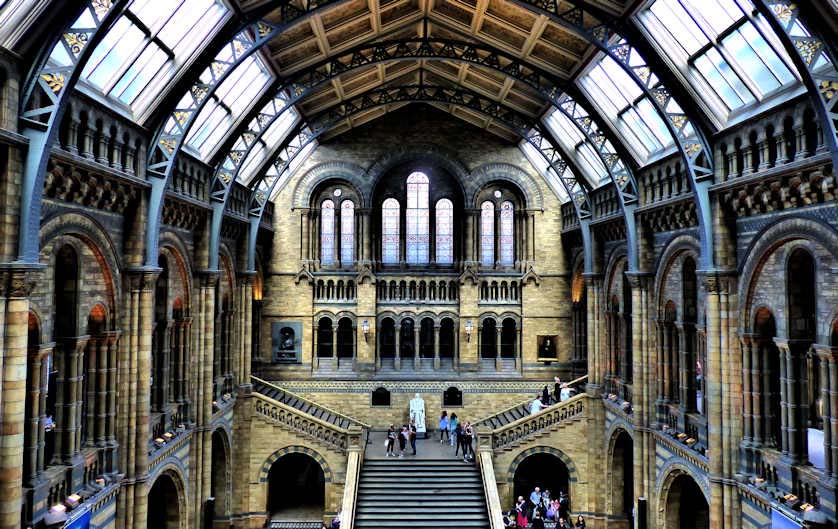
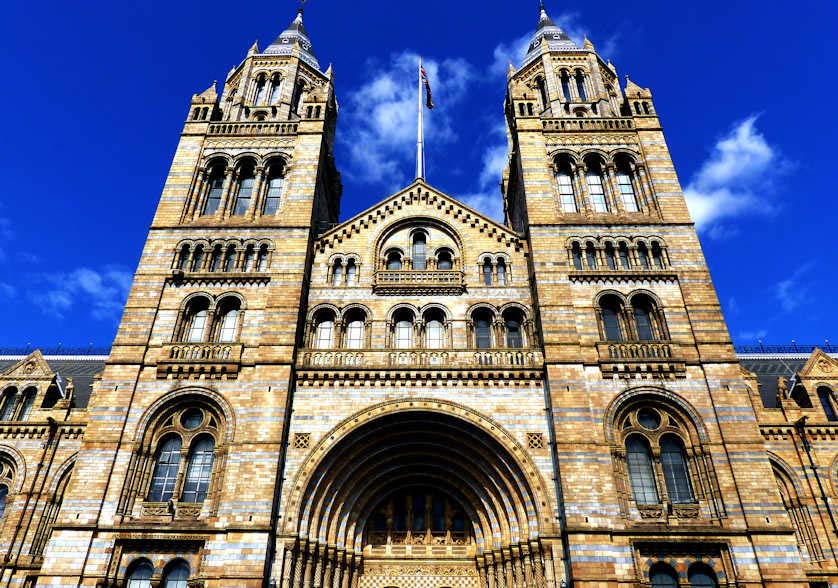
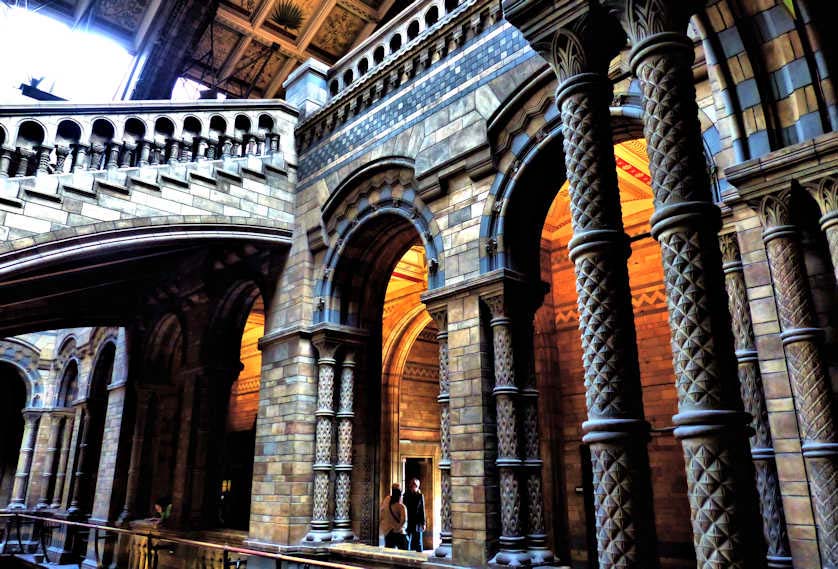
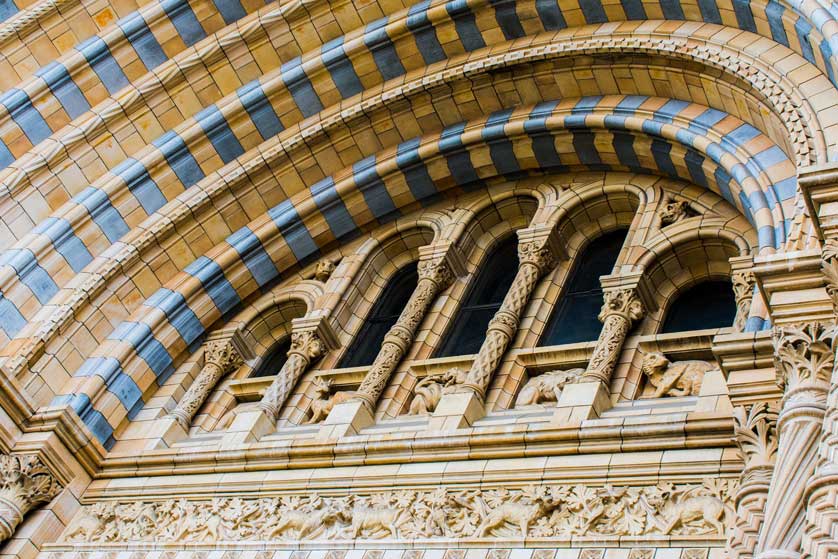
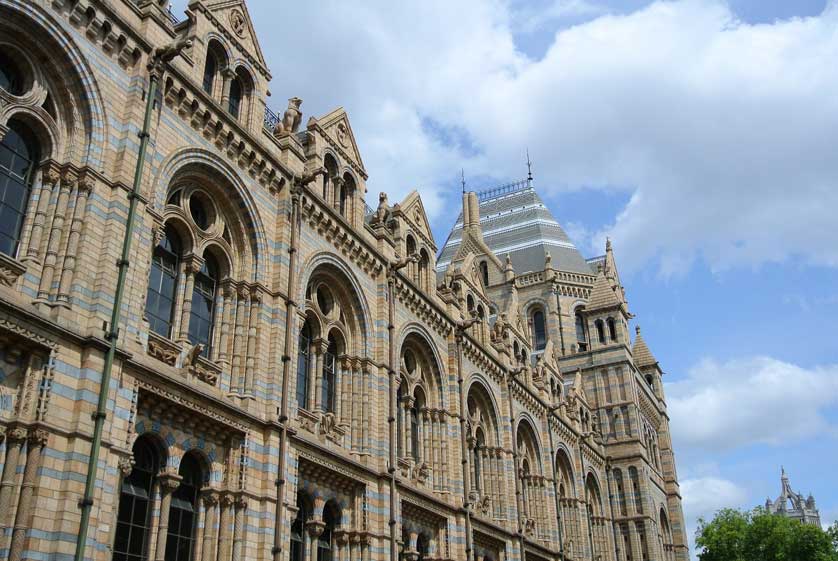
Alfred Waterhouse (1830-1905) ended up designing the building we see now which is a combination of architectural styles including Romanesque and Neo-Gothic. The building is particularly known for its carved terracotta tiles and bricks.
Waterhouse was also the architect of Manchester's Town Hall and the Manchester Museum.
In 1963 the museum officially separated from the British Museum but did not change the name to Natural History Museum until 1992.
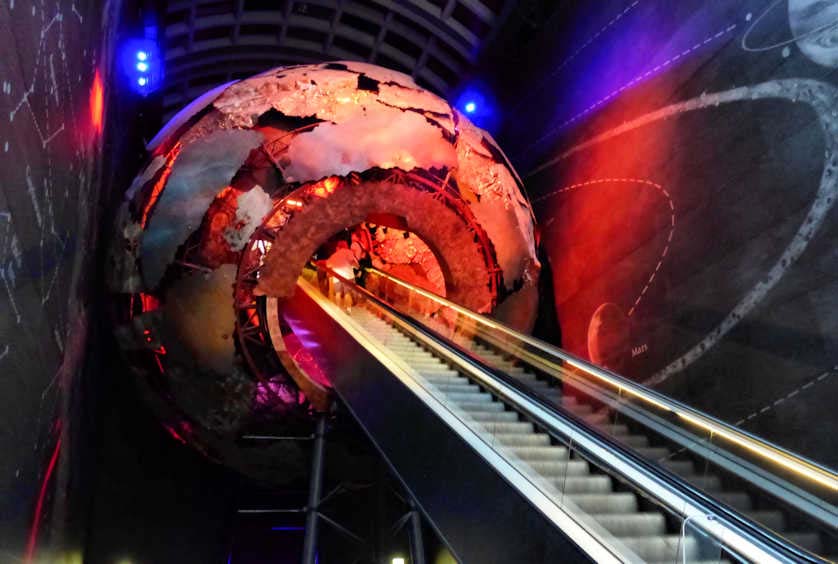
In 1976 the museum expanded by absorbing the neighboring Geological Museum which is now renamed the Earth Galleries with the original Waterhouse museum renamed Life Galleries.
Collections
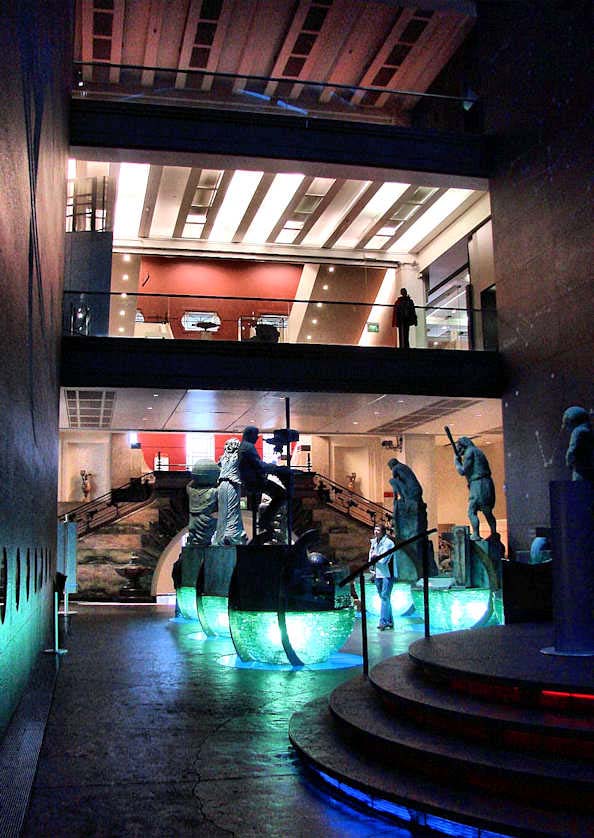
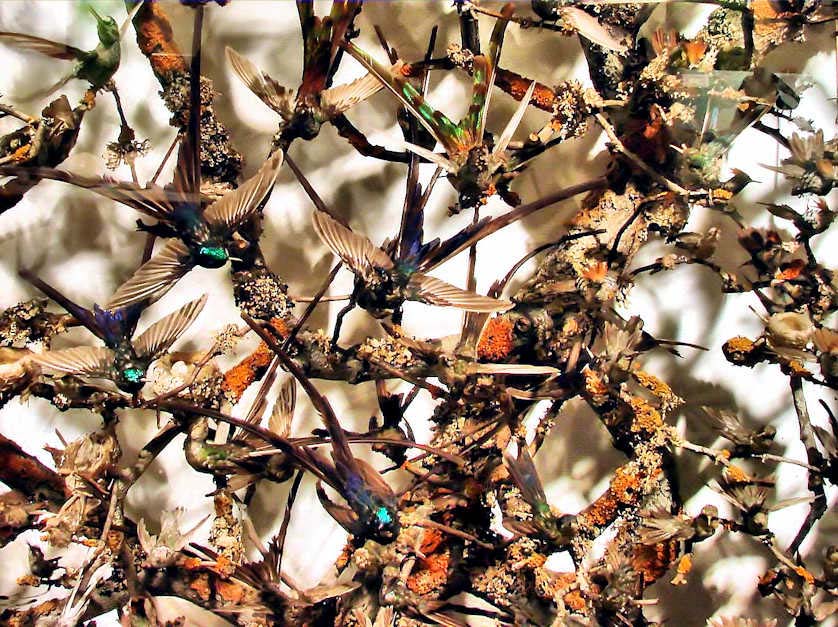
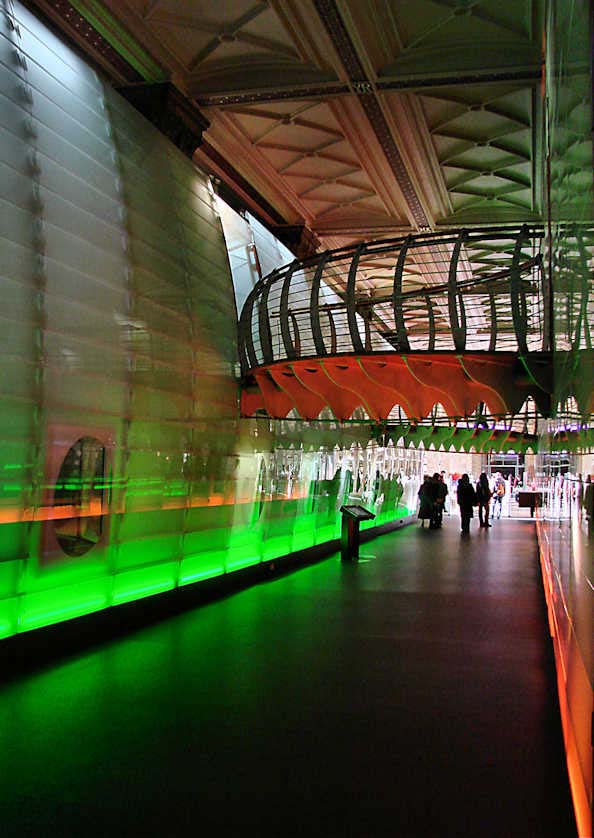
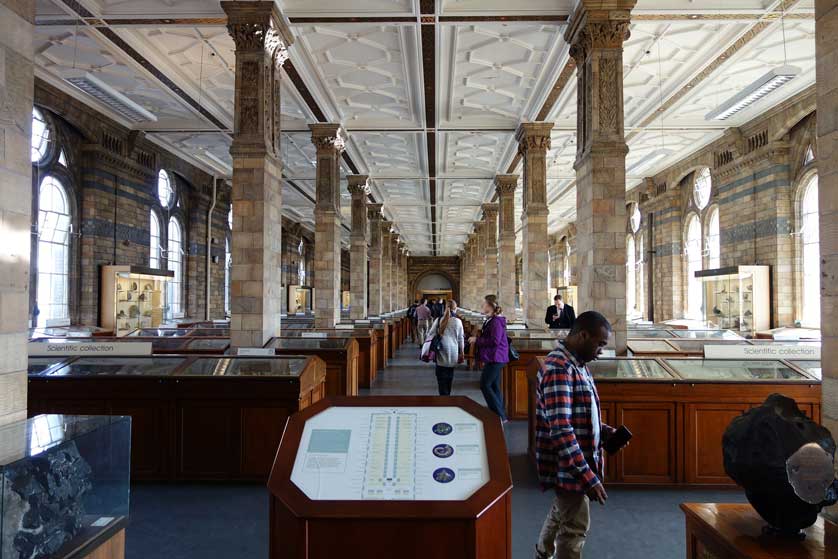
Parts of the museum are fairly traditional, with display cases of specimens, but many exhibits are modern and utilize the latest technology to make for more interactive experiences.
The museum covers five major life sciences, botany; the science of plant life, entomology; all about insects and creepy crawlies, mineralogy; a part of geology, paleontology; all about fossils, and of course zoology, the study of animals of all kinds.
The layout of the museum is divided into four zones with a bit of an overlap in content. From the vast reaches of space and the origin of our earth down to the microscopic organisms that make up our world, there is no part of our natural world, including ourselves, that is not covered in the many thematic exhibitions.
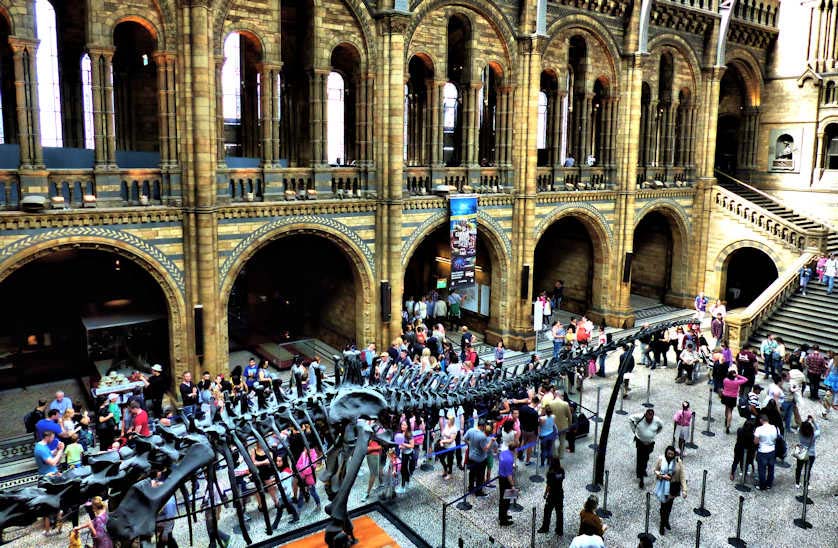
The museum includes an outdoor wildlife garden and is a major research establishment with the Darwin Center and an associated Attenborough Studio offering visitors insights into the work going on here.

Cafes
To be able to spend a long time on your visit the museum provides several options for eating and drinking. There is a cafe serving hot and cold food, drinks, and snacks, and if the weather is nice there is also an outdoor cafe.
A space has also been set aside with room for people to sit and eat food and drink they have brought in themselves.
The museum has a big shop with a wide range of souvenirs, with dinosaurs being a popular theme.
Access - Getting to the Natural History Museum
Cromwell Road
South Kensington
London SW7 5BD
Tel: 020 7942 5000
www: nhm.ac.uk
Hours: Open 11 am to 6 pm. Closed Mondays & Tuesdays. Also closed 24-26 December.
Entry is free but there may be charges for temporary and special exhibitions.
Covid Info: The museum is open, but some sections of the museum are closed to ensure safe social-distancing. Visitor numbers are limited so a booking system is in use, please see the museum website above for details.
The nearest underground stations to the Natural History Museum are South Kensington and Gloucester Road on the District, Piccadilly and Circle lines. Many London buses pass near the museum including numbers #14, #49, #70, #74, #345, #360, #414, #430 and #C1.
The Natural History Museum at Tring is a branch museum. Other places nearby include the London Oratory, the Victoria & Albert Museum, the Science Museum and the Royal Albert Hall.
Museums & Gardens in Britain
Gallery
Hotels in London
Book Hotels in London - Booking.com
Find Luxury Hotels in London - Booking.com
Budget Hotels in London - Booking.com
Find Hotels in England - Booking.com
London Offers
London Attractions Tickets - Tiqets.com