UK Castles: Conwy Castle & Town (Castell Conwy), North Wales
Jake Davies
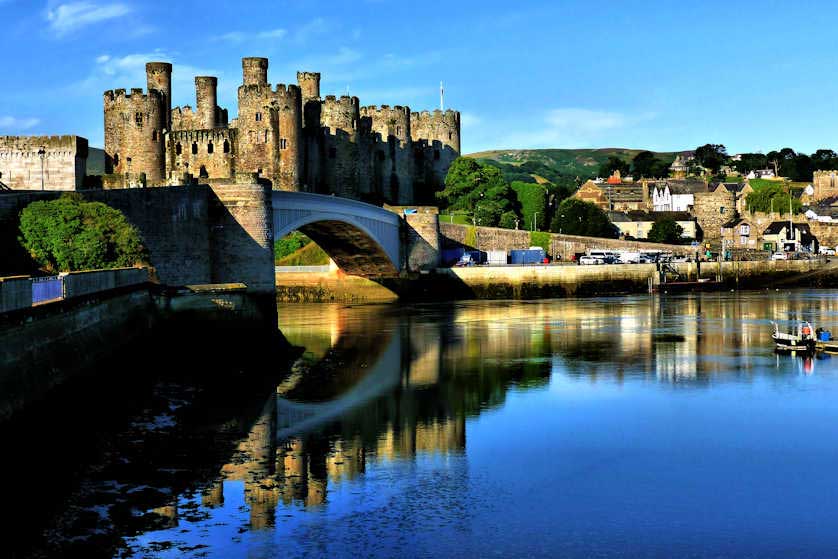

Located on the banks of the River Conwy near its mouth, Conwy Castle is an impressive 13th-century castle and fortified town.
It is part of the UNESCO World Heritage Site of Castles and Town Walls of King Edward in Gwynedd, that also includes Beaumaris Castle, Caernarfon Castle, and Harlech Castle.
Like the other castles in the group, Conwy Castle was built using the most advanced fortification techniques imported from throughout the known world and remains impressive today. For many nowadays it is considered the most picturesque of the group.
As impressive as it is, perhaps more impressive is the speed with which it was built. The castle was completed in 1289 after having been started in 1283, a mere six years, quick even by twenty-first century standards.
History
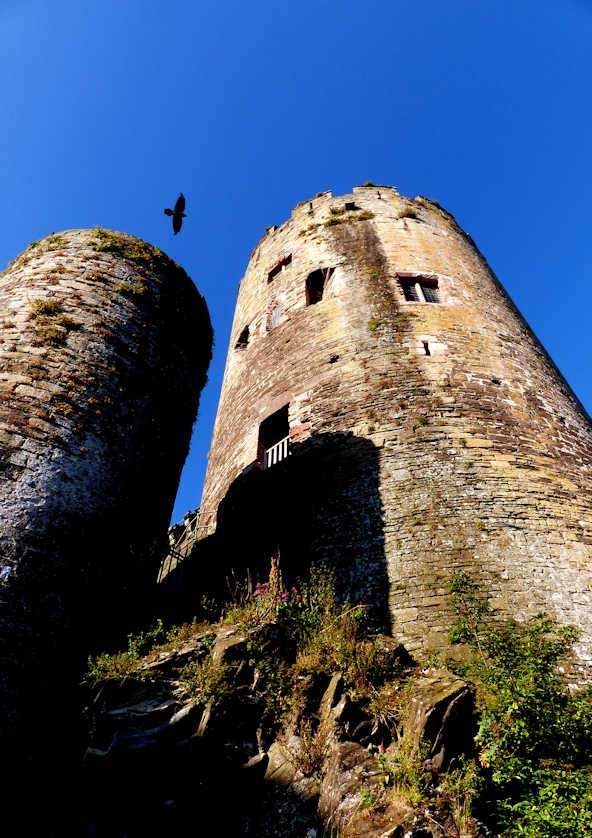
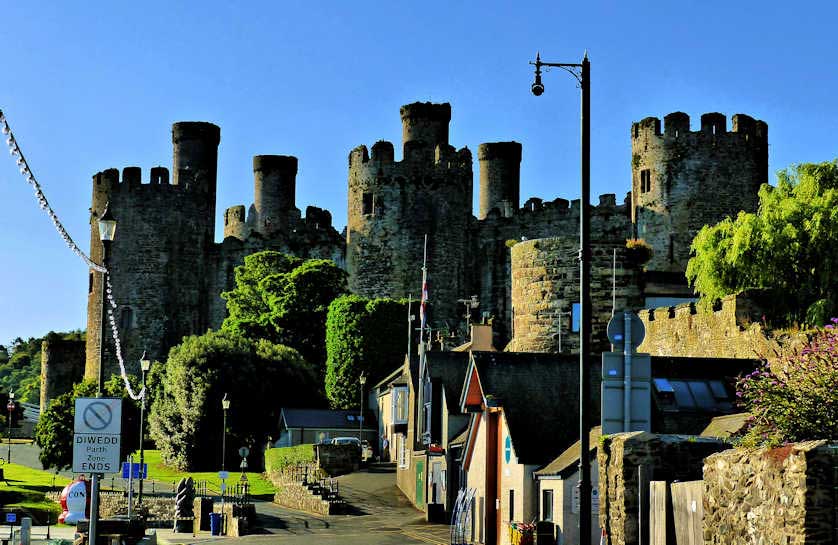
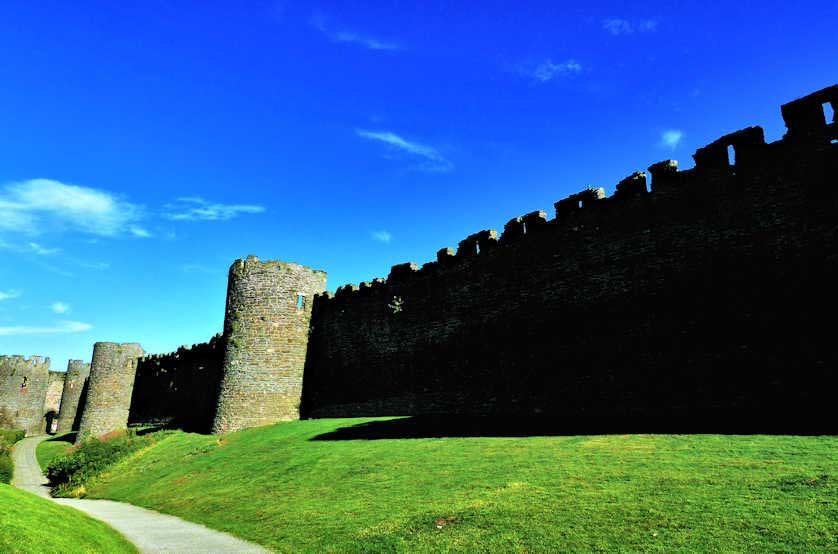
First to be constructed was the great curtain wall with its eight circular towers, then the interior buildings were constructed, with the town walls being completed last.
The interior is divided by a wall into an inner ward and outer ward, with the four towers of the inner ward having smaller watchtowers atop them.
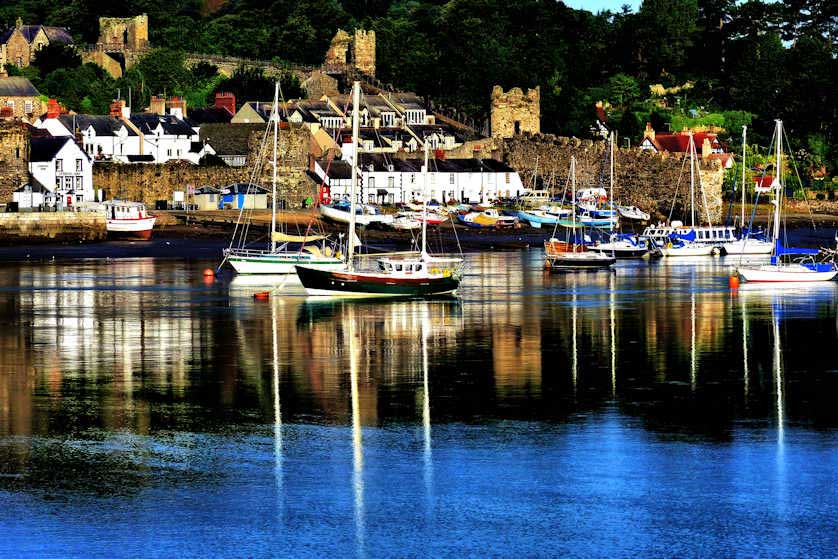
The stone used was local, with much coming from the ridge on which the castle stands, though some finer sandstone was imported for details like windows. The castle was originally whitewashed with a lime render and must have been impressive gleaming and reflected in the water of the river.
Edward himself was besieged within the castle for about a month in the winter of 1294-5 by forces of the rebel Madog ap Llywelyn.
Later, the castle fell into disrepair until Edward the Black Prince took over the fortress in 1343, but after his death the castle once again began to decay.
In 1401 during another Welsh rebellion, Welsh forces held the castle for three months before surrendering. In the early 16th century Henry VIII undertook some restoration work on the castle, but once again it soon deteriorated.
It was somewhat repaired and held by royalist forces during the English Civil War but fell after a siege. In 1660 the castle was stripped of all its iron and lead fittings and fell into ruin.
Some restoration work was done in the mid-19th century, and then again in the 1950's. In 1986 it became part of the UNESCO World Heritage Site.
The Castle Now
The castle is entered through the western barbican. Incidentally, the barbican has the oldest surviving example of a machicolation in Britain, through which stones or boiling oil could be dropped on attackers below.
Staircases in the towers have been restored allowing visitors to walk a complete circuit of the battlements.


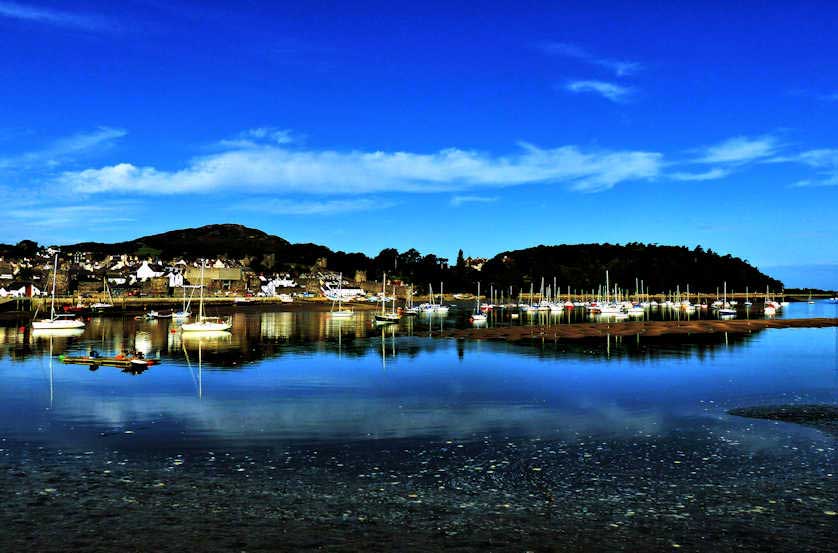
Conwy Town
The town walls are also part of the World Heritage Site and they still almost completely encircle the town with just some sections around the harbour no longer extant. Thus Conwy is the most completely walled town in Britain.
Visitors can walk along the top of the walls via several new staircases and from on top there are great views over the town, the castle, the river, and the nearby mountains.
Located directly in front of the castle is the Conwy Suspension Bridge, designed by Thomas Telford and constructed in 1826. Telford designed the bridge's towers to match the stonework of the castle behind it. The bridge can now only be crossed by pedestrians.
Tucked up against the town wall on the waterfront is the Smallest House in Great Britain. With a footprint of a mere 10 ft by 6 ft, it is a popular attraction.
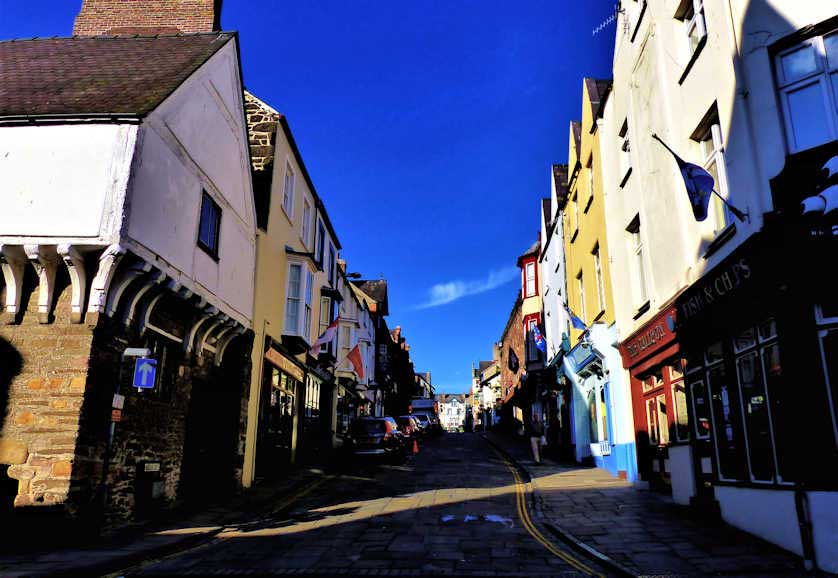
Within the old town are plenty of historical buildings including Aberconwy House, a 14th century merchant's house which was one of the first built in the town, and Plas Mawr, a much larger Elizabethan house built in 1576 for the Wynn family.
Queen Victoria established the Royal Cambrian Academy in 1881. It derives from an artist's colony in this part of Wales. It is an independent charity supporting Welsh art and artists. It now puts on a variety of exhibitions throughout the year. It is usually open 11 am-4 pm on Thursdays, Fridays and Saturdays.
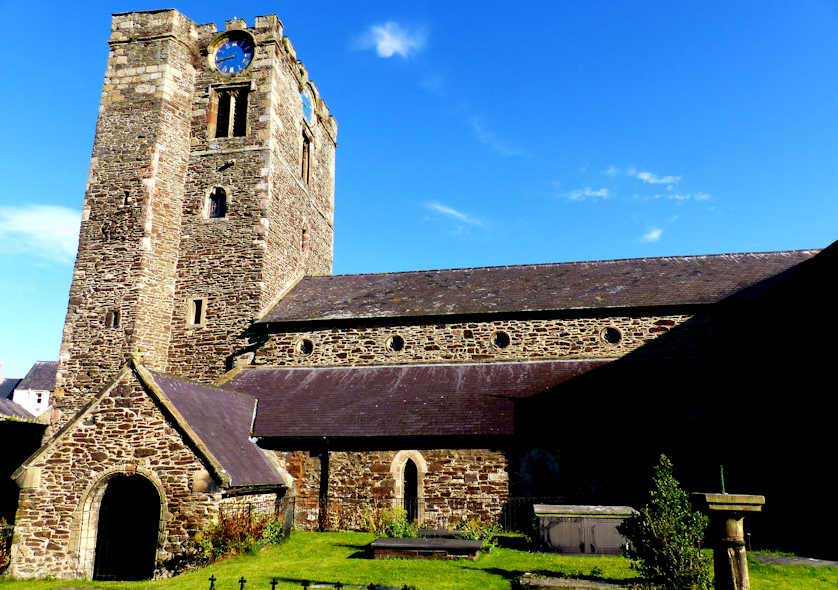
St. Mary's Church is an historic church in Conwy. It began as a Cistercian Abbey in the 12th century and was the original burial place of Llywelyn the Great (1173-1240). The abbey moved to Maenan near Llanrwst. Llywelyn's stone tomb is now in St Grwst's Church, Llanrwst.
Conwy Tourist Information Centre is located in the town between the station and the castle.
Nearby
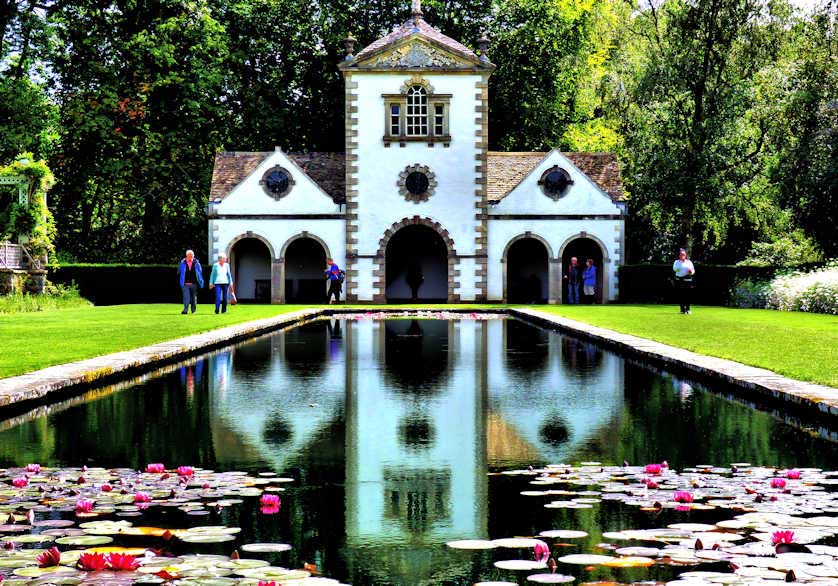
Nearby is Bodnant Garden which encompasses 80 acres overlooking the Conwy Valley and the Carneddau Mountains. Founded in 1874 and worked on by five generations of the family the gardens were donated to the National Trust in 1949. With formal gardens as well as woodlands, meadows, dells, a narrow gorge, a wide range of water features and a waterfall, new sections of the gardens are still being created. There are thousands of different plants and trees collected from all around the world. Bodnant Garden is a great place to visit whatever the season.

Access & Hours
Rose Hill St, Conwy LL32 8AY
Tel: 01492 592 358
For the latest opening times and prices etc see cadw.gov.wales
Conwy is on the A55 or B5106. The small town of less than 4,000 inhabitants is 4 miles south of Llandudno.
Bus #5 on the Llandudno-Conwy-Bangor-Caernarfon route stops close to the castle. From Llandudno the bus takes about 16 minutes. By train is about 30 minutes from Llandudno.
From Liverpool, Beaumaris is approximately 1 hours, 15 minutes by car on the North Wales Expressway/A55. From Manchester the journey is around 1 hour, 30 minutes on the M56 motorway and North Wales Expressway/A55.
Conwy Station is on the North Wales Coast Line that runs between Holyhead and Chester Station in Chester. It is a small station and trains only stop here upon request.
Accommodation in Conwy
There is a range of accommodation to suit all budgets in Conwy. Some recommended places to stay are the four-star Castle Hotel, located on the site of a historic abbey, the The Quay Hotel & Spa, also four-star and the three-star Conwy Valley Hotel on the edge of the Snowdonia National Park.
See a listing on hotels in and near Conwy
Map
British Castles
Best British Castles
Best Welsh Castles
Beaumaris Castle
Bodiam Castle
Chirk Castle
Colchester Castle
Conwy Castle
Corfe Castle
Hever Castle
Kenilworth Castle
Peveril Castle
Scotney Castle
Scottish Castles
St. Michael's Mount
Windsor Castle
Book Hotels in Cardiff - Booking.com
Find Hotels in Swansea - Booking.com