Bridgnorth, Shropshire
Bridgnorth Guide
Jake Davies

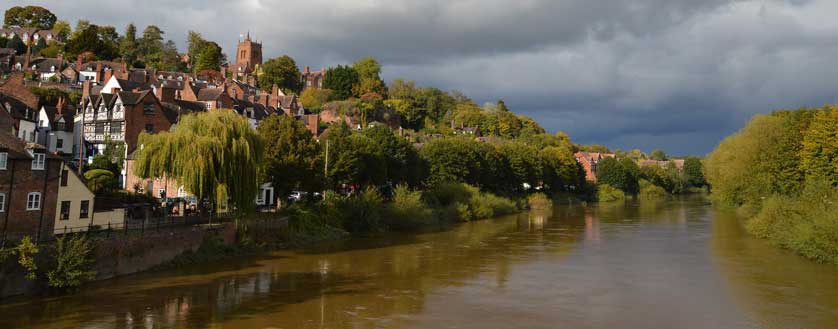
Bridgnorth is a small, historic town of around 12,000 inhabitants on the River Severn in Shropshire.
Once one of the busiest river ports in the country, the river divides the town into two parts, High Town and Low Town.
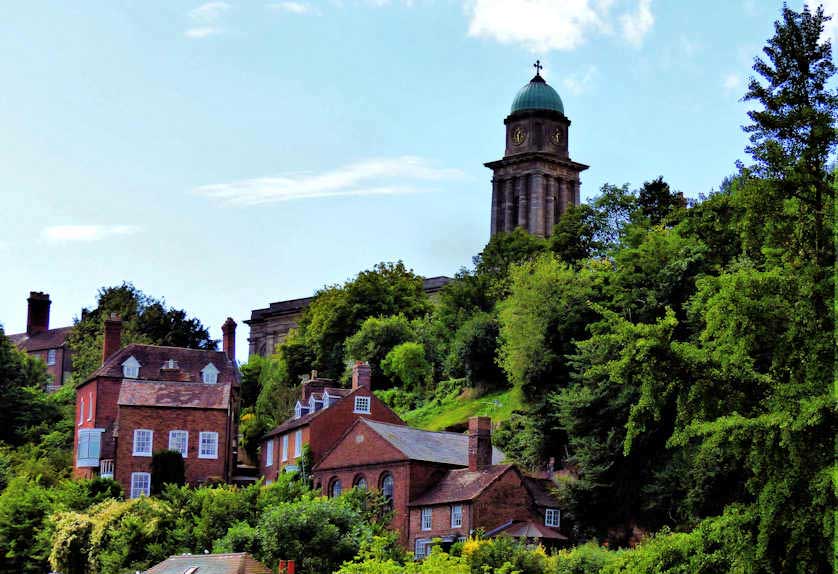
According to King Charles I (1600-1649), the view from High Town was "The finest view in all my kingdom."
Nowadays Bridgnorth is known mostly for its funicular railway, said to be the steepest in the country, and its heritage Steam railway, the Severn Valley Railway.


History
There has been a bridge here since at least Saxon times, but the town can be said to have begun in 1101 when Robert de Belleme, the Earl of Shrewsbury transferred St. Mary's Church here and constructed a castle.
In 1102 Henry I besieged the town and eventually took it from de Belleme. The town prospered and received a royal charter in 1157.
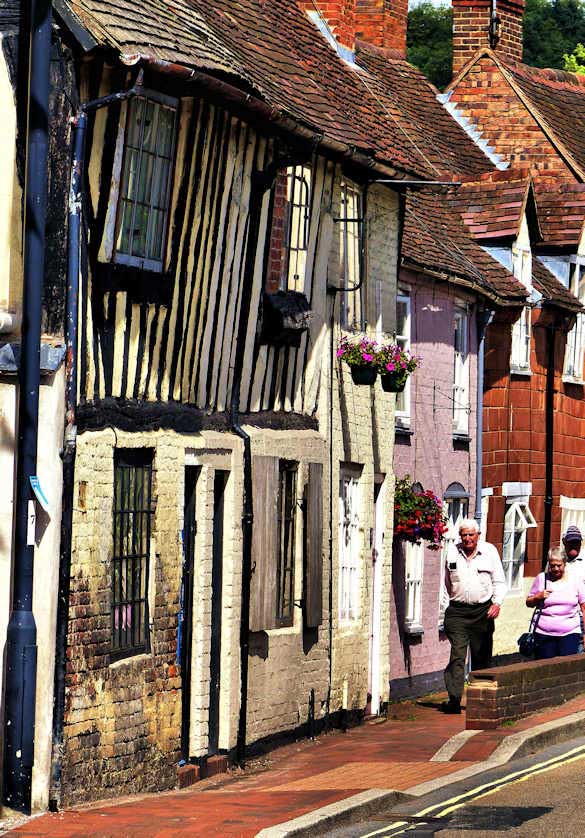
During the English Civil War the town was staunchly Royalist. During the Parliamentary army's campaign to take the town a fire, now known as the Great Fire, burned down many of the buildings, though a few half-timbered structures survived.
After taking the town and castle, Cromwell ordered the castle demolished. Some of the ruins still remain in a small park in the town. One section of the former keep wall leans at a precarious angle.
The bridge across the river at Bridgnorth has always been a substantial one, with records of 1313 showing it built of stone.
Old engravings show a sturdy stone bridge with some largish building on it. The bridge was substantially rebuilt in 1812 according to designs by Thomas Telford, the architect of the nearby Pontcysyllte Aqueduct, a UNESCO World Heritage Site.
When the bridge was widened in 1823 the last houses were also removed from the structure. The quay by the bridge was home to a bustling river trade and the town was home to many inns to accommodate the boatmen and traders. With the advent of the railways the river traffic declined and the last commercial barge service ended before the end of the 19th century.

Cliff Railway
The cliff railway at Bridgnorth is the only remaining inland funicular railway in England, though more than a dozen still operate in coastal locations.
It was opened in 1892 and the 61 meter track rises 34 meters in a minute and a quarter about 200 times a day. The alternative is to walk up 200 steps.
It is one of the steepest in the country, with a maximum incline of 68 degrees. It is now powered by electricity but was originally water-gravity powered with large tanks under the cars being alternately filled and emptied of water.
Severn Valley Railway
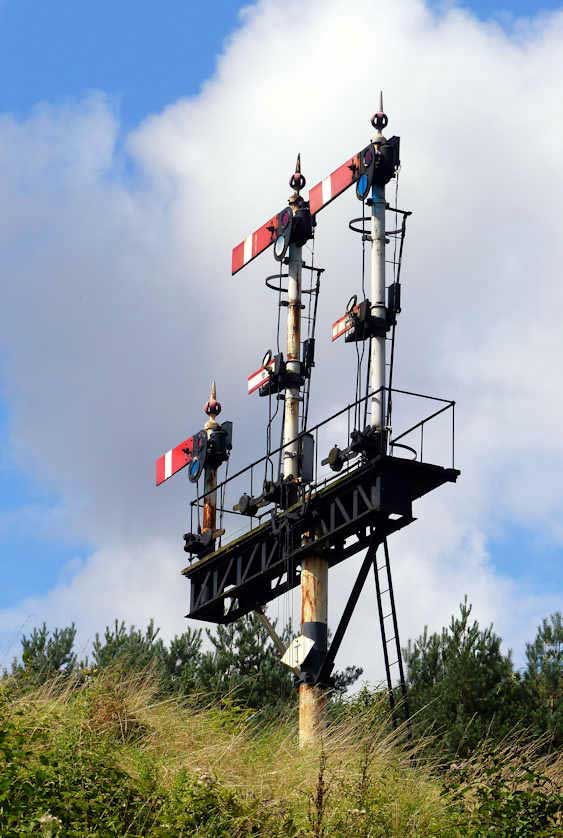
The Severn Valley Railway Line was constructed between 1858 and 1862, and connected Hartlebury in Worcestershire, with Shrewsbury in Shropshire. For most of its history it was a part of the Great Western Railway, and then the Western region of British Rail. The line was closed in 1963 leaving Bridgnorth without a railway connection.
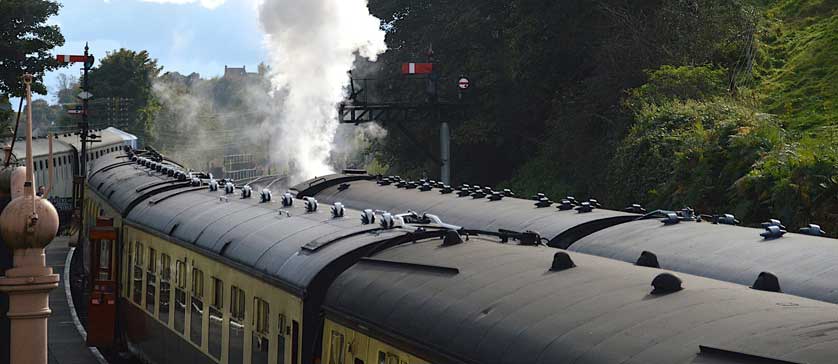
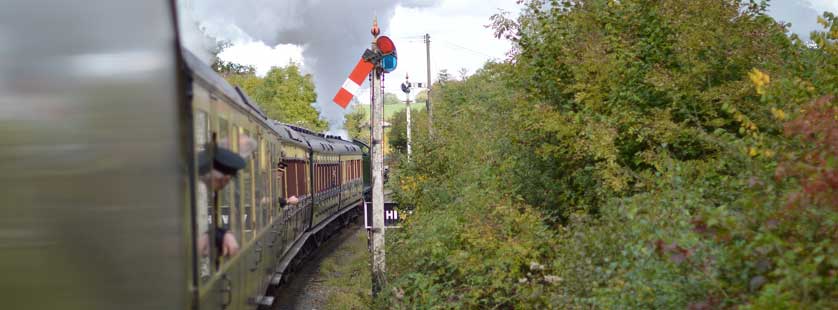
In 1965 a group formed to reopen a section of the line as a heritage railway. Now the 16 mile section between Bridgnorth and Kidderminster operates steam trains and sometimes vintage diesel trains that run mostly along the scenic Severn River. Throughout the year special dining services operate and also numerous events take place at the Bridgnorth Station depot.
Other Attractions
There are several historic buildings to enjoy in Bridgnorth, including the Old Town Hall. Built in the mid-17th century, this half-timbered structure sits astride the High Street.
Raised up on stone pillars to allow markets to take place under cover, something that still takes place regularly, the Town Hall is open to the public and from inside the magnificent Victorian stained glass can be appreciated.
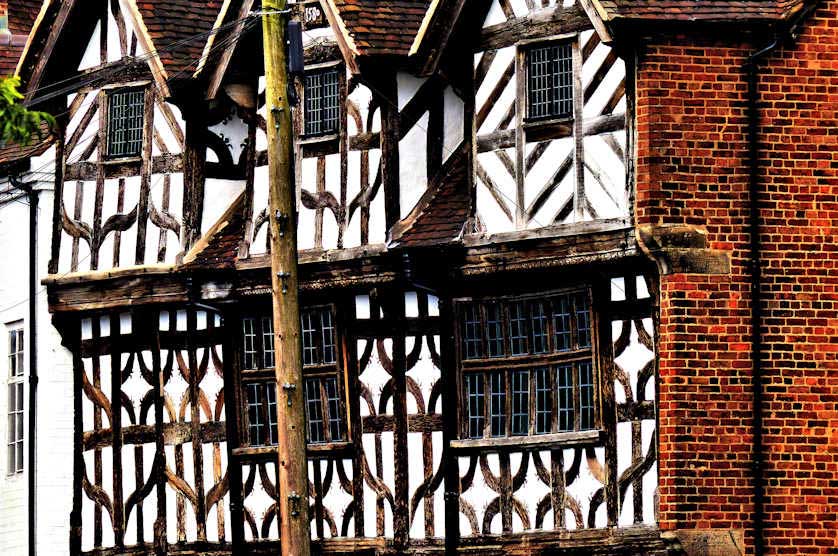
Another impressive half-timbered building is Bishop Percy's House, built in 1580, and believed to have been built using recycled oak from ships, it is one of the wooden buildings that survived the Great Fire of 1846. Recently extensively refurbished, the building is now open as a Tea Room, with holiday flats occupying the upper floors.
Churches
There are two churches worth a visit, the first, St. Leonard's, an impressive Norman building of red sandstone, was built in the 12th century. During the Civil War it was used as an ammunition store by the Roundheads and a cannon shot caused it to ignite, destroying a large part of the church and starting the Great Fire. It was partially restored later but not completely restored until the 19th century. It is no longer used as a church but is open to the public.
St. Mary's was originally constructed in the 14th century, but by the late 18th century it was deemed in danger of collapse, so Thomas Telford was asked to design a new church.
Telford is known more for his civil engineering works like suspension bridges and aqueducts, but St. Mary's was his first church.
Consecrated in 1796, he designed the exterior in Tuscan style, the interior in Ionic style, and the tower in Doric style.
The Bridgnorth Visitor Information Centre is in the library on Listley Street.
Access
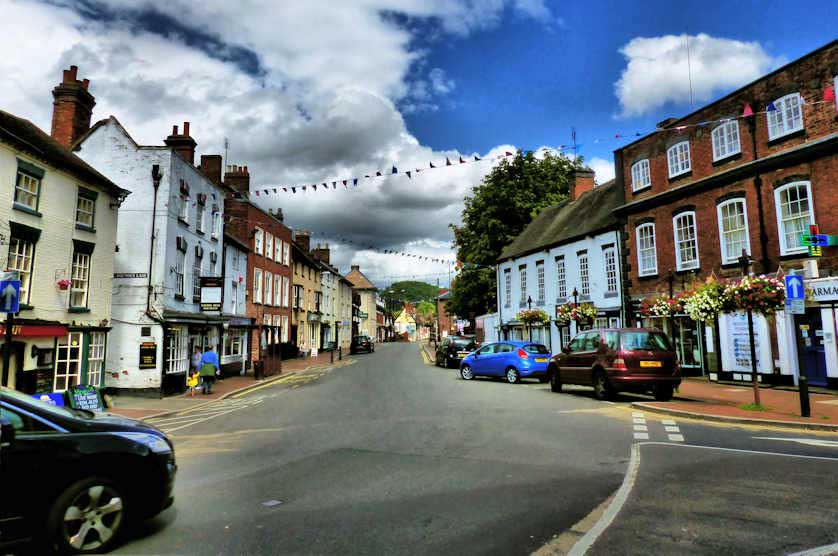
Bridgnorth can be reached by bus #9 from Wolverhampton. There are also buses to nearby Ironbridge, Kidderminster, Much Wenlock, Telford, Shifnal and Shrewsbury (#436).
The two closest railway stations are Telford and Wolverhampton. Trains from Telford connect with Chester Station in Chester and Shrewsbury.
Wolverhampton Station has trains to Birmingham New Street, London Euston, Holyhead via Shrewsbury and Chester, Liverpool Lime Street, Shrewsbury, Stoke-on-Trent, Macclesfield and Manchester Piccadilly.
By car the town is about 50 minutes from Birmingham on the M6 and M54 motorways. From Aberystwyth take the A44 and A489. Driving time is about two hours.
Accommodation
Bridgnorth has some excellent places to stay. Choose from the Falcon Hotel a former 17th century coaching inn on St John's Street, the Down Inn just outside town with full English breakfast or the Parlors Hall Hotel with bar, garden and free WiFi.
See a listing on hotels in and near Bridgnorth
Nearby
15 km (10 miles) or so up the River Severn is the UNESCO World Heritage Site of Ironbridge. The birthplace of the Industrial Revolution, it was here the world's first iron bridge was constructed by Abraham Darby III. A Quaker, Darby was the third man of that name among the Darby family that played such a pivotal role in Britain's industrial breakthrough.
A further 15 km east is the Royal Air Force Museum in Cosford, one of Britain's many fine aviation museums. Cosford's collection includes both passenger aircraft, fighter planes and bombers from the UK and overseas. Among the many planes on display are an Avro Vulcan, de Havilland Mosquito TT.35, Gloster Gladiator I, Hawker Hurricane and Supermarine Spitfire I.
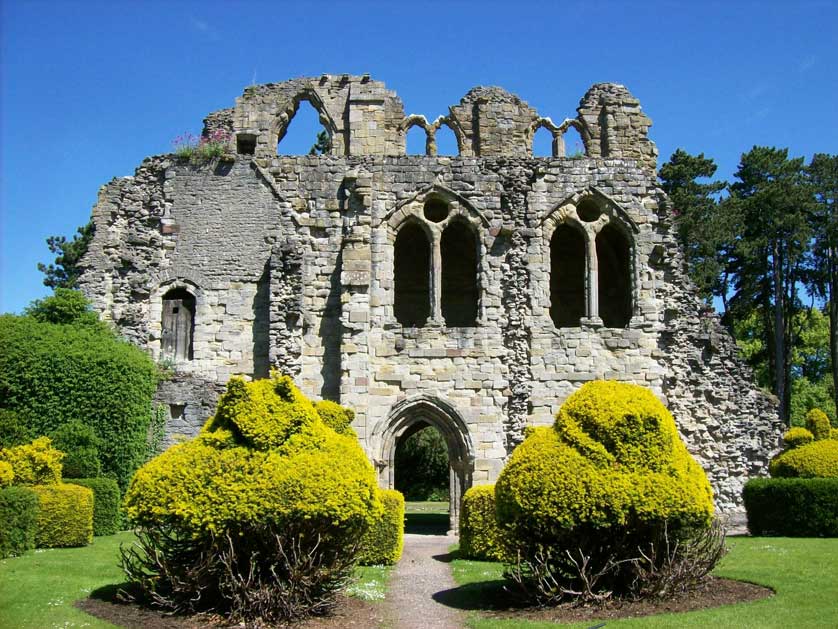
Wenlock Priory in the village of Much Wenlock dates to the 12th century. Now ruined, the priory was dissolved in 1540, with many of the buildings destroyed at the time. The site is now managed by English Heritage. The spacious grounds contain a collection of topiary.
Map
Gallery


Book Hotels in Cardiff - Booking.com
Find Hotels in Swansea - Booking.com