Britain's Nature: Swans
Cygnus - King of Birds
Jake Davies
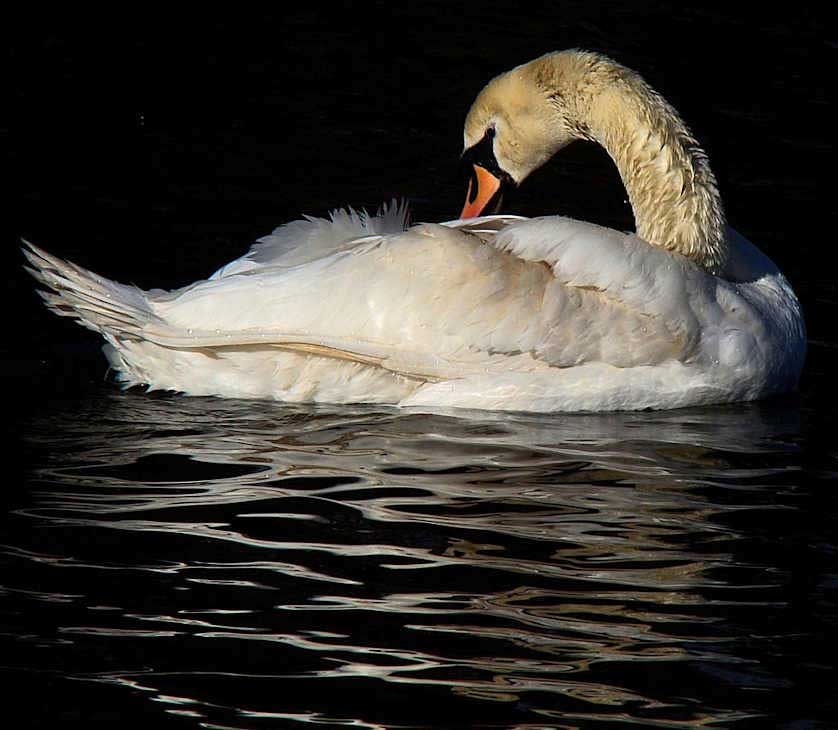
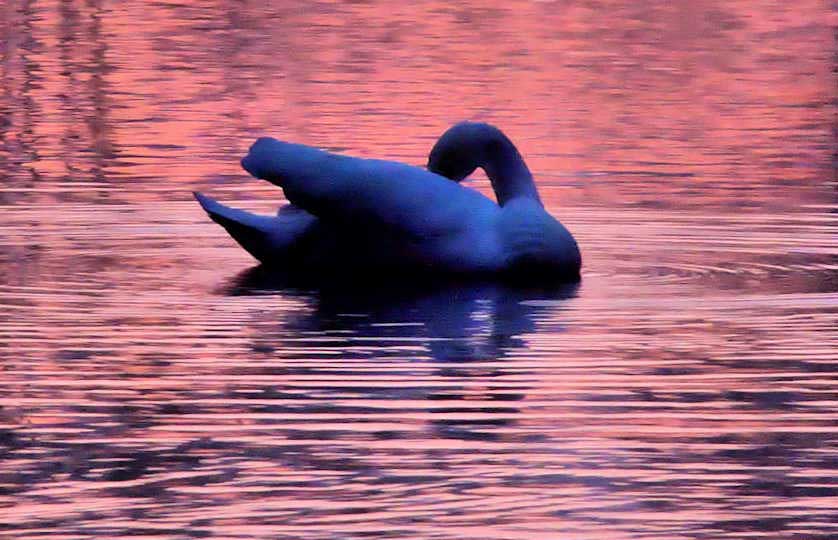
Swans are without a doubt the largest flying birds that can be seen in the wild in the UK.
It may be possible to see larger flightless birds like ostriches in zoos and safari parks or even farms, where you could also see some larger flying birds.
Related to ducks and geese, the swan is a waterfowl found mostly throughout the temperate regions of the northern hemisphere, although Australia and South America also each have a single species and some northern hemisphere species have been introduced into some southern-hemisphere countries.
The most common species found in the UK is the Mute Swan, Cygnus olor, although a few Whooper Swans live year-round in some far northern spots, and many more over-winter in the UK after migrating south from sub-arctic regions. The Mute Swan earned its name by being relatively quiet compared to other swan species.
Weighing up to 15 kilos and with a wingspan of over a meter, swans need a relatively large area of water, or land, for take-off and landing, within this limitation swans can be found on any rivers, lakes, large ponds, canals, etc.
Swans' Nests
The nests are built on land, very close to water, and the male takes part in building the nest and also incubating the eggs which usually number around half a dozen.
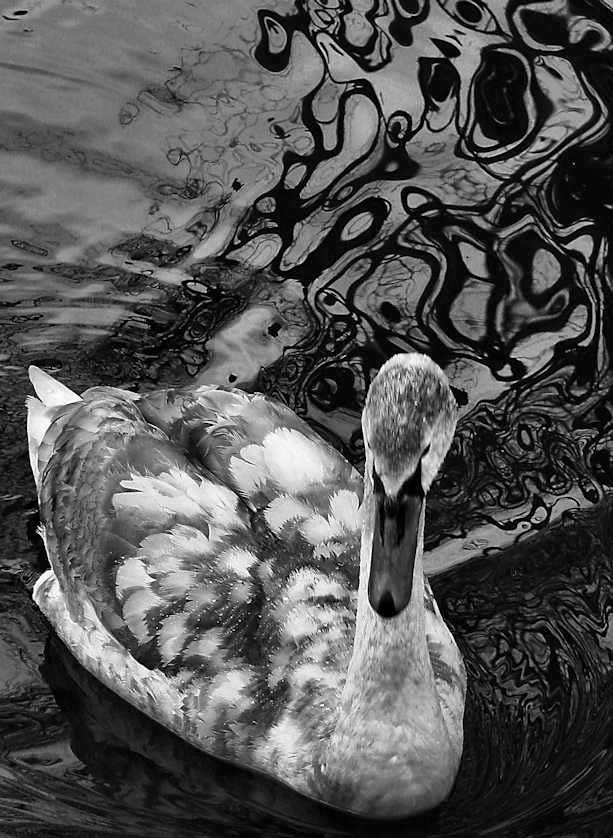
Swans will attack if you approach too close to the nest. Babies are called cygnets and are born with beige and gray colouring which doesn't turn all white until maturity.
Swans are often held to be symbols of love as it is said they mate for life, and while this is actually mostly true, there have been instances of "divorce" after a failed nesting, and following the death of one of a mating pair the other can find and pair with a new mate.

Swans in Popular Culture
The swan appears in culture throughout the world, with the most famous European examples being the children's story The Ugly Duckling by Hans Christian Andersen, and Swan Lake, the ballet by Tchaikovsky.
In Greek mythology Zeus turned himself into a swan to seduce Leda. In Norse myths, two swans drink from the sacred Well of Urd in the land of Asgard, home of the gods. Swans are also revered in Hinduism.
The word "Swan" also often appears in the name of pubs in Britain and also hotels. The Swan is the most common and found all over the country including Brighton, Cheltenham, Harrogate, Leicester and Liverpool, The Old Swan appears in Crewe, Dudley, Liverpool and London and then there is The Swan With Two Necks in Stockport near Manchester. The Black Swan is common, too. The Black Swan in Oldstead is a Michelin-starred restaurant with rooms on the edge of the North York Moors run by celebrity chef Tommy Banks. The Black Swan Inn in York dates from the 15th century. The Swan Theatre in Stratford-upon-Avon is now an intimate and iconic venue in Shakespeare's birthplace.
Swan or Swann is also a fairly common surname in the UK. Famous people with that name include former England cricketer Graeme Swann, Vivien Swan (1943-2009), the archaeologist and Joseph Swan (1828-1914) the inventor of the incandescent light bulb.
The word itself is Old English from the German. Swan song is a metaphorical phrase for a final effort, gesture, or performance just before death or retirement.
The Monarchy & Swans
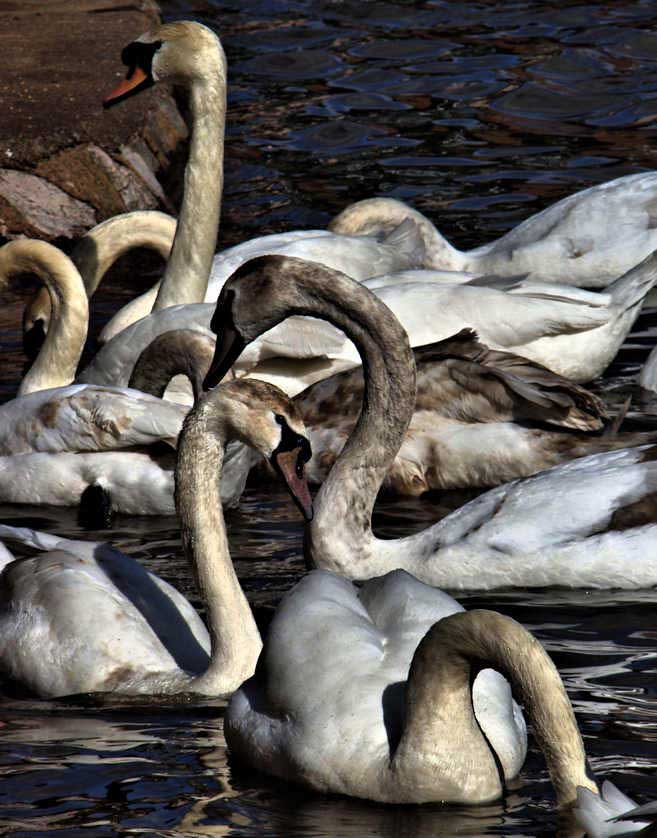
It is commonly believed that the Queen, or more properly, the Crown, owns all the swans in the UK.
In fact the Crown owns all the unmarked, Mute Swans on open water. So this excludes all the Whooper Swans were migrate here, and all those "marked", that is the property of those given historical permission by the crown to own swans.
This is really just the few organizations like the Vintners or the Dyers who have had the right since the 15th century to mark the bills of swans to claim ownership.
In fact, the Queen only exercises her right, along with the Vintners and Dyers, to the swans along sections of the Thames River. The reason why ownership of swans in historical times was important was because they were a delicacy served at feasts and banquets.
Swans are now a protected species and no longer eaten, though King's College in Cambridge has the right to catch and eat swans, none there have been consumed since the late 19th century.

Feeding Swans
In recent years there has been something of a debate about whether to feed swans.
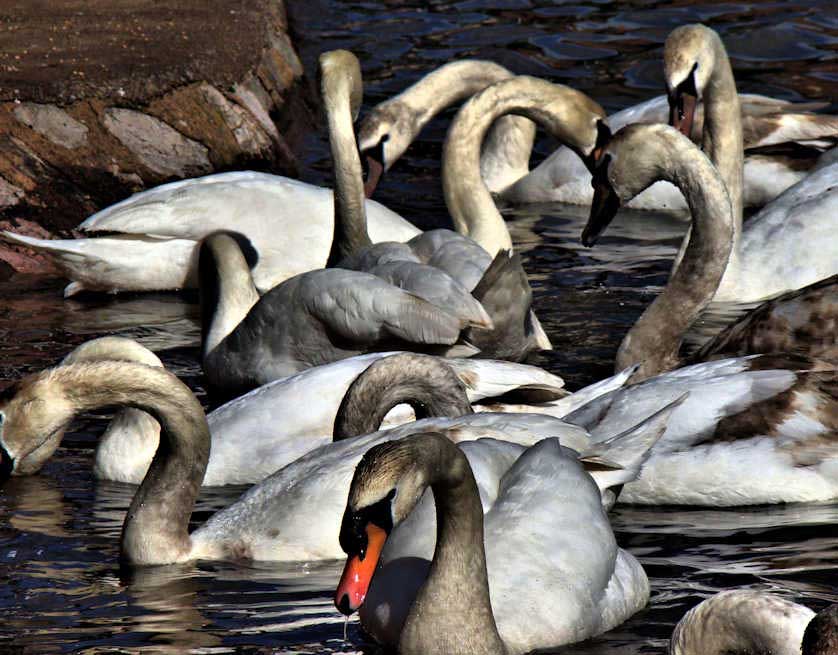
Swans are herbivores, eating mostly plants on the surface of the water, though with their long necks they are able to feed on deeper plants than other waterfowl, and they do sometimes eat on dry land.
Feeding bread to swans and other waterfowl has been a common practice for years, but for a while a campaign to stop the practice operated on the principle that bread was harmful to the birds' digestive systems.
However, it is now considered that while bread is not the most ideal food for the swans, they have come to depend on being fed by humans especially in mid-winter and times of drought when natural food sources become limited.
Swans will also eat vegetable peelings and other greens, although commercial available feed for swans, ducks etc is actually the best.
Related
Boating Holidays on Britain's Waterways
Britain's Canals & Their Habitat
Hotels in the UK
Book Hotels in England - Booking.com
Find Accommodation in London - Booking.com
Search Hotels in Scotland - Booking.com
Hotels in Northern Ireland - Booking.com