Britain's Birds
Birds in Britain
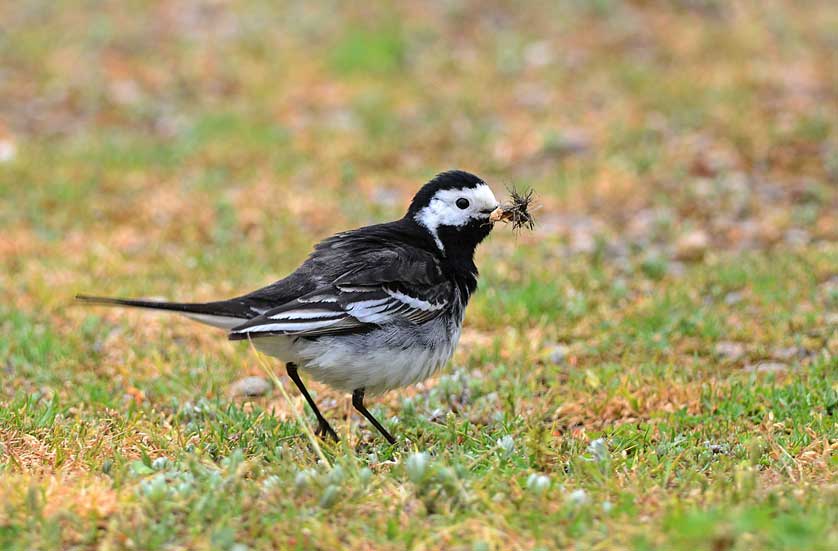
Britain's birdlife is diverse and numerous. Britain is home to a rich and diverse array of birdlife, shaped by its varied landscapes, temperate climate, hedgerows, numerous islands and both long coastlines and cliffs.
From the call of the curlew over windswept moorland to the vibrant flash of a kingfisher darting along a quiet river, the UK's birds are an ever-present part of its rich natural heritage.
Seasonal migrations also bring dramatic changes, with winter flocks of geese arriving from the Arctic and summer visitors like swallows returning from Africa. Whether in city gardens, National Parks, ancient woodlands, canals, lakes, or rugged coastal cliffs, birds are both a symbol of Britain's ecological richness and a vital part of its environmental story.
See an A-Z listing of birds in the UK.
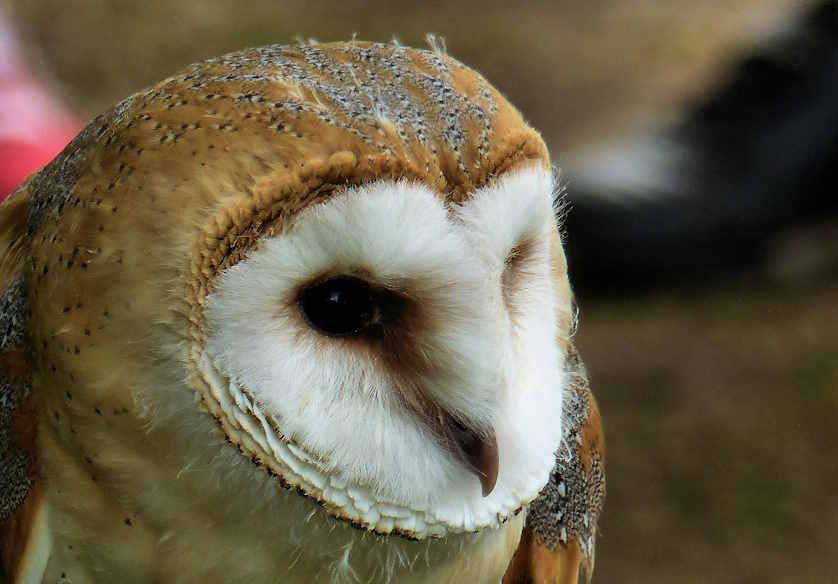
Barn Owl
With its distinctive, heart-shaped face, the barn owl is possibly the most easily recognizable of all the owls.
The genus Tyto, is the most widely distributed, world-wide, of all the various owls. Tyto alba, the western barn owl, is the species seen in Britain, where it is found throughout the British Isles. It can also be found throughout Europe, in many parts of Africa, and in a few areas of the Middle East.
The western barn owl nests in cavities. While this can include holes in trees or rock fissures, or disused nests of larger birds, they tend to prefer man-made structures like barns, churches, farm sheds. They are sometimes known as barnyard owls, church owls, or cave owls. They do not hoot, rather their call is more of a screech, which gives rise to several of their other names, such as hissing owl, or screech owl. Other common names include demon owl, ghost owl, death owl, monkey-faced owl, rat owl, stone owl, and straw owl.
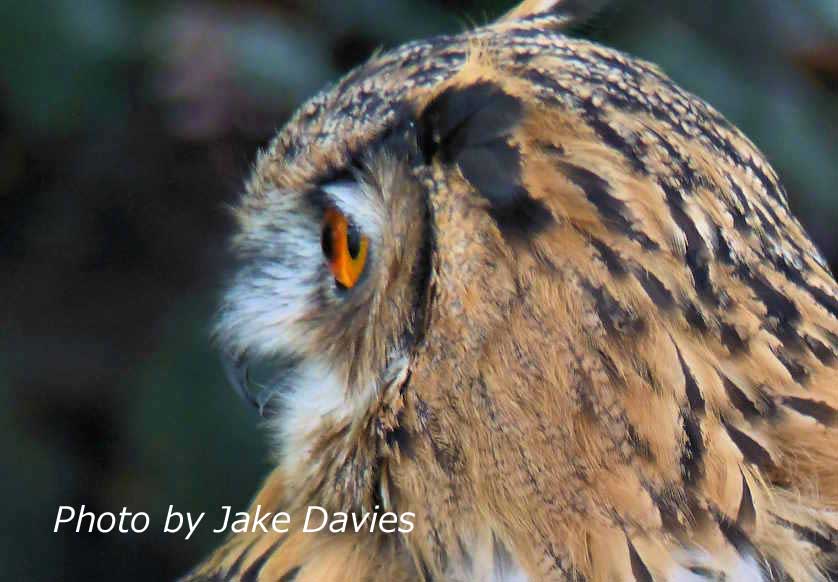
Eagle Owl
The Eurasian Eagle Owl, Bubo bubo, is not only the largest owl to be found in the UK, but also one of the biggest of all birds in the country, with a wingspan that can reach 6 feet. It is as large as a Red Kite, and the only birds larger being the Golden eagle and White-Tailed eagle. The females are larger than the males.
There are, however, contradicting opinions on whether the eagle owl is considered a native bird or not, with experts and authorities about evenly split on the matter.
There are believed to be several dozen mating pairs of Eagle Owl currently in the UK, mostly in the north of England and in Scotland.

Greylag Goose
The Greylag, or Graylag, Goose, Anser anser, is one of nine species of wild goose that can be seen in the UK, but is the only native goose of the three species that breed here.
It is the ancestor of most of the domestic breeds of geese. Though not as common as Canada Geese, introduced to the UK in the 17th century, it is estimated that there are about 46,000 breeding pairs in the UK, though that number more than doubles with those that migrate here from Iceland. They are primarily herbivorous and mostly found in Scotland, coastal Wales, and the East of England.
These were photographed next to the Oxford Canal near Rugby, Warwickshire. The name comes from the fact that they tend to migrate fairly late in the season and therefore "lag" behind other geese. Until the popularization of the turkey, the goose was the standard Christmas dish. Considered sacred in many ancient cultures, with links to fertility, the goose was connected to Aphrodite, and the tradition of wishing and pulling the "wishbone" comes from the goose.
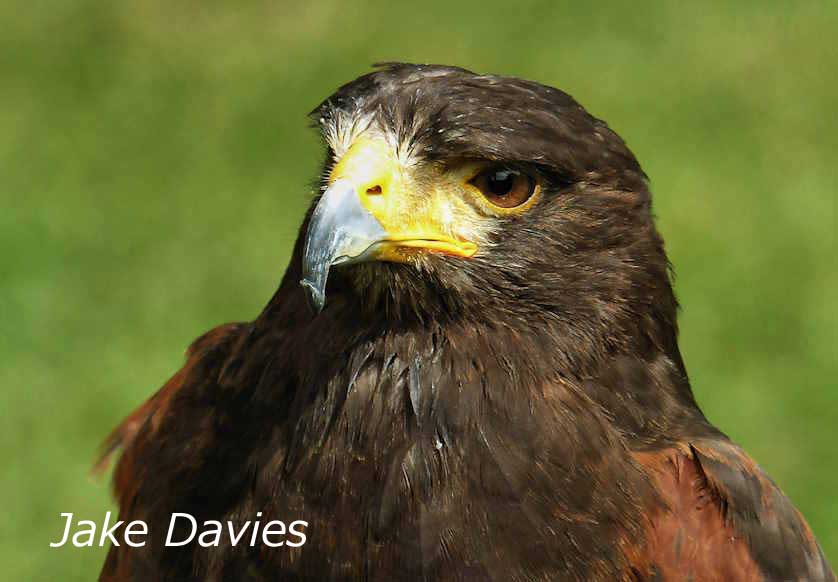
Harris Hawk
The Harris Hawk (Parabuteo unicinctus) is able to tolerate a very wide range of habitats, from desert to woodland, mangrove to grassland, and even urban environments. It is native to the Americas, but is often included among British birds as it is the most popular species used in falconry.
Harris Hawks are a medium sized bird of prey with a wingspan of 2 to 4 feet. Their distinctive appearance, dark brown body, reddish shoulders, and white tips on their tail feathers, make them easy to identify.

Herring Gull
The Herring Gull, Larus argentatus, is the classic seagull whose call is a quintessential sound of the British seaside. Adults, both male and female, are mostly white with grey wings tipped with black, and yellow legs and bill.
They are born with an overall mottled plumage which they keep for four years. Until their third year their bills and eyes are black. They live all across the coastline of the British Isles and venture quite far out to sea and inland in their search for food.

Mallard
The mallard, Anas platyrhynchos, is the most common wild duck in the UK. Found throughout the Northern Hemisphere, in the UK they can be seen on any body of water, river, lake, pond, or canal. It is also the species of duck that most domesticated ducks are descended from. The most distinguishing feature of the mallard is its green head and neck, however, this is only on the males. The female mallard is pretty much brown and mottled, perfect camouflage for protecting the nest. The colourful male plumage is exhibited during mating season and will become almost indistinguishable from the female plumage at other times. Unlike many migratory birds that strictly follow a specific route to a specific destination, mallards are somewhat flexible and will migrate depending on weather and availability of food.

Muscovy Duck
The Muscovy duck, Cairina moschata, is not native to the UK. It originates from the Americas, primarily Central and South America but is found as far north as southern Texas.
It was domesticated by various Native American peoples, and was introduced from there to the rest of the world as a domestic duck, the only domestic duck in the UK not descended from the Mallard. It is quite a large duck, sometimes believed to be a goose, and is prized mostly for its meat.
Those found in the wild are feral or descended from feral, and so are often found near humans. There are numerous theories on the origin of the name, but none seem certain. Most commonly they are black and white with the balance of colors being variable. Most noticeable are the red faces which develop wart-like caruncle as they age, especially with the drakes. Caruncle is a natural fleshy growth like the wattle of turkeys or the combs of some chickens.

Peregrine Falcon
The Peregrine Falcon, Falco peregrinus, is a crow-sized bird of prey that is the most widespread of all raptors. Found across the globe, though not found on very high mountains, in the extreme polar regions, or most tropical rain forests, the peregrine is also found in urban settings. In the UK it is the largest of the falcons, and can be seen pretty much across the whole of Britain.
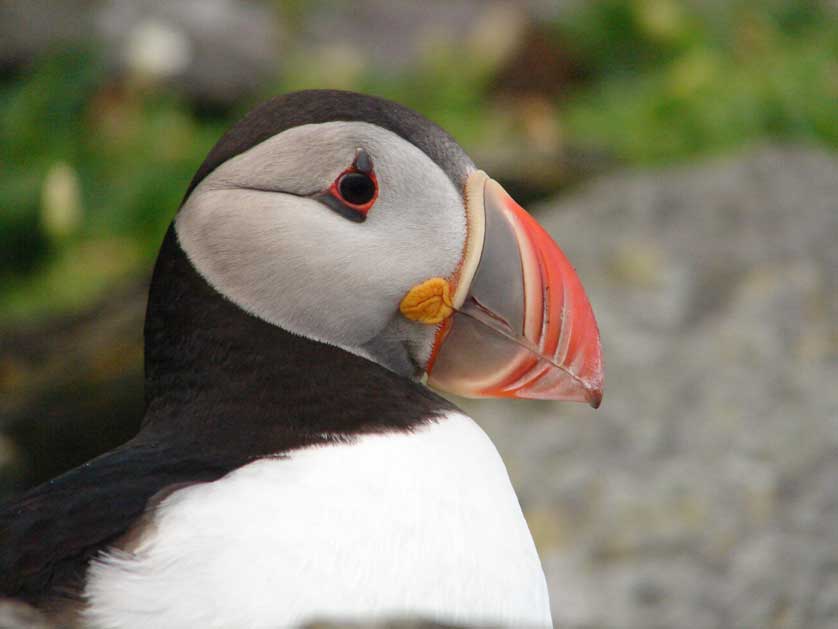
Puffins
Fratercula or Puffins, with their colorful beaks during the breeding season and somewhat clownish appearance, are some of Britain’s best-loved birds.
Puffins are seabirds belonging to the auk family and have a predominately black and white plumage. Puffins in the UK are mostly found in a few sites in the north of England, Anglesey in Wales and Scotland.
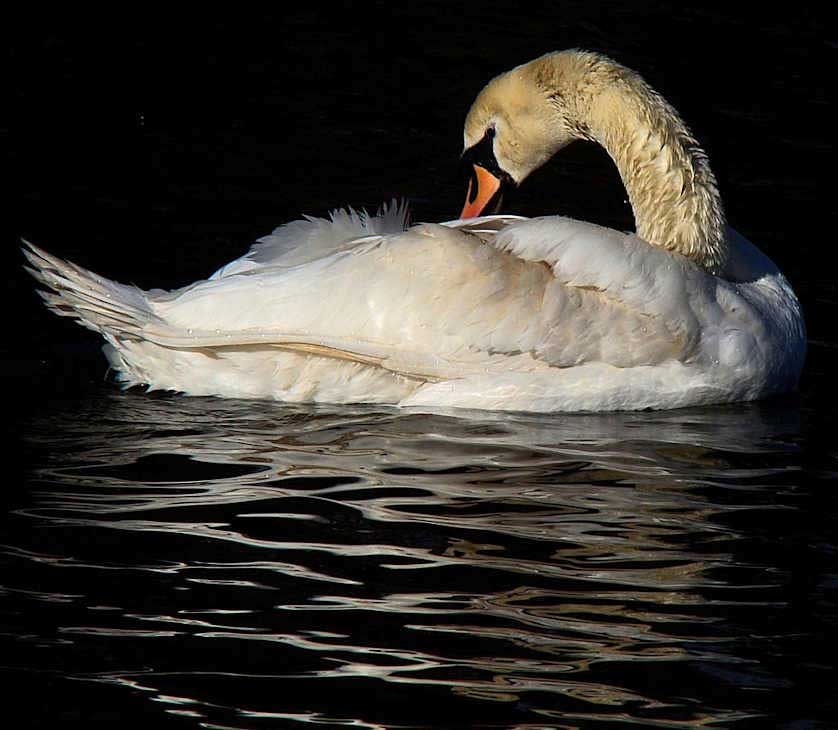
Swans
Swans are without a doubt the largest flying birds that can be seen in the wild in the UK. It may be possible to see larger flightless birds like ostriches in zoos and safari parks or even farms, where you could also see some larger flying birds. Related to ducks and geese, the swan is a waterfowl found mostly throughout the temperate regions of the northern hemisphere, although Australia and South America also each have a single species and some northern hemisphere species have been introduced into several southern-hemisphere countries.
Hotels in Britain
Book Hotels in Edinburgh - Booking.com
Find Hotels in Glasgow - Booking.com
Search Hotels in Orkney - Booking.com
Hotels in The Shetlands - Booking.com