London Parks: Hyde Park
Hyde Park
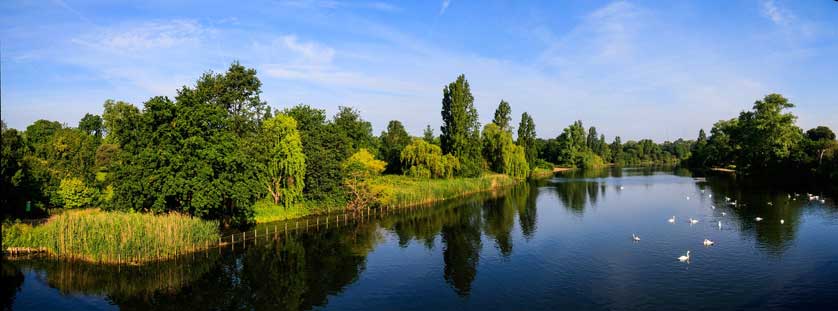
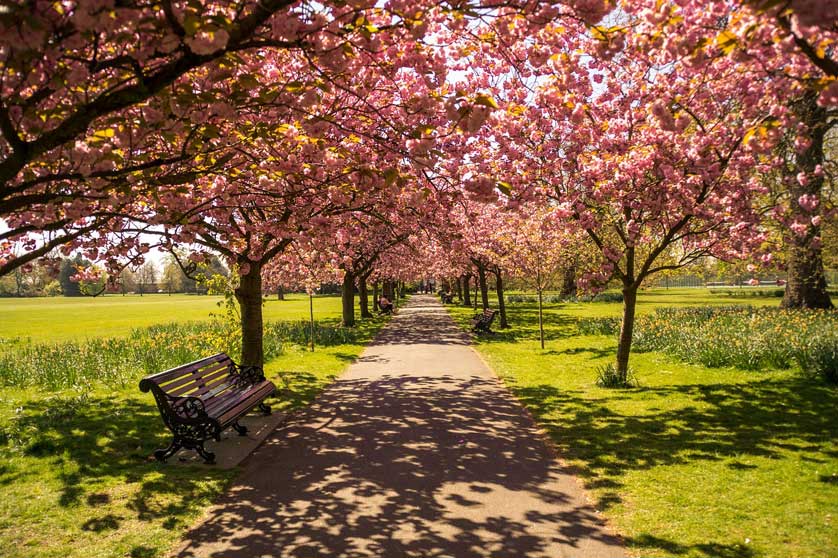
Huge and centrally located, Hyde Park is one of the most visited parks in London with more than 4,000 trees, a lake, a meadow and ornate rose gardens.
It is one of capital's eight beautiful Royal Parks - the others are Green Park, St. James's Park, Kensington Gardens, Regent's Park in the center plus Greenwich Park, Bushy Park and the vast Richmond Park farther out.
The park's meandering paths are perfect for a relaxing stroll or bike ride, while the meadow frequently hosts picnickers during the summer months. The Diana, Princess of Wales Memorial Fountain can be found in the park.

History
Originally acquired by King Henry VIII in 1536 as a hunting ground, the land which is now Hyde Park was seized from Westminster Abbey during the dissolution of the monasteries. The park remained a private royal property until 1637, when King Charles I opened it to the public. Before that James I had opened the park to a select group of courtiers and socialites in 1603.
In 1726, Queen Caroline oversaw the first major landscaping of Hyde Park. This included the creation of the Serpentine Lake, formed by damming the River Westbourne, which effectively divided the park into two distinct sections.
Its transformation into a public space marked the beginning of its continuing role as a green space for leisure, recreation, and public gatherings. Designed to include wide avenues, ornamental water features, and lush greenery, the park quickly became a popular destination for Londoners of all social classes.
During the 19th century, Hyde Park became a focal point for political and social movements. The establishment of Speakers' Corner in 1872 formalized its reputation as a site for free speech and public debate, with figures such as Karl Marx and George Orwell addressing crowds there. Throughout its history, the park has also hosted major cultural and historical events, from the Great Exhibition of 1851 to modern-day concerts and festivals.
Layout & Events
The park covers an area of 350 acres (140 ha) and is the largest of the chain of parks running through the center of London.
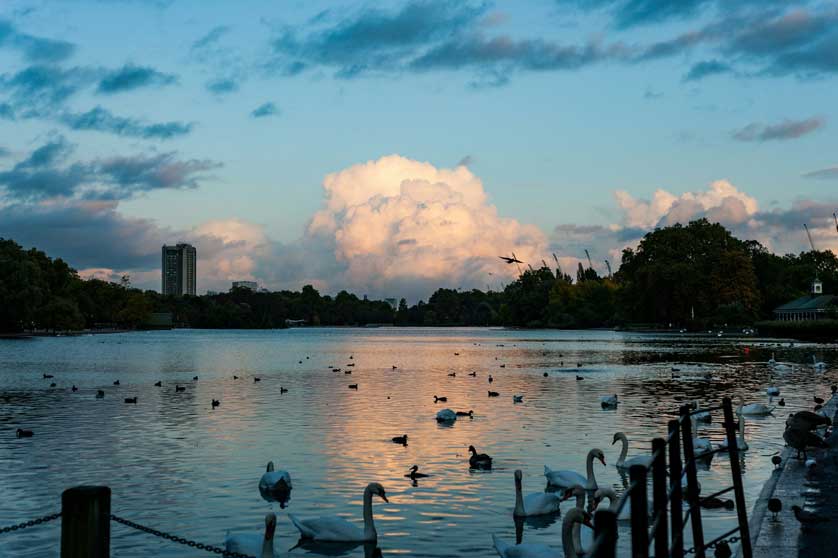
At its heart lies the Serpentine Lake, a curving water feature that bisects the park, offering opportunities for boating and lakeside relaxation. The park is crisscrossed by a network of tree-lined avenues, such as Rotten Row, historically a horse-riding track, now used by cyclists and pedestrians.
Open meadows and gardens, including the Rose Garden near Hyde Park Corner, provide tranquil green spaces. Key landmarks like Speakers' Corner, the Diana Memorial Fountain, and the Joy of Life Fountain are strategically placed, creating focal points for visitors. The park connects to adjacent Kensington Gardens offering a unified green expanse in the heart of London.
Monuments in Hyde Park
Hyde Park is also home to several notable statues, monuments and other landmarks. These include The Diana, Princess of Wales Memorial Fountain, a contemporary and interactive water feature opened in 2004 by Queen Elizabeth II to commemorate Princess Diana's life and legacy.
Serenity, a work by Simon Gudgeon from 2009, representing Isis, the Egyptian goddess of motherhood and more widely nature and magic, in the form of a bird is nearby.
The 5.5 meter Achilles Statue was erected in 1822 as a tribute to the Duke of Wellington and the British Army. The statue is inspired by the hero of the Trojan War. It was the first statue unveiled in Hyde Park.
The 7 July Memorial is a somber tribute to the victims of the 2005 London bombings, consisting of 52 stainless steel pillars.
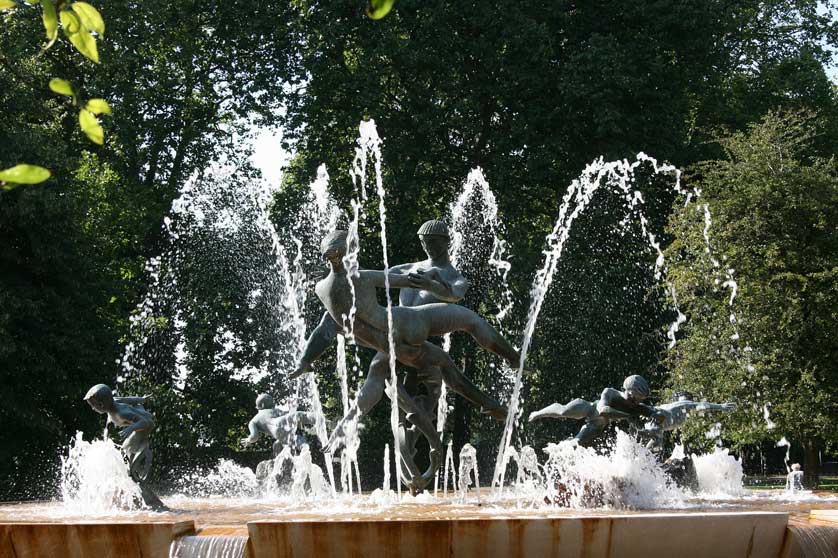
The Joy of Life Fountain located next to Aldford Street North Gate is a mid-1960's fountain designed by T. B. Huxley-Jones depicting figures dancing and playing, celebrating vitality and energy.
The Holocaust Memorial unveiled in 1983 is a memorial located near the Serpentine, dedicated to the memory of Holocaust victims and the first such memorial in the UK. It is in the form of a garden of boulders surrounded by birch trees.
The Reformers' Tree marks the spot of a historic tree burned during protests in the 19th century, this mosaic commemorates the struggle for workers' rights and suffrage. It was unveiled in 2000 by Labour politician Tony Benn.
Other monuments include the small Queen Caroline memorial in the form of an urn, the Pan statue, aka Rush of Green, the last work of British sculptor Sir Jacob Epstein and the Norwegian War memorial.
Gates
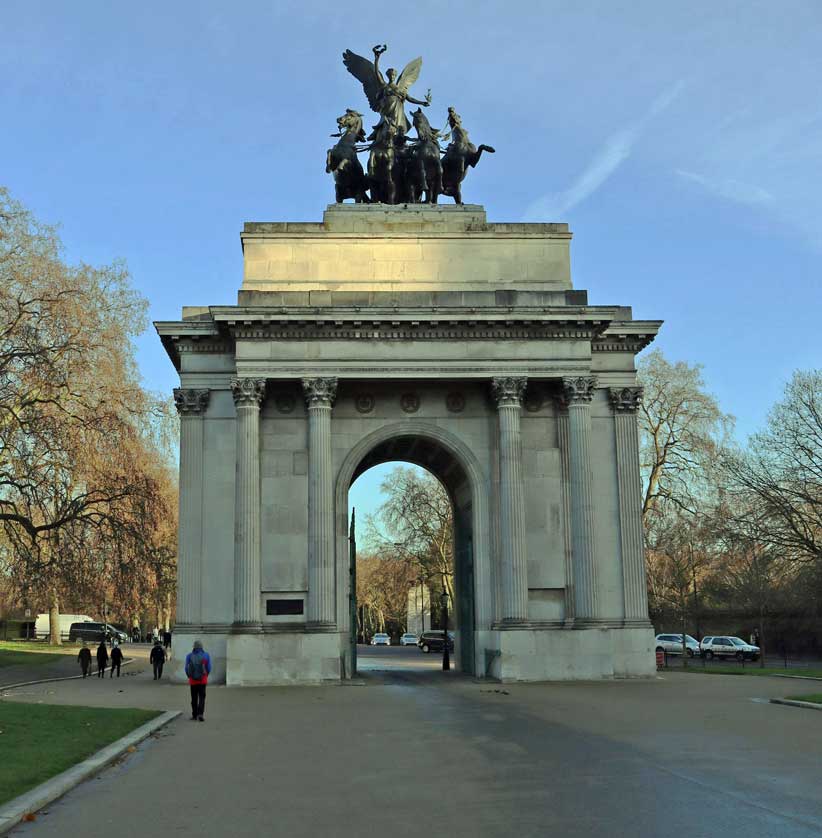
Apsley Gate, designed in Portland stone by architect Decimus Burton when he was just 25 years old was erected in the 1820s at the grand entrance to the park at Hyde Park Corner.
The Queen Elizabeth Gate, aka the Queen Mother's Gate, is an ornate entrance crafted from forged stainless steel and bronze. It is situated at Hyde Park Corner, behind Apsley House.

Winter Wonderland
Winter Wonderland takes place in the park close to the Rose Garden. This free-to-enter event (at off-peak times) includes a host of Christmas-themed fun and activities, including big top shows, an observation wheel, an ice bar and a sprawling German-style Christmas market.


Cafes
There are several cafes in the park serving refreshments. The Serpentine Bar & Kitchen, the Serpentine Lido Café, the Park Sports Café, and The Lodge Café at Hyde Park Corner offer a variety of delicious, sustainably prepared hot and cold dishes, including vegan, vegetarian, and other dietary options. Each venue features both indoor and outdoor seating, ensuring a comfortable and relaxing experience in any weather.
Nearby
There are several interesting places to visit close to Hyde Park. These include Portobello Market to the north in Notting Hill.
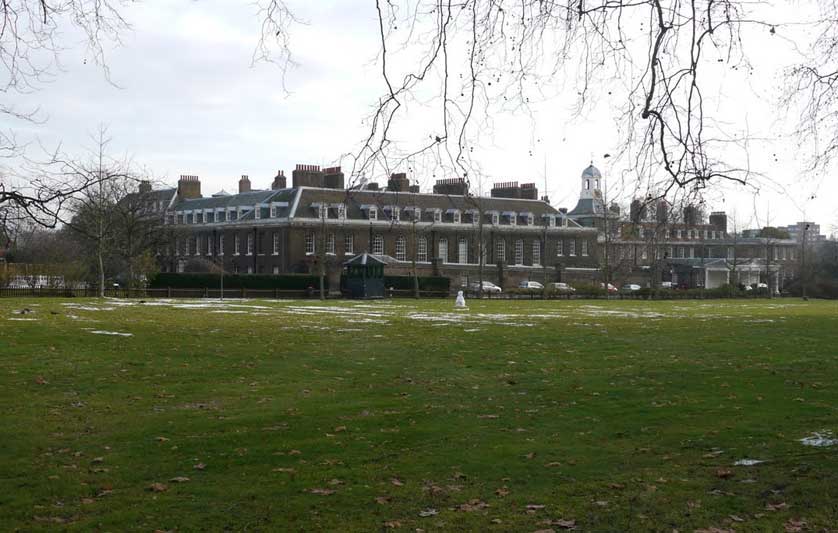
Kensington Palace is to the west in adjacent Kensington Gardens. The palace was also official residence of Diana, Princess of Wales from 1981 until her death in Paris in 1997.
To the south east is Buckingham Palace, Green Park and St James's Park. Due south is the affluent area of Knightbridge and Harrods department store.

Hotels
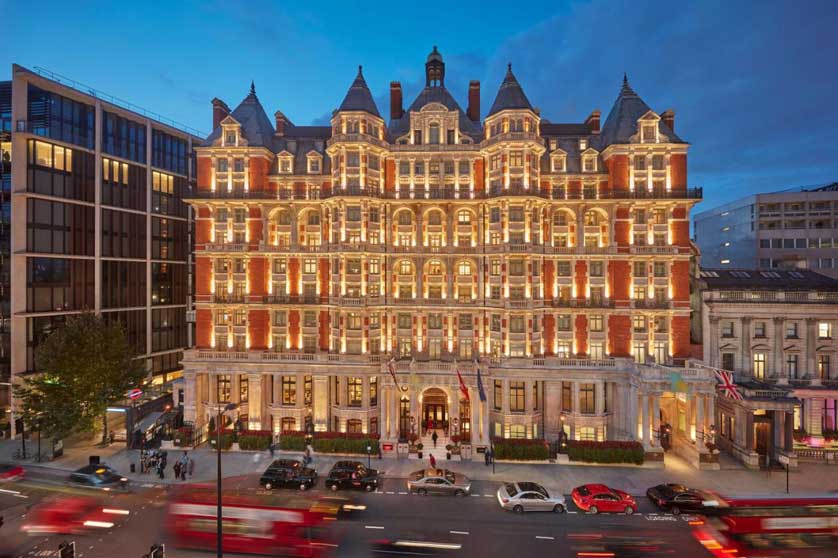
Accommodation in this area of London includes the five-star Milestone Hotel Kensington in Kensington Court. Other options include the four-star Sonder Chelsea Green, the luxury Mandarin Oriental Hyde Park at 66 Knightsbridge and The Dorchester on Park Lane.
See a listing of hotels near Hyde Park.
Access
Hyde Park
London
W2 2UH
Tel: 0300 061 2300
Hours
Opening times (pedestrian gate) 5 am to 12 am.
Knightbridge on the Piccadilly Line is on the south side of Hyde Park. Lancaster Gate on the Central Line is on the north side of the park. The following buses run along the south side of the park - the 9, 23, 52 and 452. On the north side near Lancaster Gate the 94 and 148 both stop.
Images of London
To see more images of London visit our images of Britain section.
Map of London Parks & Gardens
Hotels in London
Book Hotels in London - Booking.com
Find Luxury Hotels in London - Booking.com
Budget Hotels in London - Booking.com
Find Hotels in England - Booking.com
London Offers
London Attractions Tickets - Tiqets.com