UK Culture: Great British Sculptors
Great British Sculptors

Since World War II Britain has produced some of the world's most famous and celebrated sculptors. They include such names as Henry Moore, Barbara Hepworth, Anthony Caro and Antony Gormley.
Two of the most prominent late 19th century and early twentieth century sculptors in Britain were Alfred Gilbert (1854-1934) and the controversial Eric Gill (1882-1940).
Gilbert is known for such works as the Shaftesbury Memorial Fountain aka Eros statue in Piccadilly Circus and the Queen Alexandra Memorial on Marlborough Road, also in London. Gill's work can be seen in Westminster Cathedral and BBC Broadcasting House. He remains a deeply divisive figure for the abuse of his own sisters, daughters and pet dog.
The next generation of British sculptors was led by Henry Moore and Barbara Hepworth, followed by the so-called Geometry of Fear school of artists who exhibited at the Venice Biennale of 1952. These included Robert Adams, Eduardo Paolozzi, Lynn Chadwick and William Turnbull. A later generation includes Anthony Caro, once an assistant of Henry Moore, Antony Gormley and Anish Kapoor.

Henry Moore
Yorkshire is the birthplace of arguably the two greatest British sculptors of the twentieth century; Henry Moore (1898-1986), and Barbara Hepworth (1903-1975).
Henry Moore was born in Castleford and showed an early talent for art. He began his formal art education at the Leeds School of Art in 1919. Later, he studied at the Royal College of Art in London, where he was influenced by both classical sculpture and the modernist movements of the early 20th century.
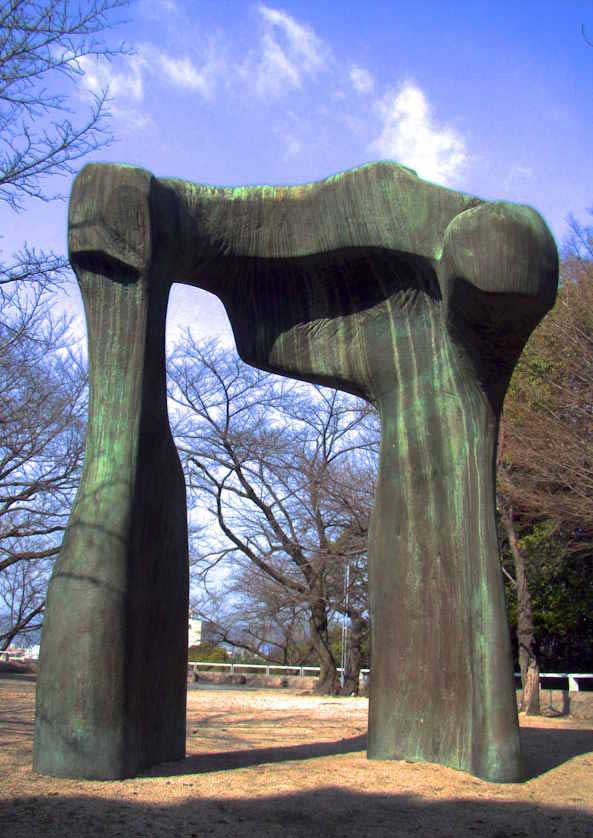


Moore's work often reflects his fascination with natural forms, such as bones, stones, and shells, which he encountered during his childhood explorations of the Yorkshire countryside. His sculptures, typically created in bronze or stone, evoke a sense of timelessness and often blur the line between abstraction and figuration.

As Moore's fame and fortune increased his work grew in size. His later monumental sculptures now adorn public spaces around the world. His best-known works include the "Reclining Figure" series, characterized by their elongated and abstracted human forms.

Barbara Hepworth
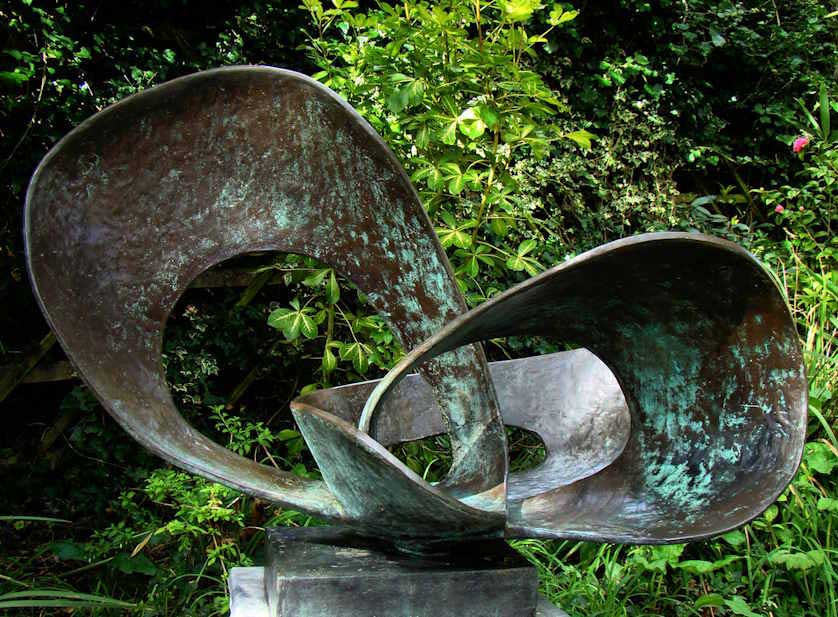
Barbara Hepworth was without a doubt the preeminent female sculptor from Britain in the twentieth century and certainly among the top female sculptors of the world.
Born in Wakefield in the north of England in 1903. She studied at Leeds School of Art in Leeds in northern England and befriended fellow student Henry Moore at the school. She maintained a friendly rivalry with Moore as their early work shared some stylistic similarity. The two of them were largely responsible for the Modernist Movement in sculpture. During the Second World War she stayed in Cornwall with her second husband, the painter Ben Nicholson.

During and just after the war, St. Ives became a major center of modern art with many European artists fleeing the conflict and its aftermath in Europe. In 1949 she purchased Trewyn Studio and this is where she lived and produced most of her work until her death in 1975. In accordance with her will Trewyn, her former home and studio in St. Ives, became the Barbara Hepworth Museum & Sculpture Garden in 1976 and has been maintained by the Tate since 1980.
In Wakefield itself there is the Hepworth Wakefield where much more of her work can be seen.

Anthony Caro
Sir Anthony Caro (1924-2013) was a prominent British sculptor known for his significant contributions to modern abstract sculpture. He was an assistant to Henry Moore in his early years. However, he diverged from Moore's figurative and organic forms, and he embraced abstraction, exploring new materials and techniques. One of Caro's most influential periods was during the 1960s when he began using steel and welding techniques to create large-scale, abstract sculptures. He abandoned the traditional pedestal, placing his sculptures directly on the ground.
Antony Gormley
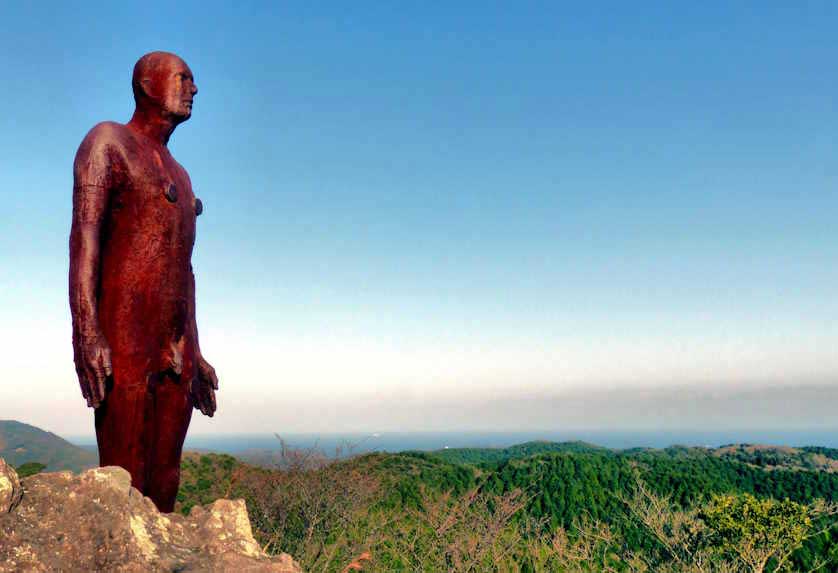
Gormley's most famous work in the UK is probably the huge Angel of the North in Gateshead. Completed in 1998, the Angel of the North is one of the largest statues in Britain at 20 meters in height, with its wings spreading 54 meters. Like the Another Place figures, the statue is based on a cast of the artist's body.
Born in London, Gormley studied at Trinity College in Cambridge, before pursuing a postgraduate degree in sculpture at the Slade School of Art.
Gormley's work often revolves around the themes of the human body, identity, and the relationship between the individual and the environment. He is particularly interested in exploring the body as a space and the idea of the body as a vessel for experience.
Beyond his artistic endeavors, Gormley has been involved in teaching and advocacy for the arts. He has served as a trustee of the British Museum and the Hayward Gallery.

Other British Sculptors
Several other contemporary British sculptors have reached a wider, global audience outside the UK. These include Damien Hirst, Rachel Whiteread, Eduardo Paolozzi and Anish Kapoor.
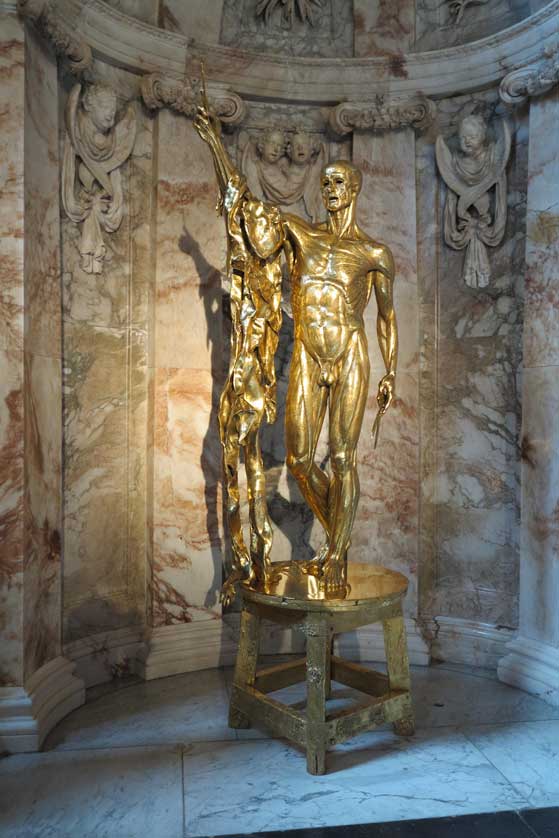
Damien Hirst first gained widespread attention for his series of artworks featuring preserved animals in formaldehyde, such as "The Physical Impossibility of Death in the Mind of Someone Living," a shark suspended in a tank. One of his most beautiful sculptures can be seen at Chatsworth House in Derbyshire. It is Saint Bartholomew, Exquisite Pain. The eight foot tall bronze statue depicts the martyr was flayed to death holding his skin as well as a scalpel and a pair of scissors. Hirst's Verity (2012) in Ilfracombe, Devon was chosen as one of the 10 best statues in Britain in 2020.
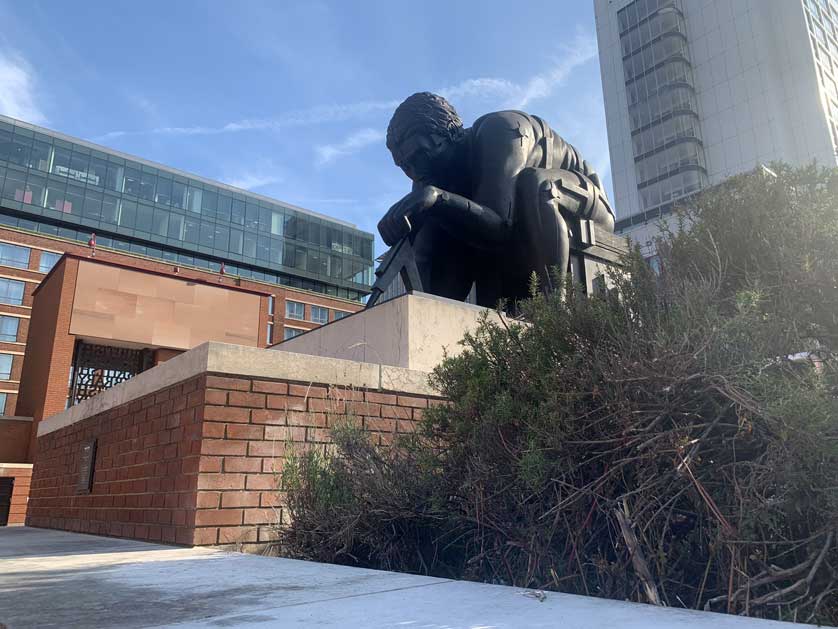
Eduardo Paolozzi (1924-2005) was a Scottish sculptor and artist of Italian descent, recognized for his pioneering contributions to the Pop Art movement. Born in Leith, Scotland, Paolozzi studied at the Edinburgh College of Art and later at the Slade School of Fine Art in London. He gained prominence in the 1950s and 1960s for his collages, sculptures, and prints that incorporated elements of mass media, consumer culture, and science fiction. Paolozzi's work often explored themes of technology, mechanization, and the impact of mass production on society. Notable pieces include his series of "Bunk" collages, the mosaics at Tottenham Court Road tube station and his monumental sculptures like "Newton" in the British Library Piazza.
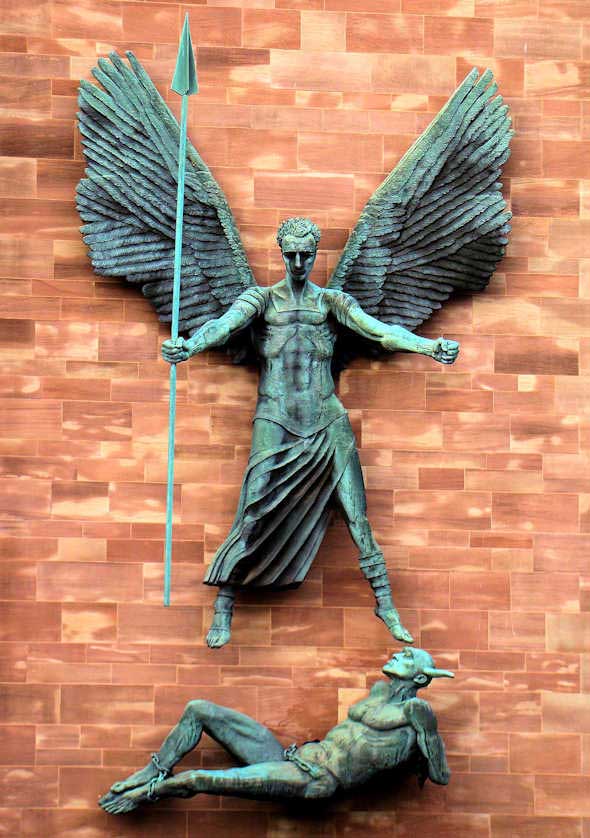
Jacob Epstein (1880–1959) was a revolutionary British sculptor whose work defied convention and challenged traditional aesthetic norms. Born in the United States, Epstein settled in England and became a pivotal figure in the early 20th-century art scene. Known for his bold, expressive style and innovative techniques, Epstein pushed the boundaries of sculpture, often provoking controversy with his provocative subject matter and raw, emotive and often naked forms. His diverse body of work encompassed portraits, monuments, and abstract pieces. Epstein's work in the UK can be seen at many different places. These include Coventry Cathedral, the National Portrait Gallery (a famous bust of the novelist Joseph Conrad), and Lewis's department store, Liverpool - a statue entitled Liverpool Resurgent.

Rachel Whiteread is known for her innovative use of negative space, casting everyday objects and architectural elements in materials such as resin and concrete.
Anish Kapoor's work delves into the realms of color, form, and perception, with sculptures that challenge viewers' understanding of space and materiality.
Where To See British Sculpture
Heather Jansch Studio in Olchard

Hotels in the UK
Book Hotels in England - Booking.com
Find Accommodation in London - Booking.com
Search Hotels in Scotland - Booking.com
Hotels in Northern Ireland - Booking.com