Southwark Cathedral, London
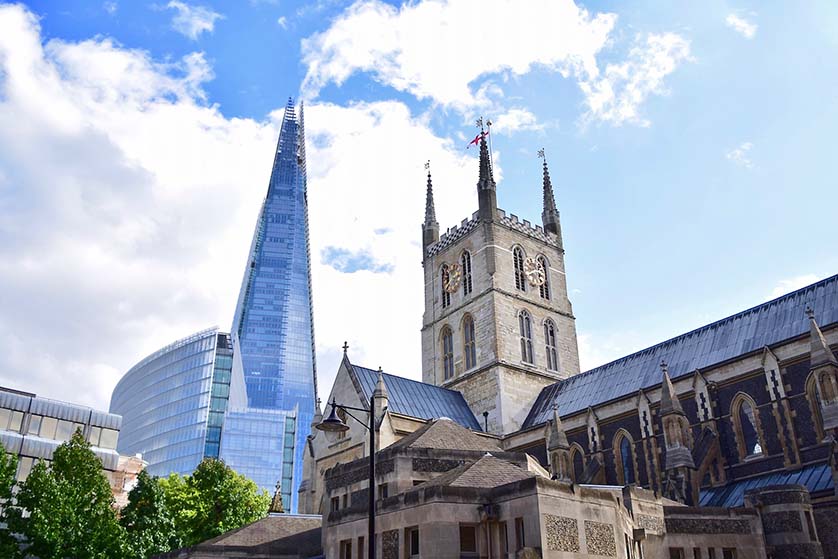
Southwark Cathedral (The Cathedral and Collegiate Church of St Saviour and St Mary Overie) is on the south bank of the River Thames in London close to The Shard, Guy's Hospital, the Golden Hinde, the Globe Theatre and the historic George Inn on Borough High Street.
History
The mainly Gothic church itself dates back to the 12th century and an Augustinian priory dedicated to the Virgin Mary. After Henry VIII's dissolution of the monasteries, it became a parish church rededicated to St Saviour. By the 19th century the building was in some disrepair and was restored by the architect George Gwilt (1775-1856).
The church became an Anglican cathedral only in 1905. It miraculously survived serious damage during World War II save for a few srapnel marks still visible on its walls.
It's full name is The Cathedral and Collegiate Church of St Saviour and St Mary Overie.
Architecture
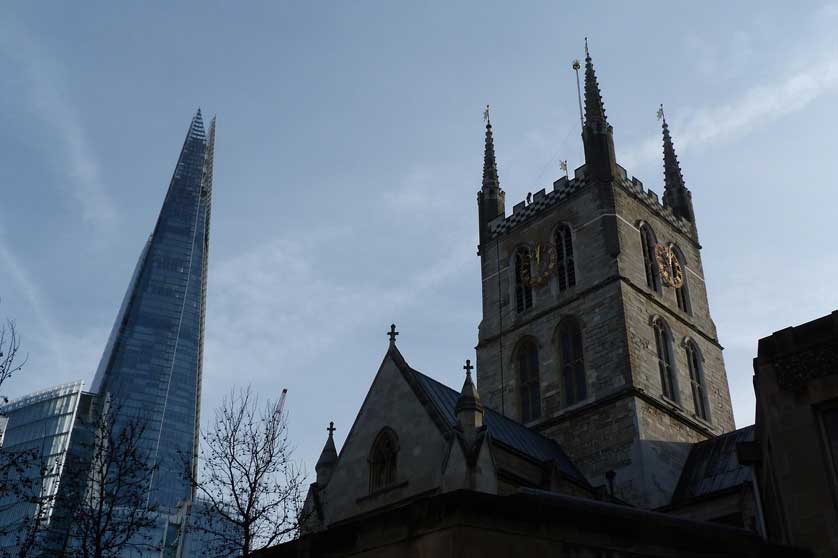
Southwark Cathedral is home to the oldest surviving example of Gothic architecture in central London. The cathedral is distinguished by its remarkable fusion of early 13th-century engineering and an elegant combination of French and English Gothic design influences.
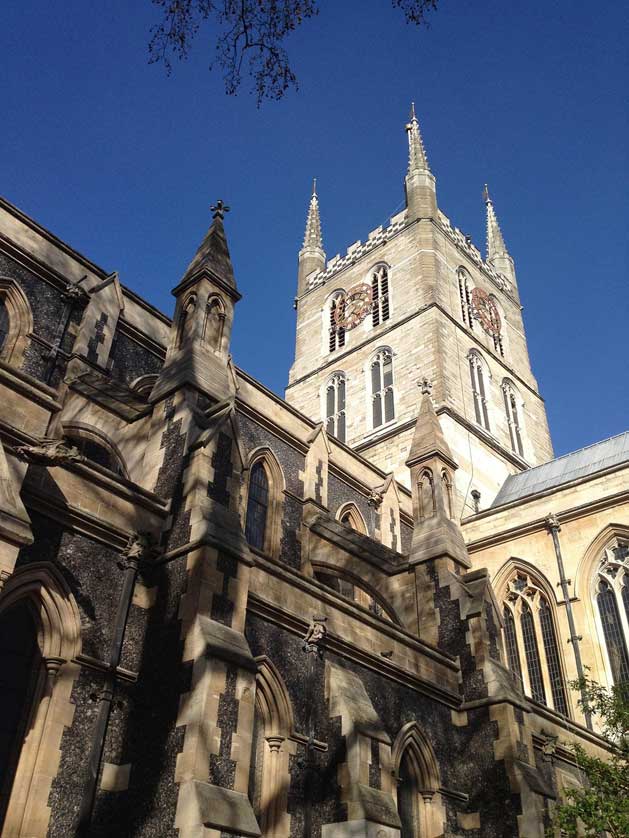
The Retrochoir was built in the early 1200s, and is the oldest surviving part of the cathedral. It is known for its graceful, multi-span pointed arches, delicate stone carvings, and vaulted ceilings.
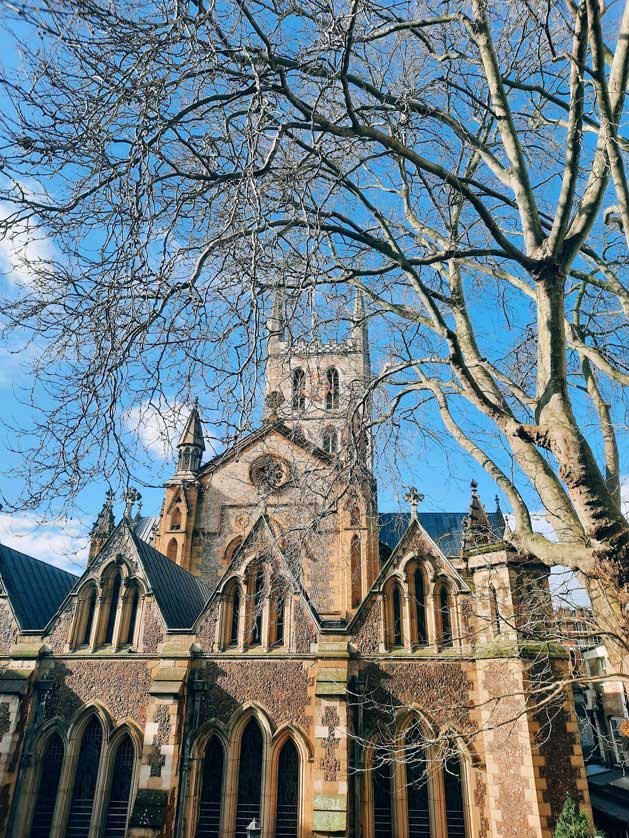
The high nave is a fine example of High Victorian Gothic design. While inspired by a 13th-century layout, it was rebuilt in the 1890s by architect Sir Arthur Bloomfield to replace a collapsed wooden ceiling. The Central Tower dates originally from the 14th century and rises 160 feet with four pinnacles added in the 17th century.
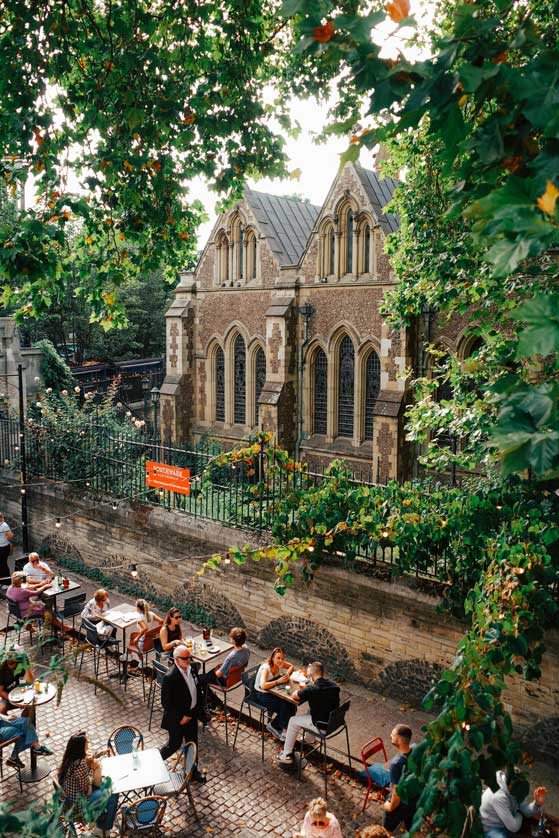
The Millennium Buildings, designed by Richard Griffiths and completed in 2000, are contemporary additions that integrate well with the cathedral’s historic fabric. Linked by a glass-covered internal passageway, the extensions feature sweeping arches that echo and reinterpret the style of the original Gothic stonework.
The south aisle houses an Archaeological Collection with remnants of a 1st-century Roman road as well as 12th-century Norman foundations.
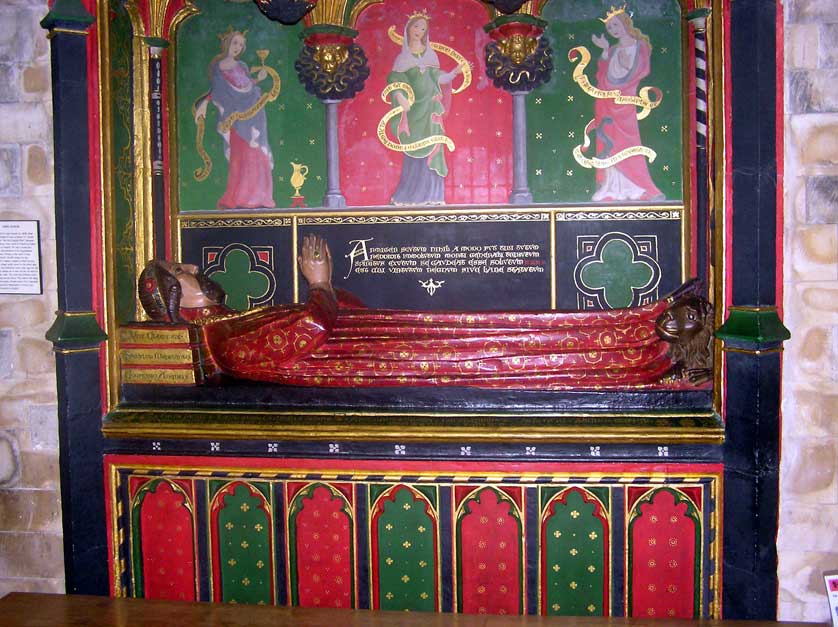
Located close to the original Elizabethan Globe Theatre, the cathedral features beautiful memorials to both William Shakespeare in a stained glass window and the 14th-century poet John Gower (1330-1408), a friend of Geoffrey Chaucer. William Shakespeare's brother, Edmund, was buried here in 1607.
There are also memorials to Isabella Gilmore, the sister of William Morris, and the victims of the Marchioness disaster on the River Thames in 1989 and monuments to both Nelson Mandela and Desmond Tutu.
In addition, the choir stalls contain intricately carved wooden misericords that also date back to the 15th century.
Entrance to the cathedral itself is free.
Access - Getting There
Southwark Cathedral (cathedral.southwark.anglican.org)
London Bridge, London, SE1 9DA
Tel: 020 7367 6700
The closest station to Southwark Cathedral is London Bridge (Jubilee and Northern lines) or it is a 20-minute walk north of Borough tube station on the Northern Line of the London underground.
London buses 4, 17, 21, 43, 47, 133, 141, 149, 344 (N344), 381 and 388 are all convenient.
Opening Times
Monday to Saturday from 9 am to 6 pm; Sunday from 8.30 am to 5 pm.
The cathedral has hourly prayers throughout the day from 10.30 am to 4.30 pm.
There is a cafe at the church operated by Comptoir Bakery, a small, family company based in Bermondsey.
Cathedrals in Britain
Hotels in London
Book Hotels in London - Booking.com
Find Luxury Hotels in London - Booking.com
Budget Hotels in London - Booking.com
Find Hotels in England - Booking.com