Cathedrals in the UK
List of Britain's Cathedrals
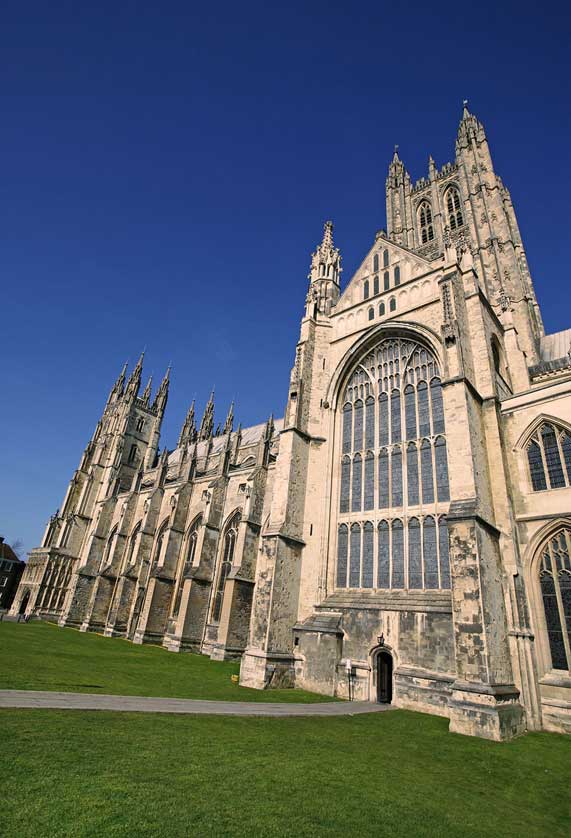
Cathedrals are the seat of a bishop and the main church of a diocese.
Britain has many fine cathedrals with some of the oldest dating back to the Medieval period. Some are more modern such as Coventry Cathedral in Coventry, the Anglican Cathedral in Liverpool and Westminster Cathedral in London.
Canterbury Cathedral in Canterbury is the seat of the Archbishop of Canterbury, the head of the Anglican Church, and the most important cathedral in the country.
Britain's ecclesiastical architecture is some of the finest in Europe.
Salisbury Cathedral is the highest with a spire reaching 123.1 meters, followed by the dome of St Paul's at 111.3 meters and the tower of Liverpool Anglican Cathedral at 101 meters. Liverpool Anglican Cathedral also has the largest interior floor area (9,687 square meters) and the longest external length (188.7 meters).
Cathedrals in London
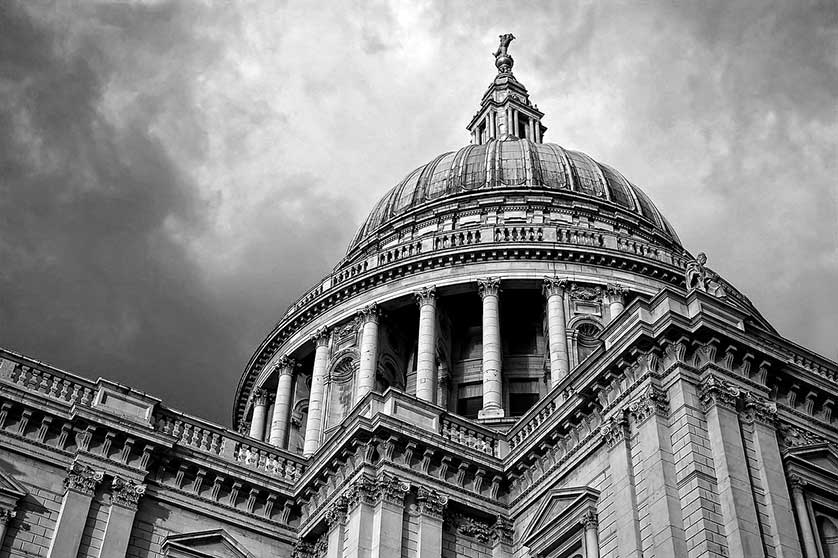
St. Paul's Cathedral
St. Paul's Cathedral in the City of London is a powerful icon of the city up there with such popular London attractions as Westminster Abbey, Big Ben, Trafalgar Square, Buckingham Palace and Piccadilly Circus.
St. Paul's is the masterpiece of Sir Christopher Wren and part of his plan for the rebuilding of London following the Great Fire of 1666.
A St. Paul's Cathedral had stood on the spot since 604 and the present building, the fourth, was constructed between 1675 and 1710.
St. Paul's stands at the very heart of some momentous occasions in British history including the state funerals of such celebrated warriors as Lord Nelson, the Duke of Wellington and Sir Winston Churchill, the Jubilee celebrations for Queen Victoria and, of course, the royal wedding of Prince Charles to Lady Diana took place at St. Paul's.
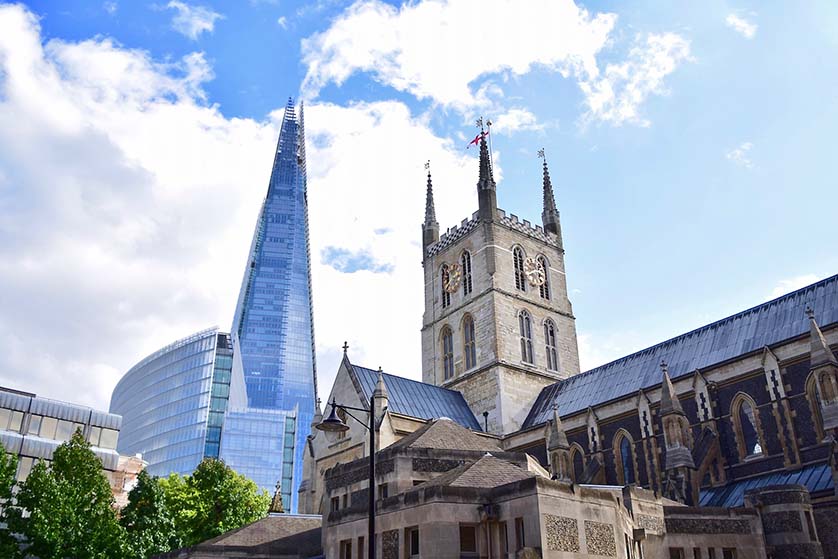
Southwark Cathedral
Southwark Cathedral is on the south bank of the River Thames close to The Shard, Guy's Hospital, the Golden Hinde, the Globe Theatre and the historic George Inn on Borough High Street. The church itself dates back to the 12th century and an Augustinian priory but became an Anglican cathedral only in 1905.
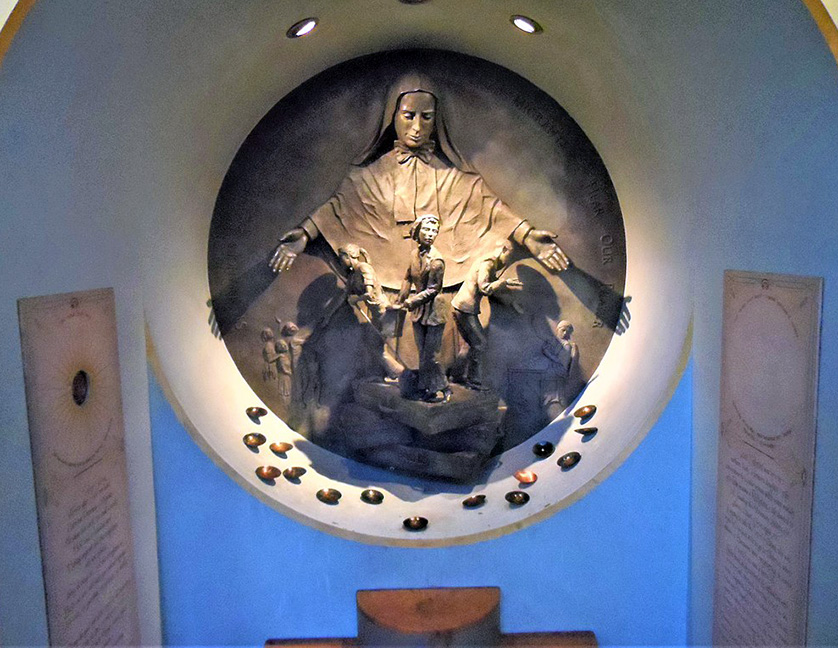
St George's Cathedral, Southwark
St George's Cathedral (The Metropolitan Cathedral Church of St George), in Southwark, south London is the cathedral of the Roman Catholic Archdiocese of Southwark. The diocese includes all of London south of the River Thames including Kent and north Surrey as well as the Dioceses of Arundel and Brighton, Plymouth and Portsmouth.
The Gothic building dates originally from 1848 and was designed by Augustus Pugin (1812-1852), best-known for his work on the interior of the Houses of Parliament. It was badly damaged by German bombing during World War II and did not fully reopen again until 1958. The building stands opposite the Imperial War Museum on Lambeth Road.
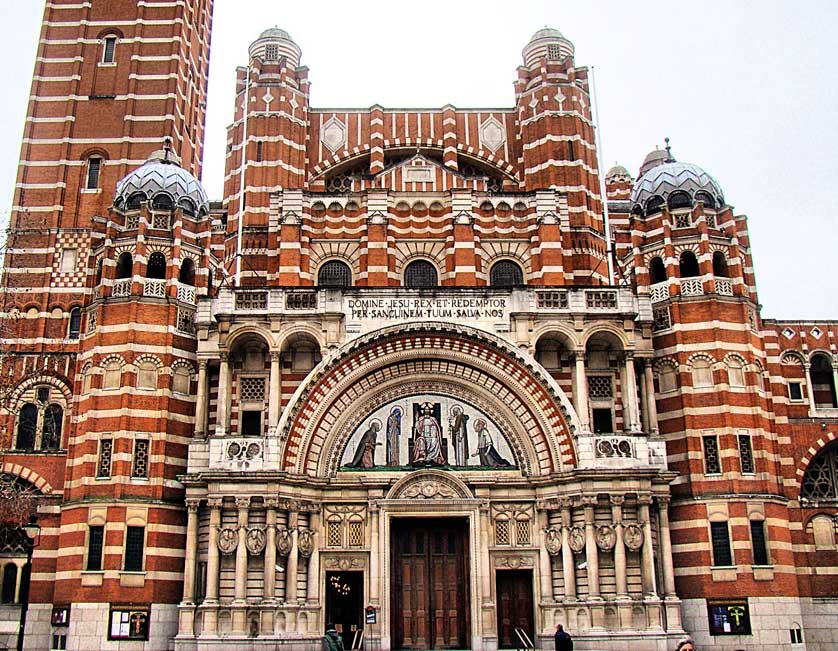
Westminster Cathedral
Westminster Cathedral is The Cathedral Church of Westminster, and it is both the head of all Catholic churches in England and Wales, and the largest Catholic church in England and Wales.
The outside of the building is unusual and striking, not being built in the traditional Gothic style. With its striped layers of alternating red brick and white Portland stone, the design is based on very early churches in the Byzantine style and has sometimes been confused with a mosque.
It is no mere copy of a Byzantine building, but places like the Hagia Sophia in Istanbul and St. Marks in Venice, served as inspiration for its design. Construction of Westminster Cathedral began in 1895 and it opened 8 years later.
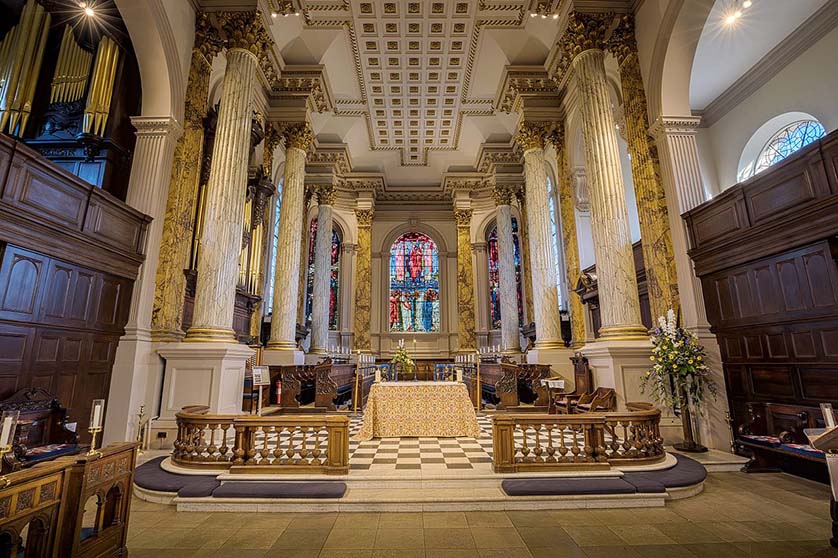
Birmingham Cathedral
Birmingham Cathedral in Birmingham central England is known as the Cathedral Church of Saint Philip. It dates from the early 18th century and is in the Baroque style of architecture. It is the third smallest cathedral in England after Chelmsford and Derby cathedrals. A statue of Statue of Charles Gore, the 1st Bishop of Birmingham, by Thomas Stirling Lee, stands outside.
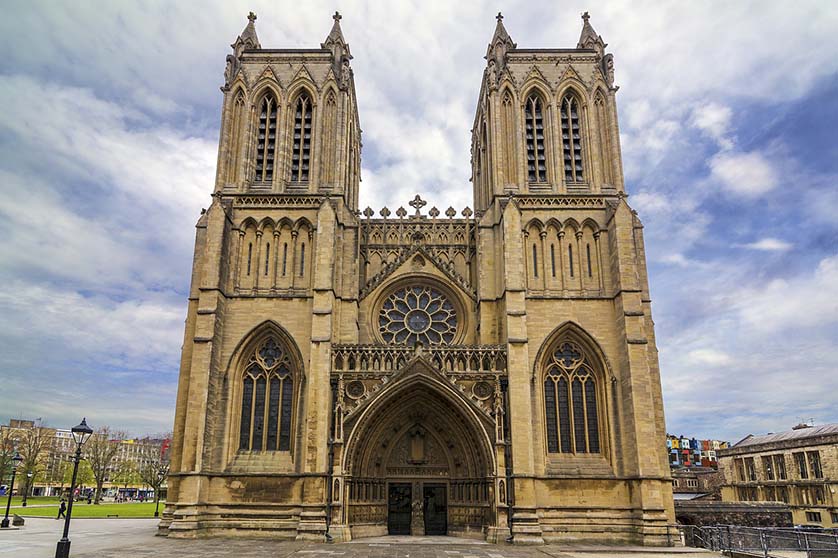
Bristol Cathedral
Bristol Cathedral in central Bristol is built on the site of the Abbey of St. Augustine which was founded in 1140 AD.
The cathedral is a famous example of a "Hall Church" because the nave, aisles, and choir are all the same height.
The full name of Bristol Cathedral is the "Cathedral Church of the Holy and Undivided Trinity" which it became in 1542.
The first Anglican female priests were ordained at here in 1994.
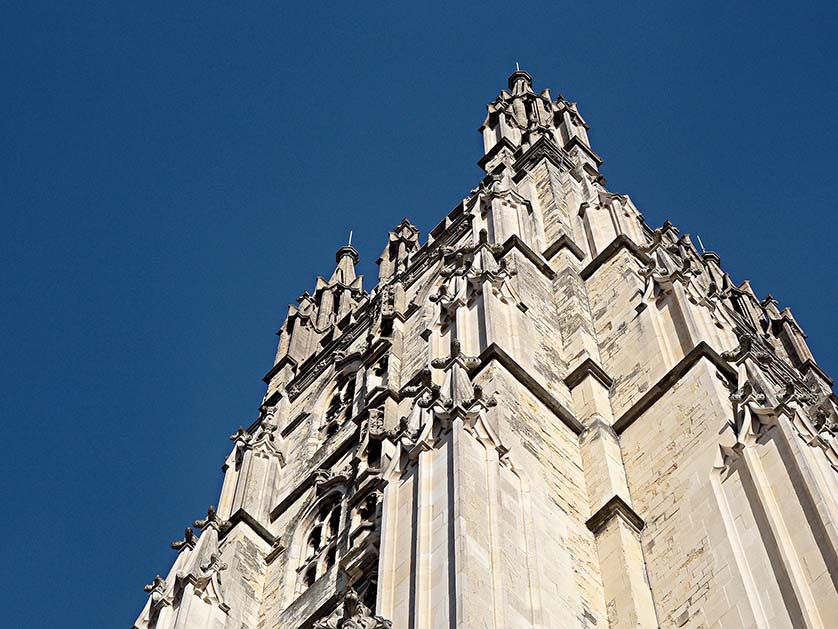
Canterbury Cathedral
Canterbury Cathedral in Canterbury has given the city much of its identity over the centuries since a church was first constructed here way back in 602, at the beginning of Saxon England's conversion to Christianity by Augustine.
Nowadays Canterbury Cathedral is the cathedral of the Archbishop of Canterbury, leader of the Church of England and Anglicans worldwide.
Canterbury Cathedral forms part of the UNESCO World Heritage Site comprising the cathedral along with St Augustine's Abbey and St Martin's Church.
In 1070, the first Norman archbishop Lanfranc demolished the original Saxon structure, which had been damaged in a fire and began the building that we now see as Canterbury Cathedral. Little remains of these early Norman structures except for the Romanesque Crypt, which is the oldest of its kind in England, and was begun under an archbishop named Anselm.
Canterbury Cathedral has been much modified and enlarged over the following centuries and includes the 71 meter-tall Bell Harry Tower (the present central tower) that was completed in 1505, the spectacular Gothic Nave, and St. Anselm's Chapel.
The spectacular interior of Canterbury Cathedral includes the tomb of King Henry IV and his wife Joan of Navarre and a gilded effigy of the Black Prince, the son of Edward III, and one of the most famous of English warrior princes of the medieval period.
Also impressive is the stained glass in the Trinity Chapel which depicts the life of Thomas a Becket.
Notice the white marble St. Augustine's Chair where archbishops of Canterbury are enthroned.
Chelmsford Cathedral
Chelmsford Cathedral in Chelmsford, Essex became a cathedral in 1914 and is the seat of the Bishop of Chelmsford. The church has a long history but has been rebuilt several times over the ages. The interior was refurbished as recently as the 1980's. Peter Eugene Ball's sculpture Christ in Glory was placed in the church in 2000.
Chichester Cathedral
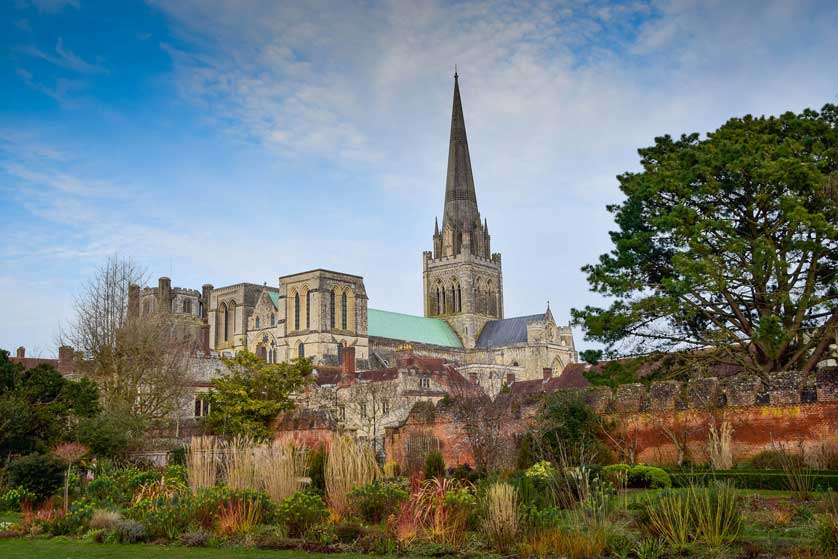
Chichester Cathedral in Chichester, Sussex has elements of Norman and Gothic architecture and a free-standing medieval bell tower. Within are Medieval sculptures as well as contemporary art work and stained glass.
The Cathedral Church of the Holy Trinity dates originally from the 11th century but the building visitors see today is largely 14th century Gothic, following a fire which largely destroyed the original.
The interior inspired the poet Philip Larkin to pen An Arundel Tomb and is now richly decorated with contemporary art including a stained glass window by Marc Chagall and a painting by Graham Sutherland. A pair of 12th century reliefs in the south aisle are considered some of the finest Romanesque carvings in England.
The free-standing bell tower (campanile) and double aisles are unique features among England's medieval cathedrals, as is the fact that its spire is visible from sea.
Chester Cathedral
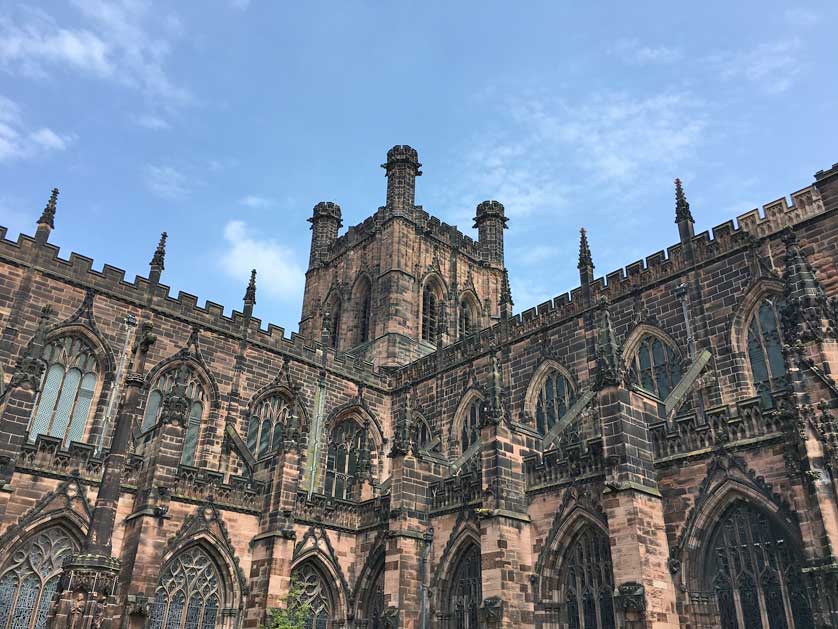
Chester Cathedral has a long history. It was formerly the abbey church of a Benedictine monastery and is now the center of the Diocese of Chester.
A Christian church has stood here since the 7th century and the present church dates from the Norman period. At that time a great monastery was built in new red sandstone, becoming a cathedral after Henry VIII's dissolution of England's monasteries and the seizing of their lands and wealth in the 16th century.
Christ Church Cathedral Oxford
Christ Church Cathedral Oxford is unique in that it serves as a cathedral in addition to being the chapel for Christ Church College at Oxford.
The present cathedral was constructed between 1160 and 1200 AD. The church was originally called the Priory Church of St. Frideswide, the patron saint of Oxford.
The impressive chancel ceiling of Christ Church Cathedral was added in 1500 and its star-like patterns present an image of heaven.
Coventry Cathedral
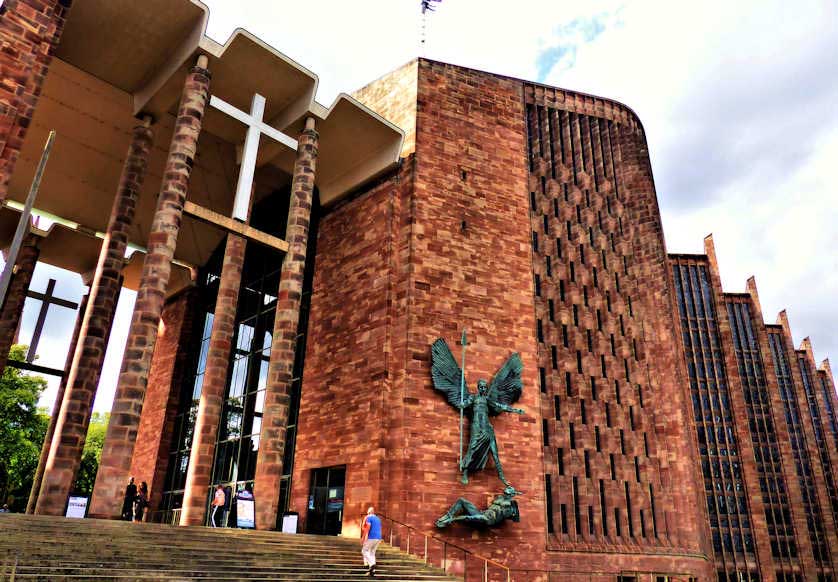
There are two cathedrals in Coventry, both called St. Michael's, located adjacent to each other, the Old Cathedral and the New Cathedral.
What is known as the Old Cathedral was built in the late 14th and early 15th centuries and was one of the biggest parish churches in the country.
In 1918 it was made a cathedral. All that remains now are the exterior walls and the impressive spire. 245 feet tall, the third-highest spire in the country, visitors can climb the 180 steps and get fantastic views out across the city from about halfway up.
On the 14th November 1940 Coventry was firebombed by the German Luftwaffe in what is known as the Coventry Blitz, and the cathedral received multiple direct hits that reduced the structure to its current state.
After the war a competition was held for designs of a new cathedral. Won by Basil Spense, his idea was that the ruins should remain and be linked to a new structure. Both constructed out of the same type of sandstone, a huge canopy physically connects the two cathedral structures.
At the time Spence's design was controversial, but has stood the test of time and is now considered elegant and beautiful. As with traditional cathedrals, the building contains and is composed of numerous artworks.

Derby Cathedral
The Cathedral Church of All Saints (Derby Cathedral) is an Anglican cathedral in Derby, Derbyshire. The original parish church was promoted to the status of a cathedral in 1927, thus creating the see of the Bishop of Derby. Originally established as a royal collegiate church in 943 AD by King Edmund I, it served as a center of worship and ecclesiastical governance. The original church underwent significant transformations, especially in the 14th century when it was rebuilt in the Gothic style. However, the most defining change came in the early 18th century when Scottish architect James Gibbs (1682-1754) redesigned the church in Neo-Classical style. Gibbs' other major works in England are St Martin-in-the-Fields (near Trafalgar Square in London), Radcliffe Camera at Oxford University, and the Senate House at Cambridge University.
Durham Cathedral
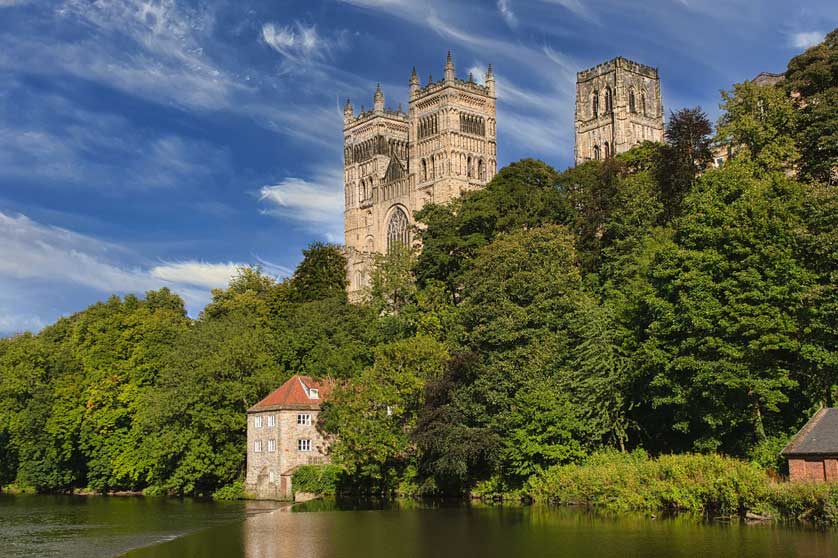
Durham Cathedral founded in AD 1093, is one of the oldest and most famous churches in England. The original Cathedral was designed and also built under William of St. Carilef, who is now buried in the Cathedral, but since then major reconstructions and additions to the building have taken place.
Durham Cathedral sits almost at the very top of the city, above the River Wear, and the central tower stands at 217 feet (66 metres).
The Cathedral is still very much in use and daily Church of England services are held there, which often incorporate performances from the Durham Cathedral Choir.

Ely Cathedral
Ely Cathedral, is a huge Romanesque structure and dominates the sleepy town of Ely near Cambridge. Dating back to 1083, the church's highlights include the superb octagon tower and the church's overall length - the cathedral is over 169 meters long! The octagon was constructed in response to disaster, as one of the towers collapsed in 1322. The ornate chantry chapels date from the 15th and 16th centuries.

Exeter Cathedral
Exeter Cathedral in the centre of Exeter is one of England's most beautiful churches.
Set between the lovely streets of Cathedral Close and Cathedral Place and fronted by a grassy square, the Cathedral Church of St. Peter was begun in 1114 by the Normans and the sturdy, rather squat cathedral towers date from Norman times.
The cathedral was remodelled in a decorative Gothic style over a century beginning in 1270 by Bishop Walter Bronescombe. Influenced by the architecture of nearby Salisbury Cathedral, the church was built using local stone, including Purbeck Marble.
Gloucester Cathedral
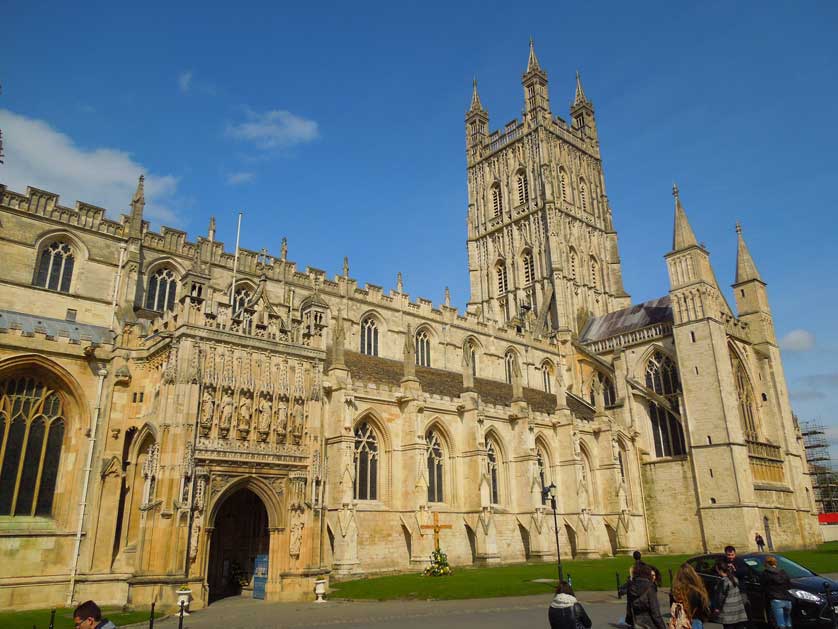
Gloucester Cathedral (The Cathedral Church of St Peter and the Holy and Indivisible Trinity) has been a place of Christian worship for over 1300 years, since Osric, an Anglo-Saxon prince, founded a religious house here in 678-9 AD.
In 1072, King William I appointed Serlo, a monk from Mont St Michel in Normandy, France to be its Abbot. Serlo built up the wealth of the monastery so that in 1089 he was able to start building the splendid abbey church which the visitor sees today. King Henry III was crowned here in 1216.
Gloucester Cathedral showcases all the periods of medieval church architecture, but its two main building phases – Romanesque and Perpendicular, are of the most importance. The nave is a Romanesque construction probably completed around 1130.
Hereford Cathedral
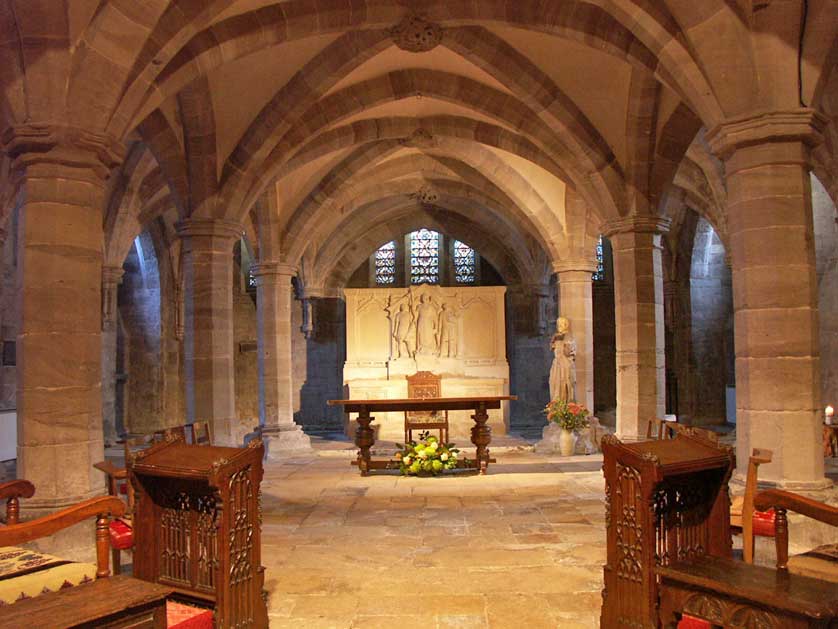
Hereford Cathedral, formally known as the Cathedral Church of St. Mary the Virgin and St. Ethelbert the King, is a fine example of Norman and Gothic architectural styles. Construction began in 1079 under Bishop Robert of Lorraine, and the cathedral has undergone significant modifications and restorations over the centuries, including the addition of its celebrated central tower. The cathedral is internationally renowned as the home of the Mappa Mundi, a medieval map of the known world created around 1300, and one of the most important surviving examples of medieval cartography. It also houses the Chained Library, a collection of over 1,500 rare books and manuscripts secured with chains to prevent theft. The church is also known for its superb stained glass windows, intricate stonework, and tranquil cloisters.
Leicester Cathedral
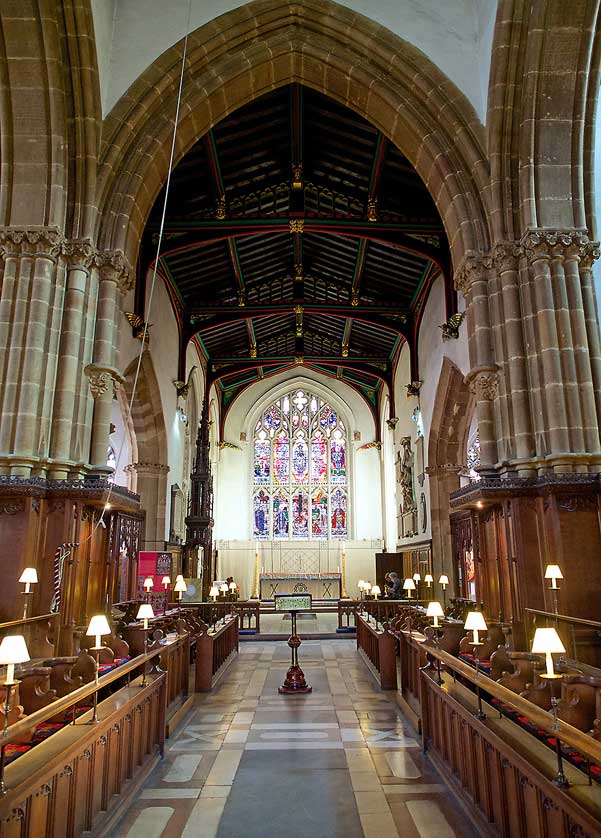
Leicester Cathedral, (St. Martin's Cathedral) is a medieval building, situated in the city centre of Leicester, close to the Guildhall. With its tall spire, Leicester Cathedral is an important part of Leicester's history and present day skyline. The church was not originally designed as a cathedral and only became one in 1927, when the diocese of Leicester was formed.
With the recent discovery of King Richard lll's skeleton, Leicester Cathedral's importance has increased further. The courts have finally decided that the cathedral is where the King's remains will be re-interred, and a ceremony took place in March 2015. The ceremony, and the memorial, brought thousands of visitors to the city. The King Richard III Visitor Centre now has interactive exhibits on the king's life, death and the discovery of his grave.
Lincoln Cathedral
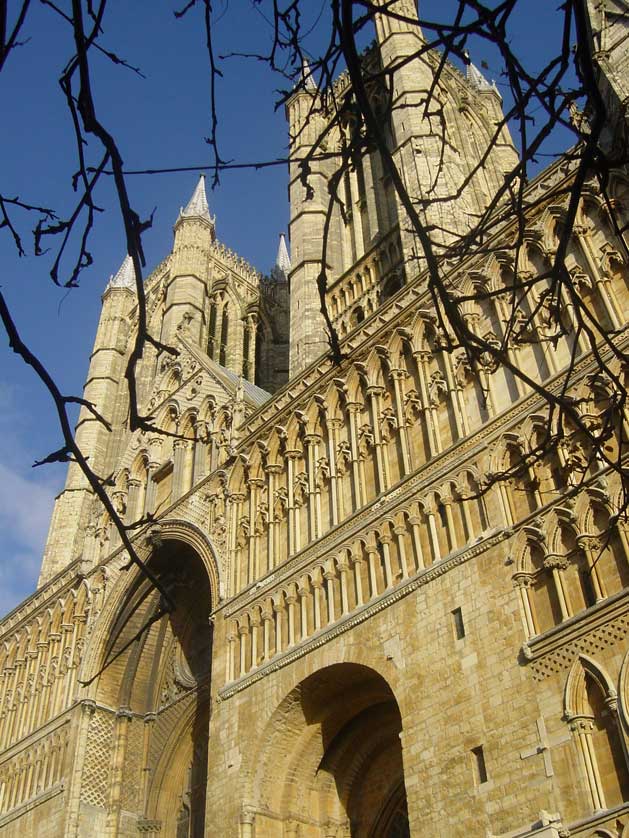
Lincoln Cathedral, formally known as the Cathedral Church of the Blessed Virgin Mary of Lincoln, is an example of English Gothic architecture and one of the most significant medieval buildings in Europe. It dates from around the end of the 11th century. For over two centuries, it was one of the tallest buildings in the world, with its central spire reaching an estimated height of 525 feet before its collapse in the 16th century. The cathedral is renowned for its intricate stone carvings, including the famous Lincoln Imp, its vaulted ceilings, and the grandeur of its rose windows.

Cathedrals in Liverpool
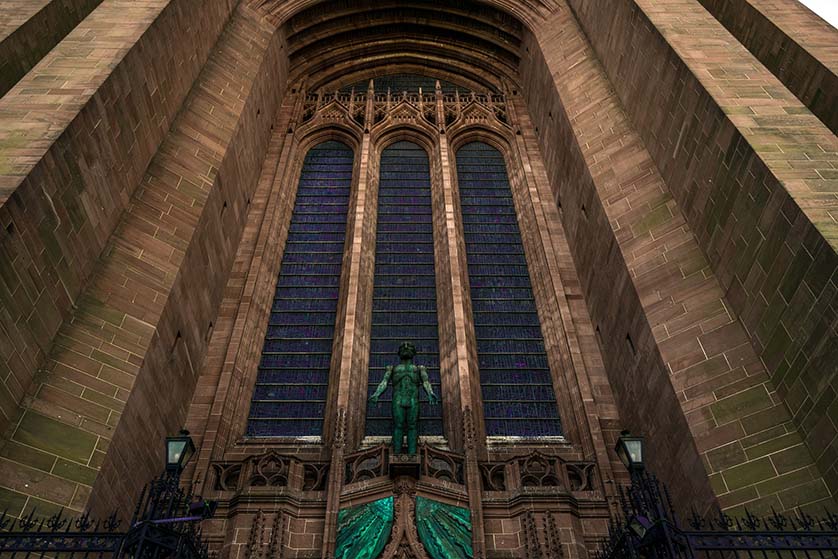
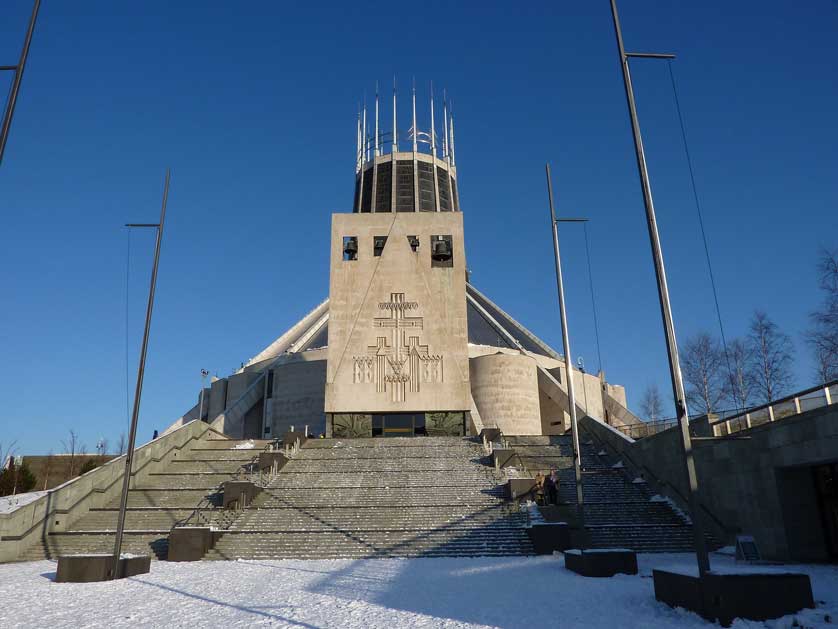
Liverpool has two cathedrals - an Anglican cathedral and a Catholic cathedral. The Anglican Liverpool Cathedral on Hope Street looks the older but is, in fact, the newer of the two.
It was completed in 1978 after 74 years of building work. Neo-Gothic in design, it is a masterpiece by Sir Giles Gilbert Scott. It is among the largest cathedrals in the world and the largest in Britain. It also has the largest and heaviest bells in Britain. There are superb views from the top of its tower.
The Catholic Metropolitan Cathedral of Christ the King is the more modernistic in style. Built on the foundations of an earlier project of Sir Edward Lutyens, its space-age design earns it the nicknames of "Paddy's Wigwam" or the "Mersey Funnel". There are also four huge bells at the top and a cafe/bar on the first floor. To the north across Brownlow Hill is the main campus of Liverpool University.
Manchester Cathedral
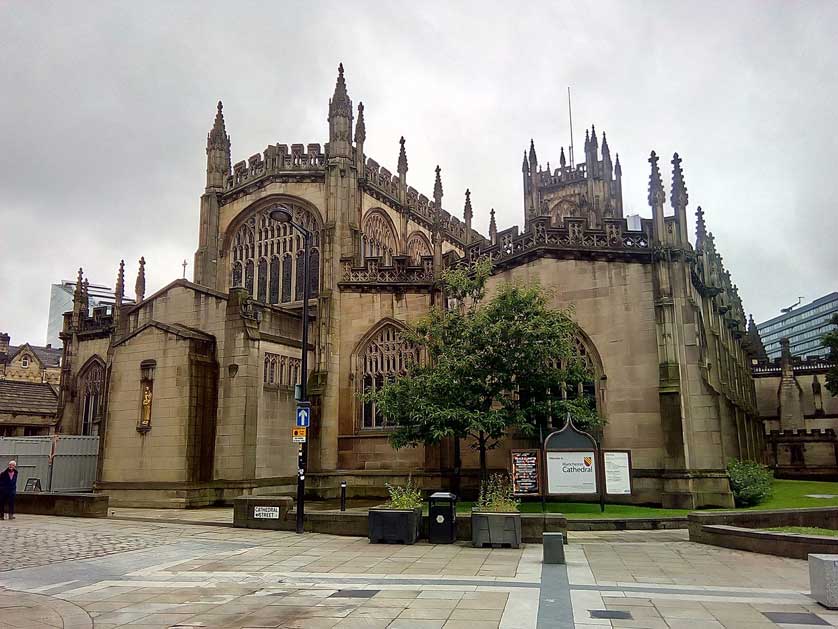
Manchester Cathedral or to give it its full title, The Cathedral and Collegiate Church of St Mary, St Denys and St George in Manchester, dates from the 15th century.
The impressive church is constructed from both sandstone and limestone from the Peak District in nearby Derbyshire to the south.
The church was heavily restored in the Victorian period and after bomb damage in World War II. It was repaired yet again following the 1996 IRA bombing of the nearby Arndale Center.
The cathedral's stained glass windows were destroyed in The Blitz in the 1940's but have been restored with modern versions by Margaret Traherne, Tony Hollaway and Linda Walton.

Salford Cathedral
Salford Cathedral (The Roman Catholic Cathedral Church of St John the Evangelist) in Salford, Greater Manchester, is a historic church designed by Matthew Ellison Hadfield (1812-1885).
Close to the Salford Museum and Art Gallery, the University of Salford and Peel Park, the church is the seat of the Bishop of Salford and also the mother church of the Diocese of Salford.
The impressive church was the first cruciform Catholic church to be built in England since the Reformation and was modeled on several well-known medieval churches.
The church is a Grade II Listed building and the center of the Catholic faith in Salford.
Norwich Cathedral
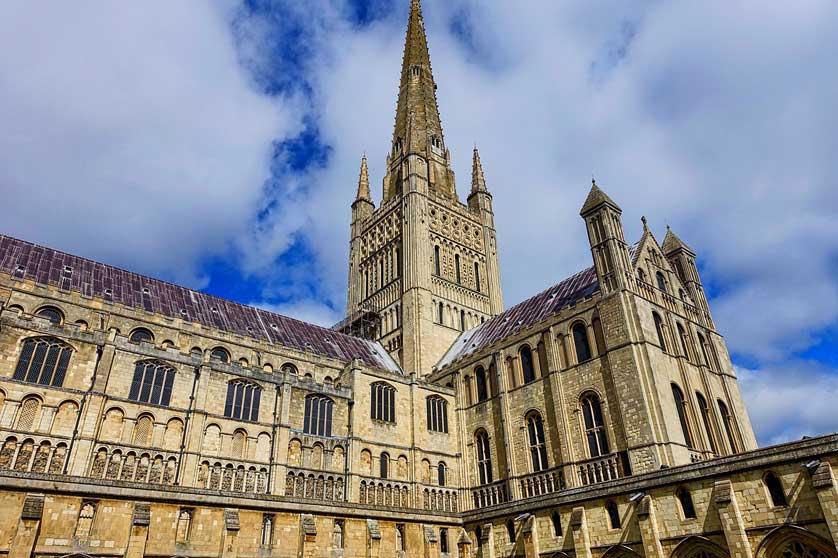
Norwich Cathedral, (the Cathedral Church of the Holy and Undivided Trinity), is a masterpiece of Norman architecture and one of the most significant ecclesiastical buildings in England. Construction began in 1096 under the direction of Bishop Herbert de Losinga, and it was completed in 1145, making it one of the most complete Norman cathedrals in Europe. The cathedral is notable for its soaring spire, the second tallest in England at 96 meters (315 feet) after Salisbury Cathedral. In addition, its extensive cloisters are the largest of their kind in the country. The interior features rib-vaulted ceilings, over 1,000 intricately carved stone roof bosses depicting biblical scenes, and fine medieval and Victorian stained glass. Surrounding the cathedral is the tranquil Cathedral Close, one of the largest and most picturesque in Europe, housing a variety of historic buildings.
Nottingham Cathedral
Nottingham Cathedral (Cathedral Church of St. Barnabas) in Nottingham is a Roman Catholic church. The cathedral is the seat of the Bishop of Nottingham and the mother church of the diocese of Nottingham.
The cathedral was built between 1841 and 1844 making it one of the earliest Catholic churches built in the country after the Catholic Relief Act was passed in 1829.
At the time it was also the largest Catholic place of worship constructed in England since the Reformation in the 1530s. The church contains the relics of St. Barnabas, brought from Rome.
The architect was Augustus Welby Northmore Pugin (1812-1852). He was responsible for a number of notable buildings in his short life including St George's Cathedral in Southwark and the interior of the Houses of Parliament in London.
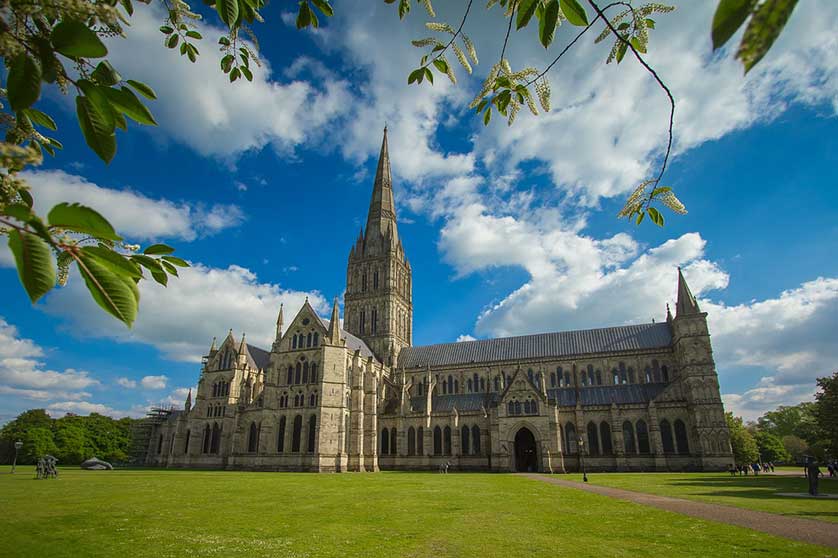
Salisbury Cathedral
Salisbury Cathedral in Salisbury dates from 1220 AD and utilized many of the stones from the old Norman cathedral at Old Sarum.
The tower and spire were completed around 1330. The spire is the tallest in Great Britain at 123 meters. Today, Salisbury Cathedral is the cathedral church of the Salisbury diocese and houses the finest of four remaining copies of the historic Magna Carta.
The nave of the cathedral is striking for its height and narrowness. The mixed use of lighter and darker stone is visually appealing.

Sheffield's Cathedrals
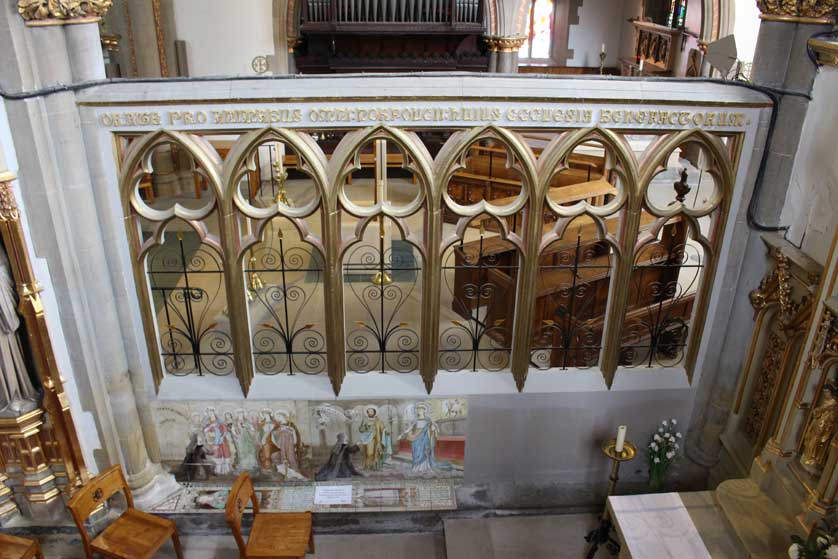
Sheffield in South Yorkshire has two cathedrals, the Anglican Sheffield Cathedral (Cathedral Church of St Peter and St Paul) and the Roman Catholic Cathedral Church of St Marie. Both were promoted from parish churches to the status of cathedrals in the 20th century. Treasures of Sheffield Cathedral include The Shrewsbury Chapel which contains the tombs and monuments of the Earls of Shrewsbury, with elaborate stone carvings and effigies that date back to the 16th century. The Cathedral Church of St Marie was completed at great expense in 1850, the cathedral was designed by the renowned architect Matthew Ellison Hadfield (1812-1885), who drew inspiration from the medieval churches of Europe. Hadfield also designed Salford Cathedral in Manchester.

Shrewsbury Cathedral
Shrewsbury Cathedral (The Cathedral Church of Our Lady Help of Christians and Saint Peter of Alcantara) in Shrewsbury, Shropshire is a Roman Catholic cathedral that dates from 1856. The church is notable for its fine stained glass windows by Margaret Agnes Rope. Rope also designed the cathedral's war memorial. The church is the only cathedral in Shropshire. The county does not have an Anglican equivalent.
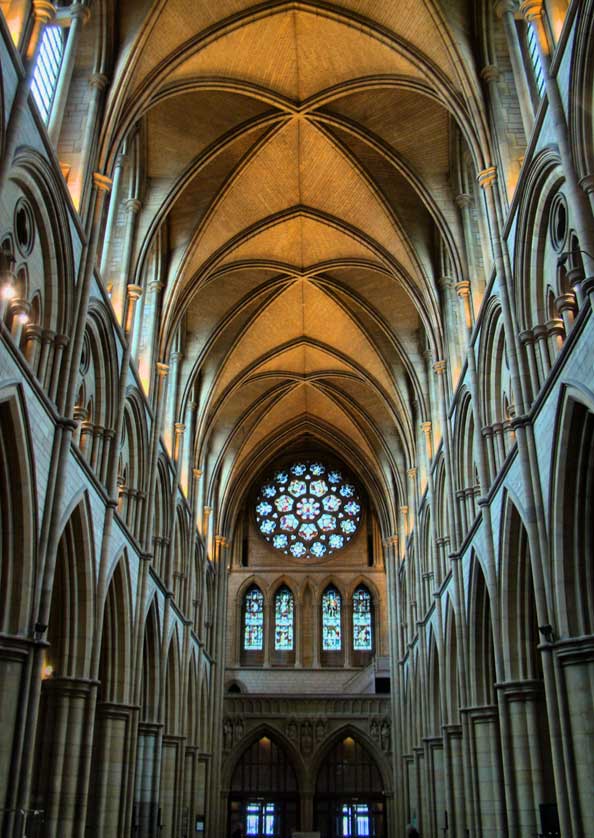
Truro Cathedral
Truro Cathedral in Cornwall's county town of Truro was the first cathedral built on a new site in England since 1220 when Salisbury Cathedral was constructed. The Diocese of Cornwall was established in 1876, and the first bishop appointed in 1877. The building was finally completed in 1910.
The architect was John Loughborough Pearson (1817-1897), who had previously worked on Lincoln Cathedral, and the two cathedrals share some features. Pearson's son continued the work after his father's death and also on of St Matthew's in Auckland, New Zealand, which is a smaller version of Truro Cathedral.

Wakefield Cathedral
Wakefield Cathedral (Cathedral Church of All Saints) is an Anglican cathedral in Wakefield, Yorkshire. Although the church is nowhere near as famous as many cathedrals in Britain it is surprisingly beautiful with many interesting and historical features. At 247 feet the spire of Wakefield Cathedral is the tallest spire in Yorkshire and the tallest structure in the city. It became a cathedral when the Diocese of Wakefield was created in 1888. The interior of the cathedral includes a few parts from the 12th century, and many elements that date back to the 15th century. These include several carvings and most of the ceilings.
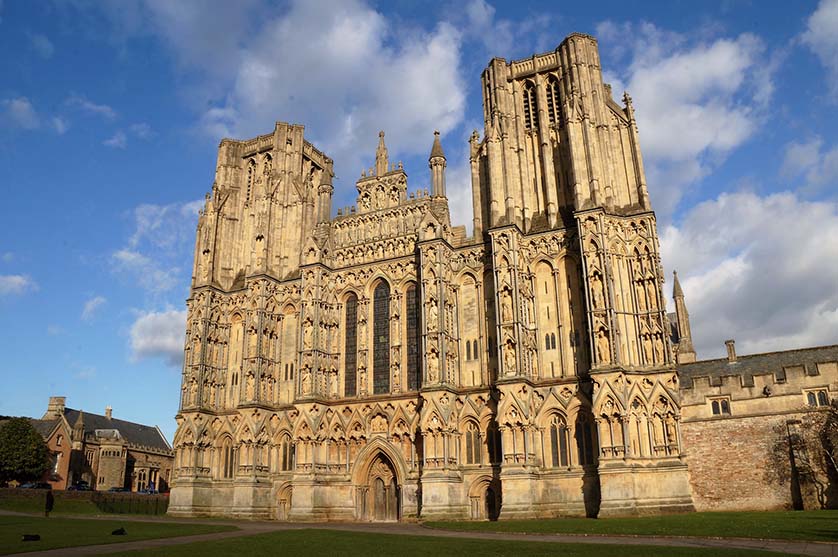
Wells Cathedral
Wells Cathedral in Wells in Somerset is rightly celebrated as one of the UK's most beautiful churches.
The cathedral was built between 1175 and 1490 and is the seat of the Bishop of Bath and Wells, who resides at the nearby Bishop's Palace. There is evidence that there has been a church at this site since the 8th century.
The magnificent West Front, which dates from around 1230, is one of the largest galleries of medieval sculpture in the world. From the bottom, biblical scenes are depicted rising to kings, bishops and angels until the twelve apostles and Christ at the very top.
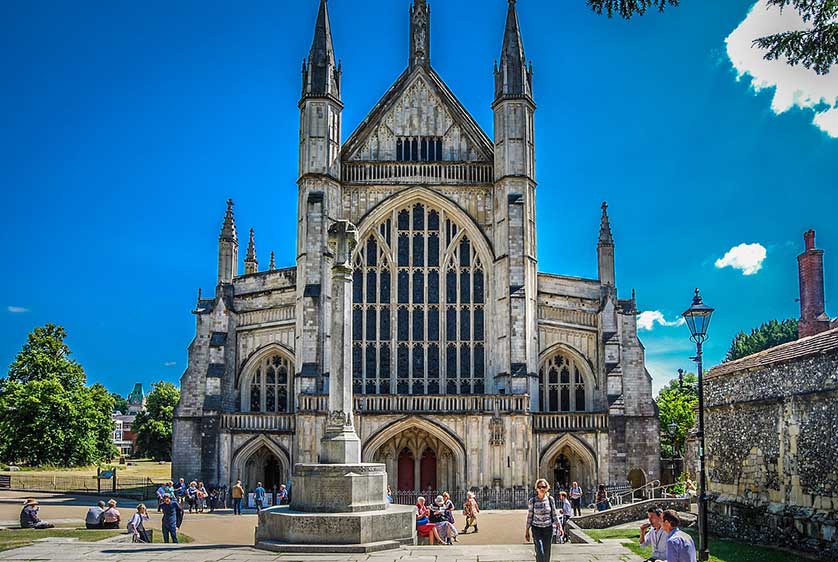
Winchester Cathedral
Winchester Cathedral in the city of Winchester in Hampshire dates from 1079 when construction began. Two later periods of construction led to Winchester Cathedral's completion in its present form in 1525.
Winchester Cathedral features the oldest medieval quire (illustrated manuscript) in England, 12th and 13th-century wall paintings, and perhaps most impressively, the "Great Screen" - the carved limestone backdrop to the high altar begun in 1455.
The Great Screen was financed by money left to the cathedral on the death of Cardinal Henry Beaufort. However, the figures of saints in the niches were all destroyed in the Reformation of the 16th century and the figures we see today are 19th-century copies.
One of Europe's largest cathedrals, its overall length is the longest of any Gothic cathedral. The church is the seat of the Bishop of Winchester and centre of the Diocese of Winchester. The structure is a Grade I listed building.
Winchester Cathedral is also the site of Jane Austen's grave.
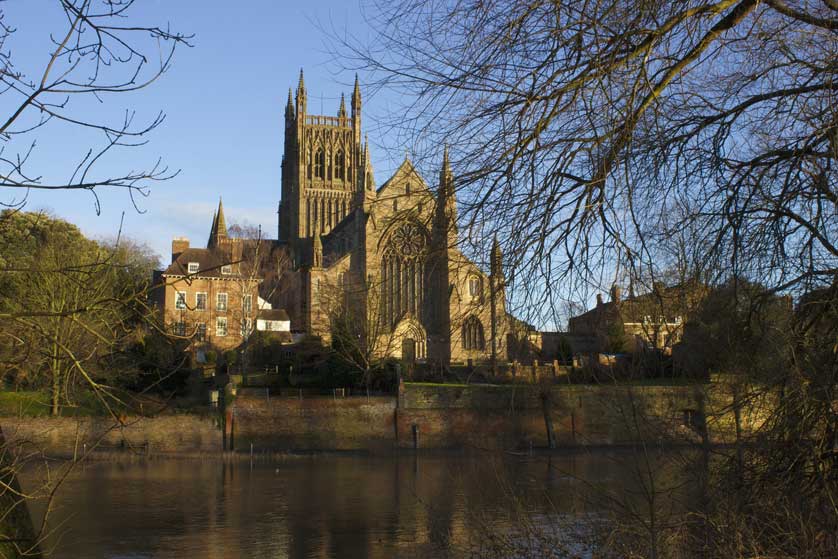
Worcester Cathedral
Worchester Cathedral on the banks of the River Severn is the seat of the Bishop of Worcester. This historic church was built between 1084 and 1504 and incorporates various types of architecture. King John is buried here along with Arthur Tudor, the older brother of King Henry VIII. The former British Prime Minister Stanley Baldwin (1867-1947) was also laid to rest within the cathedral. The cathedral library contains a copy of the Magna Carta dating from 1255.
The cathedral has three choirs and is associated with the music of the composer Edward Elgar, who spent much of his life in the county. His likeness features in one of the church's many stained glass windows.
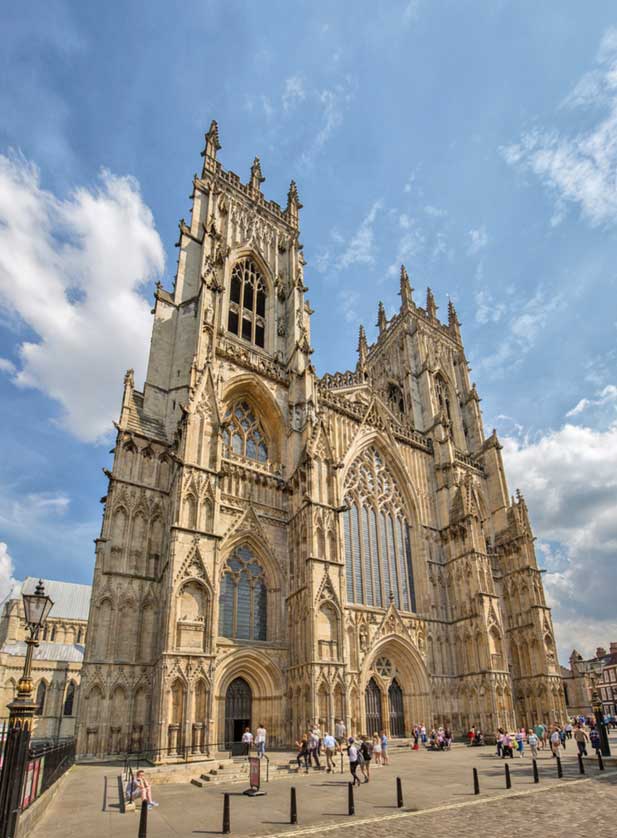
York Minster
York Minster is one of Britain's finest cathedrals. Constructed over 200 years from the 1220's to 1470, York Minster is a must-see on any visit to the historic city of York in northern England.
The first wooden church near the site was built for the baptism of the Anglo Saxon King, Edwin of Northumbria in 627. Later a stone Norman church was begun nearby, remains of which can be seen in the Undercroft.
From 1220 this Norman church was gradually enlarged to become the Minster we see today, one of the largest Gothic cathedrals in northern Europe after Cologne Cathedral in Germany.
The earlier Roman influence on York can also be appreciated from the remains of Emperor Constantine's palace that are located under the central tower.
Cathedrals in Scotland
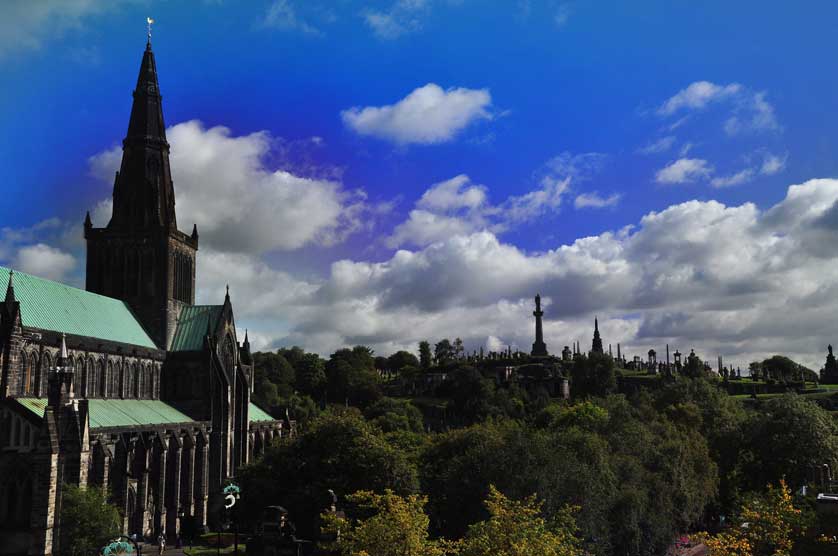
Glasgow Cathedral
Glasgow Cathedral in Glasgow is the oldest cathedral on mainland Scotland. The church is also referred to as the High Kirk of Glasgow, St Kentigern's or St Mungo's Cathedral.
The church is associated with Saint Mungo (Kentigern), the patron saint of Glasgow, whose "tomb" is in the lower crypt. Construction of the cathedral began in the 12th century in the Gothic style of architecture.
The church was the only one in mainland Scotland to survive the 1560 Reformation virtually intact.
Nearby is the fascinating Glasgow Necropolis, a Victorian cemetery. The St Mungo Museum of Religious Life and Art is also close by.

St Giles' Cathedral
St Giles' Cathedral in Edinburgh is one of Scotland's most important and beautiful churches, this working cathedral has been one of the city's religious focal points for nearly 1000 years. The recently restored crown-shaped spire is particularly attractive, with various pinnacles and ornaments.
St Magnus Cathedral
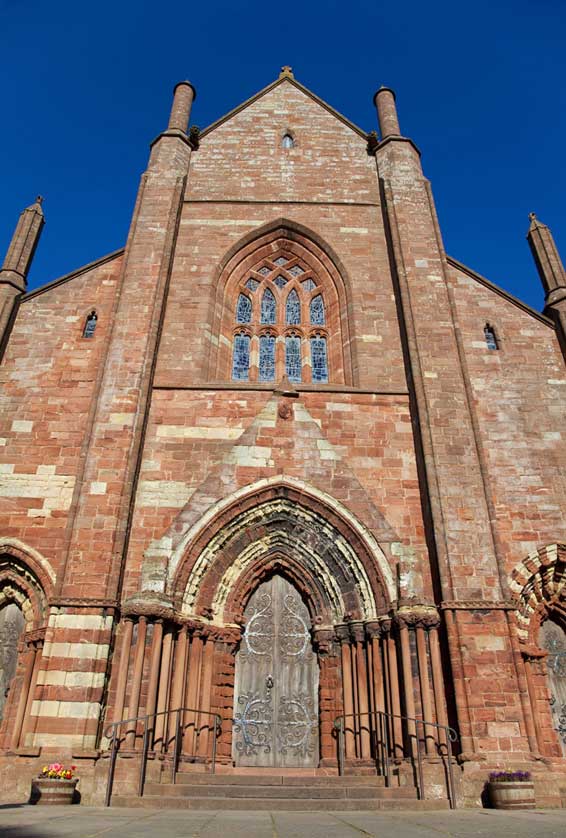
St Magnus Cathedral in Kirkwall in the Orkney Islands is Britain's most northerly cathedral. Built from local red and yellow sandstone, this impressive church originally dates from 1137. Earl Rögnvald founded the cathedral to honour his uncle St Magnus who was murdered in 1116 in a dispute with his cousin, Håkon. The Norman Romanesque cathedral has similarities to Durham Cathedral, possibly due to the fact that English masons who worked at Durham may also have been involved with St Magnus. The structure is distinctive for its positioning of red and yellow limestone blocks to produce a "polychrome" effect. The church is also the only cathedral in Britain with a dungeon - Marwick's Hole.

St Andrews Cathedral
St Andrews Cathedral in St Andrews, Scotland like nearby St Andrews Castle is a magnificent medieval ruin.
Once the largest cathedral in Scotland and headquarters of the Scottish Church, it remains one of the most important historical sites in Scotland. Its ruins are now a testament to the destruction of the turbulent years of the Scottish Reformation in the 1550s and 1560s.
In its prime, the cathedral was the seat of the Archdiocese of St Andrews and the Bishops and later Archbishops of St Andrews. It was also the largest church in Scotland.
Map
Related
Hotels in the UK
Book Hotels in England - Booking.com
Find Accommodation in London - Booking.com
Search Hotels in Scotland - Booking.com
Hotels in Northern Ireland - Booking.com