Boathouse 4 & Boathouse 7, Portsmouth Historic Dockyard, Portsmouth
Dockyard Apprentice (Boathouse 7) & Boathouse 4
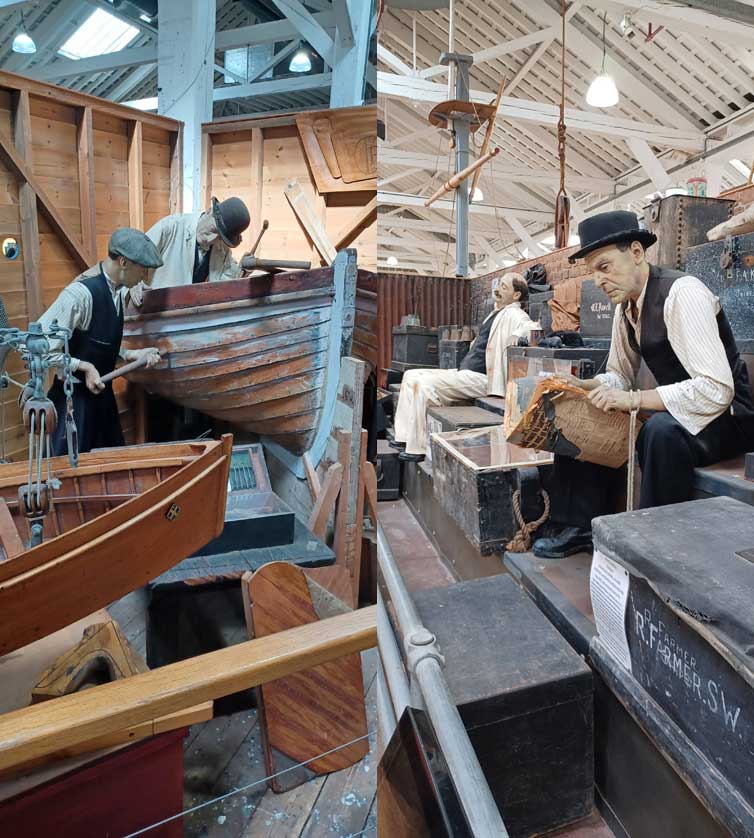
Boathouse 4 at Portsmouth Historic Dockyard in Portsmouth is a free living maritime museum and workshop where visitors can watch the active restoration of historic Royal Navy powerboats and the preservation of traditional wooden boatbuilding skills. It underwent a major restoration project in 2015.
The adjacent Boat 7 building is host to the Dockyard Apprentice Exhibition, part of the Portsmouth Historic Dockyard ticket.
History
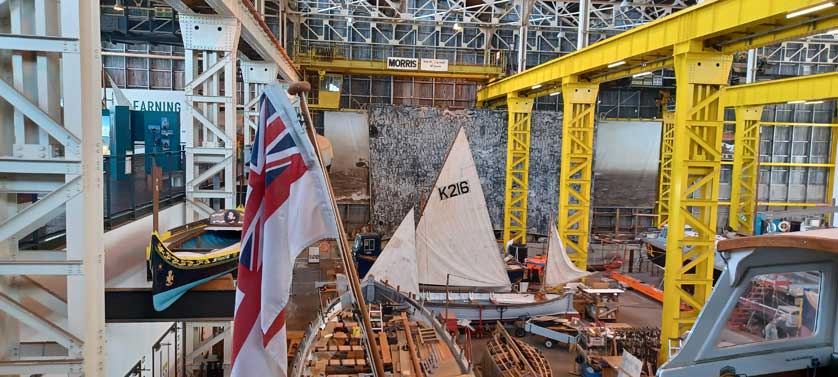
The Boathouse 4 building dates from just before the outbreak of World War II. Indeed, Boathouse 4 was the only boathouse built in a home dockyard during the rapid British military rearmament period of the late 1930s. It was designed in an International Modernist style, standing out with its distinct "sawtooth" industrial roof and steel framing.
During the war, the boathouse was utilized for the vital construction and upkeep of the Royal Navy's small vessels. Crucially, it hosted the highly classified construction of the X4 midget submarine and subsequent "X-craft" developments designed to sneak past enemy lines and lay mines beneath German battleships. King George VI personally visited the building in 1942 to inspect these small submarines.
The building also hosts a collection of 20th-century military powerboats including Motor Gun Boat 81, Landing Craft Foxtrot 8, and RAF High-Speed Launch 102.
Boathouse 7
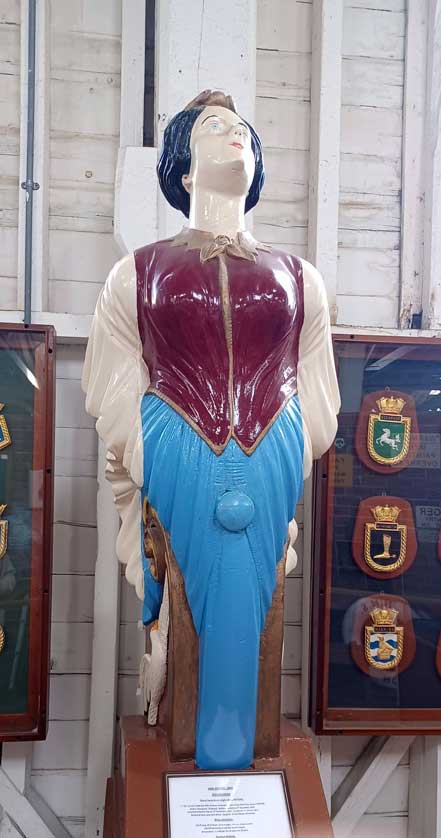
Boathouse 7 dates from 1875 as a mast house on the site of an earlier boathouse. It was restored in the mid-1990s and features a large 300-cover restaurant. The museum section has interactive displays and recreates the sounds, skills and smells of the dockyard from 200 years ago.
Deane Brothers
There is also information on the Brothers Charles Anthony Deane (1796-1848) and John Deane (1800-1884) who invented the world's first practical diving helmet by evolving an 1823 fire-fighting "smoke helmet" into an open-water salvage apparatus.
They utilized their equipment for groundbreaking salvage operations in the Solent, notably discovering and retrieving artifacts from the wreck of Henry VIII's flagship, the Mary Rose, between 1836 and 1840.
The brothers discovered the wreck of the Mary Rose after a successful salvage operation earlier on HMS Royal George. Between 1834 and 1836, they successfully retrieved numerous heavy guns and artifacts from the wreck of HMS Royal George, including brass and iron cannons. One of the recovered guns is currently on display at Southsea Castle.
The story of HMS Royal George is one of great tragedy. On August 29, 1782, the ship capsized and foundered at Spithead (near Portsmouth) while heeled over for routine hull maintenance. Open lower gunports let water rush in, causing it to sink and killing over 800 people, including Admiral Richard Kempenfelt.

Corrugated Wall
The Boathouse 4 building was originally planned to be much larger, expanding all the way south to Victory Gate. However, when World War II broke out, construction was abruptly halted so the building could be put into immediate commission. A corrugated iron wall was hastily thrown up to close off the side. Though intended to be entirely temporary, this corrugated wall remains intact today as a permanent historical reminder of the war.

Information & Access
Portsmouth Historic Dockyard
Victory Gate
HM Naval Base
Portsea
Portsmouth
Hampshire, PO1 3LJ
Tel: 02392 89 3331
Entry to Boathouse 4 is completely free of charge, and visitors do not need to purchase a ticket to the main dockyard to enter the building or its upstairs restaurant, the Boathouse Kitchen. Just obtain a Historic Quarter Pass (available from the Visitor Centre).
Hours: 10 am to 4 pm
A ticket is required for the Dockyard Apprentice Exhibition which is open from 10 am to 5 pm.

Historic Ships in Britain
Britain has many historic vessels that have been preserved include HMS Belfast on the River Thames in London and the Cutty Sark also on The Thames in Greenwich. The Golden Hinde, a replica of Drake's flagship is also in the capital.
The SS Great Britain and The Matthew are both in Bristol Harbour.
The PS Waverley, claimed to be the last seagoing paddle steamer in the world, is in Glasgow berthed outside the Glasgow Science Center.
Turbinia is on display at the Discovery Museum in Newcastle. It was once the fastest ship in the world at the turn of the twentieth century.
At The National Museum of the Royal Navy in Portsmouth visitors can visit such historic vessels as the Mary Rose, HMS M33, HMS Victory and HMS Warrior.
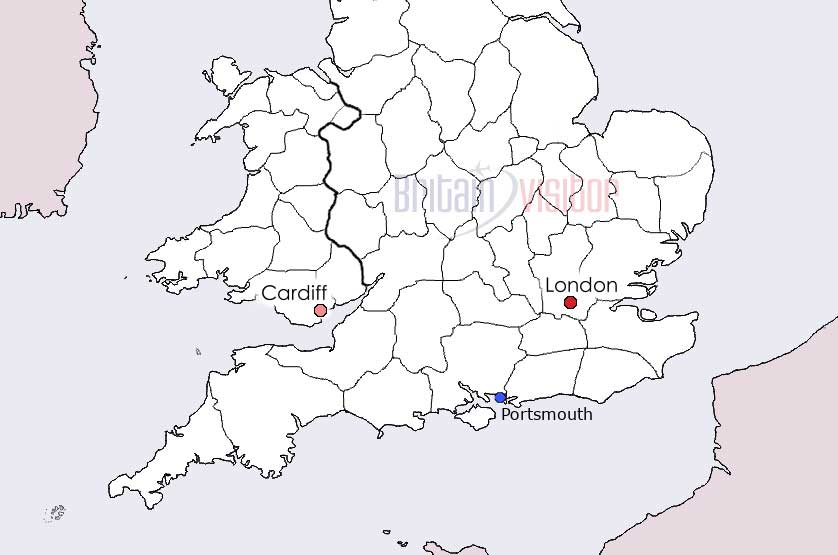
Map

Related
Hotels in London
Book Hotels in London - Booking.com
Find Luxury Hotels in London - Booking.com
Budget Hotels in London - Booking.com
Find Hotels in England - Booking.com