Britain's Canals: Macclesfield Canal
Macclesfield Canal

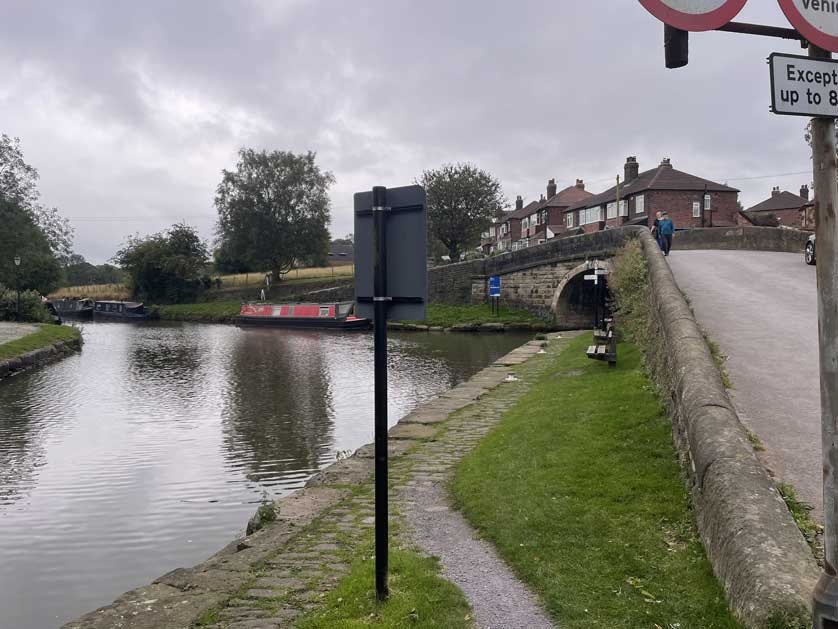
The Macclesfield Canal is a waterway in northwest England, stretching approximately 26 miles (42 km) from Marple Junction and the Peak Forest Canal near Stockport to Hall Green Stop Lock, where it meets the Trent and Mersey Canal near Kidsgrove.


History
The canal, completed in 1831, was constructed during the height of the canal-building era of the Industrial Revolution. It was designed by the renowned engineer Thomas Telford but was primarily executed under the direction of William Crosley. The purpose of the canal was to facilitate the transportation of raw materials and manufactured goods, especially silk, which was a major industry in Macclesfield during this period which can be revisited at the Macclesfield Silk Museum.
The Macclesfield Canal was built to connect local industries with the national network of canals, providing an efficient means of transporting goods, particularly to and from the thriving textile mills in the Macclesfield, Marple and Bollington areas. The canal also played a crucial role in the distribution of coal (in particular from the colleries in Poynton), limestone, and other materials used in the local industrial economy.
Despite its commercial success in its early years, the advent of the railway in the mid-19th century led to a decline in canal traffic. However, the Macclesfield Canal remained an essential part of the regional economy until its eventual decline in commercial use in the 20th century.


Engineering and Route
The canal's engineering is notable for its relatively straight course, in keeping with Telford's design philosophy, and the use of 12 locks at Bosley to negotiate the elevation changes. These locks, known as the Bosley Lock Flight, raise the canal by 118 feet (36 meters) over a distance of about 1 mile, and are a significant engineering feature of the canal. The canal's maximum depth is about 5 feet (1.5 meters), and its width allows for the passage of narrowboats.
There are many stone bridges over the canal including six of the 'change,' 'snake' or 'turnover' type where the towpath crosses from one side of the canal to the other. Thus horses pulling the boats could continue without unhitching. The whole length of the canal is a conservation area.

Mills and Industrial Heritage
Along the canal's route, several former mills and industrial buildings, particularly silk mills in Macclesfield, bear witness to the region's rich industrial past. Clarence Mill, located in Bollington, is one of the most notable structures along the canal. This former cotton-spinning mill, built in the 19th century, has since been converted into apartments, offices, and a café, symbolizing the transformation of the canal's role from industrial transport to leisure and heritage.
The original Clarence Mill complex consisted of the five-storey spinning mill, a two-storey weaving shed and also an engine house and detached chimney. The nearby Adelphi Mill was also owned by the same Swindells family and gets its name from the brothers who owned it - George and Martin Swindells. Originally used for spinning cotton and then silk, during World War II the mill produced parachutes and post-war between the 1960s and 1980s made the webbiing for car seatbelts. Now Adelphi Mill has been converted into offices and spaces for light industry.

Not far from Marple Junction are the ruins of Mellor Mill (Oldknow's Mill), once the largest mill building in the world, which burnt down in 1892. Both the mill and the nearby lime kilns were built by Samuel Oldknow.
A short walk from the Macclesfield Canal in Poynton close to the Boar's Head pub are the Anson Engine Museum, which houses some of the world's rarest engines of various types and Nelson Pit Visitor Centre - a small information center dedicated to the history of coal mining in Poynton, the creation of the Middlewood Way and local canals.
To get to the Anson Engine Museum and Nelson Pit Visitor Centre walk south on the Middlewood Way from Middlewood Station on the Piccadilly to Buxton Line. Alternatively, take a 391 or 392 bus to the Boar's Head from Stockport Interchange or Hazel Grove. From here it is also a short walk into Lyme Park.

Attractions and Natural Features
The canal passes through a variety of landscapes, from the urban outskirts of Macclesfield to rural Cheshire, offering scenic views of the Peak District and rolling hills. Notable attractions include the Gritstone Trail, a long-distance footpath that runs alongside parts of the canal to Kidsgrove Station, and Poynton Marina, a popular spot for boaters.
In addition to its industrial heritage, the canal is home to diverse wildlife and offers opportunities for recreational activities such as walking, cycling, and boating.
In modern times, the Macclesfield Canal is part of the Cheshire Ring, a popular circular canal route for leisure boating. While no longer serving its original industrial purpose, the waterway remains an important cultural and historical asset, providing insight into the region's industrial history and offering a picturesque route through the Cheshire countryside.

Map

UK Waterways & Canals Related
Gallery


Hotels in the UK
Book Hotels in England - Booking.com
Find Accommodation in London - Booking.com
Search Hotels in Scotland - Booking.com
Hotels in Northern Ireland - Booking.com