British Nature: Britain's Cliffs
Around the Margins: Cliffs
Mark Brazil
Across much of Britain, the gently undulating patterned inland landscape is linked linearly by narrow hedgerows. From the air hedges appear like ragged lines of running stitches holding together a multi-hued quilt.
Hedges though are not Britain's only linear habitat. The interface between land and sea is also essentially linear, although the habitats around the country's edge vary. They include estuaries and wetlands, beaches, rocky shores, and cliffs.


Margins
Around the margins of the nation, cliffs provide the most abruptly dramatic scenery. Here, geology, waves and wind work together building, shaping and eroding dramatic shapes.
The highest British cliffs may tower 426 metres above sea level, as at Conachair on the Scottish island of St Kilda, and may be built of hard rocks such as granites or they may be low structures just a few tens of metres high of readily eroded layers of silt clay and sand, such as along parts of the Norfolk coast including Cromer where the cliffs rise to just 70 metres.
At some sites, such as Weybourne, Norfolk, the cliff line has retreated so much so that over the decades of my visits the Norfolk Coast Path has had to diverge further and further inland and houses that once had gardens between them and the cliff edge now stand right at the edge. Elsewhere there are houses that have even been undermined and have toppled over.
Sea Thrift
High or low cliffs are habitats dominated by the sound of the sea and the wind and by the salt spray carried on the wind, which restricts the flora of the cliffs to hardy, wind-resistant and salt-tolerant species.
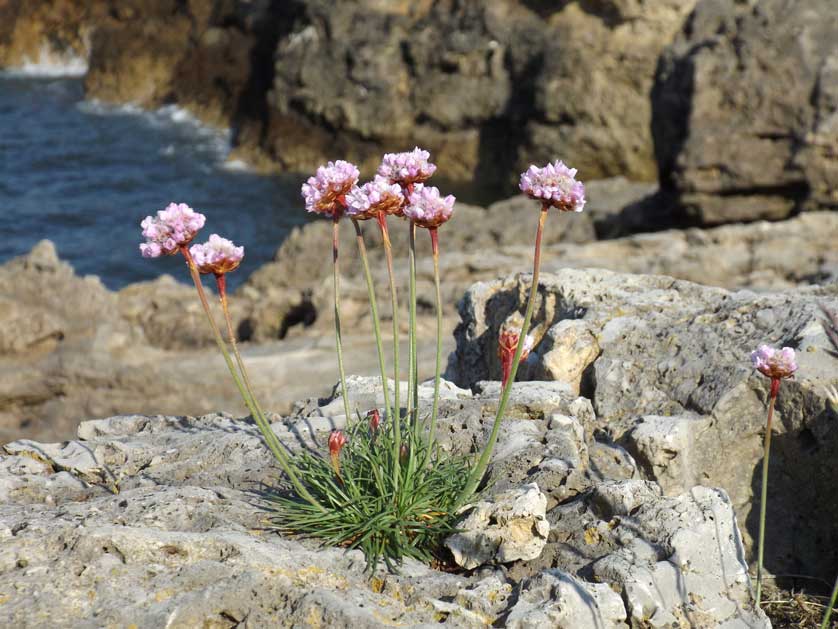
The crevices, cracks and ledges of cliffs provide homes for some very special plants and birds, including a cliff-top favourite. Among the plants are the delightful purplish-pink Sea Thrift.
Birds
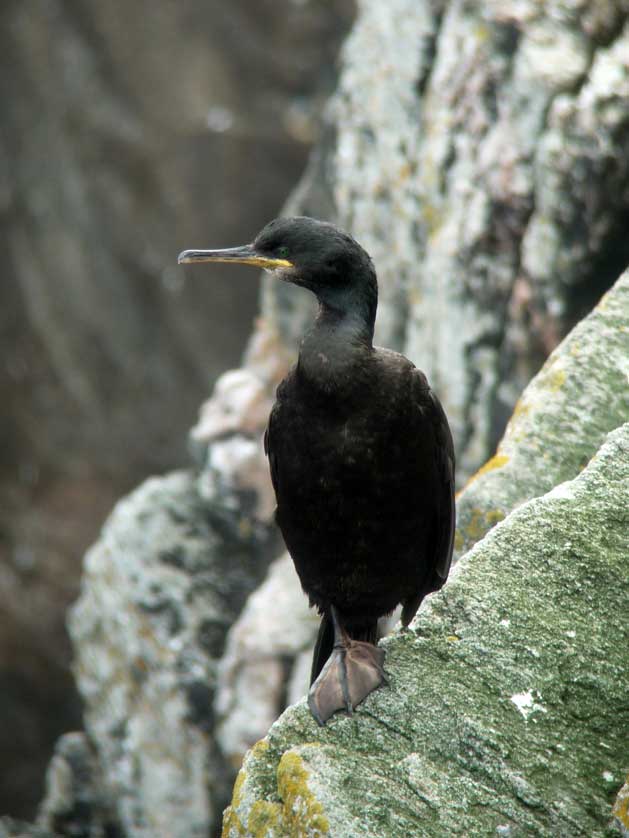
The birds utilising the cliffs are almost all seabirds which return each year to breed, although some, such as Great Cormorants and Shags may also roost there each night through the winter too.
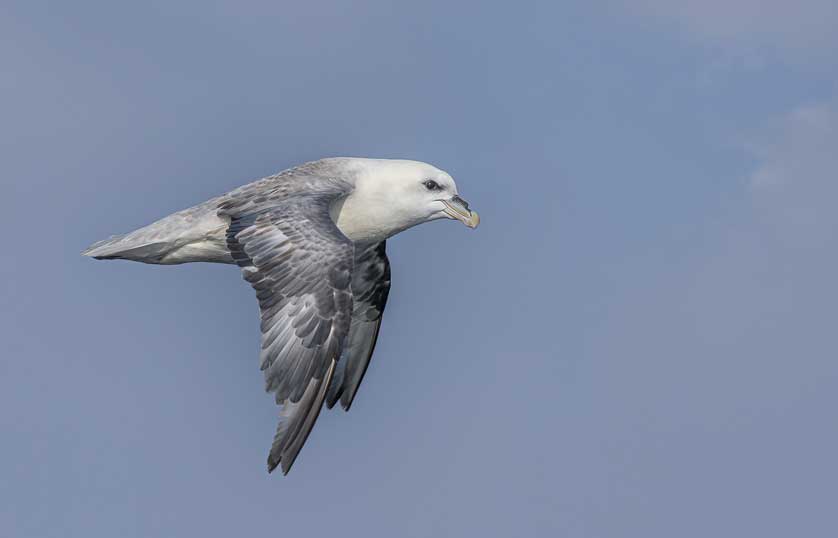
However, for the most part, summer cliffs are bustling places noisy with the cries of gulls, and the groans of auks and Northern Gannets, and eerily bereft of life in winter. Those low cliffs along the Norfolk coast at Hunstanton and Cromer are nesting sites for the Northern Fulmar, a stiff-winged gliding seabird like a mini albatross.
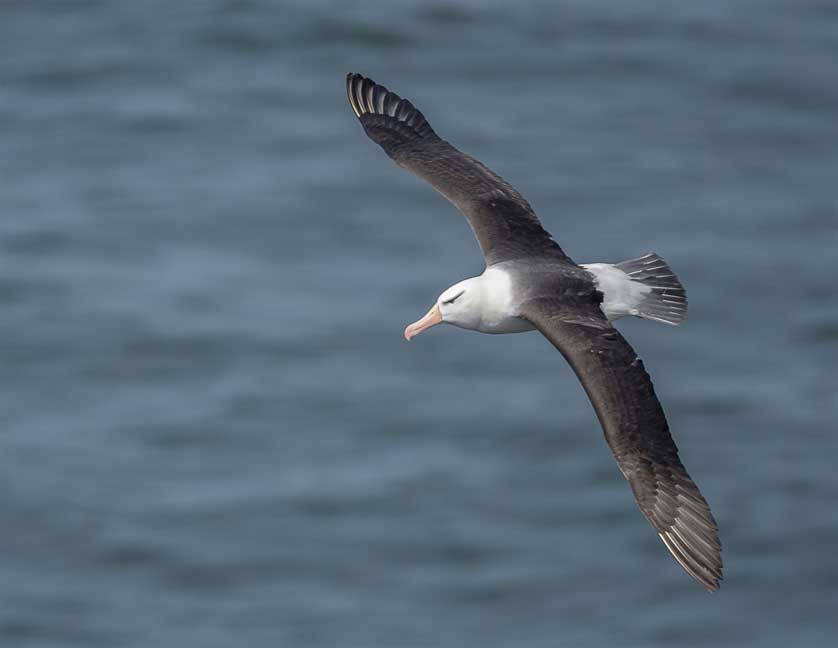
The true albatrosses are great rarities in the North Atlantic, but amazingly the occasional Black-browed Albatross has reached British waters, and it has even visited Bempton Cliffs.
Western cliffs from Cornwall to Scotland are the habitat of an unusual member of the crow family - the Red-billed Chough - which specialises in foraging in the short grass turf atop the cliffs, where they hunt for ants and other invertebrates.
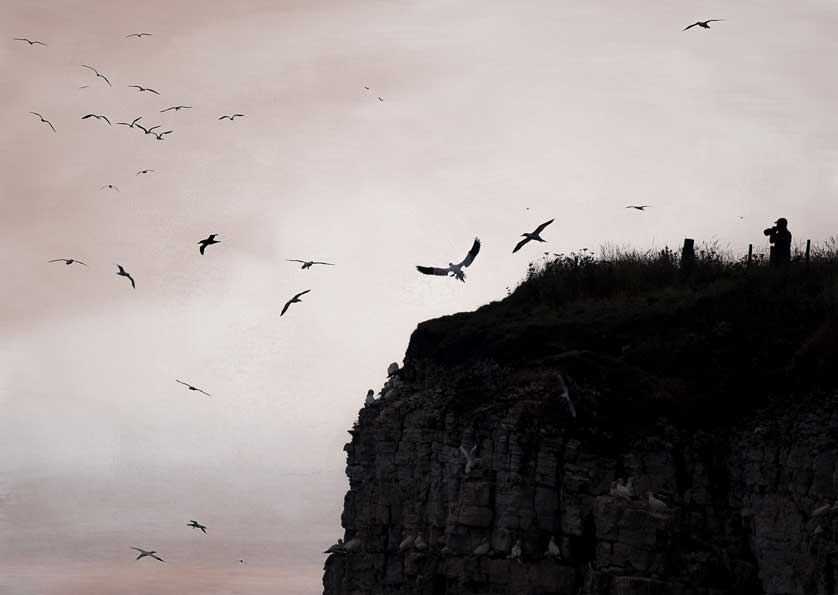
Bempton Cliffs & Hermaness
The great cliff reserves at places such as Bempton, or at Hermaness in Shetland are packed with birds.
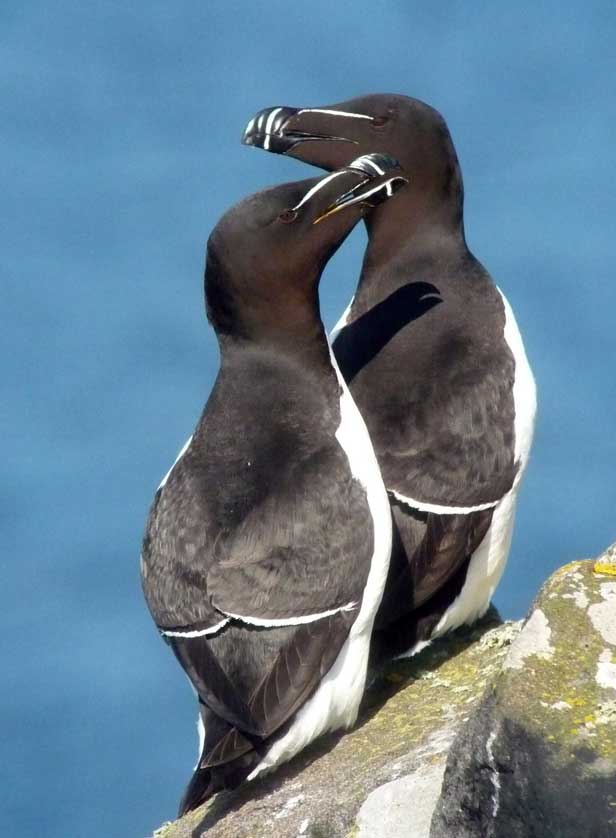
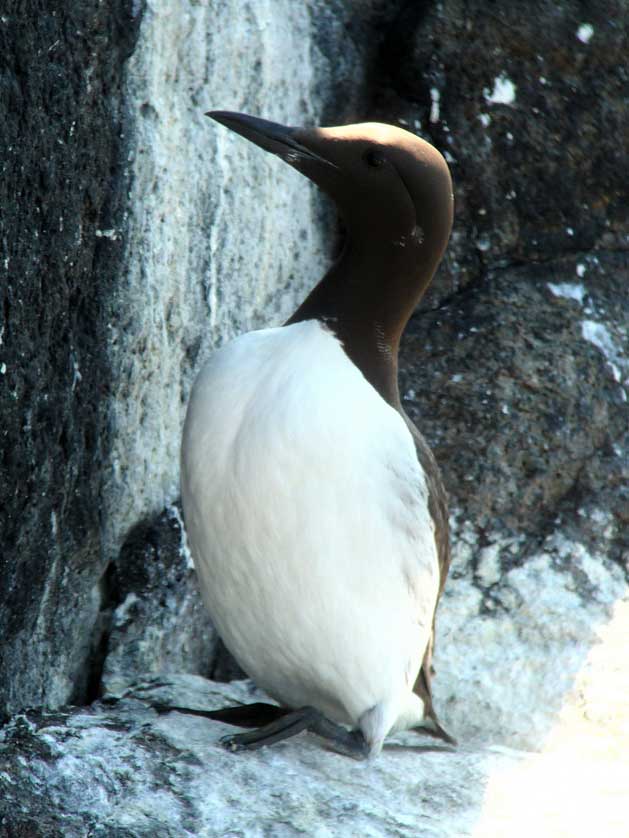
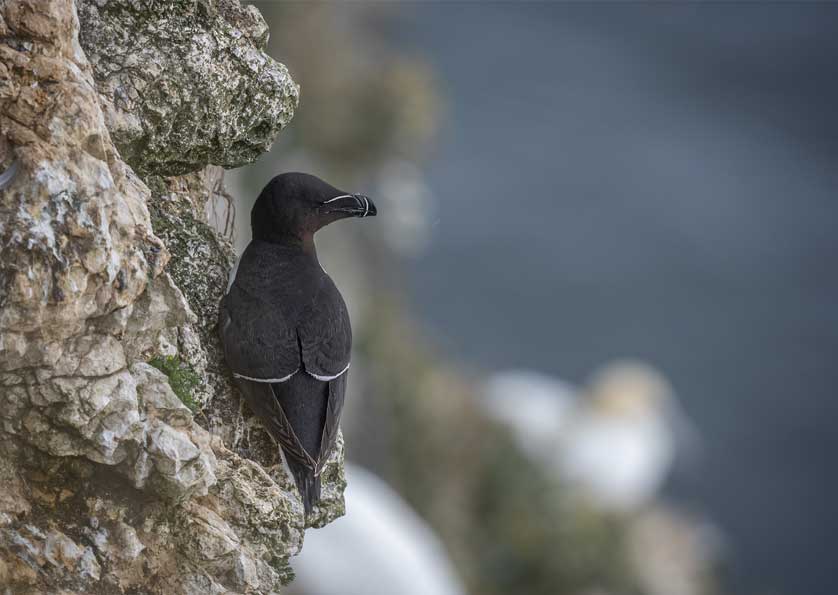
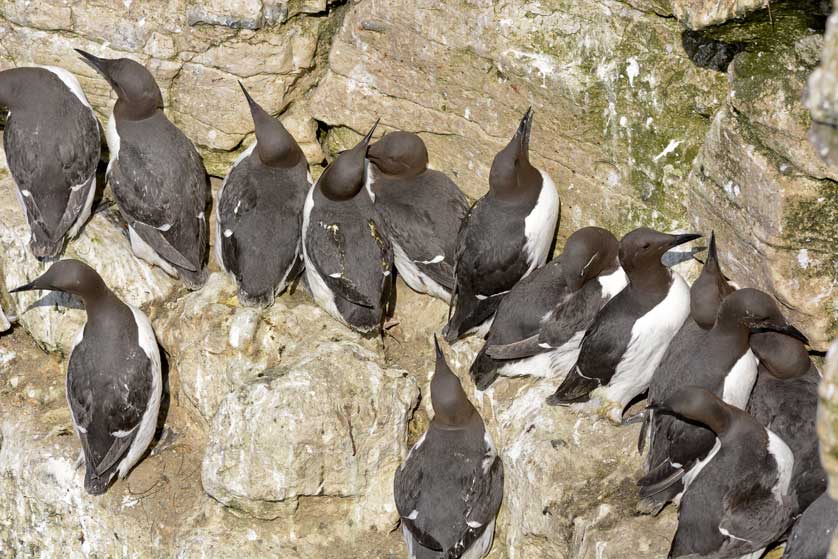
Streams of Razorbills and Common Guillemots commute back and forth between their offshore feeding grounds where they hunt mainly for fish such as sand eels and sprats, and their nesting ledges on the cliffs.
Ledges too narrow for the auks are occupied by our most delicate gull family member - the Black-legged Kittiwake. This diminutive gull with pearly grey and white plumage and sharply-pointed black-tipped wings builds a small platform-like nest of dried grass, seaweed, and flotsam bonded together and to the cliff with its own guano as a kind of poop deck. The auks on their wider ledges build no nests at all, instead they lay their extremely pyriform eggs directly onto the rock.
With the largest ledges occupied by cormorants, shags and fulmars, large ledges filled with auks (guillemots and razorbills) and the narrowest ledges the domain of the kittiwakes, the cliffs seem over crowded already, yet somehow there is still room for the puffins.
Atlantic Puffin
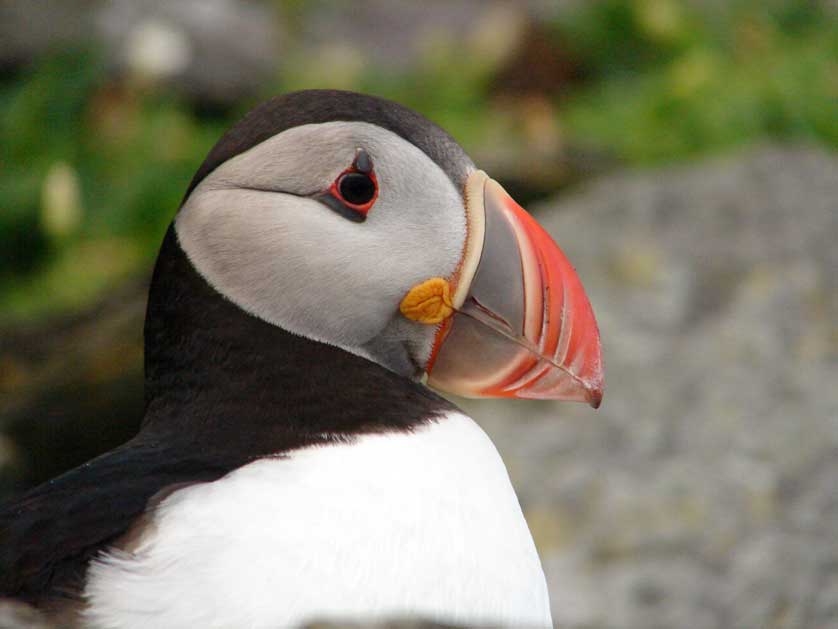
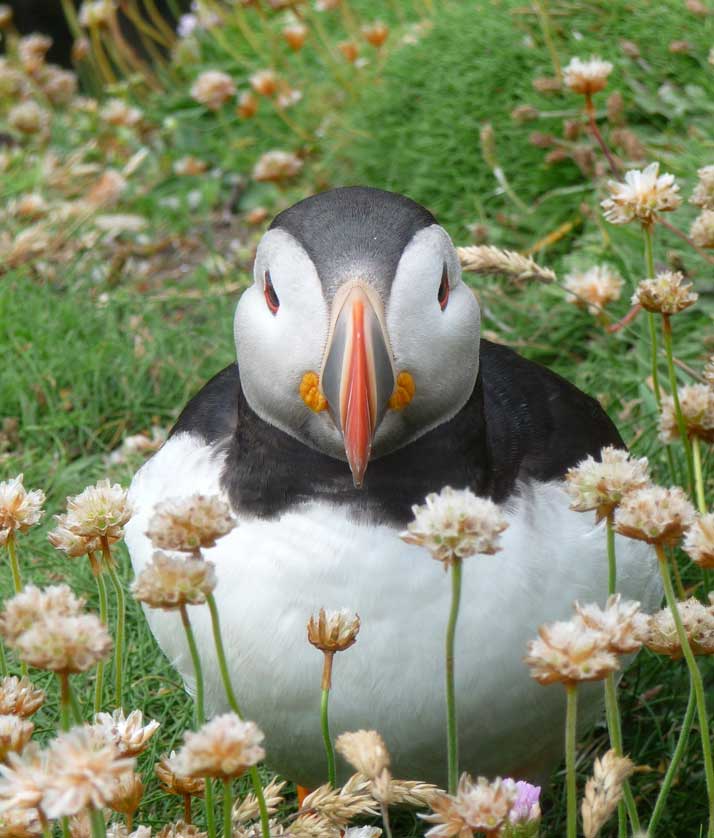
These strangely amusing "sea-parrots" are properly known as Atlantic Puffins. As their name suggests they are at home around a single ocean, in fact only the North Atlantic. Puffins avoid competing for cliff real estate with the other seabirds by specializing - unlike the others, they are burrowers.
Using their bills and feet puffins excavate a long burrow into the turf and soil along the cliff tops. Puffin burrows are typically about a metre long with a nesting chamber at the end. There the female lays just a single egg each year, and the pairs raise their single chicks during the early summer months.
Courting puffins and those that have completed a stint at the nest may relax and stand about unconcerned near their cliff-top nests providing marvelous photo opportunities, but those returning laden with food to offer to their mates or nestlings make a bee-line for their burrow and quickly dive below for cover. Their behaviour is adaptive as their goal is to feed their family not marauding predators, such as gulls and skuas, around the colony.
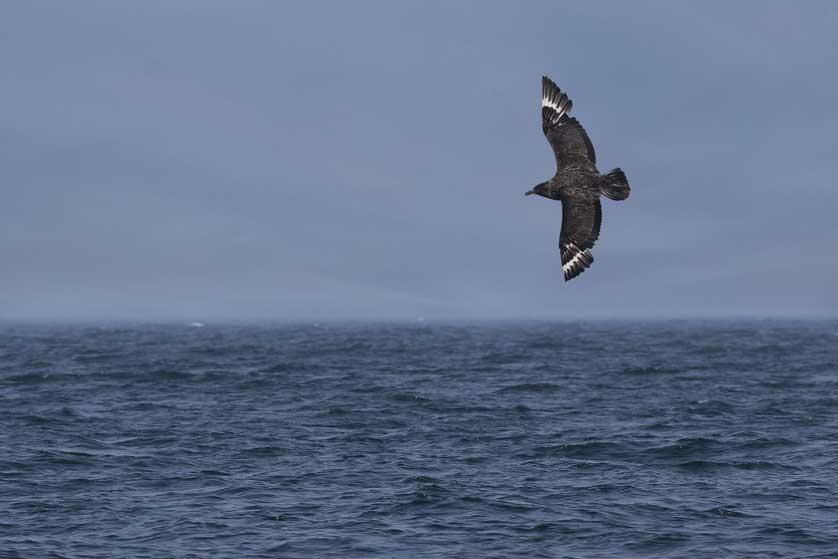
Great Skua
Large gulls and skuas, such as the Great Black-backed Gull and Great Skua, are the colony's tax collectors.
They extract their pounds of flesh in the form of food stolen from parent seabirds, that they had hoped to deliver home, or in the form of eggs and chicks exposed on the cliffs below.
A season's energy spent producing a single large auk egg or chick can be lost in an instant as a gull or skua snaffles an entire egg or gulps down a chick on its first flight to the sea.
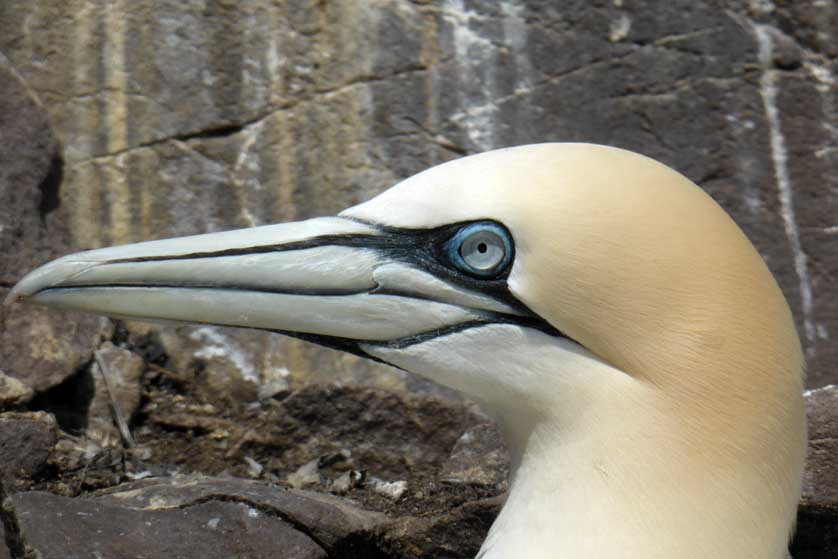
Northern Gannet
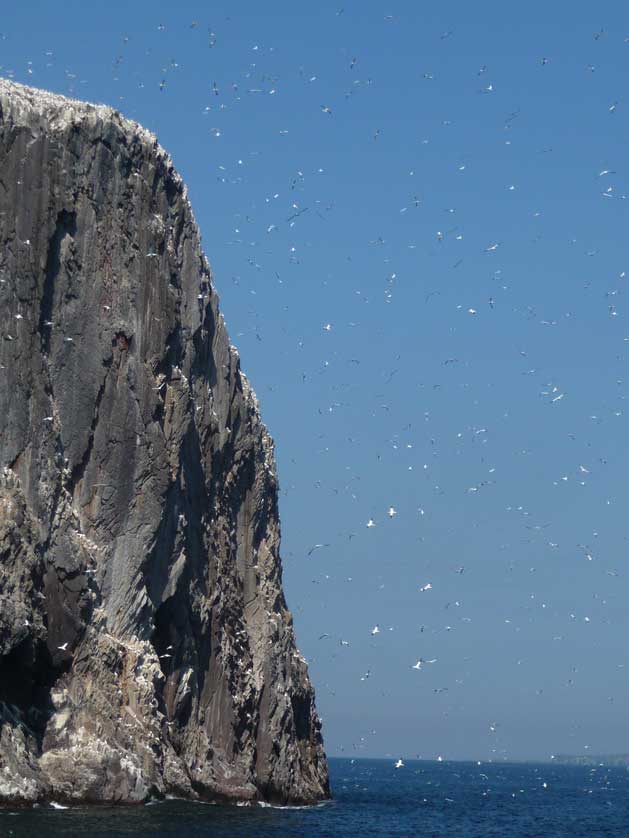
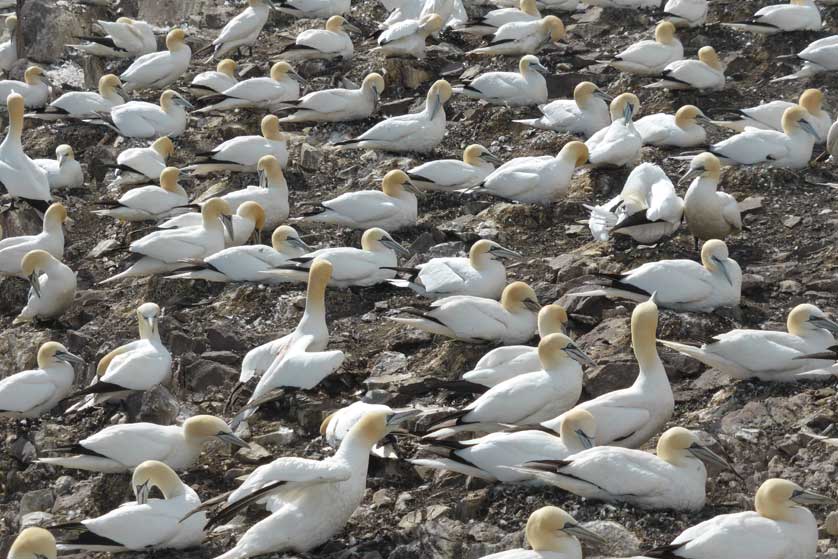
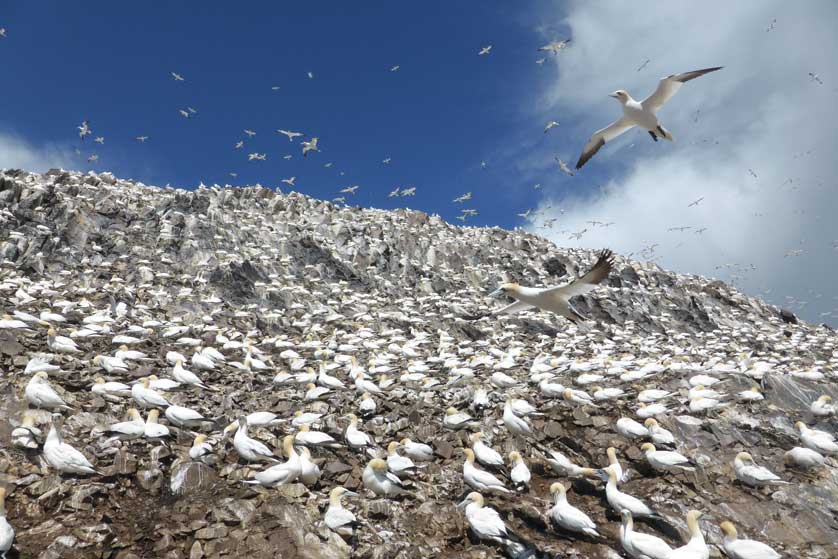
The largest of Britain's seabirds is by far the most impressive. The Northern Gannet appears pristine in its white, cream and golden plumage, and seems all the more enormous given its two metre wingspan in contrast with the dapper auks and puffins.
Nearly two-thirds of the world population breeds around Britain's coasts, totalling some 290,000 pairs. Impressive colonies such as those at Bempton in England, Troup Head in Scotland, and Grassholm in Wales, hold many tens of thousands of birds, but surely the colony on the Bass Rock is the most outstanding, it houses more than 150,000 birds in what is considered to be the world's largest single Northern Gannet colony.
Just like the auks and puffins, the Northern Gannet lays only a single egg each year. Gannet chicks are endearing in their initially pure white down, but soon seem primitively reptilian as they moult into their greyish-brown plumage with white spots.
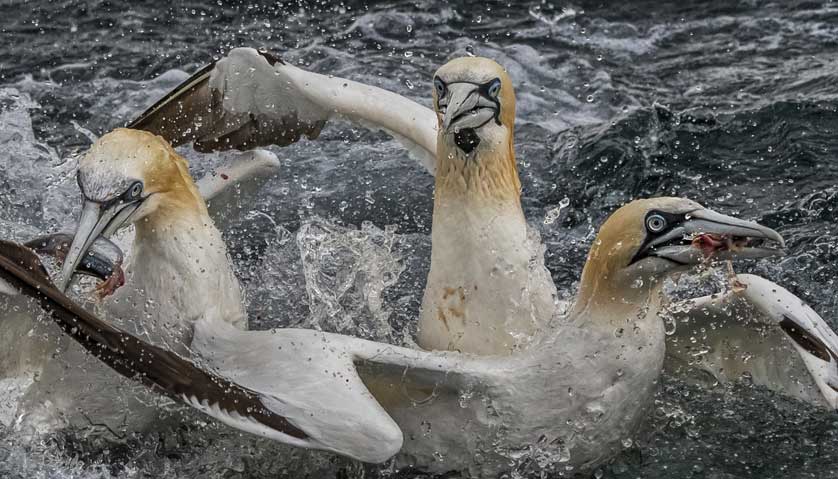
Their high-flying parents are high-speed plunge divers. Whereas the auks and puffins duck-dive from the sea surface and scull underwater, as if flying through the water, in pursuit of their prey, the gannets pause in flight and arrow downwards at a steep angle as speeds of up to nearly 90 km/hr sending up a gout of spray as they strike the sea surface. Moments later they bob back to the surface with their fish prey and soon head back to their nest carrying the food in their stomach.
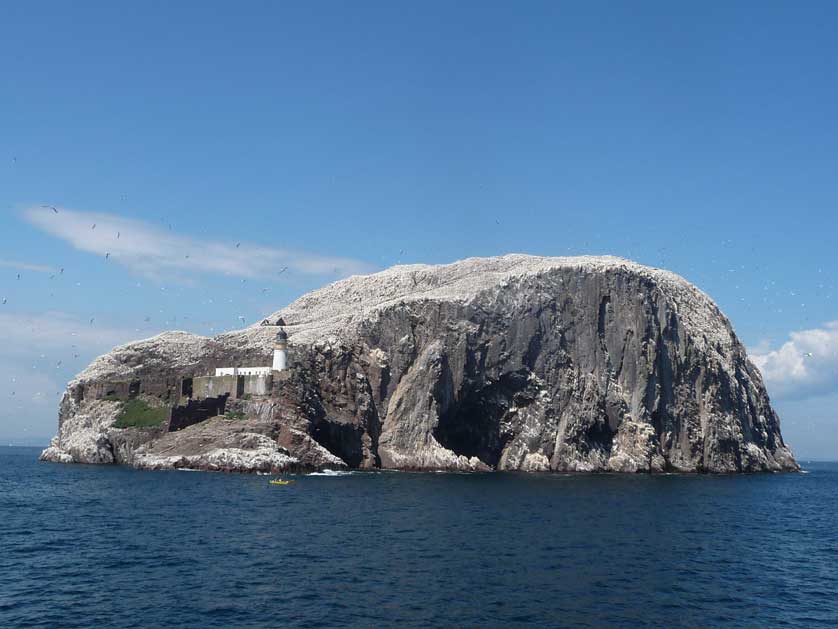
Bass Rock
Rising from the Firth of Forth, the island known as the Bass Rock is the core of an ancient volcano formed some 320 million years ago. The island and its gannets are best seen from the North Berwick coast or during a boat trip run by the Scottish Seabird Centre from North Berwick. The location itself is very special indeed, but when covered with breeding Northern Gannets it is truly spectacular.
Cliff-top Walks
Mesmerizing, entertaining and bewildering are the adjectives I use to describe cliffs and their seabird colonies, yet even once all the birds have completed their summer breeding cycles and headed back out to sea for the winter, cliff top paths remain endlessly attractive to wander along as they offer dramatic exposure to the elements and the marvelous coastal scenery.
To watch seabirds at their colonies the best times to visit are between March and October, but sea cliffs make wonderful places to walk at any time of year.
My top five recommended cliff-top walks are:
- Bempton Cliffs, Yorkshire. Described by Carrie Johnson, wife of prime minister Boris Johnson, as like a cathedral for birdwatching.
- White Cliffs of Dover, Kent. A combination of iconic scenery with chalk grassland.
- Hermaness, Shetland. Wild, wonderful and remote.
- Pembrokeshire Coast Path Trail. The Nash Point loop trail offers wild views and historical sites.
- Norfolk Coast Path, Norfolk. The route from Cley-next-the-sea to Sheringham takes in excellent nature reserves and delightful wind-swept scenery.
Gallery
Mark Brazil, naturalist, author and expedition leader, grew up in the landlocked county of Worcestershire, but has lived in Staffordshire, Stirlingshire, Hertfordshire and Norfolk.
Among his favourite places he include the coasts and offshore islands of Britain, especially the remote isles of Scotland. Between leading international expeditions he currently resides in east Hokkaidō, Japan. His most recent book Wild Hokkaidō: A Guidebook to the National Parks and Other Wild Places of Eastern Hokkaidō was published in summer 2021.
Hotels in Scotland
Book Hotels in Edinburgh - Booking.com
Find Hotels in Glasgow - Booking.com
Search Hotels in Orkney - Booking.com
Hotels in The Shetlands - Booking.com