UK Guides: Cornwall
Cornwall Attractions
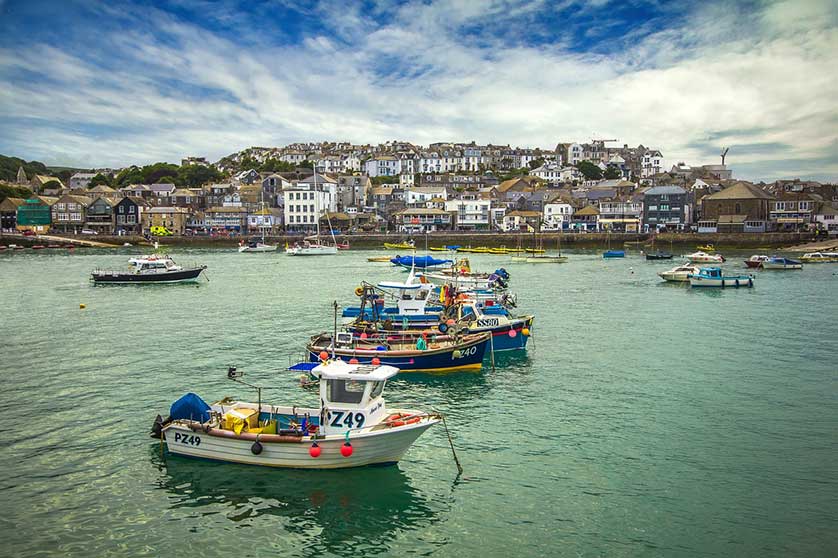
The ceremonial county of Cornwall (Kernow) is the westernmost part of the South West Peninsula of England. Bordered by Devon to the east, Cornwall is one of England's most beautiful areas.
Land's End is the southwestern-most point in Britain and Lizard Point its most southern. The River Tamar is the historic boundary between Cornwall and Devon.
Home to around half a million people, Cornwall's economy is now largely based on tourism which accounts for around a quarter of its income, agriculture which is in decline and new technology, based largely at the Aerohub development at Cornwall Airport Newquay.


History
A recognised Celtic nation along with Wales, Scotland and Ireland, Cornwall's "history" includes the myths of both King Arthur and King Mark of Cornwall. Cornwall has just claims to be the "fifth nation" in Britain along with the English, Irish, Welsh and Scots
Even though the Romans were interested in the region's tin, indeed historians believe exploiting the mineral was one of the pretexts for invasion, there are few Roman remains in the region.
Tin-mining and later copper, however were to play an important part in the industrial development of Cornwall through the 18th and 19th centuries. There is a history of periodic revolt by the Celtic Cornish against the neigboring Anglo-Saxon English. The failed Prayer Book Rebellion of 1549 had a disastrous effect on the Cornish language which was no longer used in churches (English was enforced) and gradually withered away until a rival four centuries later.
Attractions
Cornwall is one of England's fastest growing areas for tourism attracting both young and old alike. See a list of attractions in the traditional county of Cornwall.
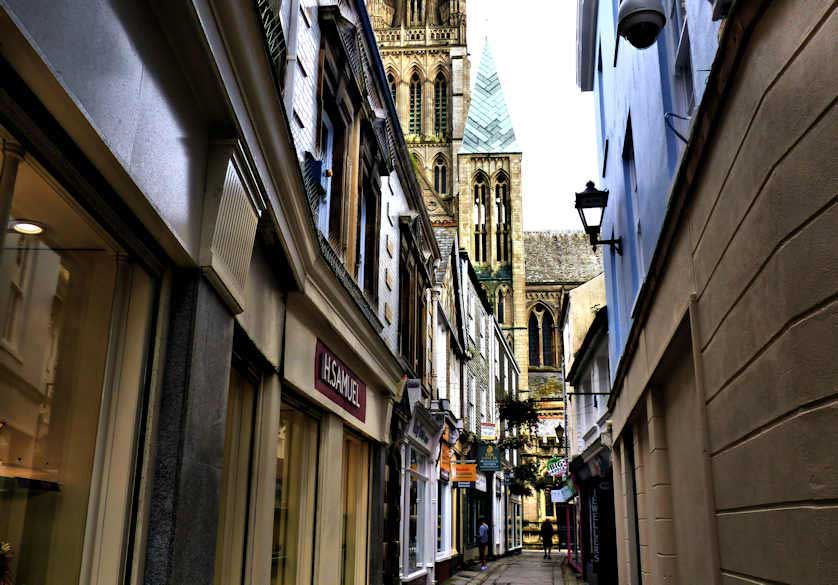
Truro
Located almost in the centre of the Cornish Peninsula, Truro, though with only a population of about 19,000, is the county seat and the only city in all of Cornwall.
The town grew up around a Norman castle that has long since disappeared. Though quite a distance inland, but safe from seaborne invaders, Truro grew as a port and then as a stannery town for the tin and copper mines of the area.
With the flourishing of the tin mines Truro prospered in the 17th and 18th centuries with many wealthy mine owners settling in the town.
With the Great Western Railway connecting Truro with London the town's importance grew and with the building of Truro Cathedral in the late 19th and early 20th century, the town was made a city.
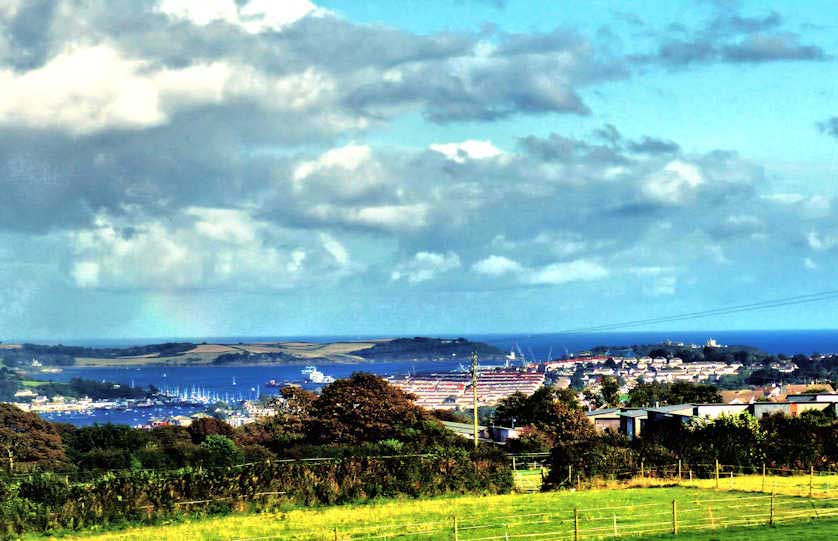
Falmouth
Warmed by the warm waters of the Gulf Stream, and protected from the cold north wind by the spine of Cornwall, Falmouth is a very popular seaside resort and is the jewel in the crown of the Cornish Riviera.
Falmouth is a relatively new town, being established by Sir John Killigrew in 1613, much to the chagrin of the residents and merchants of Penryn, a little further upriver which until then was the main town of the area.
In the 1540's Henry VIII built Pendennis Castle on the strategic headland of Pendennis, and its sister fortification, St. Mawes Castle across the narrow channel that leads into Carrick Roads, a huge natural harbor and one of the deepest in the world.
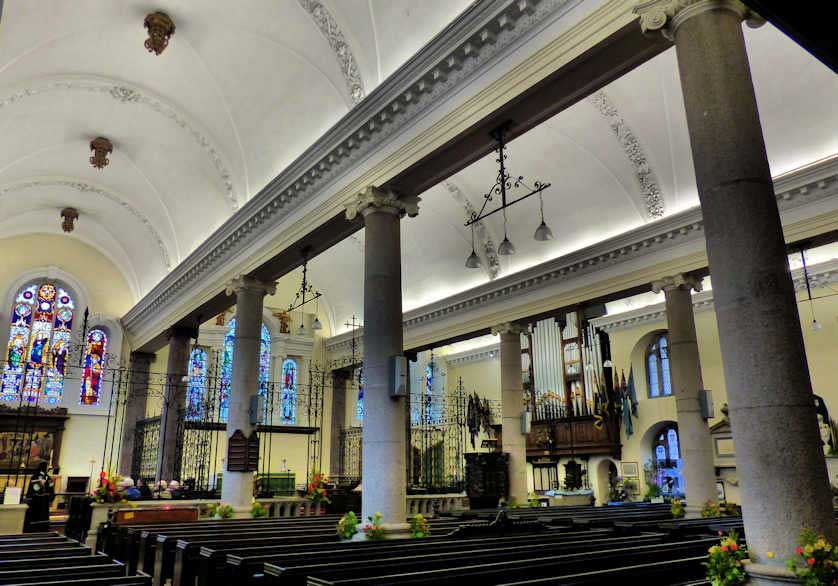
The founding of the Church of King Charles the Martyr was concurrent with the founding of the town of Falmouth. The church is dedicated to King Charles I who was executed in 1649 after the English Civil War.
His son and heir, later Charles II, had stopped briefly in Pendennis Castle on his flight to exile. With his enthronement following the restoration of the monarchy, Charles II was petitioned by John Killigrew in 1660 to found a town and church.
Falmouth Art Gallery is worth a visit for its collections of paintings, prints and automata.

Pendennis Castle
Pendennis Castle is nowadays one of the most visited tourist sites in Falmouth and is worth a visit if only for the great views up and down the coast.
Its location is just about perfect for its purpose which is coastal defense. It has been called one of the finest example of a post-medieval promontory fort in the country.
The castle is located on top of a promontory at the mouth of the Carrick Roads, one of the biggest natural anchorages anywhere.
With expansive views out into Falmouth Bay and the southwest approaches to England, Pendennis and its sister castle, St. Mawes, situated just over a mile away across the narrow entrance to Carrick Roads and Falmouth harbour, was built as a coastal fort and gun platform.
Pendennis Castle fulfilled this role well into the twentieth century.
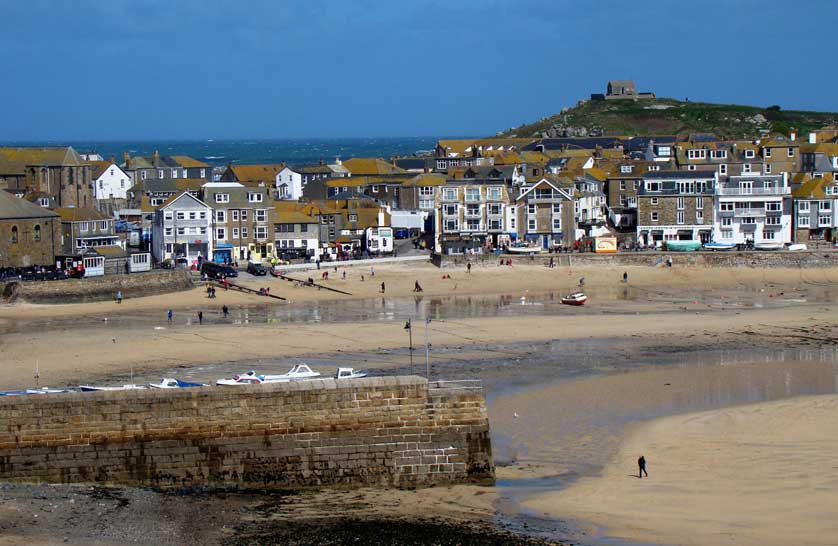
St. Ives
St. Ives is a seaside resort on the spectacular north coast of Cornwall. Repeatedly voted best seaside town in the UK in numerous surveys, St. Ives has beaches, cliffs, a picturesque harbour and old town but is also renowned as a center for the arts.
The origin of St. Ives lies in the fifth or sixth century with the arrival of St. Ila from Ireland. One of many Christian missionaries that came from Ireland to the area, according to legend she was the daughter of an Irish chieftain.
Supposedly she is buried beneath the church named after her in the town center and the name St. Ives is a derivation of her name. During the medieval period St. Ives prospered as a fishing port eventually becoming the most important port on the north coast of Cornwall.
There are numerous art galleries in the town, but the three most important are the Barbara Hepworth Museum and Sculpture Garden, the Tate St. Ives, and the Leach Pottery.
The jewel in the crown is the Hepworth site, set in the house and gardens where the famous sculptress lived and died. The Tate, the second of its provincial galleries, opened in 1993 and exhibits national and international artists as well as shows based on artists who made St. Ives their home.
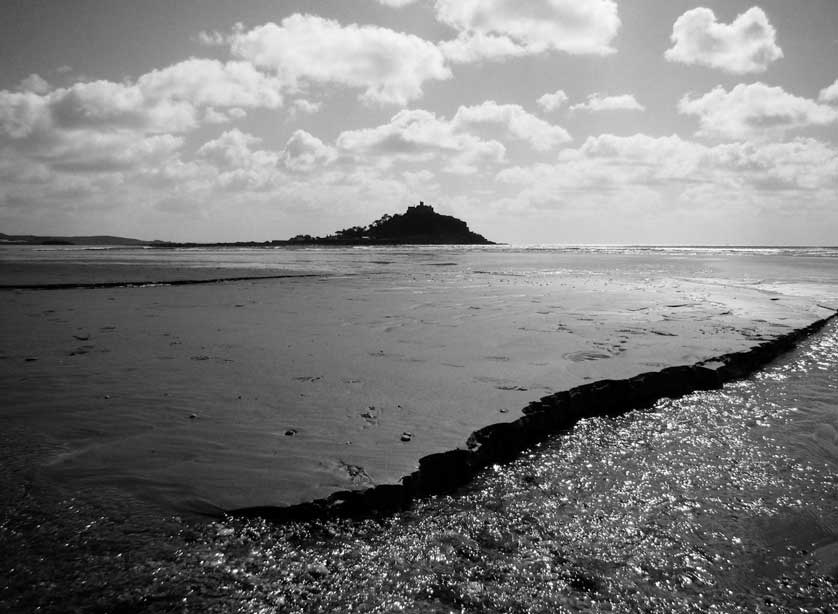
St. Michael's Mount
Though not as well visited as its namesake across the Channel, Mont St. Michel, St Michael's Mount is just as iconic. A small, tidal island topped with a castle and chapel, located about 500 meters offshore from the village of Marazion, St Michael's Mount can be seen from every point on the sweeping arc of Mount's Bay.
The Fox Rosehill Gardens are located in the middle of town and are free to enter and have a great collection of plants from the southern hemisphere including Falmouth's trademark palms.
A little out of town are several large gardens now operated by the National Trust. Near the River Fal towards Truro is the Trellisick Garden, and near the Helford River is Glendurgan Garden, probably the most famous garden in the area. Not far away from Glendurgan is the smaller Trabah Garden.

Cornish Coast Path
The Cornwall Coast Path of slightly under 300 miles along the coast of Cornwall encompasses some of the most spectacular and stunning coastal scenery of anywhere in the British Isles.
From golden beaches stretching along wide bays to towering cliffs above crashing surf, walking the path will take you through secret hidden coves and picturesque fishing villages as well as all the major tourist towns of Cornwall.
Part of, in fact almost half of, the much longer, 630 mile South West Coast Path, rated by Lonely Planet as one of the best walks in the world, which runs from Minehead in Somerset to Poole in Dorset, through Teignmouth, Beer, Seaton and Lyme Regis.

World Heritage Tin Mining Sites
Cornwall's World Heritage tin mining sites are now well known even to those who have never been to Cornwall through the popular TV series Poldark. In 2006 a large number of these sites across Cornwall were awarded UNESCO World Heritage status.
The peak of the tin industry though was the 19th century when the technology of steam pumps allowed miners to go deeper and even extend shafts out under the sea.
There are dozens of sites scattered over Cornwall and Devon in the World Heritage registration, but the bulk of them are in the west of Cornwall. Furthest west, two sites located close to each are Levant Mine and Geevor Mine.
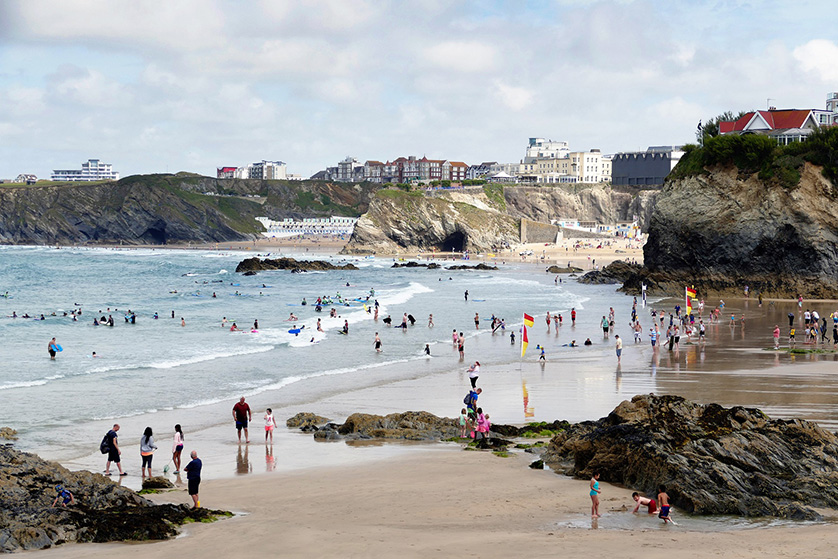
Newquay
Newquay is Cornwall's surf capital and something of a mini-Ibiza in summer. Think beer, campsites, clubs, fish & chips, pasties, pubs and surfing.
Surfing beaches include Fistral, Great Western, Tolcarne, and Towan.
The town is perched on the cliffs overlooking fine sandy beaches and attracts a distinctively younger crowd. Aside from the surf, Newquay has Newquay Zoo and the Blue Reef Aquarium, both popular with kids.
There is plenty of night-time entertainment after a day in the water with live music and events particularly in summer.
Older, well-heeled visitors mainly head for trendy Padstow, a short and pleasant drive north along the coast.
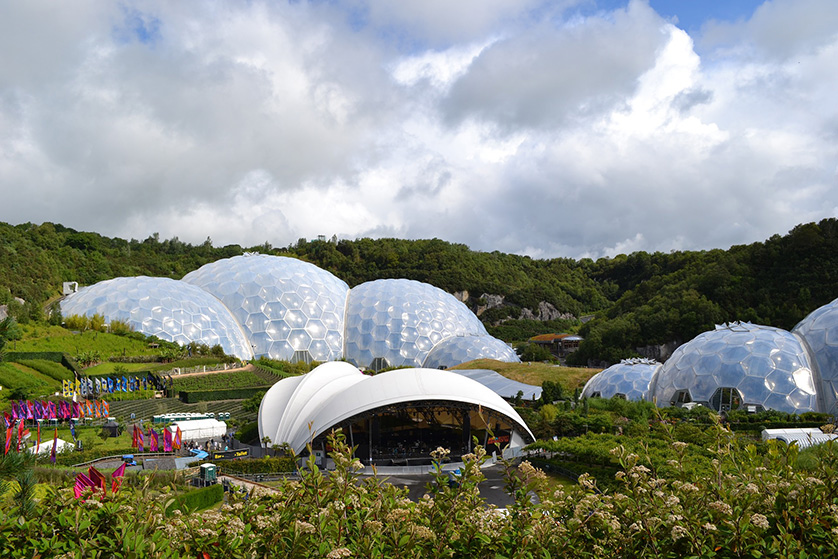
Eden Project
The giant biodomes of the Eden Project have become a major tourist attraction since they opened in 2000. Located in a reclaimed china clay pit close to St Austell, the plastic biodomes contain plants collected from diverse climates and environments from around the world. A rain forest and a Mediterranean environment are both recreated indoors and complement the outdoor botanical garden.
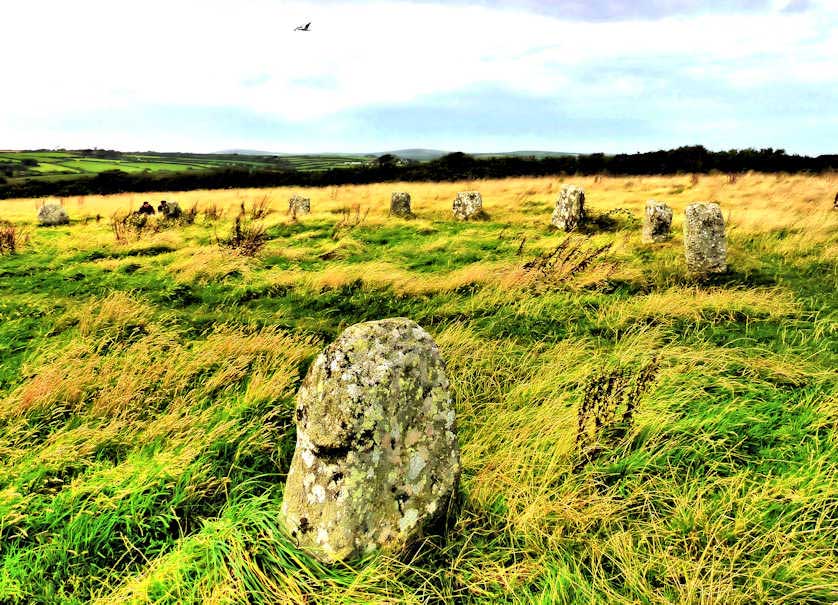
Merry Maidens & The Pipers
The Merry Maidens is a stone circle located in the west of Cornwall in St. Buryan between Penzance and Land's End.
It is almost perfectly circular and is believed to not have been altered like so many other examples around the country. It consists of 19 granite stones, evenly spaced, in a circle with a diameter of 78 ft. (23.8 meters).
The space between the stones is roughly 12 ft. with a wider gap at the eastern edge of the circle. The tallest of the stones are 55 inches (1.4 meters), though they reduce in size from the north east to the south west.
A couple of hundred meters to the northeast of the Merry Maidens and about 90 meters apart are the two biggest standing stones in Cornwall.
Called The Pipers, the legend claims they were the musicians playing for the Merry Maidens. The stones are 4.7 and 4.2 meters high and align in a roughly north east to south west direction aiming almost exactly at the Merry Maidens.
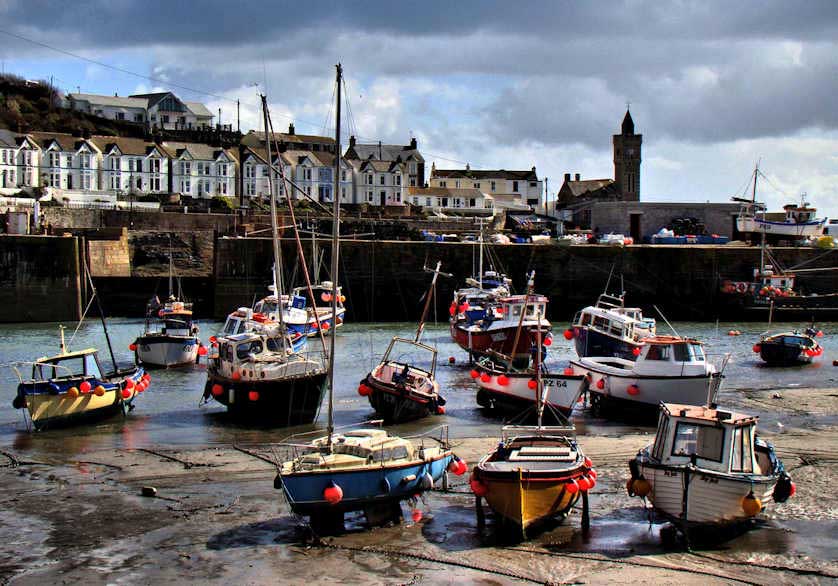
Porthleven
Porthleven is a picturesque fishing village with several beaches near Helston that has become a very popular summer seaside destination.
Porthleven has a wide array of eateries, pubs, cafes, and restaurants and so all the classic dishes can be had. Visitors can enjoy Cornish pasties, Cornish cream teas, fish and chips and ice cream, as well as a variety of local and not so local cuisines.

Scilly Islands
The Scilly Islands are a group of 140 small islands, 28 miles off the southern coast of Cornwall. Only five of these idyllic, away-from-it-all places are inhabited: St. Mary's (the largest), Tresco, Bryher (population less than 100 people), St. Martin's and St. Agnes.
Things to do on the islands include enjoying the fine beaches, walking and visiting several prehistoric sites.
Regular ferries connect the populated islands which can also be reached by plane from Newquay Cornwall and Land's End airports or a choppy ferry ride from Penzance in the summer only.
Zennor
The quiet village of Zennor on the north coast of Cornwall is known for its associations with the 20th century novelist and poet D. H. Lawrence. Born up north in Nottingham, Lawrence lived here at Higher Tregerthen with his wife Frieda for 18 months from 1915, before being driven out by the dual antipathy of the local police and residents who took a dim view of the couple’s unconventional lifestyle and Frieda’s connections with enemy Germany - her cousin was none other than Germany’s ace fighter pilot Baron von Richtofen, the famous "Red Baron". Nowadays Zennor is off the beaten track with only infrequent buses to Penzance and St. Ives. Zennor’s attractions include the Wayside Museum dedicated to Cornish life, traditions and culture, the granite stone church of St Senara and the spectacular cliffs of Zennor Head.
Cornwall Access - Getting To Cornwall
Air
Newquay Cornwall Airport (NQY) is 5 miles from Newquay and has flights to Bristol Airport, Cardiff, Glasgow, Isles of Scilly, Leeds Bradford, London Gatwick, Manchester Airport, Newcastle and international flights to Cork and Dublin in Ireland as well as seasonal flights to Alicante in Spain with Ryanair and Dusseldorf in Germany with Lufthansa.
Most UK flights are operated by Air Southwest. The airport offers airport parking for over 500 cars.
Exeter International Airport, just 5 miles to the east of Exeter city near Clyst Honiton off the A30 has regular domestic flights to Aberdeen, Alicante, Belfast, Edinburgh, Faro, Geneva, Guernsey/Jersey, the Isles of Scilly, Leeds Bradford, Manchester and Newcastle. International destinations include Amsterdam, Dubrovnik, Dublin, Funchal, Hannover, Larnaca, Nice, Palma, Paris, Malaga and Salzburg.
There are Skybus flights to the Scilly Isles from Exeter, Newquay and Land's End airports.
Train
Truro is about 4 hours, 40 minutes by train direct from London Paddington or via Plymouth on the First Great Western.
A good option is to take the overnight Night Riviera Sleeper Service (www.gwr.com/plan-journey/journey-information/on-board/night-riviera-sleeper) which connects Paddington and Penzance. It makes stops at Reading, Exeter St. David's, Newton Abbot, Plymouth, Liskeard, Bodmin Parkway, St Austell, Truro, Redruth, Camborne, St Erth and Penzance.
Road
Exeter in Devon, located at the end of the M5 motorway, coming south from Bristol makes for a good starting point if you are driving into Cornwall. Exeter is also a good place to hire a car.
From Exeter follow the A30 dual carriageway, north of Dartmoor through Okehampton, Launceston, Bodmin and Truro.
The journey takes about two hours by car. Alternatively take the A38 south of Dartmoor and join the A30 at Bodmin, which is usually slightly quicker depending on the traffic.
Hire a car in St Ives to explore the south west of England.
National Express coaches take about 8-10 hours to Falmouth from either Birmingham or London Victoria Bus Station.
Local buses from Falmouth include two loop buses, the #366 and #367 operated by OTS, which connect the town and coast in a 20-minute circuit.
First Bus operates buses from Falmouth to Truro which take about an hour, Falmouth to Penzance (2 hours) and Falmouth to Redruth (50 minutes).
Ferry
There is a passenger ferry from Penzance to the Scilly Isles. The Scillonian III passenger ferry takes between 2 hours 40 minutes and 3 hours. (Timetable & Information)
Accommodation
Cornwall offers guest houses and hotels that range from budget to luxury in addition to several campsites.
Falmouth
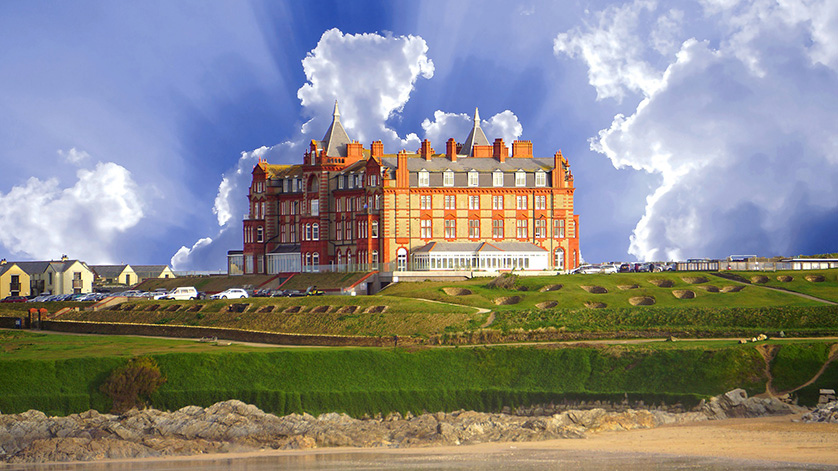
Some recommendations include the 5-star Bed & Breakfast OYO Anacapri, with incredible sea views, the four-star Greenbank Hotel, also on the sea front, The Royal Duchy Hotel, also four stars and the popular Falmouth Hotel with garden and terrace. The Falmouth Hotel was built in 1865 following the completion of the railway branch line from Truro and the beginning of Falmouth as a seaside resort.
See here for a listing of hotels in Falmouth.
St. Ives
Some good places to stay in St. Ives are the refurbished Primrose Valley Hotel close to Porthminster Beach and the nearby St Ives Harbour Hotel & Spa with terrace bar and restaurant.
See here for a listing of hotels and guesthouses in St Ives.
Truro
The Merchant House Hotel on Falmouth Road is a refurbished Victorian house with some rooms having garden views. The agreeable hotel has free WiFi and free private parking.
The Mannings Hotel on Lemon Street close to the cathedral and the Royal Cornwall Museum is a modernized Georgian property done out in vivid colors.
The Alverton is a 19th-century Grade II listed property offering four-stars, a brasserie, bar and free parking for guests.
See here for a complete listing of accommodation in Truro.
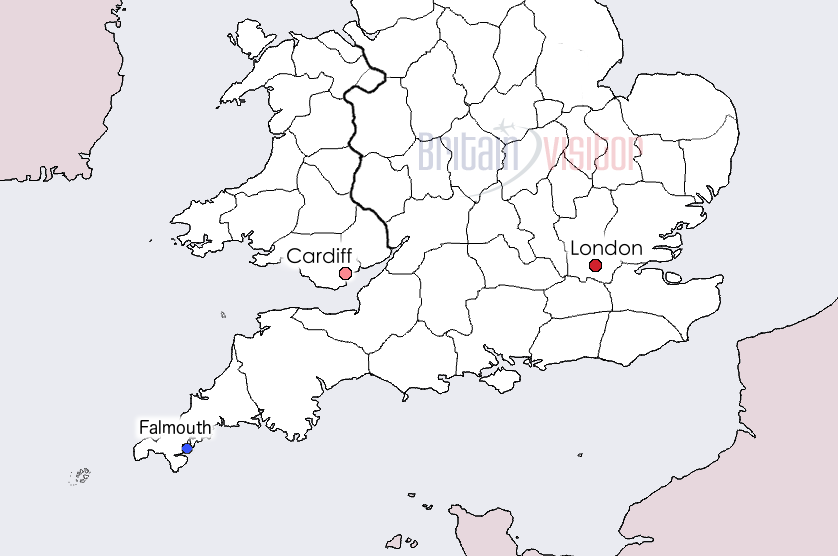
Cornwall Map
Hotels in the South West of England & Wales
Book Hotels in Bath - Agoda.com
Find Hotels in Bradford on Avon - Booking.com
Search Hotels in Cardiff - Booking.com
Recommended Hotels in Exeter - Agoda.com
Book Hotels in Salisbury - Agoda.com
Hotels in London - Booking.com
Hotels in England - Booking.com
Bath Hop-On Hop-Off Sightseeing Bus (Open Top)
The Hidden Cotswolds and The Making of England Day Tour from Bath