Churches in Wales
Wales is a land of Arthurian legends, beautiful castles and historic churches.
Wales was one of the first regions of Britain to adopt Christianity. The 6th and 7th centuries was the age of the saints when several monasteries were founded by religious scholars and leaders such as David, Illtud, Padarn, and Teilo. Indeed, Christianity helped forge the Welsh identity.
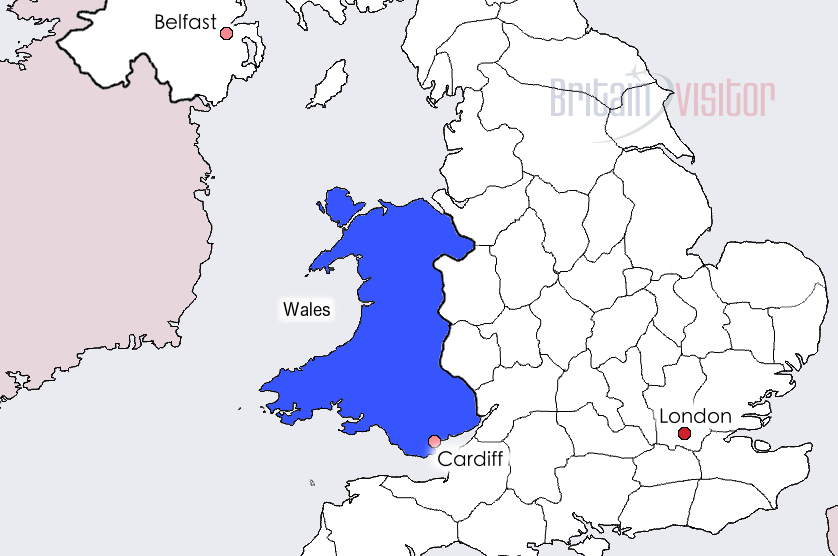
See a listing of churches in the principality of Wales from Anglesey in the north to Cardiff, the capital, in the south.

St. Mary's Church, Chirk
Chirk is a village in Wrexham, Wales, just across the border with England. It is known for the impressive Chirk Castle. The main church of the village is St. Mary's Church.
Dating the church is difficult though it is believed the south aisle is built upon Norman foundations from the 11th century when a motte & bailey fort was built nearby. It is believed to have been built on top of an older Welsh hermitage and chapel dedicated to the 7th century Celtic Saint Tysilio.
The north aisle was constructed later and the tower, built onto the north aisle, dates from 1475. Sometime around this time, the church was rededicated from St. Tsylio to St. Mary.
In the interior are many carved memorials to members of the Myddelton family who were the owners of the nearby Chirk Castle. There are numerous stained glass windows including a rather bold, modern one.
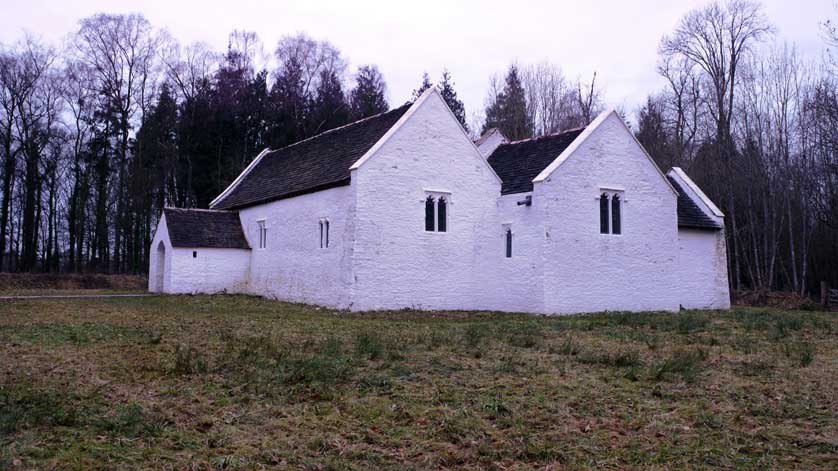
St Teilo's Church, Cardiff
St Teilo's Church stood for 700 years by the River Llwchwr near Pontarddulais in Southern Wales where it was known as the "old church on the marsh". The decision to move the church to the Museum of Welsh Life (aka St Fagans National History Museum) was taken in 1973.
As the building was being taken down to be moved, 500-year-old paintings were discovered under layers of whitewash.
Those paintings have been lovingly recreated using medieval techniques for today's visitor to enjoy.
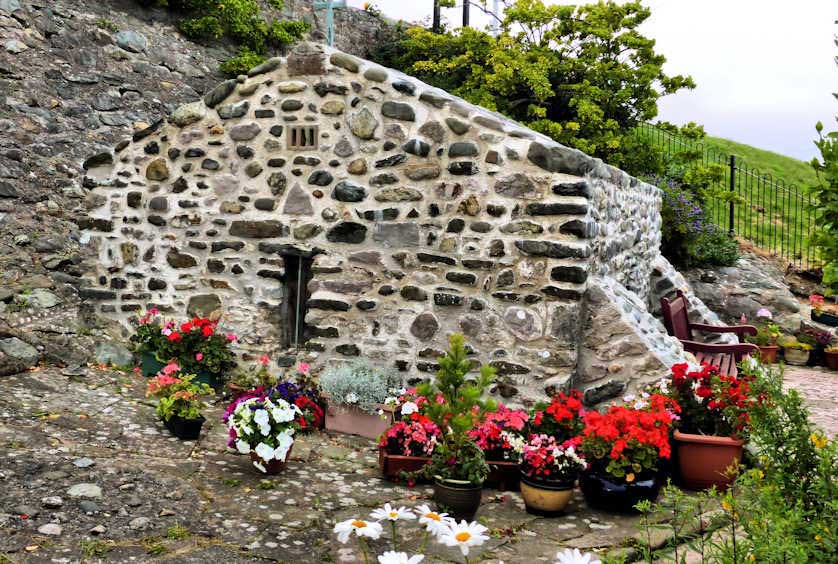
St. Trillo's Chapel, Rhos-on-Sea
St. Trillo's Chapel, located on the seafront in Rhos-on-Sea on the coast of North Wales is generally considered to be the smallest chapel in Britain.
Its interior dimensions are a mere 8 feet by 11 feet, with seats for just six people.
The chapel was established in the 6th century by St. Trillo, a holy man originally from Brittany and a contemporary of St. David. St. Trillo built some kind of structure here around the spring that is claimed to have healing properties.
He also founded the church at Llandrillo which is named after him, too. The stone structure that exists today was much repaired in the late 19th century but it probably existed for several centuries before that. The chapel has two tiny stained glass windows.
The well still exists under the tiny altar and water from it is also still used for baptisms in nearby churches.
A service is held in the chapel every Wednesday.
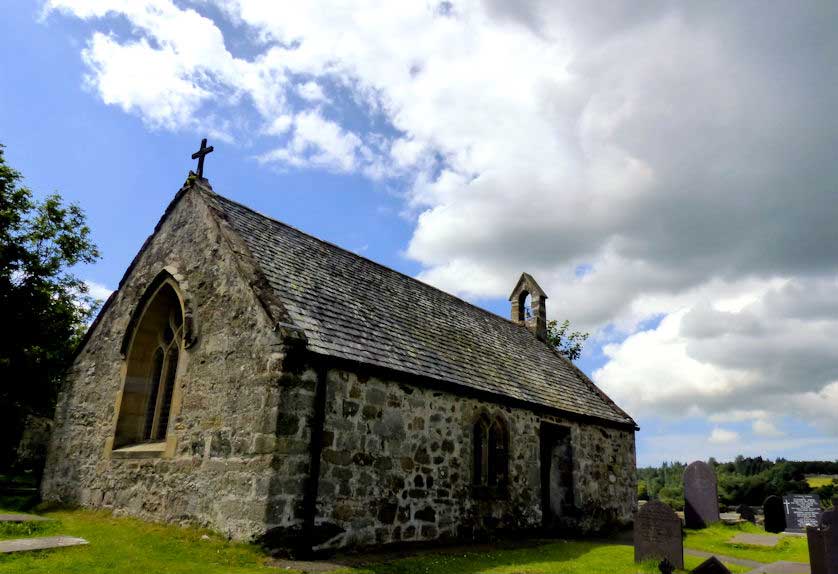
St. Tysilio's Church
Along the path close to the Menai Bridge is a small island accessed by narrow bridge with an old church and cemetery.
Not surprisingly named Church Island, a small hermitage was established here around 625 by Tysilio, son of the king of Powys. The current St. Tysilio's Church was built in the early 15th century although the big stained glass window is a 19th century reproduction of the original.
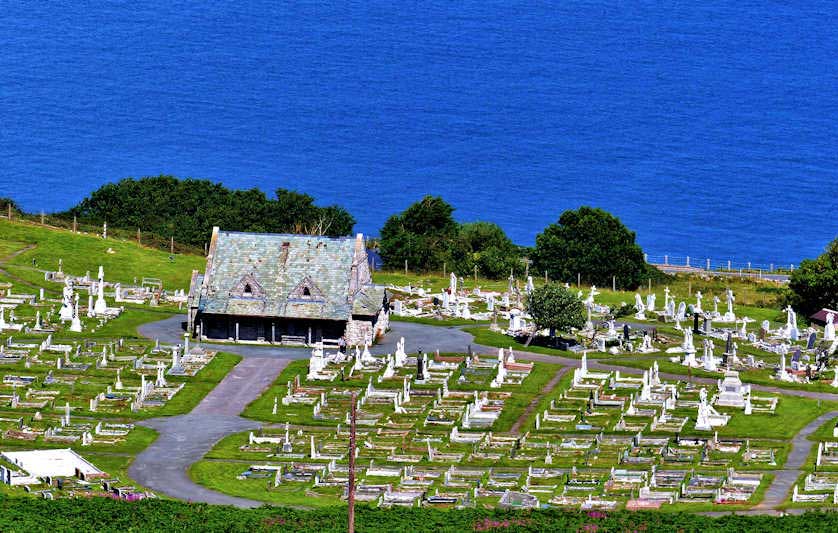
St Tudno's Church, Great Orme, Llandudno
St Tudno's Church lies on top of the Great Orme in Llandudno and has been a place of pilgrimage for over 1,400 years. St Tudno is the patron saint of Llandudno. In the summer open air services are held at the church which dates from the 12th century with extensions in the 15th century. The building underwent major restoration work in the 19th century and opened again for services in 1855.
Holy Trinity Church, Llandudno
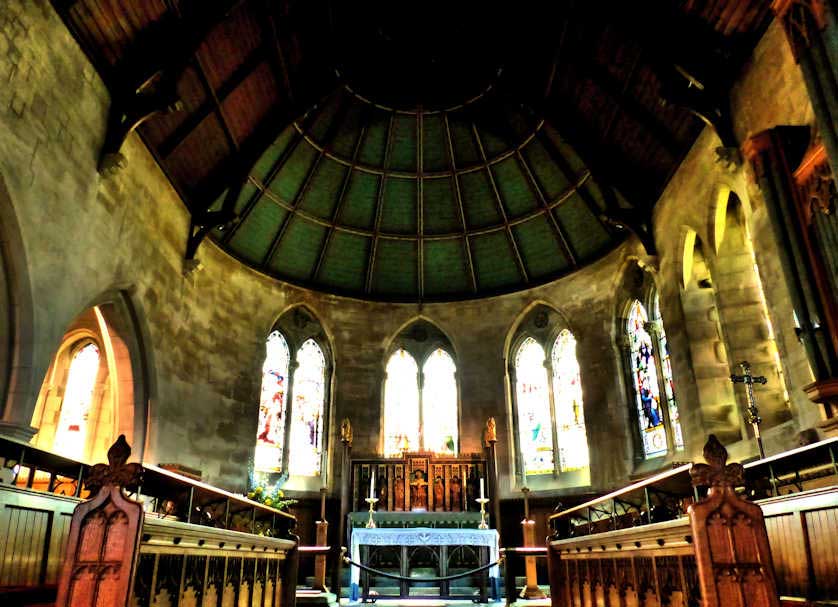
Holy Trinity Church is now the parish church of Llandudno. Holy Trinity was consecrated in 1874 and was built for the huge influx of English-speaking holiday makers who came to the expanding seaside resort from the nearby industrial cities of Liverpool and Manchester. The tower was added in 1882 followed a year later by eight bells.
The church has some lovely stained-glass windows and also worth a look is The Angel, a statue carved in teak by Handel Edwards in 1970. 31 scenes from the life of Christ are carved into the wings.
St Bridget's Church Skenfrith
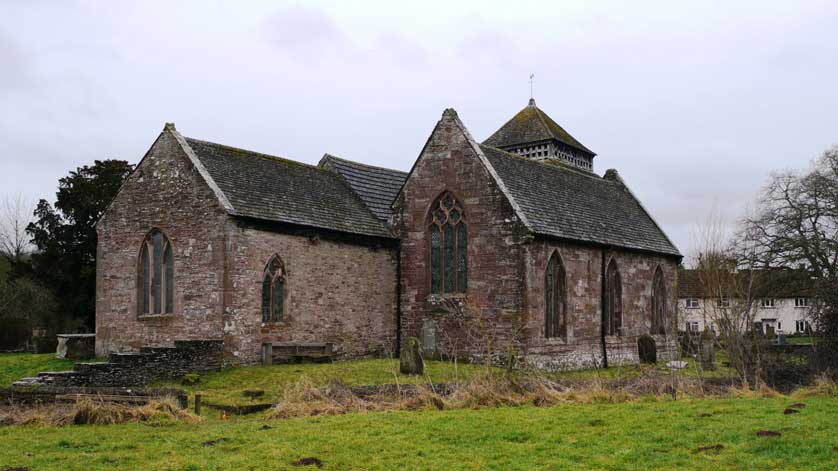
St Bridget's Church was founded in 1207 AD by Hubert de Burgh, First Earl of Kent (1160-1243) who was also responsible for rebuilding Skenfrith Castle in stone; the church was reconstructed and enlarged in the 14th century.
The tower, nave and chancel of St Bridget's Church date from its 13th-century origin. The porch and north and south aisles were constructed in the following two centuries. The church is home to the impressive tomb of John Morgan (see below) who died in 1557. Morgan was Steward of the Duchy of Lancaster and the last Governor of the 'Three Castles' (Skenfrith Castle, White Castle, and Grosmont Castle).

Tintern Abbey, Tintern, Chepstow
Now ruined, Tintern Abbey was celebrated by the poet William Wordsworth in his poem, Lines composed a few miles above Tintern Abbey, written in 1798.
The abbey was founded by Walter de Clare, Lord of Chepstow in 1131. Tintern is situated on the Welsh bank of the River Wye which separates Monmouthshire in Wales from Gloucestershire in England. This Gothic church was built in the Decorated style of red sandstone.
The present ruins of Tintern Abbey represent around 400 years of building between 1136 and 1536. Today, Tintern Abbey ranks as one of the most important ruins in Wales.
St Davids Cathedral
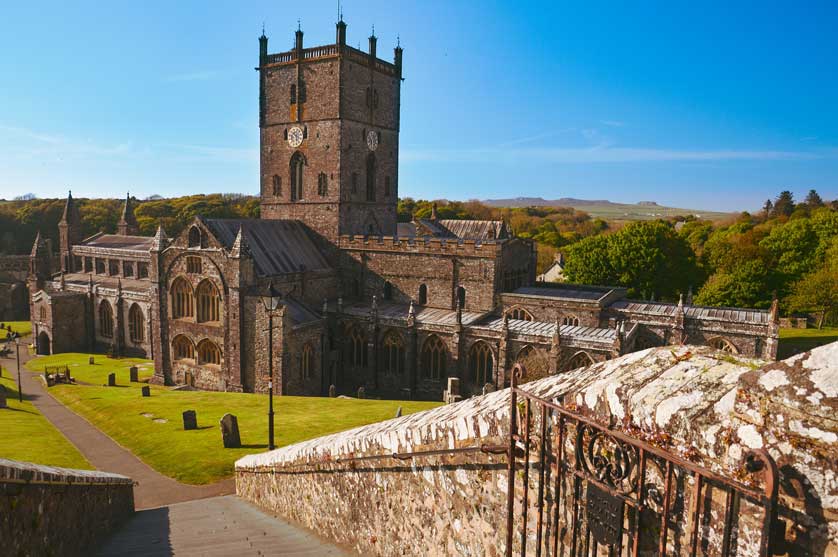
St Davids Cathedral (Eglwys Gadeiriol Tyddewi) is an historic church in Pembrokeshire. Saint David, the patron saint of Wales, founded a monastery here in the 6th century. The monastery was once protected by a wall and four gates, of which only one the Porth y Twr survives. This is now a small museum and displays the church bells. Unfortunately, the original buildings were much damaged by Oliver Cromwell's forces. It was not until the 19th century that the great George Gilbert Scott properly restored the site. St Davids is the smallest city in the UK with a population of around 1,600 people.

Church of the Holy Cross, Mwnt
The Church of the Holy Cross in Mwnt (Eglwys y Grog) is a 14th century so-called chapel of ease. A chapel of ease is a church provided for, in this case sailors, who cannot easily visit the main parish church. A Grade I listed building the simple building has whitewashed rubble stone walls with a slate roof.

Map of Wales
Hotel Accommodation in Wales
Book Hotels in Cardiff - Booking.com
Find Hotels in Swansea - Booking.com