UK Cathedrals: Lincoln Cathedral, Lincoln
Cathedral Church of the Blessed Virgin Mary of Lincoln
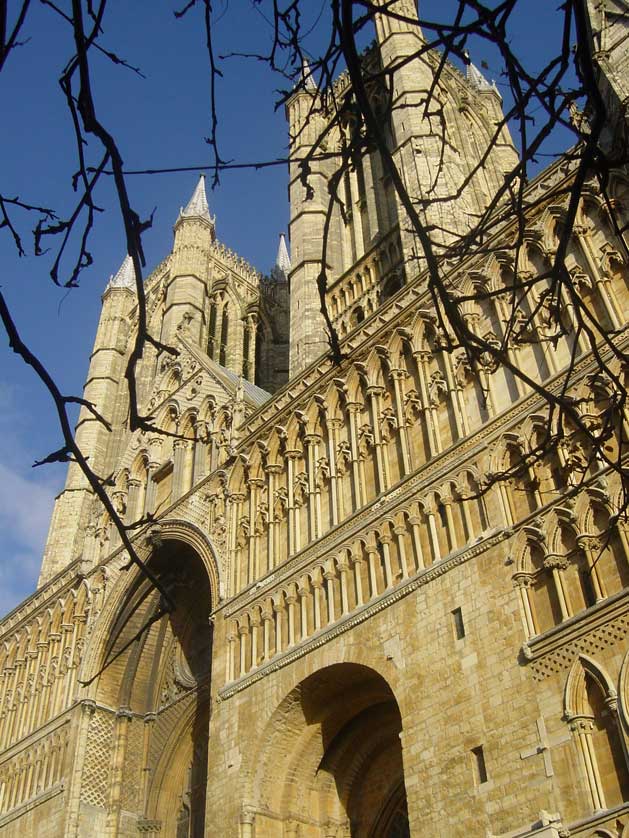
Lincoln Cathedral, formally known as the Cathedral Church of the Blessed Virgin Mary of Lincoln, is an example of English Gothic architecture and one of the most significant medieval buildings in Europe.
It dates from around the end of the 11th century. For over two centuries, it was one of the tallest buildings in the world, with its central spire reaching an estimated height of 525 feet before its collapse in the 16th century. The cathedral is renowned for its intricate stone carvings, including the famous Lincoln Imp, its vaulted ceilings, and the grandeur of its rose windows.

History
The first Bishop of Lincoln Remigius de Fécamp founded Lincoln Cathedral in 1072 during the reign of William the Conqueror. The original Norman structure was extensively damaged by an earthquake in 1185, leading to a major reconstruction in the Gothic style under Bishop Hugh of Avalon. By the 14th century, its central spire (supposedly) made it the tallest building in the world for nearly 250 years until its collapse in 1549. The cathedral has since undergone numerous restorations and renovations.


Architecture
Lincoln Cathedral is a masterpiece of English Gothic architecture, featuring elements from the Early English, Decorated, and Perpendicular Gothic styles.
The West Front is an impressive façade with a combination of Norman and Gothic influences, with detailed sculptures and grand entrances.
The Central Tower is the tallest structure of the cathedral, originally crowned by a spire, now offers stunning views over Lincoln. The cathedral's nave is one of the longest in England, adorned with ribbed vaults and large stained-glass windows. They were built and reconstructed between the 12th and 14th centuries.
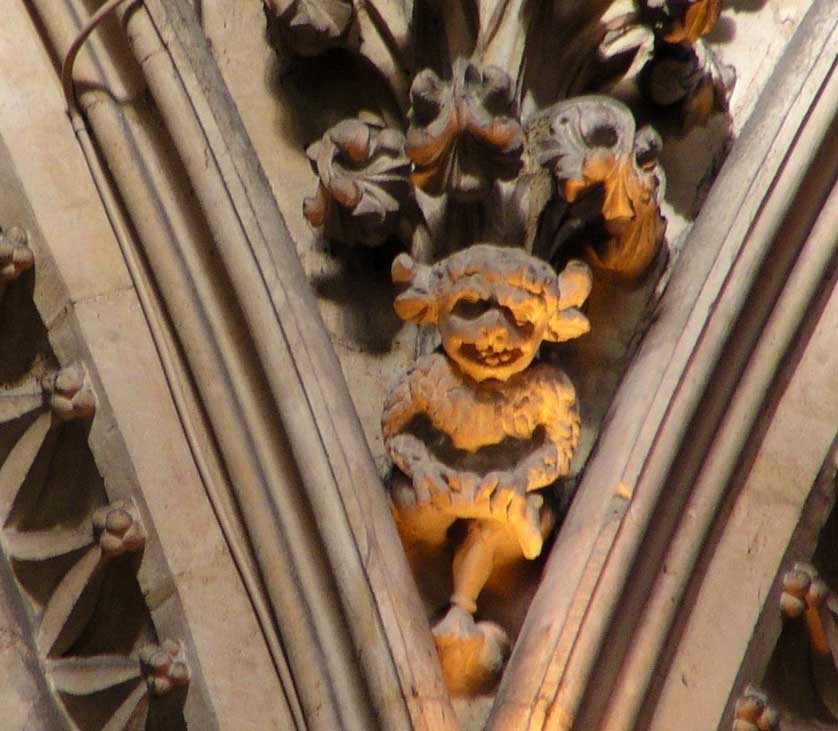
Both the Dean's Eye (north transept) and Bishop's Eye (south transept) windows are outstanding examples of medieval stained-glass craftsmanship. The Lincoln Imp is the famous grotesque carving inside the cathedral, which has become a symbol of the city itself.
The nearby medieval Bishops' Palace, now managed by English Heritage, is also worth a visit.
Interior
Highlights within the cathedral include the Angel Choir built between 1250 and 1280 to house St Hugh's shrine. The Shrine of St. Hugh is the resting place of the cathedral's most famous bishop, St Hugh of Lincoln (aka Hugh of Avalon), a significant pilgrimage site in the Middle Ages, rivalling that of Saint Thomas à Becket in Canterbury.
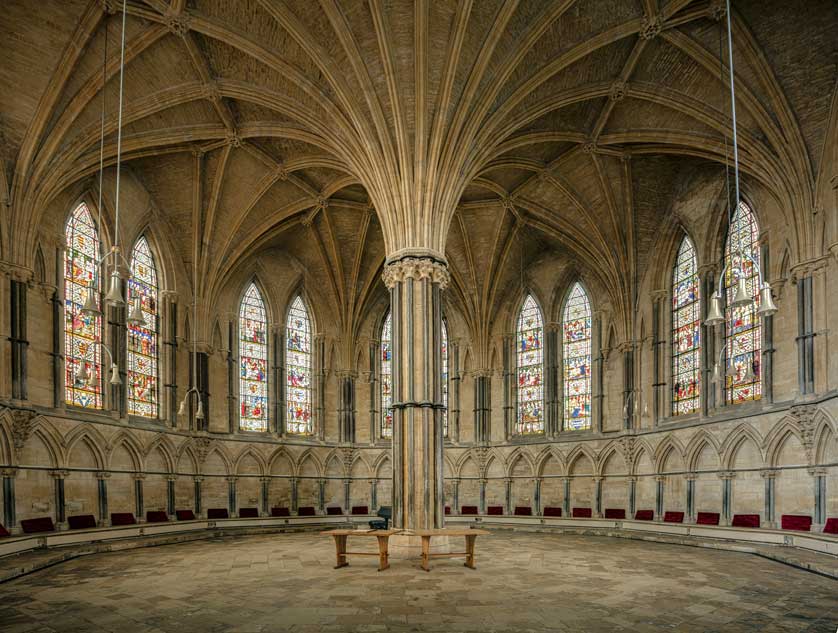
The octagonal Chapter House with intricate vaulted ceilings was built for clerical meetings.
Sir Christopher Wren's superb library houses ancient manuscripts and rare books. Dean Michael Honywood commissioned the architect to build the library to house his collection of early printed books. Along with the library at Trinity College, Cambridge, it is one of only two libraries designed by Wren outside London.


Access - Getting There
Minster Yard, Lincoln LN2 1PX
Tel: 01522 561 600
www: lincolncathedral.com
Opening hours: The Cathedral is open daily from Morning Prayer until the end of Evensong or Evening Prayer. Please check the website above for the weekly service schedule for times and details of services. Charges apply between 10 am and 4 pm Monday to Saturday, and 11.30 am (or when the morning service finishes) and 2.30 pm on Sunday.
From Monday to Saturday, admission includes a complimentary floor tour and access to the Exhibition Gallery and Discovery Centre.
No tours are available on Sundays.
Admission Fees (2025)
Adults: Monday to Saturday £12.00 Sunday £10; Children up to 16 and UK students (with ID) free.
Lincoln Cathedral is a 15-20-minute walk north from Lincoln Central Station across the River Witham then continuing up Broadgate.
Lincoln Station (Central) is a combined railway station and tram stop. It is the main point of access for visitors to this historic steel-manufacturing city.
There are East Midlands Railway trains to Leicester, Nottingham, Grimsby and one train a day to London St Pancras.
Northern operates trains to both Sheffield and Leeds.
London North Eastern Railway has direct trains to London King's Cross.
Most buses depart from nearby Lincoln Central bus station. There are both local services and also buses to Grantham, Market Rasen and Boston.
There are National Express buses from Lincoln to Leicester, Nottingham Broad Marsh Bus Station and Hull.
Book a hotel in Lincoln with Booking.com

Related
Hotels in the North West of England
Book Hotels in Blackpool - Booking.com
Find Hotels in the Lake District - Booking.com
Search Hotels in Liverpool - Booking.com
Hotels in Manchester - Booking.com
Book Hotels in the UK - Agoda.com