Hadrian's Wall, Northumberland & Cumbria
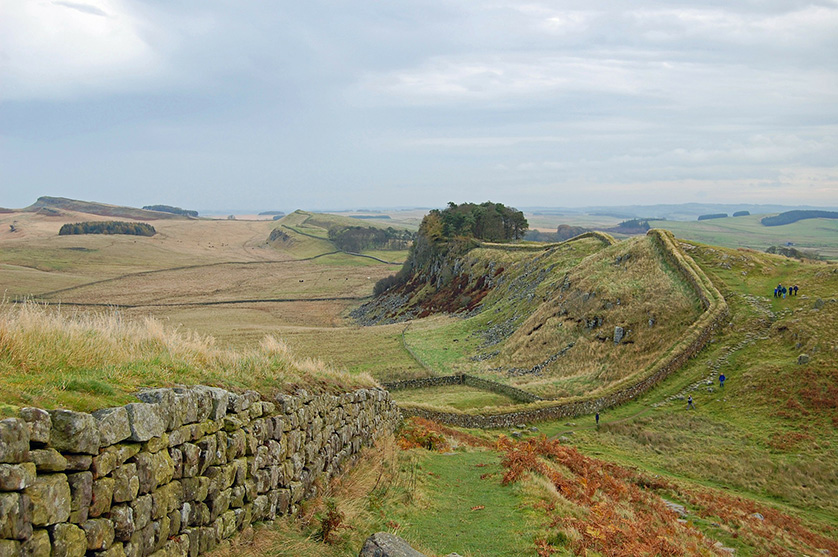
Hadrian's Wall is the largest Roman site in the British Isles.
Along with the Roman Bath in Bath it is the most impressive legacy of the Roman occupation of Britain.
This lasted from the Emperor Claudius' conquest in AD 43 until the beginning of the 5th century.
Both the Roman Bath and Hadrian's Wall (along with the Antoine Wall in Scotland) are UNESCO World Heritage sites.
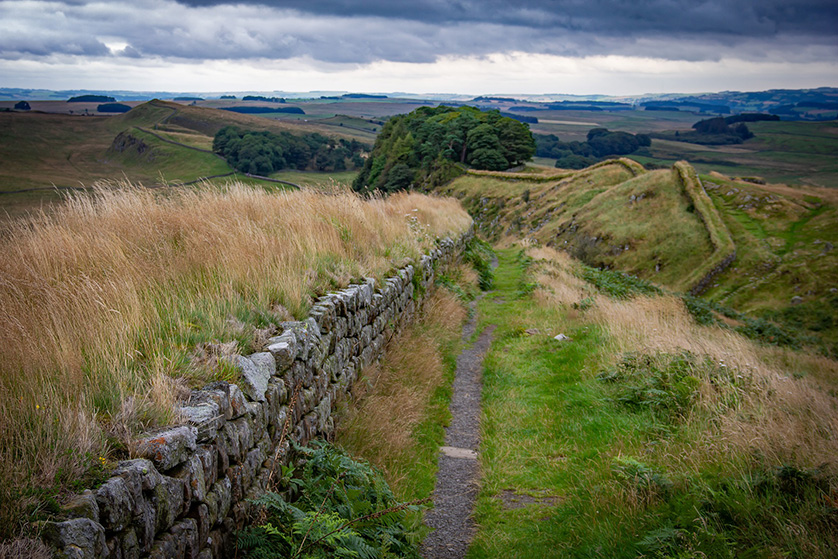
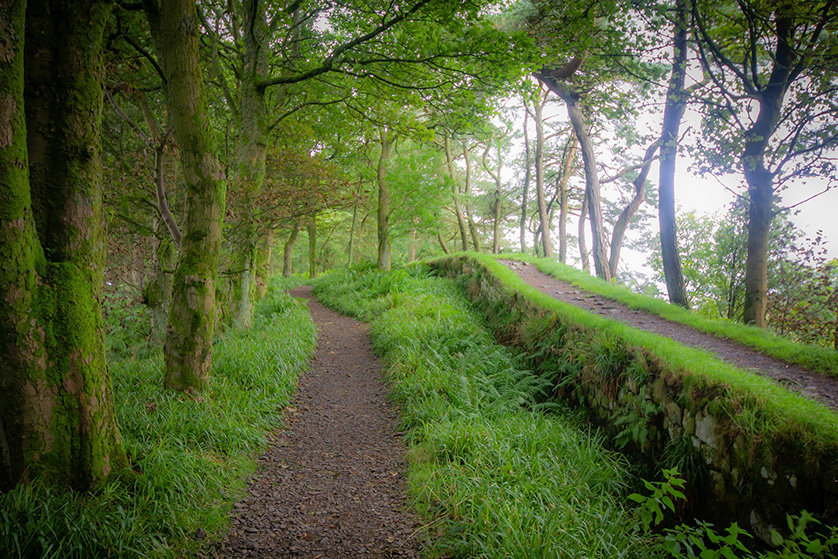
The entire wall can be walked on the 135 km Hadrian's Wall Path, a National Trail from Wallsend on the east coast to Bowness-on-Solway on the west coast. The walk has six recommended stages.

History
Every new Roman Emperor had to make a statement on succeeding to the imperial throne. Victory on the battlefield and the construction of new public buildings on a grand scale were two ways to gain instant legitimacy and honour.
The Emperor Hadrian was in his early 40's when he succeeded Trajan, who had greatly increased the size of the Roman empire.
Hadrian pursued a different foreign policy of consolidation and frontier security to protect Trajan's legacy. He had something a reputation as a megalomaniac builder who oversaw the construction of the huge Temple of Venus in Rome.
His decision to build what would be the longest Roman wall made of stone fits with this reputation and some even consider it a "vanity project."
Historians argue that the huge wall and its expense were not a military necessity. The Caledonians in Scotland were certainly troublesome but not an existential threat to the rest of Roman Britain and their capital in London.
Nevertheless, Hadrian wanted to make a statement and the 80 Roman mile long wall was it. It was constructed beginning from Hadrian's brief visit to Britain in AD 122 and was largely complete by AD 128 and probably completely finished within a period of 10 years. The barrier separated the "civilized", Roman world from the "barbarians" to the north.


Hadrian's Wall Architecture
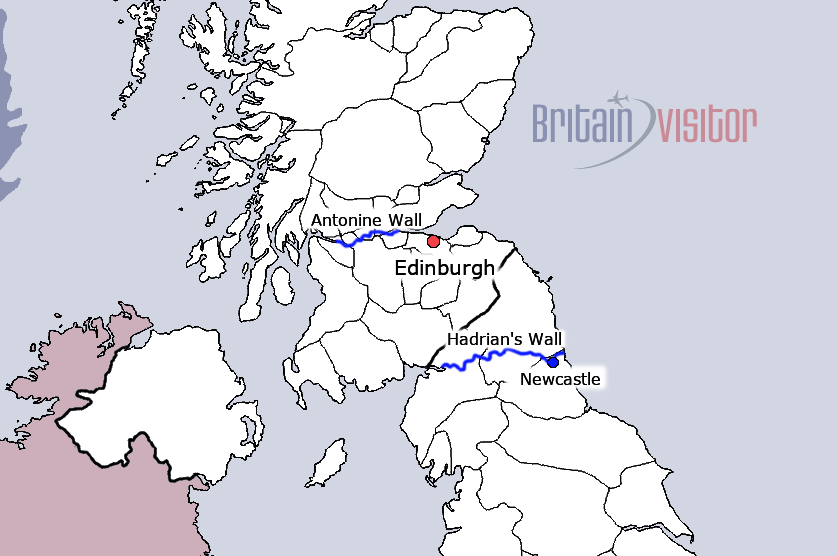
Hadrian's Wall (Vallum Aelium) is 80 Roman miles long (73 miles or 117.5 kilometres). It runs from in the east from the River Tyne near Newcastle to the Solway Firth on the Irish Sea in the west.
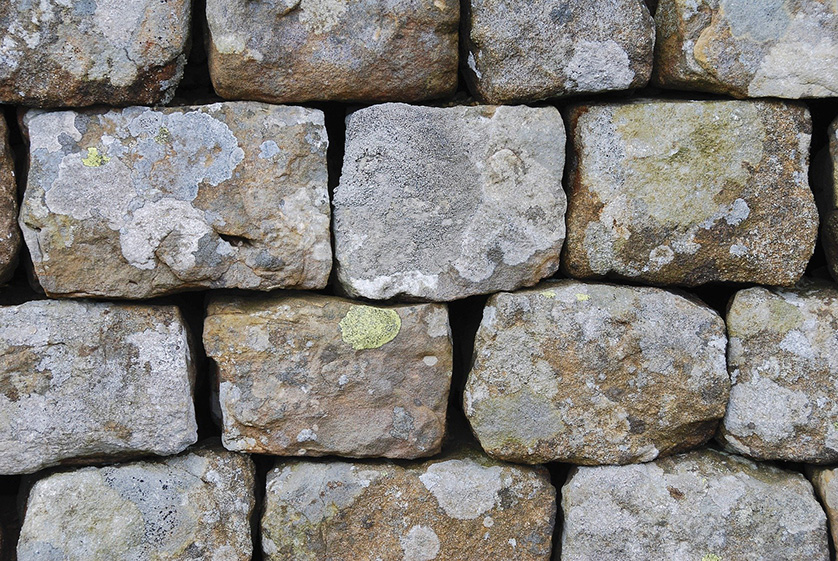
The Romans had quality surveying techniques and laid out the wall on top of an escarpment as far as possible. The wall had a stone base and a stone wall with the stone acquired locally.
There were milecastles with two manned turrets in between. A larger fort with a gate was positioned roughly every five Roman miles. Altogether there were 16 forts, 80 milecastles and 160 turrets.
Behind the wall a large ditch was dug and the extracted earth used to make parallel mounds on either side of it. This is known as the vallum.
The wall runs roughly parallel to the Stanegate - a major Roman supply road that runs from Carlisle (Luguvalium) to Corbridge (Coria). The major Roman castrum (auxiliary fort) of Vindolanda lies on the Stanegate.
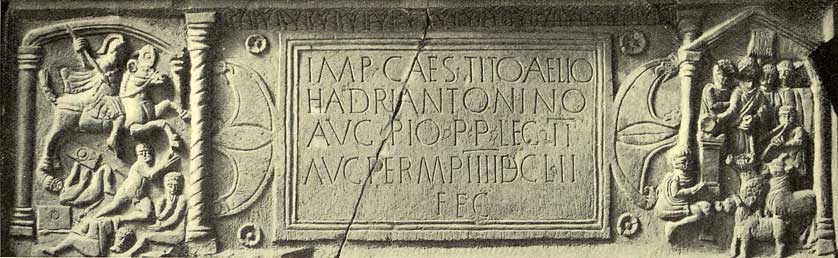
The 15-foot wall was built in segments beginning in the east by detachments of the three Roman legions based in Britain. We know this from inscriptions on the wall itself. The three legions had a manpower of around 16,000 men.
These legions were the Legio II Augusta based at Caerleon (Isca) in Wales, the Legio XX Valeria Victrix at Chester (Deva) in north west England, and the Legio IX Hispana at York (Eboracum) in the north east.
The legions built Hadrian's Wall but it would be manned by auxiliaries from as far away as Syria and other parts of Roman's vast empire.
The forts had gates to control traffic and collect custom dues as well as allow the soldiers to enter and exit. The major forts also became settlements. They were inhabited by the soldiers' families, retired soldiers, prostitutes, barmaids and other workers servicing the military.
These outposts had a significant effect on the economy not just of the local area but Roman Britannia as a whole. Large amounts of coin were shipped in to pay the troops which filtered in to the larger population.

Vindolanda
Vindolanda predated Hadrian's Wall and was a major auxiliary fort (castrum) protecting the Stanegate.
The discovery here of the Vindolanda tablets in 1973 allowed historians to better understand the history of the period. Most of these personal and military-related documents are now on display at the British Museum in London.
The tablets are made of local wood (alder, birch, oak), about the size of a modern postcard and written in ink. They include a birthday invitation written by one Claudia Severa, the wife of a commander inviting another woman to a birthday party. It is one of the earliest examples of Latin writing by a woman.
The Vindolanda Museum near Hexham has displays of the tablets on loan from the British Museum as well as other Roman period finds.
The Roman Army Museum close by in the village of Greenhead presents exhibits explaining the life of a typical soldier on Hadrian's wall. There is a 3D film, holograms, full-size replicas and original items to enjoy. A Roman classroom is reproduced using a hologram and is great fun for kids. The museum is at the site of the Carvoran Roman fort.
The nearest station to Vindolanda is Bardon Mill with connections to both Carlisle and Newcastle. Haltwhistle Station is convenient for the Roman Army Museum on the same line. The AD 122 Bus and other local buses call at both sites.
Housesteads Roman Fort & Museum
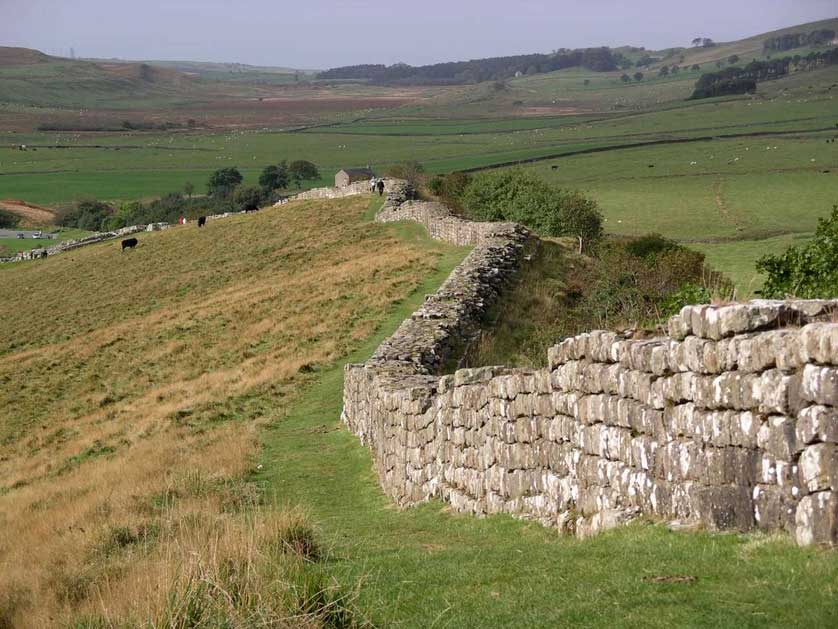
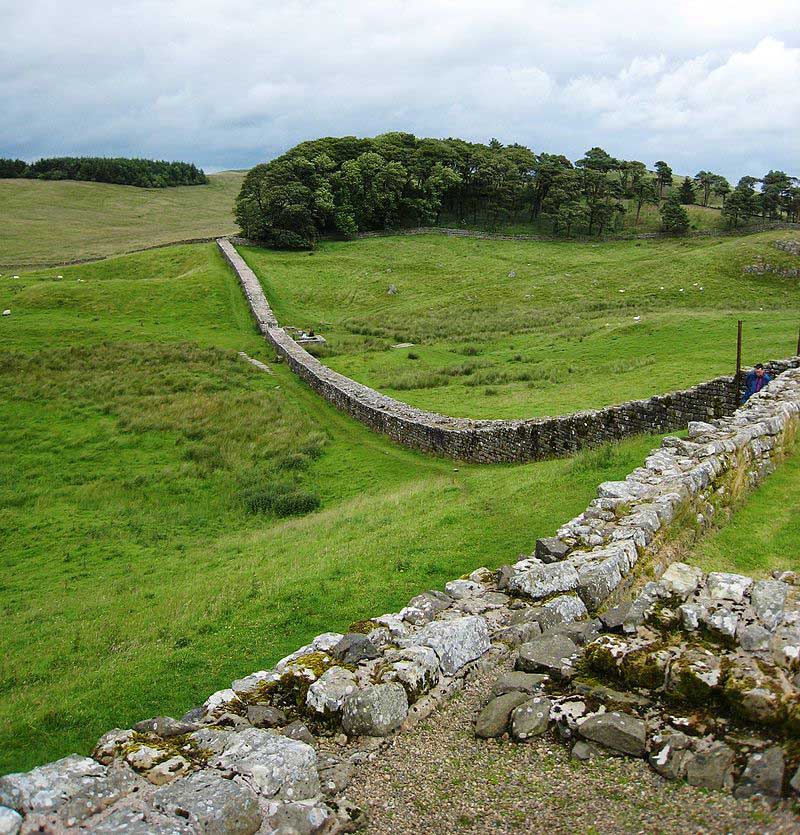
Housesteads is the best preserved Roman fort on the wall. It is located with Northumberland National Park. The site includes a granary, hospital, barrack blocks and communal latrines. The museum has a scale model of what the fort, which housed from 500-800 men would have looked like in the 2nd century.
Bardon Mill is four miles away. The AD 122 Bus stops at Housesteads Roman Fort and there is a reduction for ticket holders.
Birdoswald Roman Fort
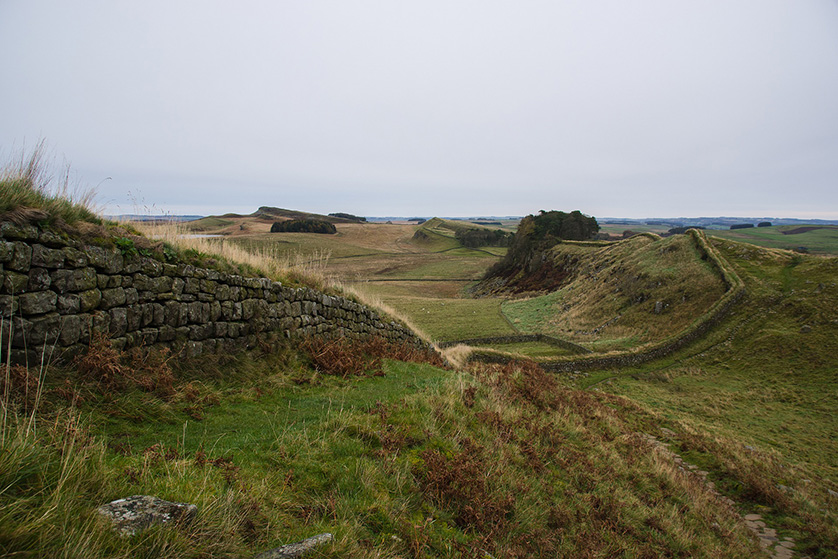
Birdoswald Roman Fort in Cumbria is perched on an escarpment overlooking Irthing Gorge 4 miles west of Greenhead. The longest stretch of intact wall runs from here to Harrow's Scar Milecastle.
The 185 bus runs Monday to Saturday between Haltwhistle and Birdoswald from mid-April to October 1. The Border Rambler Bus also passes the fort.
Brampton and Haltwhistle stations are 8 miles and 7 miles away respectively.

Chesters Roman Fort
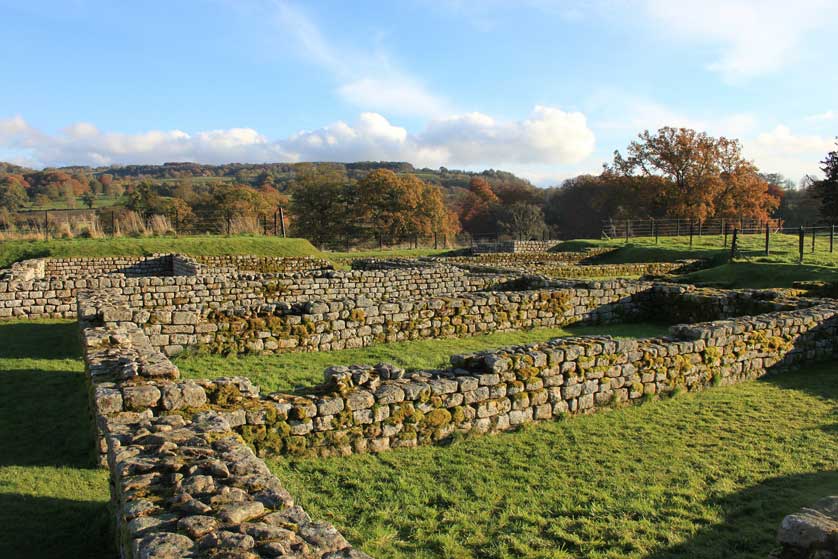
Chesters Roman Fort was a cavalry fort built to protect a bridge over the River Tyne. The highlight is the well-preserved bathhouse.
The museum dates from the 1890's and has exhibits of around 2,000 Roman archaeological finds, including many impressive Roman altar stones.
The AD122 Bus stops here. The site is a quarter of a mile west of Chollerford on the B6318.
Antonine Wall
The Antonine Wall (Vallum Antonini) is north of Hadrian's Wall in Scotland. It was built in turf on a stone base from the Firth of Forth to the Firth of Clyde. It was 63 kilometres (39 miles) in length, three metres (10 feet) high and five metres (16 feet) wide. A ditch was dug on the north side of the fortification.
Construction of the wall was on the order of the Emperor Antoninus Pius, Hadrian's successor. Work began in AD 142 and took around 10-12 years. The wall included 19 forts with Rough Castle Fort the best preserved.
Relics from the wall are on display at the Hunterian Museum and Art Gallery in Glasgow, one of the many fine museums in Glasgow.
The wall was later abandoned after only around eight years of occupation and the Roman army retreated to Hadrian's Wall, which they subsequently repaired.
Accommodation Near Hadrian's Wall
If you wish to stay close to Hadrian's Wall, Newcastle has several recommended options as does Carlisle in Cumbria.
In Newcastle accommodation options include the four-star Hilton Newcastle Gateshead, the three-star Ramada Encore by Wyndham Newcastle-Gateshead and Jurys Inn Newcastle Quayside.
In Carlisle choose from three-star The County Hotel, the Crown & Mitre Hotel and the four-star Crown Hotel Wetheral.
There are also options much closer to Hadrian's Wall itself including a number of hostels and guesthouses.
See here for a listing of accommodation near Hadrian's Wall.

Nearby
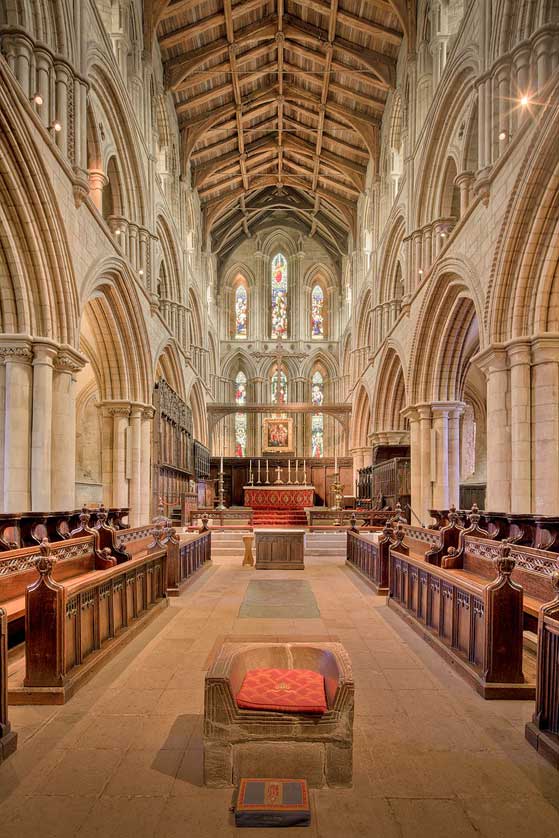
Other places of interest close to Hadrian's Wall include Hexham Abbey. It dates originally from way back in 674 with additions through the following centuries. It is now the parish church of Hexham.
Also near Hexham is the Sill National Landscape Discovery Centre this recent fun museum gets it name from Whin Sill, the escarpment on which much of Hadrian's Wall was laid out. There are exhibits on the area's natural history including its rich animal and plant life. In addition, visitors can enjoy the views of the wall from the centre's grass roof, a Youth Hostel, YHA The Sill, a cafe and shop selling local crafts.
Map of Hadrian's Wall & Antonine Wall
Hotels in the North East of England
Book Hotels in Durham - Booking.com
Find Hotels in Newcastle - Booking.com
Scarborough Hotels - Booking.com
Search Hotels in Whitby - Booking.com