Caerleon Guide, Wales

Caerleon is a small town in south Wales near Newport and Cardiff with a long history.
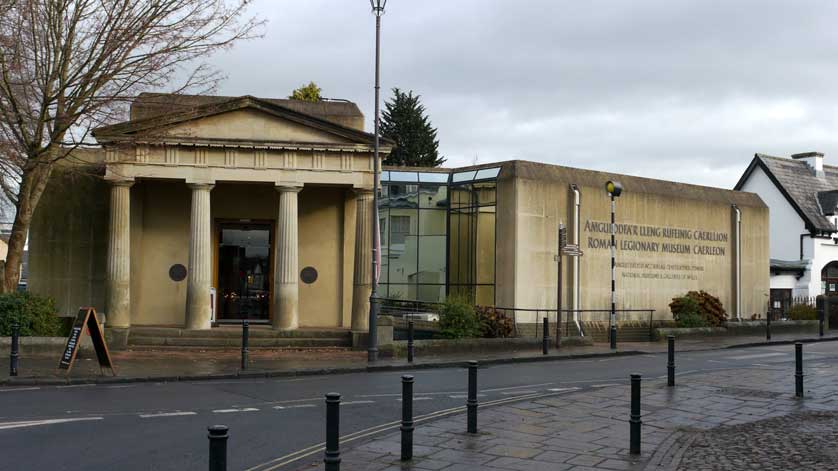
Formerly the Roman town of Isca, Caerleon was one of only three permanent military fortresses in Roman Britain each serving as a base for a Roman legion.
The other two were Chester (Deva, pronounced "Dewa") in north west England, and York (Eboracum) in the north east.
History
The Legio II Augusta was based in Caerleon, the Legio IX Hispana at York, and the Legio XX Valeria Victrix stationed in Chester.
Wales was the furthest outpost of the Roman Empire in 75 AD, and the Romans built a fortress at Caerleon, Isca, that would guard the region for over 200 years.
The Roman base was built below a hill on which was an Iron Age hill fort. Historians believe the name Isca derives from the nearby River Usk.
National Roman Legion Museum
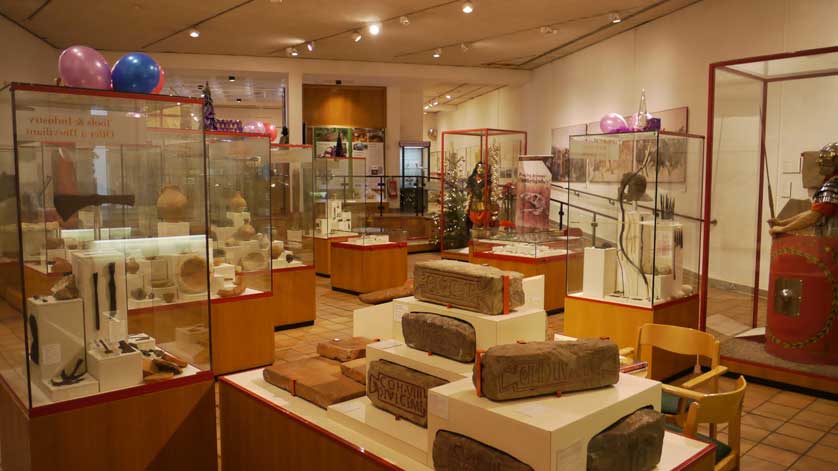
The National Roman Legion Museum in Caerleon was built in 1850 and features exhibitions and artefacts showing how the Romans lived, fought, worshipped and died in this part of their once vast empire. The museum lies inside what used to be the fortress.
Admission to the museum in Caerleon is free and the visitor is treated to a treasure trove of artefacts from Roman times.
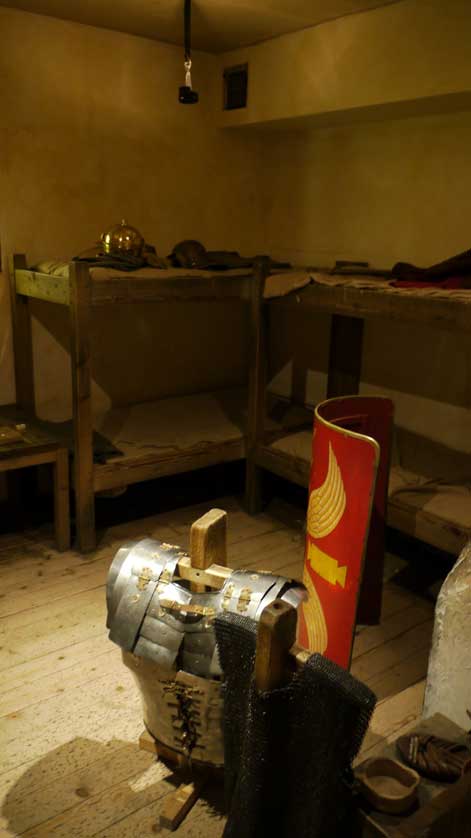
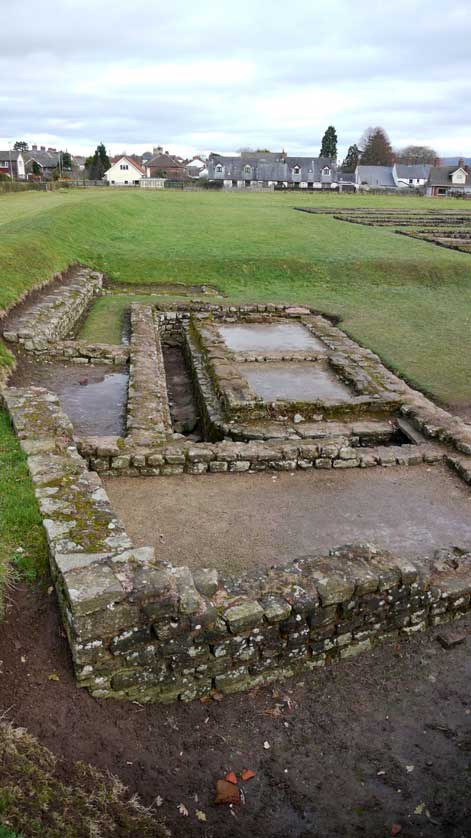
Visitors to the National Roman Legion Museum in Caerleon can also view a reproduction of a Roman military barracks (see below). On show are replicas of Roman shields, helmets and body armour.

Roman Barracks Caerleon
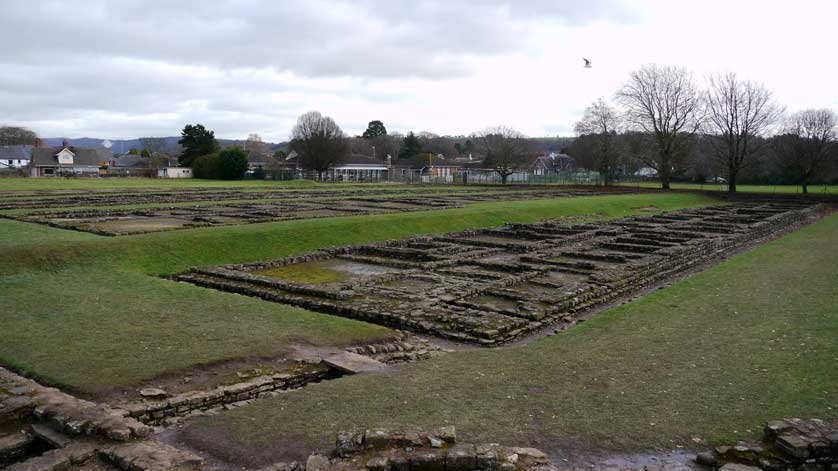
The Roman Barracks Caerleon are the only visible remains of Roman legionary barracks which exist in Europe. These barracks lie in what was once the western corner of the fortress of Isca.
Visitors to the Roman Barracks at Caerleon can view the remains of 4 of the original 60 blocks of barracks which housed the Second Augustan Legion (comprising around 5,500 men). The barracks were built around 75AD originally of wood and then in the 2nd century replaced in stone.
Each of the Barracks buildings at Caerleon housed a century (80-100 men) and featured a veranda, red-tiled roof, and greenish glass windows.
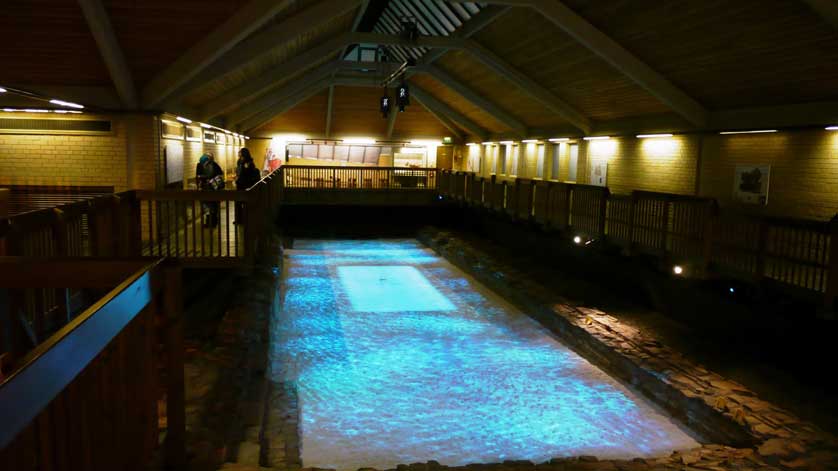
Caerleon Roman Fortress Baths
As part of their fortress, the Romans built a bath house and exercise facility. The ruins of that facility can be seen by visitors at the excellent Roman Fortress Baths Museum in Caerleon.
Upon entering the Roman Baths Museum, the visitor encounters the natatio (outdoor swimming pool) used by the Roman Second Augustan Legion. A projection system has been used to recreate the water (see above) and bathing Romans. The Fortress Baths exhibition also includes hands-on, interactive computer games which are a hit with kids and a lot of fun.
Other areas of the bath house include the apodyterium (heated changing rooms) and frigidarium (cold plunge pools). There is even an actual Roman period footprint frozen in time.
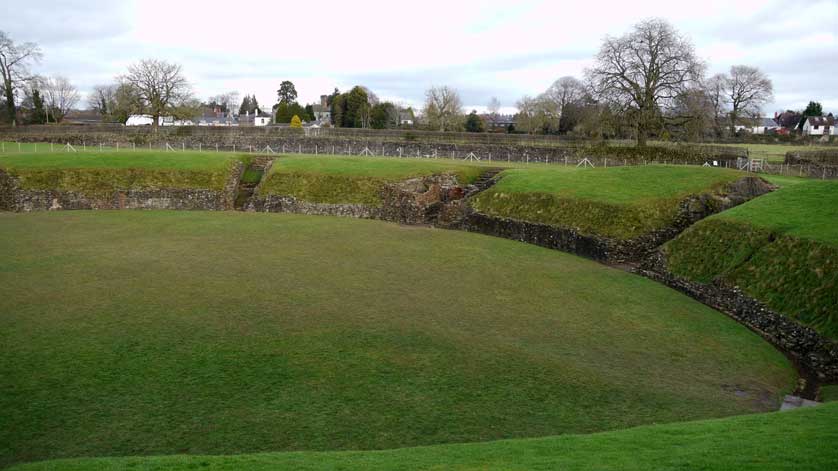
Caerleon Amphitheatre
The Caerleon Amphitheatre is the only fully excavated Roman amphitheatre in Great Britain. The structure was built in 90 AD and was maintained until its abandonment in the 3rd century. This was when the Second Augustan Roman Legion departed to protect what remained of the diminishing Roman Empire.
The Roman Amphitheatre in Caerleon was built just outside the Isca fortress defenses.
The Caerleon Amphitheatre boasted eight vaulted entrances, a shrine possibly to the goddess Nemesis, and seating for up to 6,000 spectators.
Visitors to the site can also catch a glimpse of the remains of the fortress wall which once surrounded Isca.
Present Day Caerleon
The modern town of Caerleon has a population of just under 8,000 people. The pleasant Goldcroft Common is adjacent to the High Street (B4236).
The town has several good pubs and restaurants, St. Cadoc's Church and the Caerleon campus of the University of South Wales.
Alfred Lord Tennyson wrote his cycle of 12 narrative poems on the King Arthur legend, Idylls of the King while staying in the town, which has a strong Arthurian heritage. Geoffrey of Monmouth (1095-1155) mentions the town at length in his Latin chronicle The History of the Kings of Britain, which inspired Tennyson to take up residence for a period.
Access - Getting to Caerleon
Caerleon is about 8 km northeast of Newport and 9 km southeast of the town of Cwmbran. There are local buses to both places.
There are trains from Cardiff Central Station to Newport that take about 13 minutes. Buses from Newport to Caerleon take about 15 minutes.
Newport is connected by train to Piccadilly Station in Manchester (around 3 hours), Birmingham (1 hour, 45 minutes) and London with the quickest, direct trains taking 1 hour, 40 minutes to Paddington Station. Another, slower route to the capital is via Bristol Temple Meads Station in Bristol.
If driving on the M4 motorway exit at junction 24.
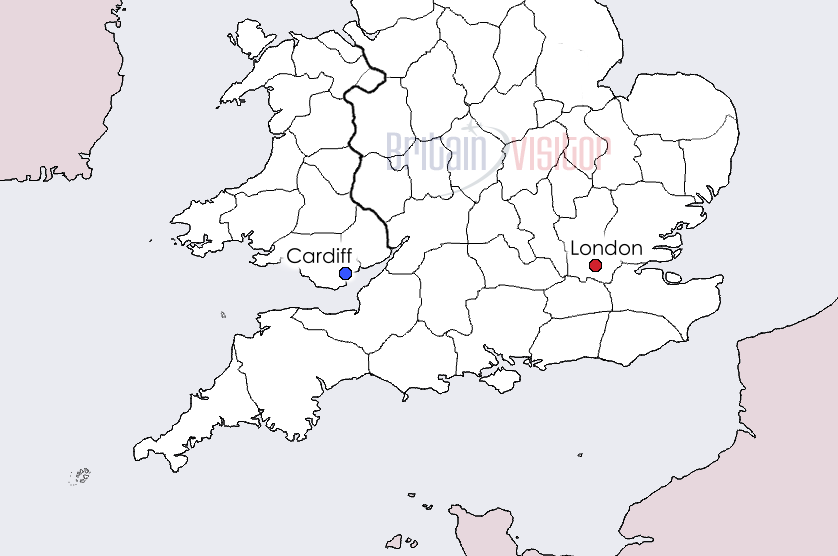
Map of Cardiff & South Wales
Accommodation
South of town is the recommended Celtic Manor Resort which hosted the 2010 Ryder Cup. The 5-star hotel is set in an historic 19th-century manor house within 2000 acres of grounds in the Usk Valley. The resort boasts three championship golf courses, six restaurants to choose from and a spa.
There are also many hotels and B&B's in nearby Cardiff.
Some recommended places to stay in the Welsh capital are the four-star Cardiff Marriott Hotel, The Royal Hotel Cardiff, which also has four stars and the Hilton Cardiff.
See here for a listing of hotel accommodation in Cardiff.
Roman Britain
Chedworth Roman Villa Fossebridge
Hotels in Wales
Book Hotels in Cardiff - Booking.com
Find Hotels in Swansea - Booking.com