UK Museums: Glasgow Museums & Art Galleries
Museums in Glasgow, Scotland
Glasgow, as the largest city in Scotland, has a number of world class museums and art galleries.
Many of Glasgow's museums reflect its long history of ship-building and industry as well as its heritage as a centre of learning and science.
See a listing of museums in and around Glasgow.
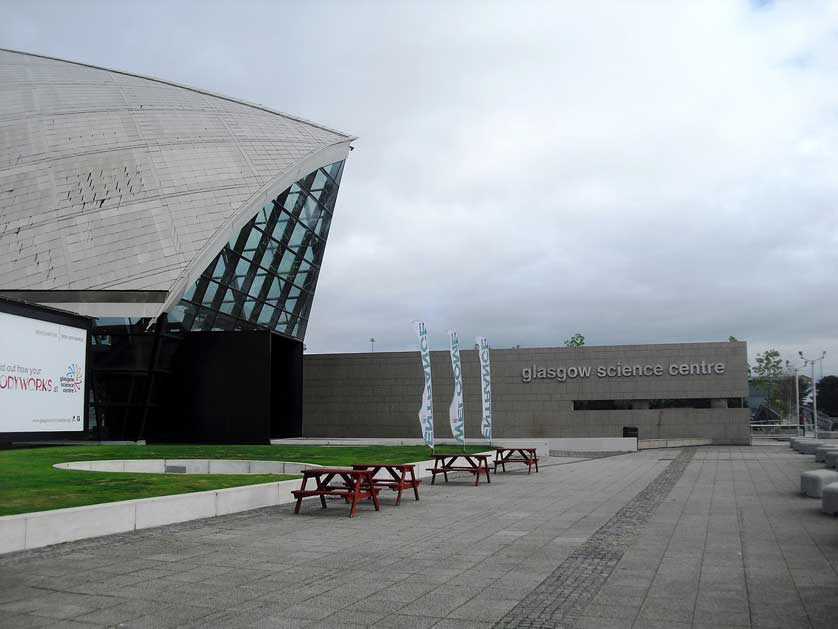
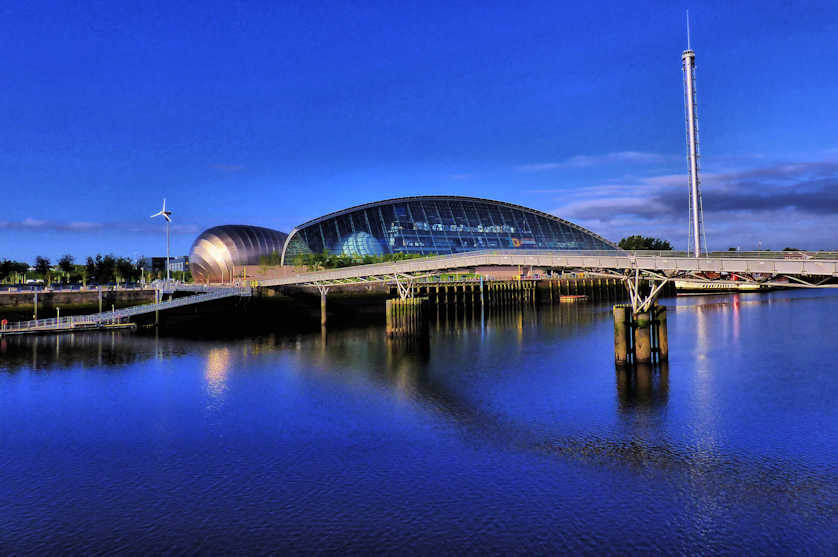
Glasgow Science Centre
The Glasgow Science Centre on the south bank of the River Clyde is a complex of several buildings dedicated to science and includes a planetarium and IMAX cinema.
Opened in 2001 the main building is the Science Mall. Shaped like a boat's hull on its side and half-buried, a nod to the adjacent "canting" basin where ships would be brought to have their hulls cleaned of marine growth.
Spread over three floors, hundreds of displays that tend towards the interactive, cover a wide range of science topics from Space to the human body.
The emphasis is on hands-on learning, and most ages are catered for. A large section is devoted to jobs and careers in various fields of science and technology.

Glasgow City Chambers
Though not exactly a museum, Glasgow City Chambers have been the seat of municipal government in the city since 1889.
Like similar municipal buildings around the UK dating back to this time, it is an impressive structure, meant to impress with the authority that came with massive wealth created by commerce and industry.
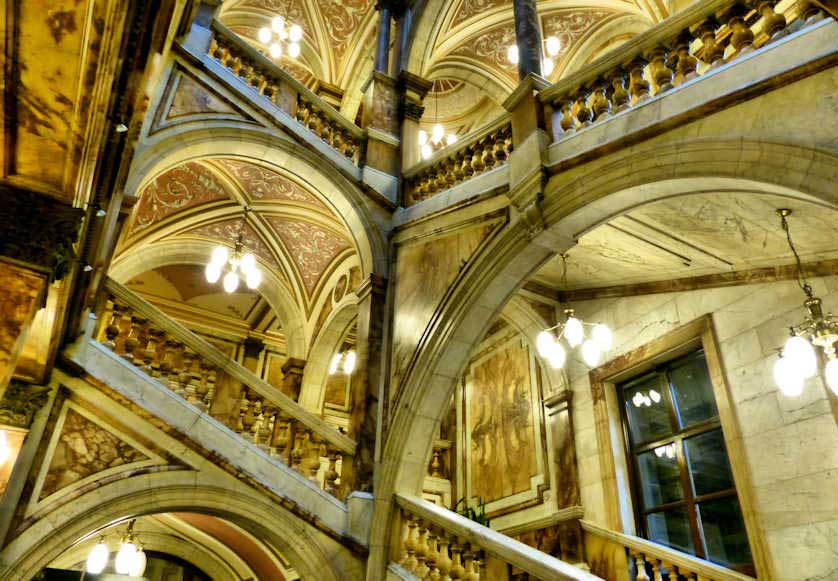
However, the exterior, imposing as it is, fails to indicate what you will experience in the interior of the building, which is best described perhaps as opulence.
You could be forgiven for thinking you were inside some kind of palace, and in fact film-makers would agree. The 1983 movie An Englishman Abroad featured scenes shot here that were meant to the interior of the Kremlin, and the 1986 movie Heavenly Pursuits similarly used the interiors to represent the Vatican.

Kelvingrove Art Gallery & Museum
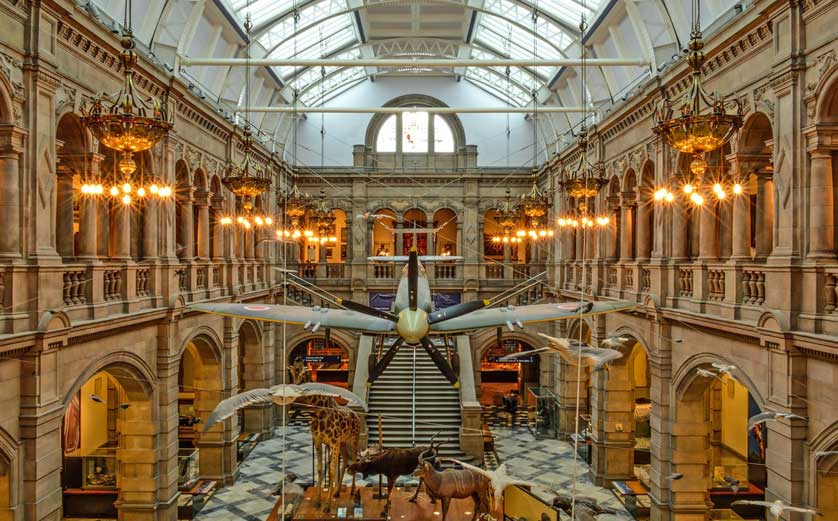
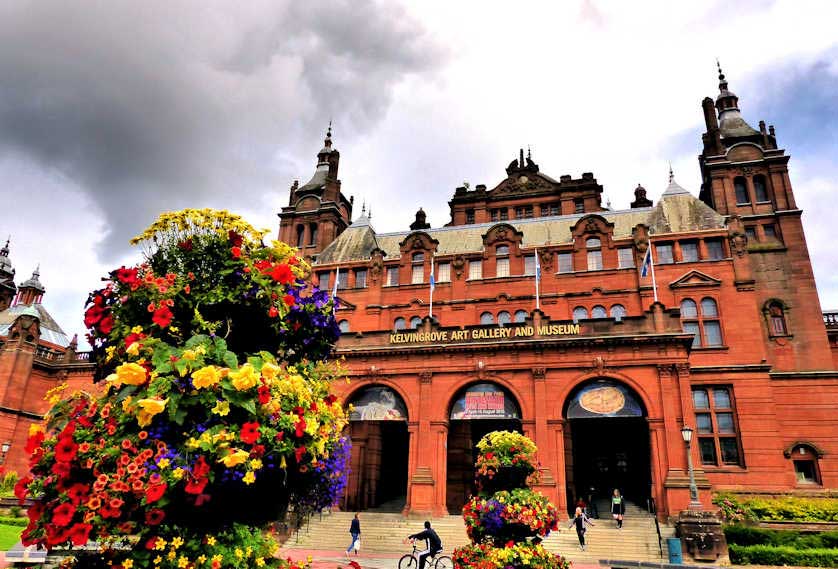
The Kelvingrove Art Gallery and Museum is a world-class institution that quite rightly is one of the most visited sites in the city.
Construction began following the 1888 International Exhibition held in Kelvingrove Park and the museum opened in 1901 as the Palace of Fine Arts for the Glasgow International Exhibition of that year.
Built in Spanish Baroque style and designed by Sir John W. Simpson and E.J. Milner Allen, it is constructed, like many of Glasgow's buildings, of red sandstone and features copious sculptural embellishments.
The museum has a huge taxidermy collection and one of the best collections of medieval weaponry and armour in the world. In addition, there is a superb collection of European jewelry from the 18th and 19th centuries.
Probably the most well known painting in the museum is Christ of Saint John of the Cross by Salvador Dali, but the museum also has works by other modern masters such as Van Gogh, Gauguin, Renoir, Monet and Pissarro as well as Old Masters like Rembrandt. The Glasgow School and Scottish Colourists are also well represented.

Riverside Museum
The Riverside Museum located on Pointhouse Quay on the River Clyde, was opened in 2011. It is part of the regeneration of the old harbour area of the city.
The primary function of the museum is to display the collection of the Glasgow Museum of Transport which was previously located in Kelvin Hall.
Since moving to the new site the museum has increased its collection to over 3,000 items, from skateboards up to steam locomotives.
The focus is overwhelmingly on land transport, with marine transport primarily consisting of models, and air transport barely getting a glimpse.
There is also somewhat of an emphasis on the history of Glasgow transport, with several reconstructed historical street scenes with mannequins and period vehicles like a horse-drawn cart.
Scottish Event Campus (SEC)
The Scottish Event Campus (SEC) is the largest exhibition centre in Scotland and hosts a wide variety of conferences, exhibitions, concerts, and sporting events.
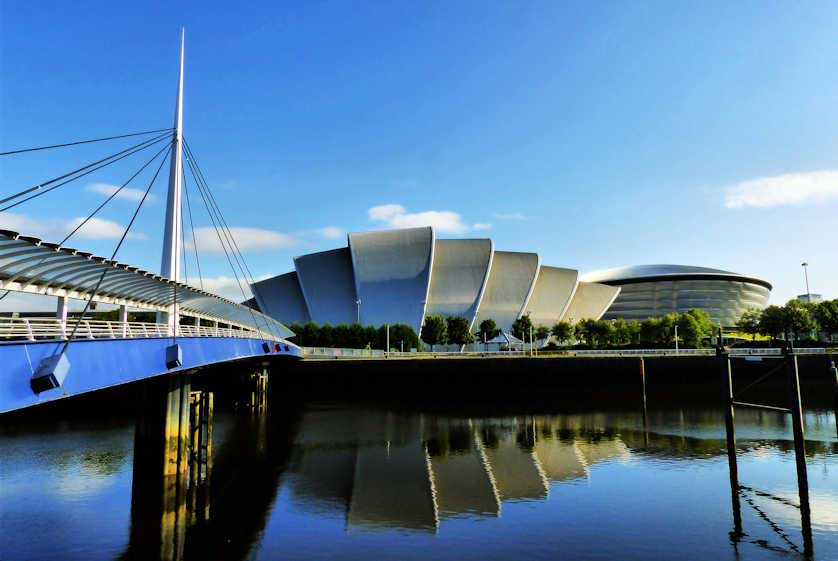
Two expansions in 1997 and 2013 created two structures that have become icons of Glasgow, the SEC Armadillo and the SSE Hydro.
The Clyde Auditorium (Armadillo) was built in 1997 and designed by architects Foster & Partners. Their design for this 3,000 seat auditorium was based on a series of interlocking ships hulls, a reference to the shipbuilding heritage of the area.
The SSE Hydro, a circular indoor arena. Once again Foster & Partners were chosen to design the structure. With 25,000 square feet of space the arena seats 12,500 and has space for a further 1,300 standing spectators.
Gallery of Modern Art
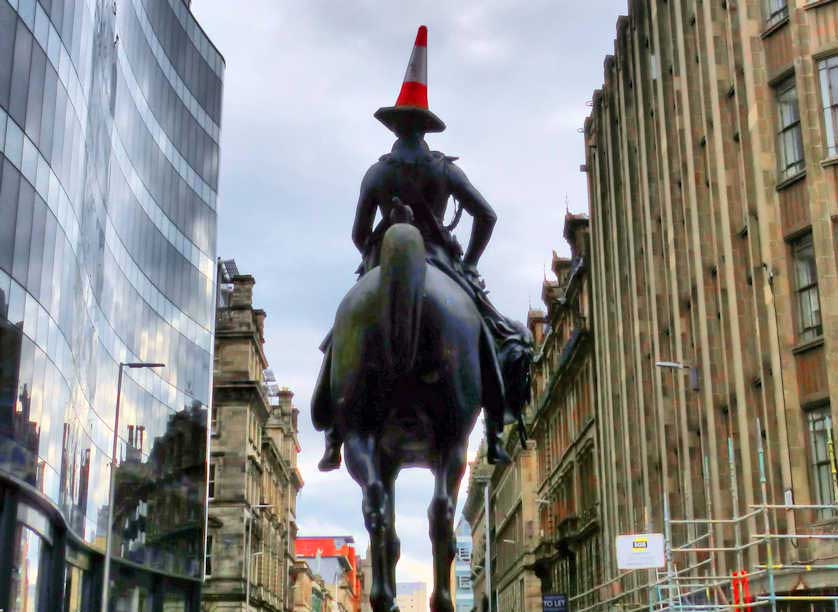
The Gallery of Modern Art in the centre of the city is a world class art museum attracting millions of visitors. The Gallery stands behind what has become an icon of Glasgow, the traffic cone capped statue of the Duke of Wellington.
Inside the museum there are four galleries that exhibit works of modern and contemporary art from local and international artists. The permanent collection includes works by many renowned artists including David Hockney and Andy Warhol, and the mirrored artwork that adorns the interior and exterior of the main entrance is by French artist Niki de Saint Phalle.
The collection includes all styles of artwork including painting, photography, prints, sculptures, as well as conceptual works and pieces utilizing video or neon.
The gallery hosts many art-related events, talks and workshops etc.
As well as the galleries there is a well stocked library, a cafe, and a museum shop.
Finnieston Crane
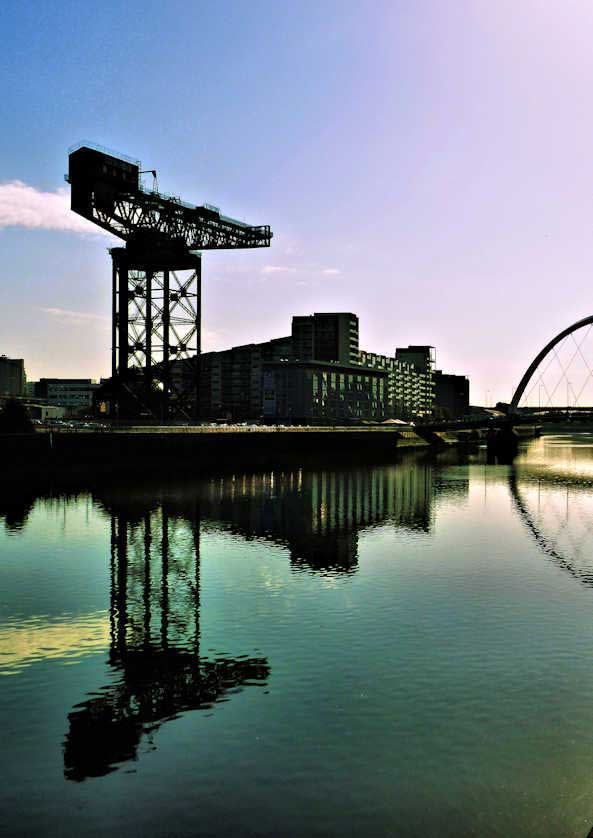
Standing alone among all the modern development on the banks of the Clyde is a solitary reminder of Glasgow's industrial past, the Finnieston Crane. One of only eleven giant, cantilever cranes left in the world, the Finnieston Crane is sometimes called the Stobross Crane after the Stobross Quay which has long since been filled in.
175 ft (53 metres) tall, and with a jib of 152 ft (46 metres), the crane had a lifting capacity of 175 tons. The crane was actually the last of the giant cantilever cranes built on the Clyde in 1926. It ceased operating when the docks it served finally closed down in 1969.
Hunterian Museum & Art Gallery
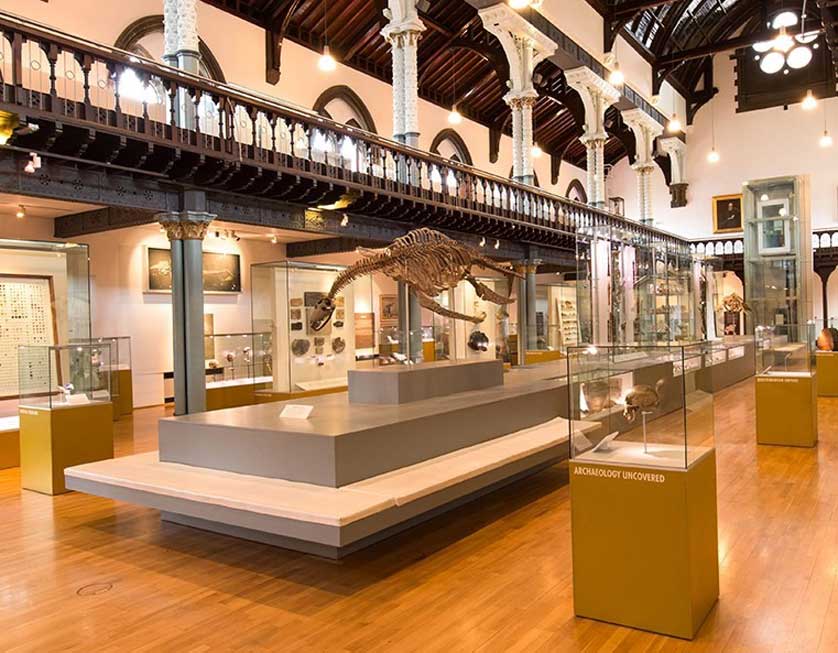
The Hunterian Museum & Art Gallery is the oldest museum in Scotland. It includes the Hunterian Museum, the Hunterian Art Gallery, the Anatomy Museum, the Mackintosh House and the Zoology Museum on the main campus of Glasgow University. It exhibits the eclectic collections of William Hunter (1718-1783) the Scottish anatomist and physician who studied at the university and left money in his will for its foundation. The museum opened in 1807. As well as the core collections bequeathed by Hunter there are now additions of art by such Scottish painters as James McNeill Whistler and Charles Rennie Mackintosh. In addition, Roman finds from the Antonine Wall are on display.
The Lighthouse
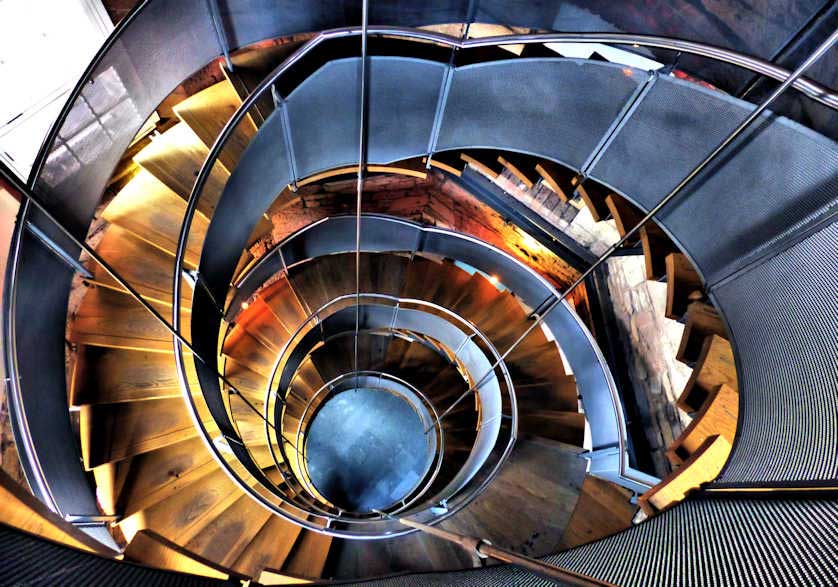
The Lighthouse in the former Glasgow Herald building is an events venue, exhibition space, and visitor centre dedicated to the design and architecture of Scotland's most famous architect, Charles Rennie Mackintosh.
Charles Rennie Mackintosh developed his own unique style and was influenced by both the new Modernist ideas, and the recently discovered arts and design of Japan.
The Mackintosh Centre comprises numerous displays that document the life and work of Macintosh. These include examples of his design work as well as many models of his buildings that never got beyond the design stage.
Another floor has a changing series of exhibitions and events that focus on the impact of architecture and design on our daily lives. On another floor is a Sustainable Building materials library in which visitors can explore and study a wide range of materials.
Related
Stay
Glasgow has a wide choice of accommodation. At the top end are the Kimpton Blythswood Square Hotel and the One Devonshire Gardens a Hotel Du Vin. Other recommended places to sat in Scotland's largest city are Dalziell House and the Tartan Lodge. See here for a complete accommodation list of available hotels in Glasgow.
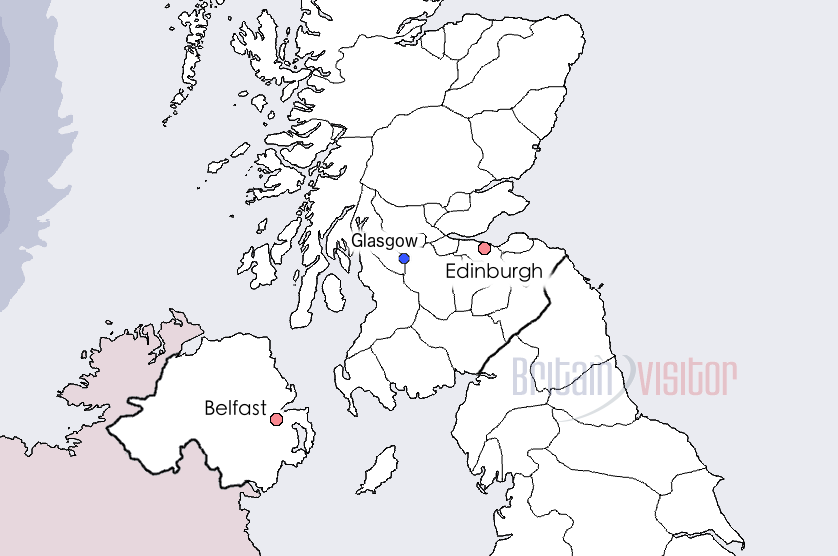
Map
Hotels in Scotland
Book Hotels in Edinburgh - Booking.com
Find Hotels in Glasgow - Booking.com
Search Hotels in Orkney - Booking.com
Hotels in The Shetlands - Booking.com
Search & Book Hotels in Scotland - Booking.com
Hotels in Edinburgh - Agoda.com