Iona Guide, Isle of Mull, Scotland
Iona (Ì Chaluim Chille)

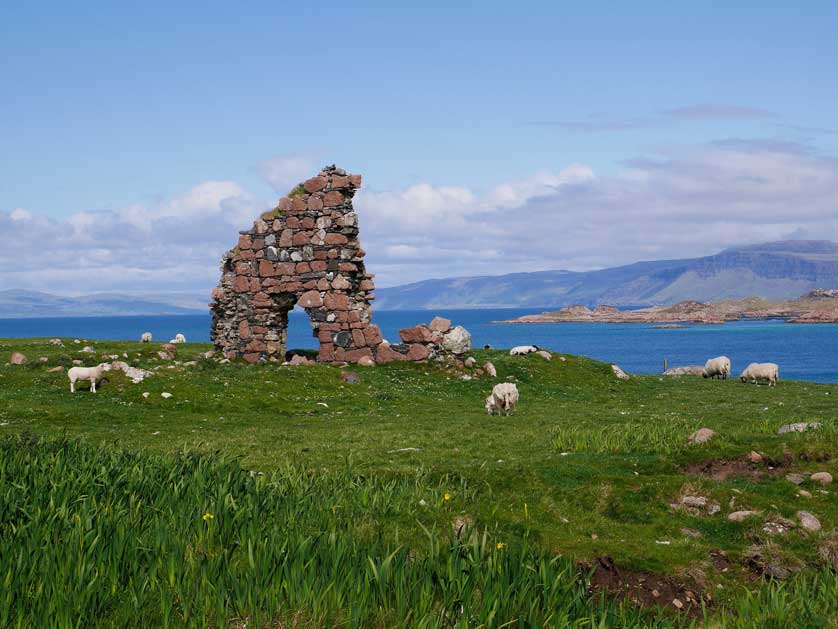
Iona, a small island off the southern tip of the Isle of Mull in Scotland, was where the Irish Saint Columba established a monastic community in 563 with the aim of spreading Christianity in Scotland.
It is one of the earliest Christian centres in Western Europe and now home to a mainly agricultural population of 120 inhabitants. The island belongs to the National Trust for Scotland.
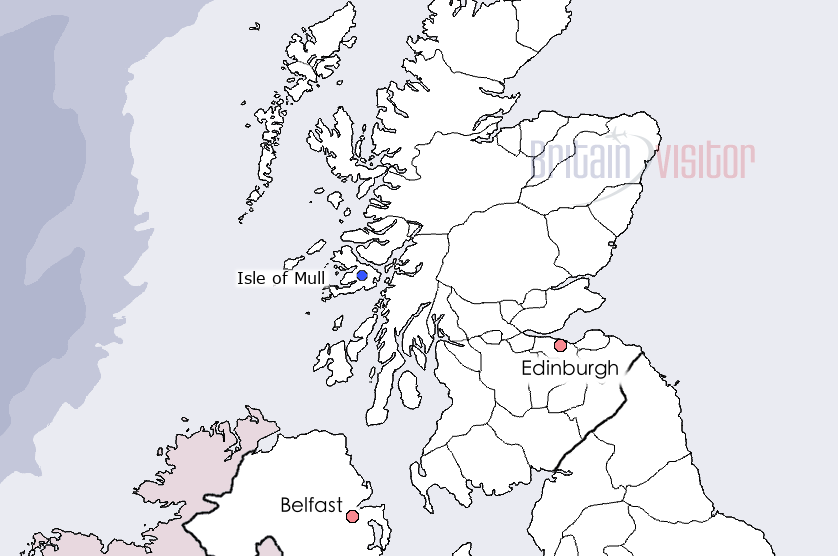
The Isle of Mull is the second largest island of the Inner Hebrides after the Isle of Skye to the north.
History
Once part of an ancient Gaelic kingdom, Iona became the home of the monk Columba (Colm Cille), who was forced into exile here from his native Ireland in the mid-6th century. The reason for his expulsion was, so legend has it, a conflict over the copying of a religious book.
Over 3,000 people were reportedly killed in the feud over the book and the terms of Columba's exile were that he should "win as many souls to Christianity as had been lost in the battle". The argument over copying of the religious text leading to the conflict, however, is disputed by historians.
Undeniably, though, it was Columba now in Scotland who was mostly responsible for the conversion to Christianity of the native Scottish Picts and the Anglo-Saxon kingdom of Northumbria in England.
Attractions
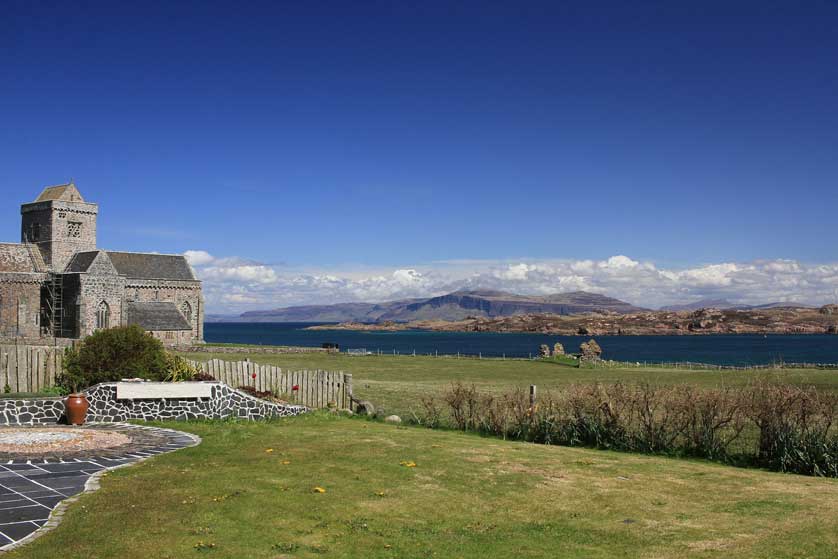
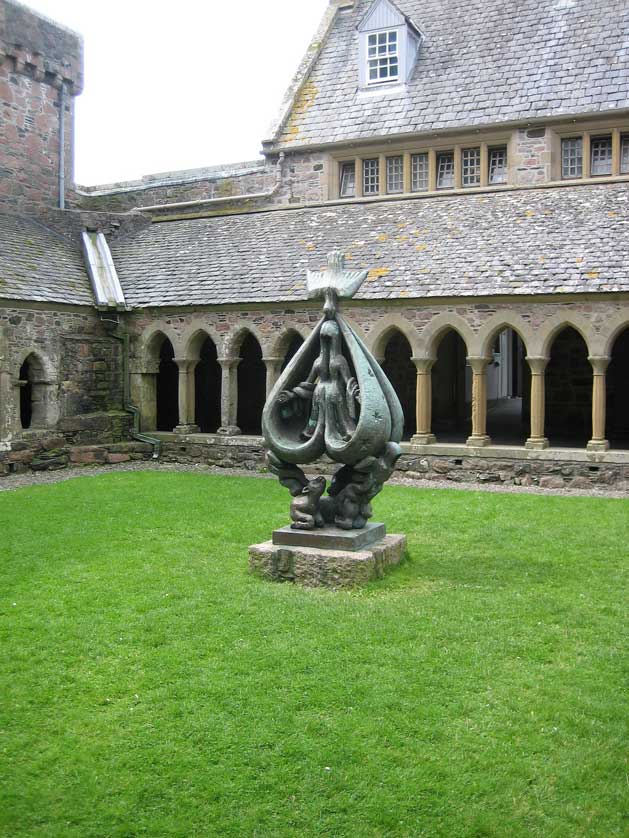
The restored Iona Abbey is the main attraction on the island. A working monastery, the abbey is now also a place for popular spiritual retreats.
An important center of learning after its foundation, the abbey's monks in the scriptorium, produced a number of important religious documents.
Indeed, the Book of Kells, an illuminated manuscript containing the four Gospels of the New Testament, now kept at Trinity College in Dublin, was written here.
By the 13th century the community had become a Benedictine monastery and an Augustinian nunnery, despite Viking attacks, until it was mostly destroyed in the Calvinist Scottish Reformation of the mid-16th century.
The community was re-established in the early 20th century and now offers a variety of spiritual courses and retreats.
The modern abbey complex contains a museum with a number of ancient Medieval carved stones and Celtic crosses. Adjacent to the abbey is a graveyard supposedly, though not definitively containing the graves of 48 Scottish monarchs including Macbeth. The graveyard also contains the grave of John Smith (1938-1994), the former Labour Party leader.
The distinctive Celtic Cross is also believed to have originated at Iona. The 9th century St Martin's Cross stands outside the abbey and is one of the best-preserved Celtic crosses in Britain.
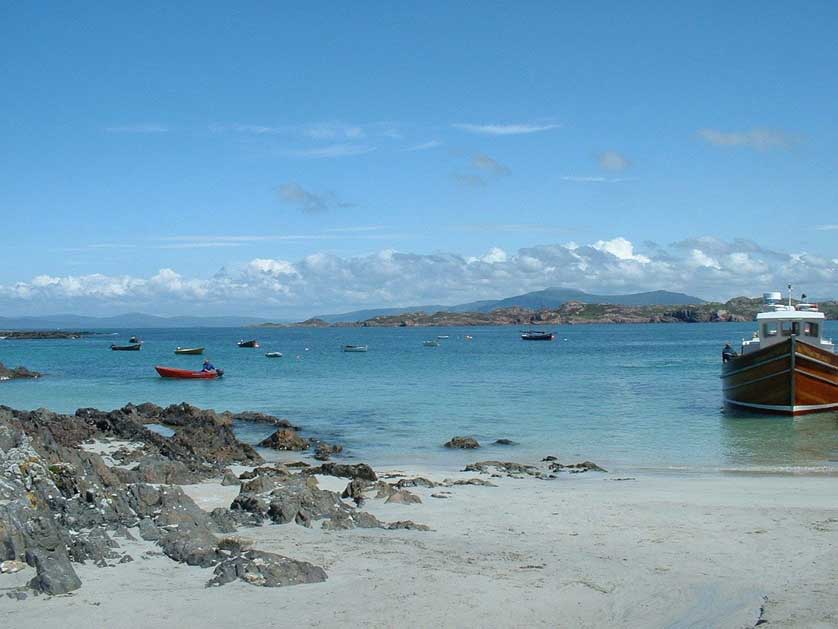
Over 130,000 tourists visit the island each year to see not only the abbey but also to enjoy several tranquil beaches. The remains of an historic marble quarry can also be visited.
This remote place is a haven for wildlife including puffins and rare corncrakes.
Access
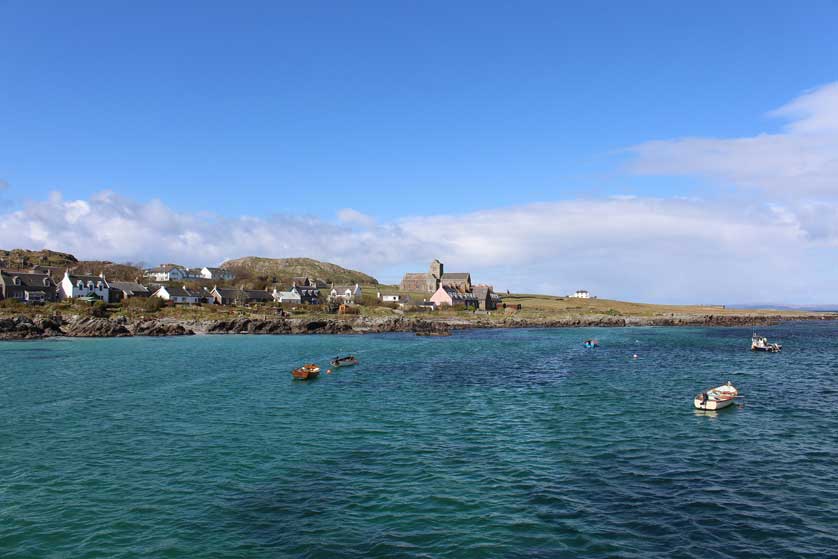
Iona is reached by ferry (10 minutes) from Fionnphort on Mull. Cars are restricted to permanent residents only. There is some free parking at Fionnphort, so visitors can leave their vehicles here. 96/496 buses from Craignure run to Fionnphort to meet several of the ferries.
Cycle hire and taxis are available on the island but walking is the most popular means of transport. The abbey is a mere 10 minutes on foot from the ferry pier.
Visitors should familiarize themselves with local customs and regulations at welcometoiona.com
The Iona Heritage Centre Garden Café offers light snacks and warming soups and there are a couple of stores and a post office on the island. For local handicrafts visit the Iona Craft Shop.
Ferries To Mull
Three car ferries connect Mull to the Scottish mainland. There are CalMac ferries from Lochaline to Fishnish on the east coast (15 minutes), Oban to Craignure (75 minutes) and Kilchoan to Tobermory (35 minutes).
Various ferries also connect Mull to the surrounding islands of Iona, Col and Tiree.
There are also ferries from Oban to Barra and South Uist.
Car
Oban is 44 miles south of Fort William and 97 miles northwest of Glasgow. By car from Glasgow it is an approximately 2 hour, 20 minute drive on the A82 and A85 to Oban.
Train & Bus
Fairly regular trains from Glasgow to Oban take around 3 hours.
There are also coaches from Glasgow to Oban usually via Tarbet and Inveraray (also 3 hours).
There is also cycle hire in Tobermory among other places on the island.

Accommodation
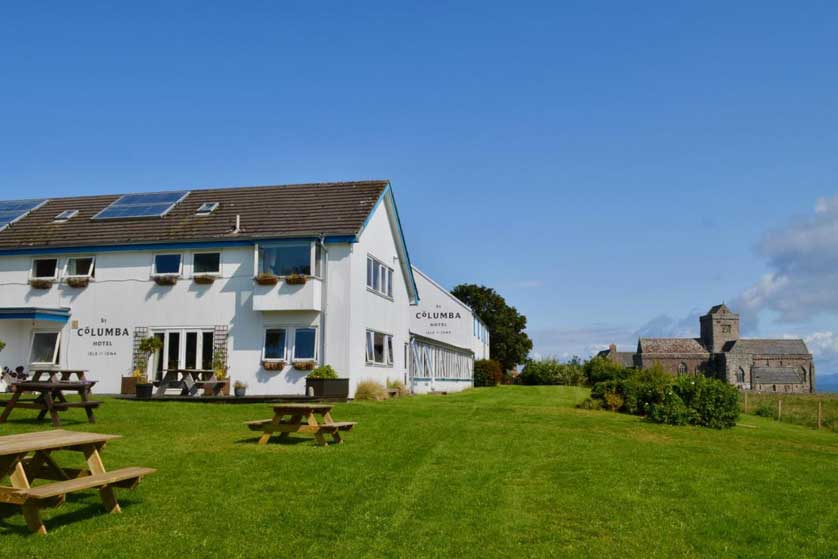
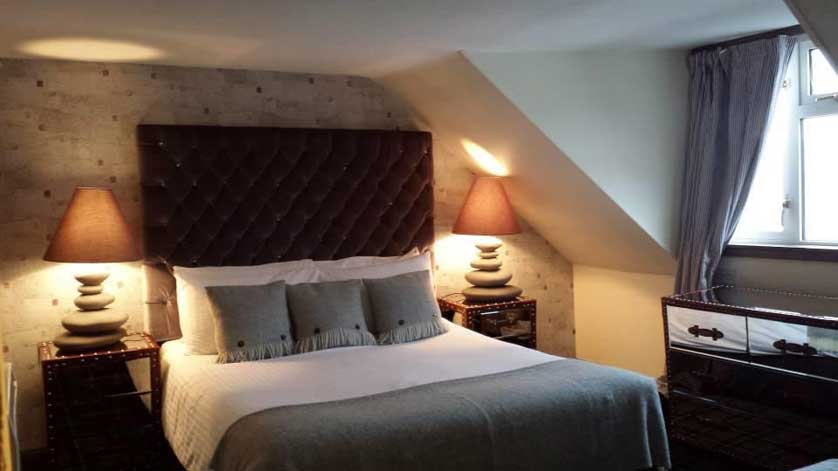
Places to stay on Iona include a campsite, B&B', self-catering accommodation and two hotels. These are the St Columba Hotel and the Argyll Hotel.
Ardoran House is a luxury bed and breakfast while the Iona Pods provide pod accommodation on a working croft.
Tobermory, the main town on Mull, has several small hotels, guest-houses, and self-catering rental cottages, many with views of the sea or harbour.
The Tobermory Hotel on Main Street offers a restaurant, bar, shared lounge, and free WiFi.
The Western Isles Hotel has great sea views while the Park Lodge Hotel on Western Road is just a short walk from the harbour front.
See here for a complete listing of accommodation in Tobermory.
See a listing of accommodation options on Mull.
Scotland Related
Hermaness National Nature Reserve
Map of Mull
Hotels in Scotland
Book Hotels in Edinburgh - Booking.com
Find Hotels in Glasgow - Booking.com
Search Hotels in Orkney - Booking.com
Hotels in The Shetlands - Booking.com