Glenfinnan Monument, Glenfinnan, Scotland
Glenfinnan Monument, West Highlands
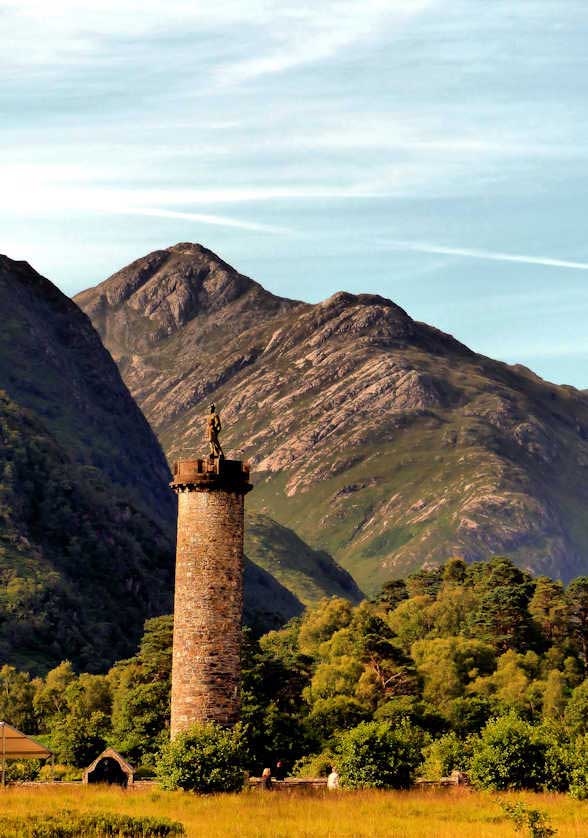
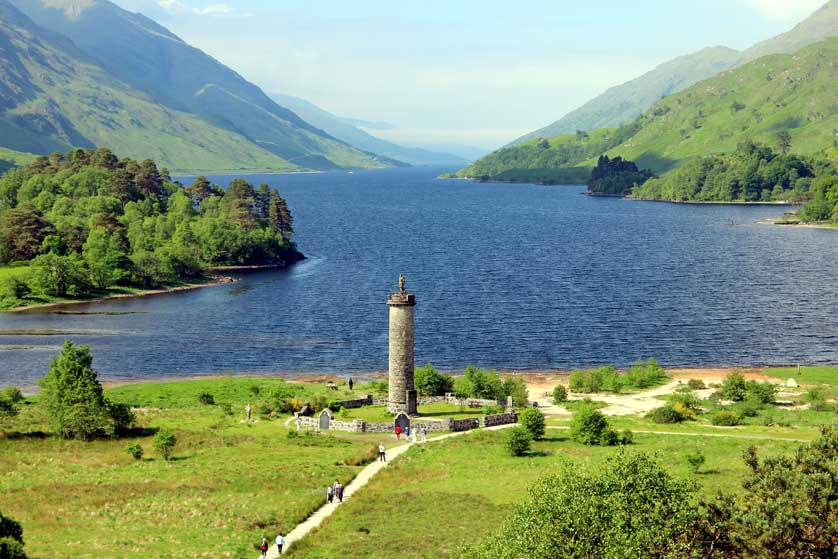
Glenfinnan, on the shores of Loch Shiel is a monument erected long before the railway came to the area.
The Glenfinnan Monument was built in 1815 to commemorate the spot where in 1745 Bonnie Prince Charlie raised his family standard and began the ill-fated Jacobite Uprising, the last of several that took place in the early 18th century.
Topped with a statue of lone, kilted highlander, the column is 18 meters high and can be climbed by an internal staircase. From the top there are magnificent views of the loch and surrounding mountains as well as a distant view of the viaduct.
Now operated by National Trust Scotland, a new visitor center has exhibitions and displays about the uprising and Bonnie Prince Charlie in both English and Gaelic.

History
In 1745 the Catholic Prince Charles Edward Stuart ("Bonnie Prince Charlie") landed in Eriskay in the Western Isles of Scotland before travelling to Glenfinnan to raise his standard and gather the clans.
He claimed the thrones of Scotland and England in the name of his father, James Francis Edward Stuart (1688-1766), the son of James II of England and James VII of Scotland.
His dream was to end in bitter defeat and finally exile after the Battle of Culloden.
After the battle, Bonnie Prince Charlie had to dodge his many pursuers while crisscrossing the Outer Hebrides before being rescued by French ships from the Isle of Skye.
The monument was commissioned by the MacDonald clan part of the larger Donald clan. Alexander MacDonald provided most of the funds for the monument.
Recent research has revealed that Alexander's father also named Alexander and known as "Golden Sandy" and the 10th laird of Glenaladale, had purchased the land with the proceeds made from slave plantations in the West Indies. Indeed Bonnie Prince Charlie arrived in Scotland on the French-owned ship the Du Teillay, which was used for transporting slaves and had been owned by Antoine Walsh, a French-Irish slaver and plantation owner.
The numerous links between Highland land owners and the slave economy in Jamaica is now being added to the literature and exhibits at the memorial.
Architecture
The tower was designed by the Scottish architect James Gillespie Graham (1776-1855). Graham worked on several Scottish castles and churches during his career, including Ayton Castle and St Andrew's Cathedral in Glasgow.
The figure of the Highlander by sculptor John Greenshields (1795-1835) was added later in 1835. During his short life Greenshields also designed the the statue of Sir Walter Scott in Parliament House, Edinburgh and The Scott Monument in Glasgow.


Access & Hours
National Trust for Scotland
Hermiston Quay
5 Cultins Road
Edinburgh EH11 4DF
Tel: 01397 722 250
Open 9 am to 6 pm everyday. Entry 4 GBP for adults, 10 GBP for a family.
The monument is less than a mile from Glenfinnan Station on the West Highland Line. The West Highland Line connects the ports of Mallaig and Oban in the Scottish Highlands to Glasgow via Fort William.
There are numerous hotels, guest houses, B&B's, and holiday cottages in the area.
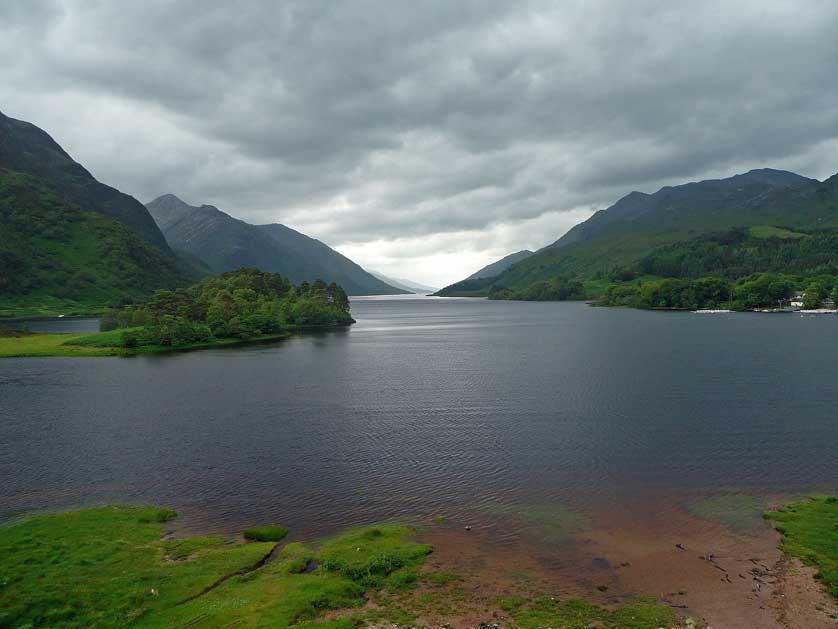
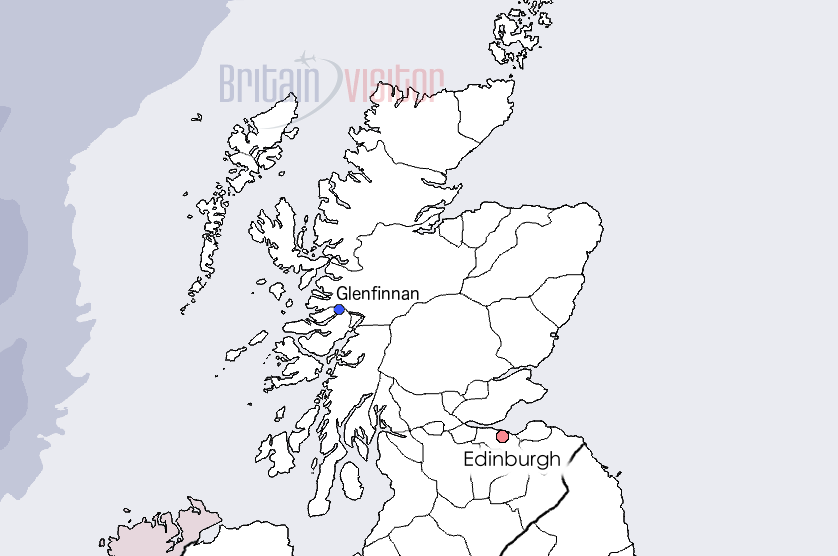
Loch Shiel is 20 km west of Fort William. The A830 passes close to the Glenfinnan Viaduct (familiar to fans of Harry Potter) and the Glenfinnan Monument. The A861 also between Lochailort and Kinlochmoidart approaches the loch from the southwestern side.
If you wish to stay in the area try the recommended Glenfinnan House Hotel or The Armoury, with two bedrooms, a garden and private parking.
Renting a car is another option for getting around this part of Scotland.
Nearby
The nearby St. Mary & St. Finnan Church is a Catholic church completed in 1872 in the Gothic style. There are also superb views over the loch from the church.
Scotland Related
Hermaness National Nature Reserve
Map
Hotels in Scotland
Book Hotels in Edinburgh - Booking.com
Find Hotels in Glasgow - Booking.com
Search Hotels in Orkney - Booking.com
Hotels in The Shetlands - Booking.com