UK Guides: Mining Landscape of Cornwall
World Heritage Site, Mining Landscape of Cornwall
Jake Davies
A common sight when traveling in Cornwall are the abandoned engine houses of tin mines. Tall granite buildings, now roofless, almost always with an attached chimney.
You can see them rising from the mist on desolate moorland slopes, or, most dramatically, clinging to cliff edges high above the crashing surf below, they are the remnants of a mining industry that stretches back 4,000 years.
Now well known even to those who have never been to Cornwall through the popular TV series Poldark. In 2006 a large number of these sites across Cornwall were awarded UNESCO World Heritage status.


Tin
Tin is a primary ingredient used to make bronze and tin mined in Cornwall made its way all across the ancient world through Phoenician traders.
It is also believed Cornwall's tin was one of the motivations for the Roman invasion of Britain.
The peak of the tin industry though was the 19th century when the technology of steam pumps allowed miners to go deeper and even extend shafts out under the sea.
This was the era in which Poldark is set and when hundreds and hundreds of engine houses were built and which have left us the familiar ruins of today.
Production of tin continued on a smaller and smaller scale until the last mine closed down in the waning years of the 20th century.
There are dozens of sites scattered over Cornwall and Devon in the World Heritage registration, but the bulk of them are in the west of Cornwall. Furthest west, two sites located close to each are Levant Mine and Geevor Mine.
Levant Mine & Beam Engine
Levant Mine & Beam Engine is a National Trust site on the cliff tops not far from Land's End.
Originally established in the 18th century, by the mid- 19th century the Levant Mine employed about 500 people including almost 200 children.
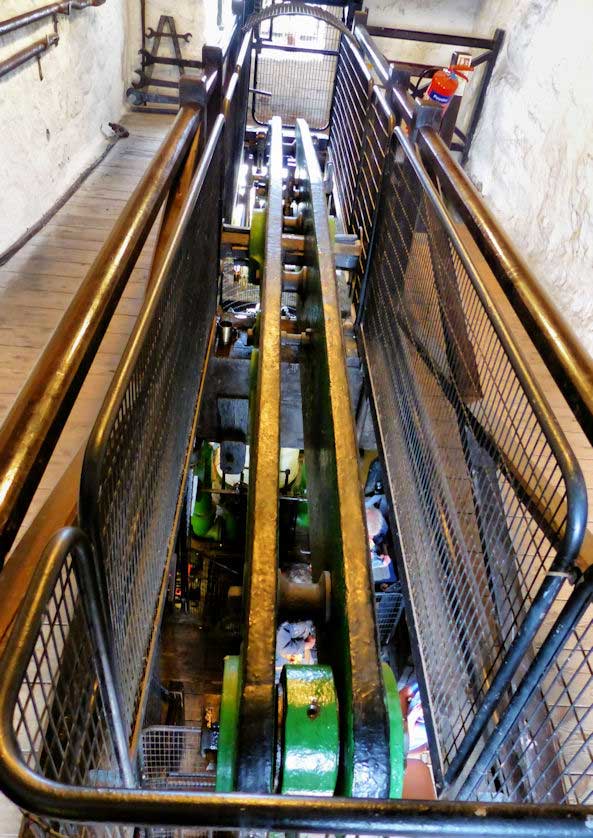
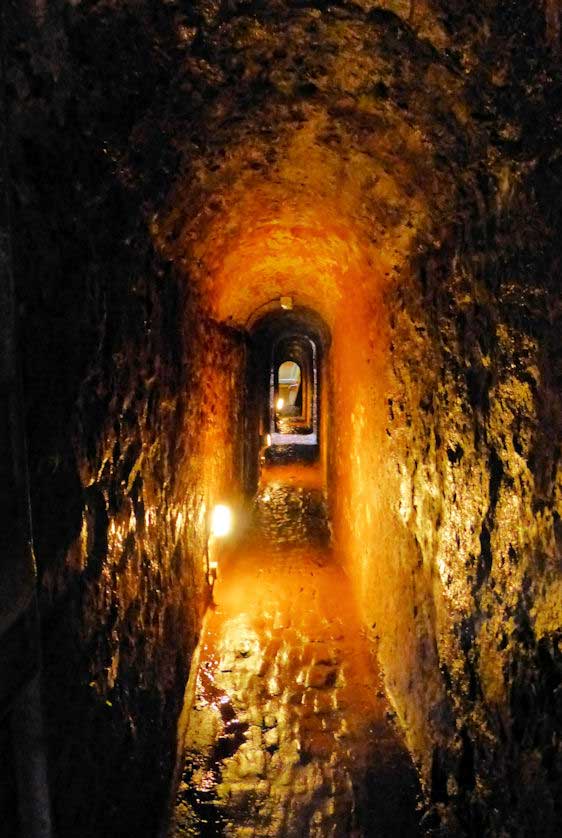
The main mineral mined was copper, with some tin, and the shafts run out more than a mile under the sea. The highlight of the site is the working beam engine.
Installed in 1840 and running until the mine closed in 1930, the steam engine is now powered by an oil fired boiler but would originally have used coal.
The engine is set in motion every 15 minutes. The engine has been carefully restored but the site closes for a time in the winter to allow maintenance work.
Knowledgeable volunteers give informative tours around the site and can answer any questions. There are stunning views up and down the coastline as well as out to sea and plenty of spots around the site to sit and have a picnic and enjoy the views.
Trewellard, Pendeen, Cornwall TR19 7SX
Tel: 0736 786 156
Open 10:30 to 5 every day, from March 1st to November 1st.
Entry is free for National Trust members. 9 GBP for adults, 4.50 GBP for kids
It is located just 8 miles from Penzance Station. Buses run from Penzance to Trewellard, 1 mile from the mine. The Southwest Coast Path passes the site.

Geevor Mine
Just a few hundred meters inland and a few minutes walk is Geevor Mine. Much larger than Levant, and also more modern, it is the largest mining museum in the UK.
The mine opened in 1911 and operated until 1990. The Hard Rock Museum is a large, modern museum devoted to tin mining in Cornwall and has many kid-friendly and interactive exhibits.
Throughout the other buildings of the site are many examples of mining machinery and equipment to see.
Intriguing is the Dry Room, the changing rooms for the miners where time has stood still and everything is left as it was on the day the mine closed.
There is a shop, and a cafe serving breakfast and lunch with great views of the coast, but the highlight of a visit would be a trip underground. Guided hard hat tours go into the shafts some of which date back 200 years.
Pendeen, Penzance, Cornwall TR19 7EW
Tel: 0736 788 662
Open 10 am to 4 pm, everyday except Saturdays and over Christmas.
Adults 12.95 GBP or 16.10 GBP including the underground tour. Kids 9 GBP. Reduced family rates are also available.
Geevor and Levant can be visited together for a 20% reduction.
Access by bus from Penzance, and in the summer there is an extra bus service that connects with St Ives.

Cornwall Access - Getting To Cornwall
Exeter in Devon, located at the end of the M5 motorway, coming south from Bristol makes for a good starting point if you are driving into Cornwall. Exeter is also a good place to hire a car.
From Exeter follow the A30 dual carriageway, north of Dartmoor through Okehampton, Launceston, Bodmin and Penzance.
Alternatively take the A38, which skirts the southern edge of Dartmoor, through Plymouth and Saltash on in to Cornwall, where it joins the A30 at Bodmin.
The A390 begins after Liskeard on the A38 and goes south west through St. Austell and Truro, where the A39 goes south in the direction of Falmouth.
Exeter's main railway station is Exeter St David's Station with rail links to Bristol, Birmingham and London Paddington Station as well as on to Plymouth.
Great Western run the overnight Night Riviera Sleeper Service (www.gwr.com/plan-journey/journey-information/on-board/night-riviera-sleeper) from London Paddington to Penzance.
Exeter International Airport, just 5 miles to the east of Exeter city near Clyst Honiton off the A30 has regular domestic flights to Aberdeen, Alicante, Belfast, Edinburgh, Faro, Geneva, Guernsey/Jersey, the isles of Scilly, Leeds Bradford, Manchester and Newcastle. International destinations include Amsterdam, Dubrovnik, Dublin, Funchal, Hannover, Larnaca, Nice, Palma, Paris, Malaga and Salzburg.
National Express coaches take about 7-8 hours to Truro from either Birmingham or London.
Newquay Cornwall Airport (NQY) has connecting flights to Bristol Airport, Cardiff, Glasgow, Isles of Scilly, Leeds Bradford, London Gatwick, Manchester Airport, Newcastle and international flights to Cork and Dublin in Ireland as well as seasonal flights to Alicante in Spain with Ryanair and Dusseldorf in Germany with Lufthansa.
Most UK flights are operated by Air Southwest. The airport offers airport parking for over 500 cars. An Airport Development Fee of 5 GBP is currently levied on all departing passengers.
There is a passenger ferry from Penzance to the Scilly Isles. The Scillonian III passenger ferry takes between 2 hours 40 minutes and 3 hours. (Timetable and further information here: islesofscilly-travel.co.uk)
There are Skybus flights to the Scilly Isles from Exeter, Newquay and Land's End airports.
Cornwall Map

Cornwall Related
Hotels in the South West of England & Wales
Book Hotels in Bath - Agoda.com
Find Hotels in Bradford on Avon - Booking.com
Search Hotels in Cardiff - Booking.com
Recommended Hotels in Exeter - Agoda.com
Book Hotels in Salisbury - Agoda.com
Hotels in London - Booking.com
Hotels in England - Booking.com
Bath Hop-On Hop-Off Sightseeing Bus (Open Top)
The Hidden Cotswolds and The Making of England Day Tour from Bath