Images of Britain: Tomb Effigy of Bess of Hardwark, Derby Cathedral
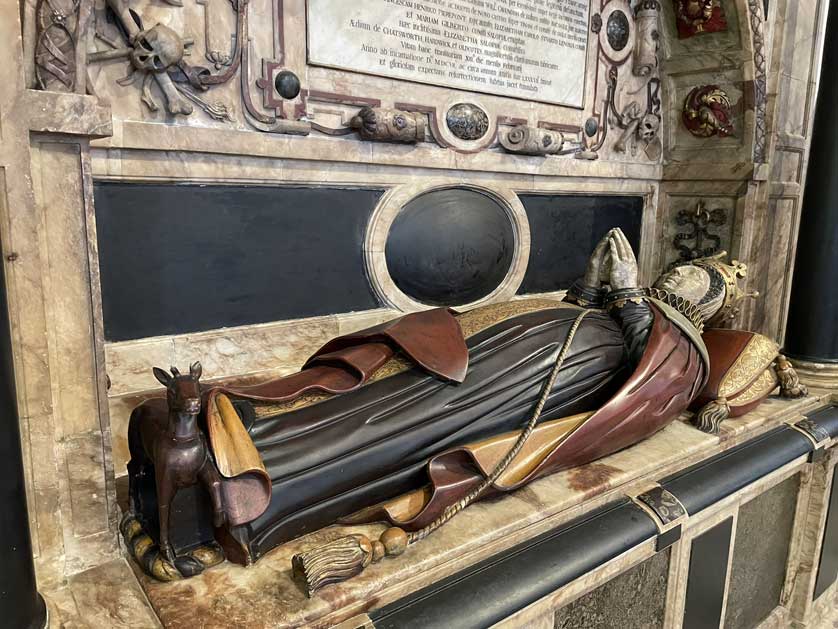
The tomb effigy of Bess of Hardwick lies in Derby Cathedral in Derby and below it a crypt containing the remains of members of the aristocratic Cavendish family.
Bess of Hardwick, born Elizabeth Hardwick in around 1521, was one of the most influential and wealthy women in Elizabethan England. She rose from relatively modest beginnings to become a prominent figure at court, largely through a series of strategic marriages.
Her first marriage at the age of 16 to Robert Barlow (or Barley) brought her limited wealth, but her subsequent marriages to twice-widowed Sir William Cavendish, Sir William St. Loe (Captain of the Guard to Queen Elizabeth I), and George Talbot, the wealthy and powerful 6th Earl of Shrewsbury, significantly elevated her social standing and financial power.
Each marriage augmented her wealth and influence, allowing her to amass vast estates and properties, including the construction of Hardwick Hall, a symbol of her architectural ambition and social status. Bess was not only a savvy estate manager but also a patron of the arts, and her legacy is closely tied to her ability to navigate and thrive within the male-dominated world of Tudor politics and society.
Beyond her financial and architectural achievements, Bess of Hardwick was deeply involved in the political and social affairs of her time. Her marriage to the Earl of Shrewsbury placed her at the center of court intrigues, most notably as the custodian of Mary, Queen of Scots, during her long captivity in England. Bess was together with Mary for prolonged periods in 1569, 1570, and 1571 at Chatsworth House where the pair worked on the needlework Oxburgh Hangings together.
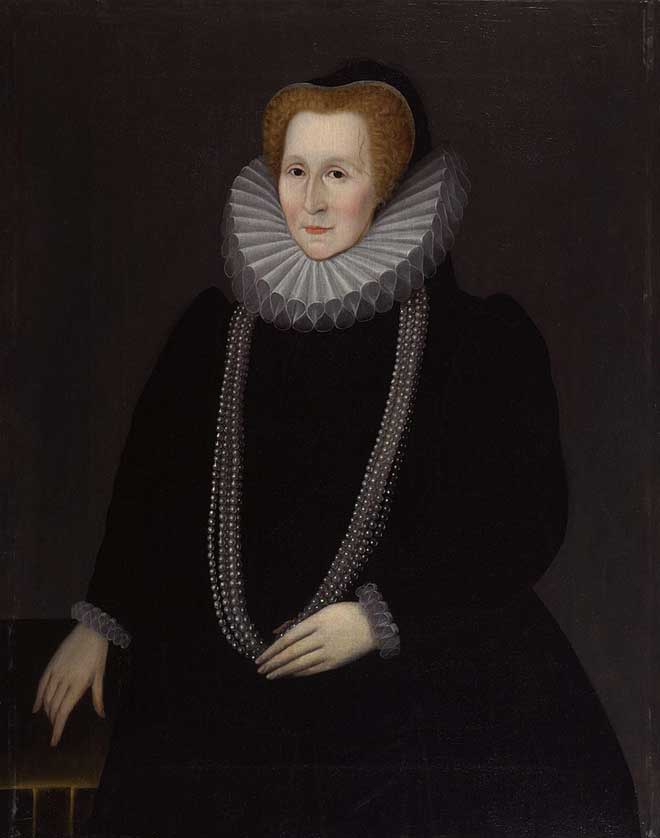
This role as minder of Mary put significant strain on her marriage to the Earl of Shrewsbury (George Talbot) and further entangled her in the dangerous politics of the Tudor court. Despite these challenges, Bess maintained her influence, leveraging her connections to secure advantageous marriages for her children and solidify the power of the Cavendish family, which would go on to become the Dukes of Devonshire.
Her life exemplifies the agency and influence a woman could exert in 16th-century England, despite the constraints of her gender, and she remains a significant figure in the history of Elizabethan England.
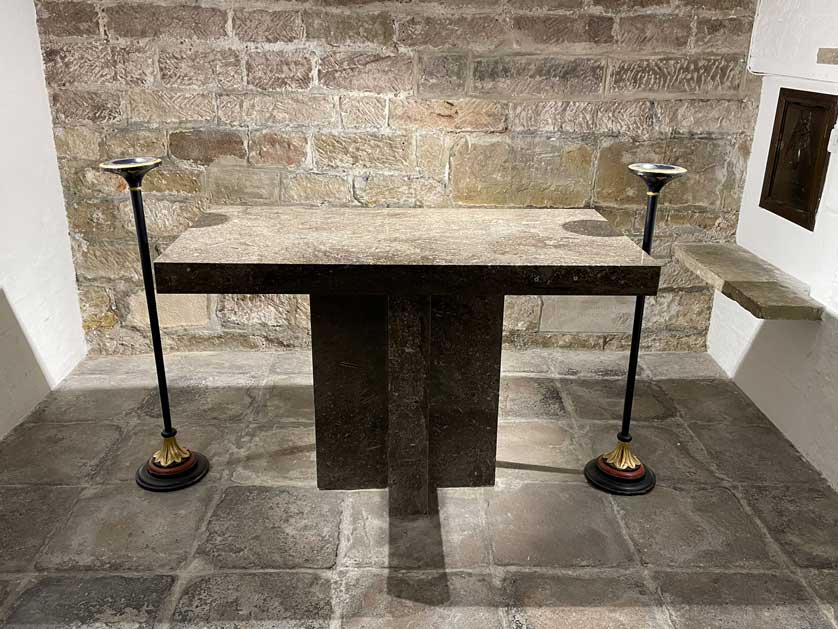
In 1590 Bess purchased an area in the Church of All Saints (now Derby Cathedral) to build a crypt to house her remains and those of her descendants. As a result of her second marriage to Sir William Cavendish, there are now over forty coffins of the Cavendish family buried in the vaults. Among them are the remains of the rather tragic Georgiana Cavendish, Duchess of Devonshire, the great-great-great-grandaunt of Diana, Princess of Wales, and someone to whom Georgiana is often compared.
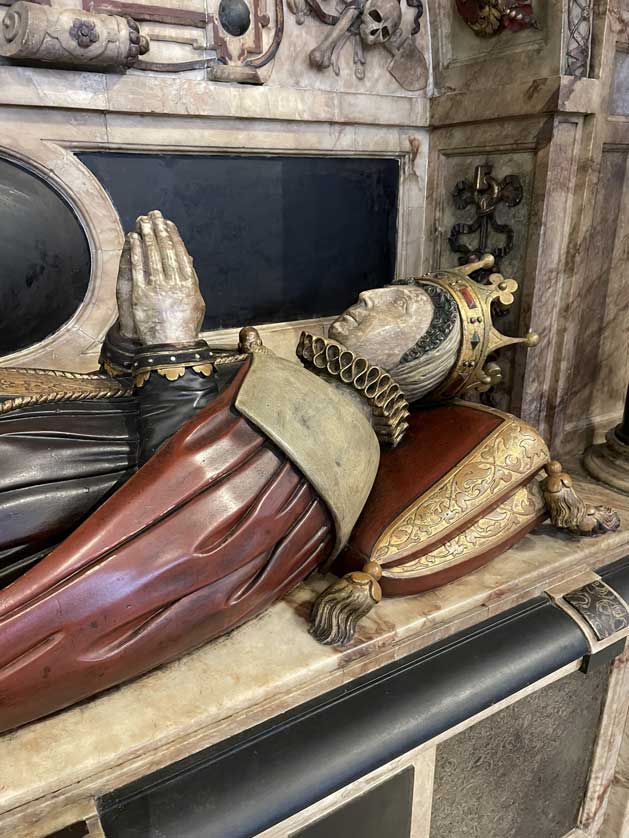
In the alabaster effigy Bess is depicted in a coronet and robes with hands clasped in prayer. Above her is a Latin inscription with details of her life, husbands and numerous building projects including Chatsworth House and Hardwick Hall.


Images of Britain: Tomb Effigy of Bess of Hardwark, Derby Cathedral, Derby
Hotels in the UK
Book Hotels in England - Booking.com
Find Accommodation in London - Booking.com
Search Hotels in Scotland - Booking.com
Hotels in Northern Ireland - Booking.com