Derby Guide
Making Things - A Guide to Derby
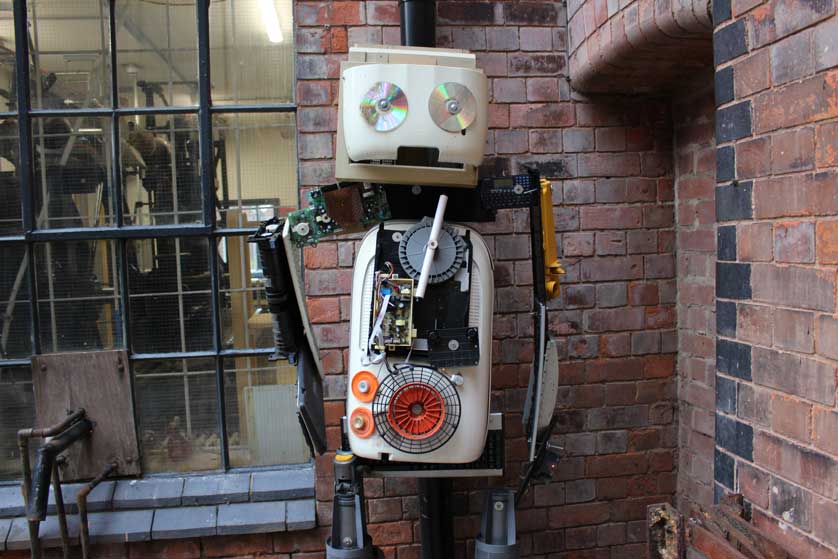
Derby in Derbyshire in the East Midlands is an historic town of over 260,000 people with a long story of manufacturing which continues to the present day.
Situated on the banks of the River Derwent, Derby is one of the birthplaces of the Industrial Revolution in the UK, playing a pivotal role in the development of Britain's manufacturing industry.
The city is now a hub for advanced engineering, particularly in the aerospace and automotive sectors, with major employers like Rolls-Royce and Toyota having significant operations there.

History
The city of Derby has its origins as a Roman settlement known as Derventio. Established around the 1st century AD near the River Derwent, Derby served as an important Roman military and trading post. Following the Roman departure, the area was settled by the Saxons and became part of the Kingdom of Mercia. By the 9th century, it fell under Danish control as one of the Five Boroughs of the Danelaw, reflecting its strategic importance during this period of Viking rule before the town was retaken by the Saxons.
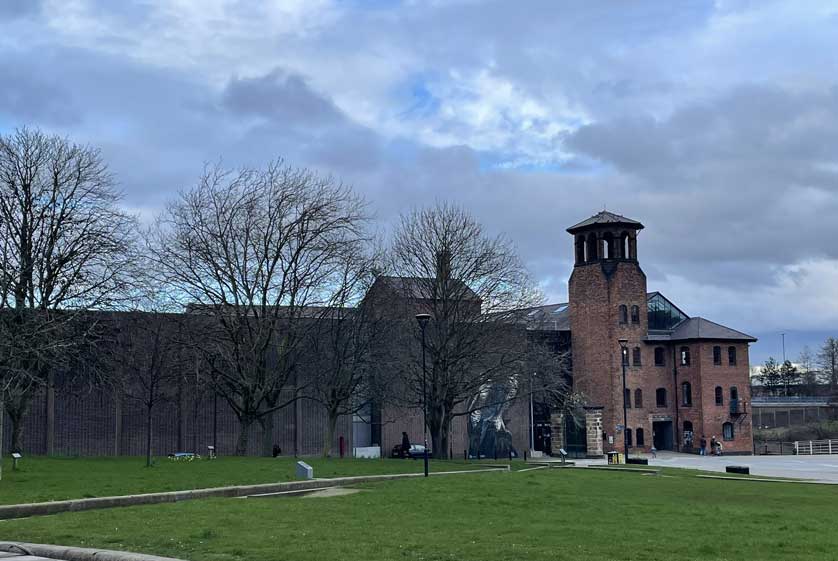
The city is home to the world's first factory, the Derby Silk Mill (Museum of Making), now part of the UNESCO Derwent Valley Mills World Heritage Site, which showcases Derby's contribution to global industrial history.
During the Middle Ages, Derby grew as a market town, benefitting from its location at the intersection of important trade routes. The town's economy was primarily based on agriculture and local crafts, but it began to industrialize in the 18th century, playing a key role in the early Industrial Revolution. The establishment of Lombe's Mill in 1721, the world's first successful silk-throwing mill (aka Derby Silk Mill and now housing the Museum of Making), marked the beginning of Derby's transformation into an industrial center.
During the Jacobite Rising of 1745, troops of the Jacobite Army, under the command of Prince Charles Edward Stuart (Bonnie Prince Charlie), arrived in Derby on 4 December 1745 as part of their campaign to advance towards London in an effort to overthrow the reigning House of Hanover. An equestrian statue of Stuart stands outside Derby Cathedral.
Derby Attractions
The award-winning Museum of Making in the Derwent Valley Mills UNESCO World Heritage Site in Derby explores and celebrates the city's rich industrial heritage and ongoing contributions to innovation and manufacturing. Located within the historic Silk Mill, widely regarded as the site of one of the world's first modern factories, the museum is deeply rooted in Derby's identity as a hub of industrial development since the 18th century.
The site first opened as Derby's Industrial Museum in 1974. A multi-million pound redevelopment started in 2016, and the museum reopened under the new name of the Museum of Making in 2021. The exhibits are now mostly on the upper floors to reduce the possibility of flood damage from the nearby River Derwent.

The interesting Derby Museum & Art Gallery on The Strand in Derby offers a rich and varied collection of art, artifacts, and natural history exhibits. The museum was founded in 1879 along with Derby Central Library. It is housed in a building by Richard Knill Freeman in classic Victorian style. Over the years, it has expanded its collections and galleries to offer a wide range of exhibitions. One of the museum's most notable features is its extensive collection of works by Joseph Wright of Derby, an 18th-century painter known for his dramatic use of light and shadow. The museum holds the largest collection of his works in the world, including famous paintings such as A Philosopher Lecturing on the Orrery.

Pickford's House Museum at Number 41 Friar Gate in Derby offers a glimpse into Georgian life at the preserved house of Joseph Pickford (1734-1782), a prominent architect of the time. Pickford moved in influential circles and was friends with painter Joseph Wright of Derby, potter Josiah Wedgwood, and the inventors and businessmen Matthew Boulton and John Whitehurst. The house dates from 1770. Pickford designed the residence both as his family home and as a showcase for his work. The building itself is an excellent example of Georgian architecture, reflecting the elegance and symmetry typical of the era.
Churches in Derby
The Cathedral Church of All Saints (Derby Cathedral) is an Anglican cathedral promoted from a parish church in 1927.
Originally established as a royal collegiate church in 943 AD by King Edmund I, it served as a center of worship and ecclesiastical governance. The original church underwent significant transformations, especially in the 14th century when it was rebuilt in the Gothic style. However, the most defining change came in the early 18th century when Scottish architect James Gibbs (1682-1754) redesigned the church in Neo-Classical style. Gibbs' other major works in England are St Martin-in-the-Fields (near Trafalgar Square in London), Radcliffe Camera at Oxford University, and the Senate House at Cambridge University. This period marked the transition of the building from a parish church to a cathedral, following the establishment of the Diocese of Derby in 1927.
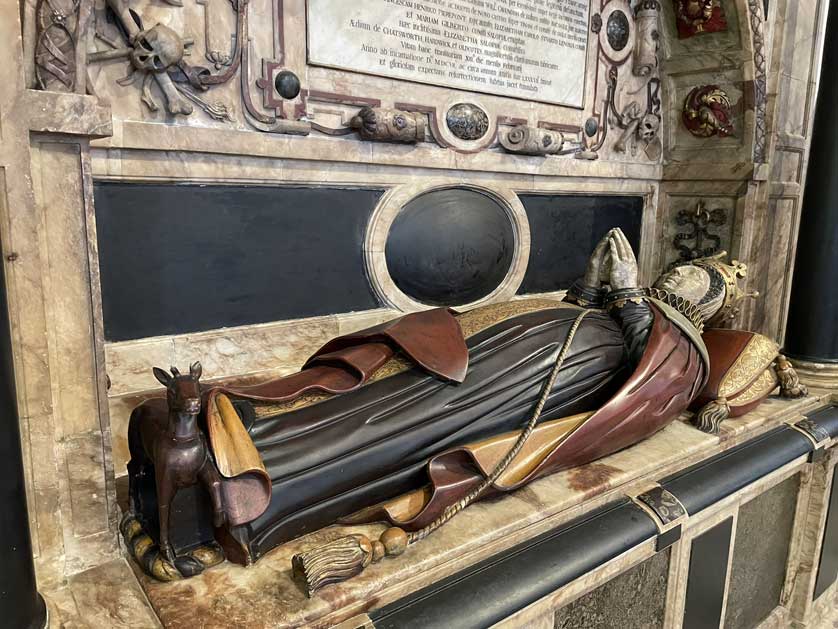
Treasures include a 16th-century Renaissance-style effigy of Bess of Hardwick of Hardwick Hall and an 18th century wrought iron rood screen by Robert Bakewell. Other notable people buried in the church include John Lombe, who began the silk mill near the River Derwent which is now the Museum of Making and the philosopher and scientist Henry Cavendish (1731-1810).
There are more recent stained glass windows including a pair designed by Ceri Richards in 1965.
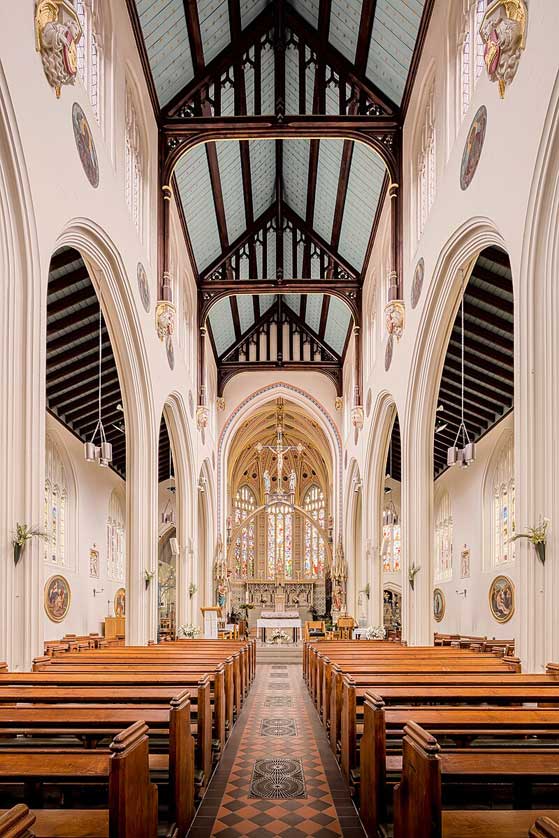
St. Mary's Catholic Church is a fine example of 19th-century Gothic Revival architecture. It was designed by the renowned architect Augustus Pugin (responsible for Elizabeth Tower aka Big Ben and the interior of the Houses of Parliament in London). The building was completed in 1839 and reflects Pugin's dedication to the principles of the Gothic style, characterized by its pointed arches, ribbed vaults, and intricate tracery. As one of the earliest Catholic churches built in England after the Catholic Emancipation Act of 1829, St. Mary's holds much historical importance. The church's interior features elaborate stained glass windows and a richly adorned altar, reflecting Pugin's belief in the integration of beauty and spirituality.
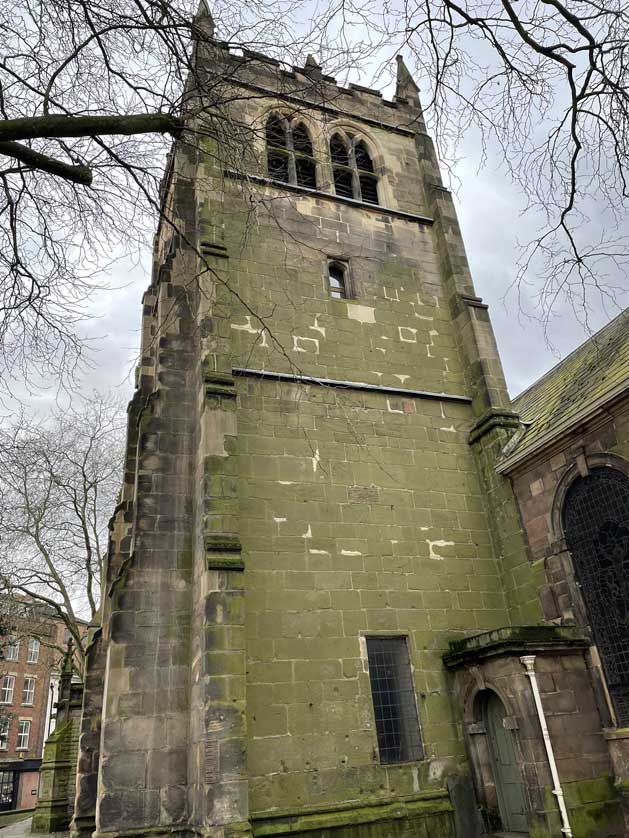
St Werburgh's Church, on Friar Gate, close to Derby Museum & Art Gallery, was reopened as a place of worship after being closed in 1984. The earliest parts of the church date from the 17th century. The tower and the main church though connected have no internal access. Sanctuary (facebook.com/sanctuaryderby) provides live music and other events at the church on a regular basis.
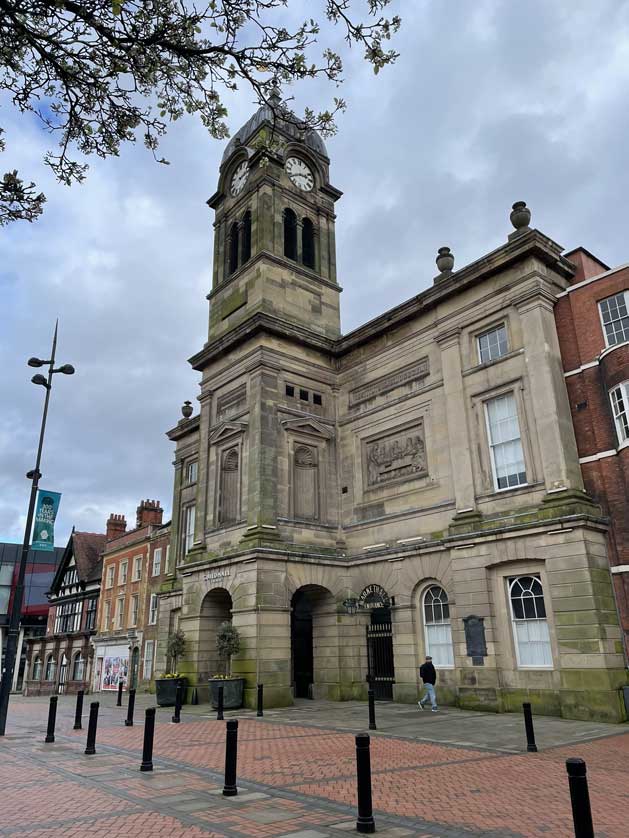
Derby Shopping & Entertainment
The city's retail landscape is centered around the intu Derby shopping center, which houses a variety of high-street brands, independent retailers, and dining establishments, catering to a wide range of consumer preferences. Beyond the shopping center, Derby's Cathedral Quarter presents a mix of boutique shops, artisanal markets, and specialist stores
Derby boasts a thriving cultural scene, with venues such as the Derby Theatre offering a program of theatrical performances, live music, and community events. The Quad, a center for contemporary art and film, provides a space for visual arts exhibitions, independent and mainstream cinema, and creative workshops. Additionally, the city hosts several annual festivals, including the Derby Festé in September - an indoor/outdoor festival with acrobatics, art, circus, dance, and theatre - and the Format International Photography Festival, established in 2004.



Derby Restaurants & Pubs
The city is home to a wide range of dining options, from fine dining establishments to casual eateries, catering to a variety of tastes and preferences.
Many of Derby's restaurants focus on international cuisine, offering everything from Indian, Italian, and Chinese dishes to more niche options like Thai, Japanese, and Mexican fare. The Cathedral Quarter and Friar Gate are particularly known for their concentration of high-quality restaurants, many of which emphasize locally sourced ingredients and seasonal menus.
Some recommendations include The Dining Room and Lorentes both on Friar Gate, Seven on Wheelwright Way, and Shalimar Gold on Midland Road. Darleys, just north of Darley Park on the River Derwent, is a Michelin-starred eatery housed in the former canteen of a 19th century silk mill.
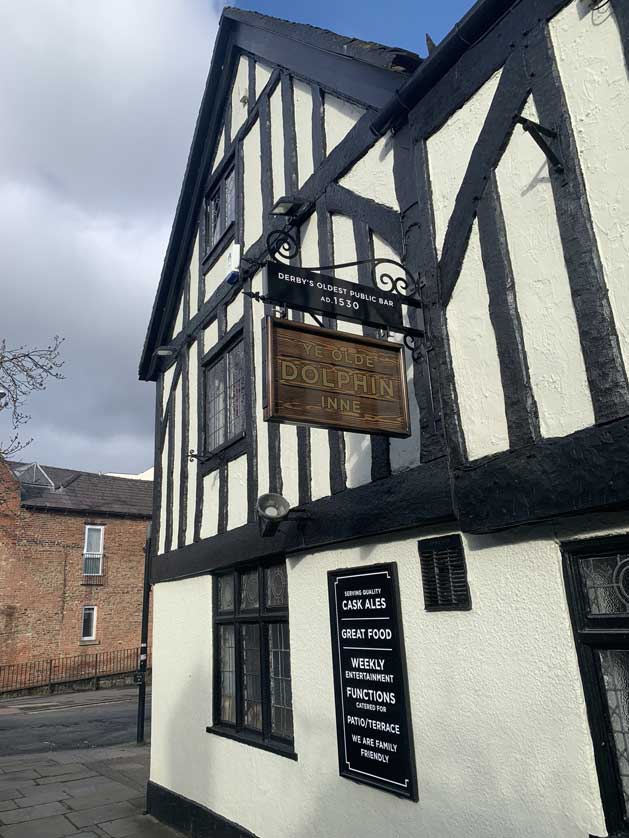
Derby's pub scene is equally vibrant, with a mix of historic inns, traditional pubs, and modern gastropubs. The city has a strong brewing heritage, and many pubs pride themselves on offering a selection of local ales and craft beers, often produced by breweries in the surrounding Derbyshire countryside. Some of the city's most iconic pubs, such as the Olde Dolphin Inne, which dates back to the 16th century, offer a glimpse into Derby's history while providing a cozy atmosphere for patrons. In addition to serving drinks, many pubs also offer robust food menus, with traditional British dishes like fish and chips, Sunday roasts, and hearty pies.
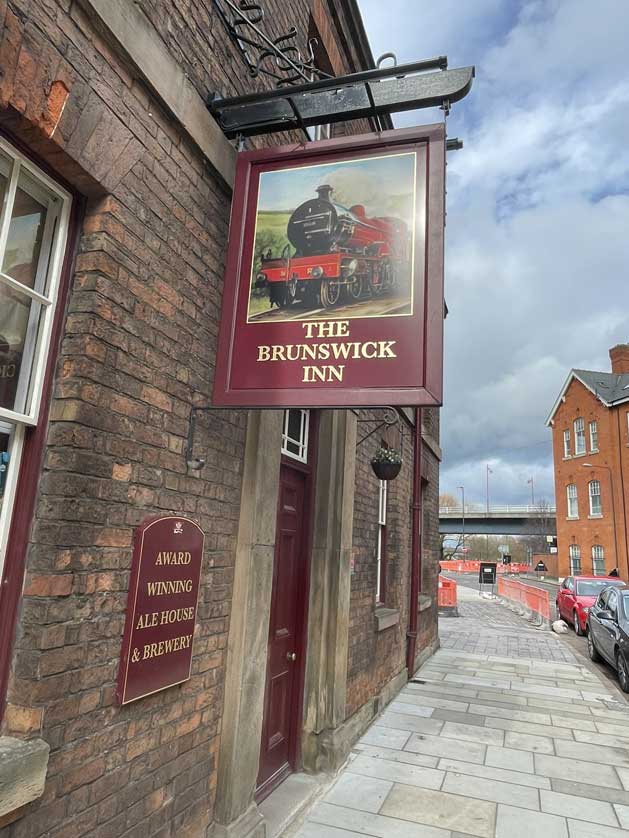
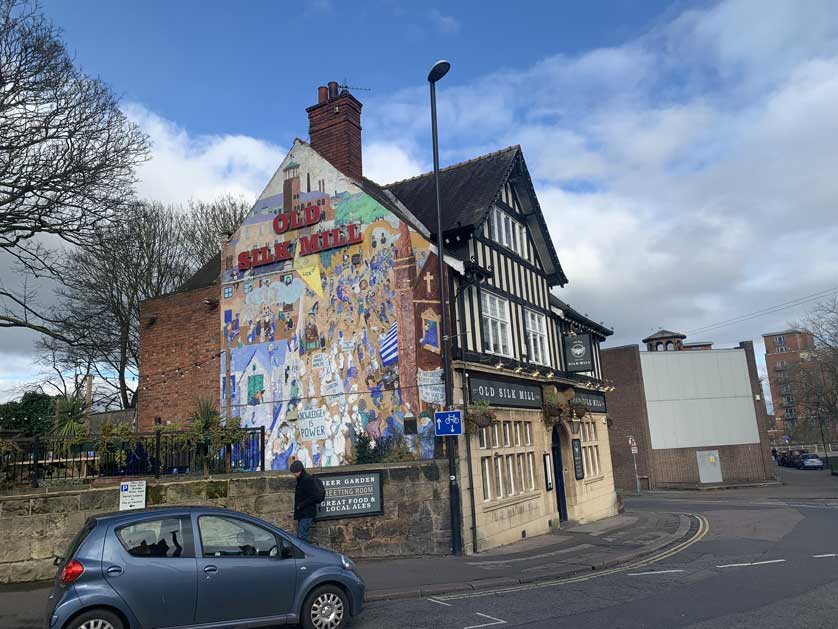
Other notable pubs in Derby are The Brunswick Inn near the station, The Lord Nelson near Derby Museum & Art Gallery, the Exeter Arms across the Derwent in Exeter Place and The Silk Mill on Full Street.

Parks & Gardens
Green spaces in Derby include Markeaton Park, one of the largest in Derby, offering over 200 acres of woodland, meadows, and recreational facilities, including a craft village, playgrounds, and a boating lake.
Darley Park, situated along the banks of the River Derwent, is renowned for its expansive lawns and the largest collection of hydrangeas in Britain, serving as a key venue for outdoor events such as the annual Darley Park Concert.
The Arboretum, often recognized as Britain's first public park, was designed by John Claudius Loudon in 1840 and features a range of historical monuments, diverse plantings, and a network of pathways that exemplify Victorian park design.
Kedleston Hall
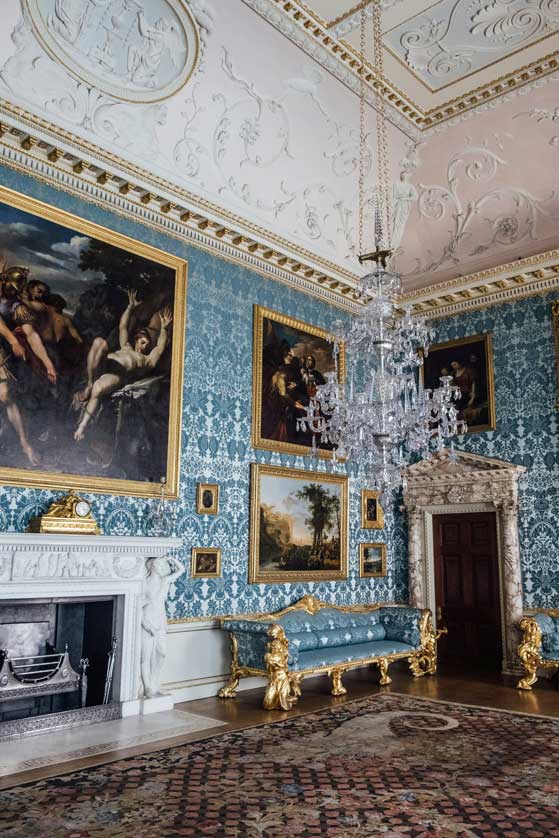
Kedleston Hall, an 18th-century English stately home is located about 6 miles northwest of Derby. It is a prime example of neoclassical architecture and the work of the renowned architect Robert Adam between 1759 and 1765. Designed for Nathaniel Curzon, who later became the 1st Baron Scarsdale, Kedleston Hall reflects the Palladian ideals of symmetry, proportion, and the use of classical forms.
Adam's design was heavily influenced by the ancient Roman architecture he encountered during his Grand Tour. The interior of the hall showcases Adam's skill in integrating architecture with decorative arts, where he collaborated with artists and craftsmen to create opulent rooms adorned with classical motifs, elaborate plasterwork, and rich furnishings.
Today, Kedleston Hall is managed by the National Trust and offers a window into the lifestyle and tastes of the wealthy Curzon family, including its colonial connections, particularly through George Nathaniel Curzon, the 1st Marquess Curzon of Kedleston, who served as Viceroy of India. The hall's collections, including artwork, furniture, and artifacts from the British Empire, contribute to ongoing discussions about heritage, empire, and the representation of history in public spaces.
The 114 bus service from Derby (25 minutes) and Ashbourne (30 minutes) stop at the Hall on summer Saturdays, and at the Smithy/estate entrance on other days (a 1 mile walk from the Hall).

Access - Getting to Derby
Derby Station has trains to Edinburgh Waverley Station in Edinburgh via Leeds, York Station in York, Newcastle, and Berwick-upon-Tweed.
There are also services to Penzance via Birmingham New Street, Cheltenham Spa, Bristol Temple Meads, Exeter St David's, Plymouth and Truro.
In addition, Derby also has rail connections to Crewe, Nottingham, Sheffield Station, Matlock and London St Pancras.
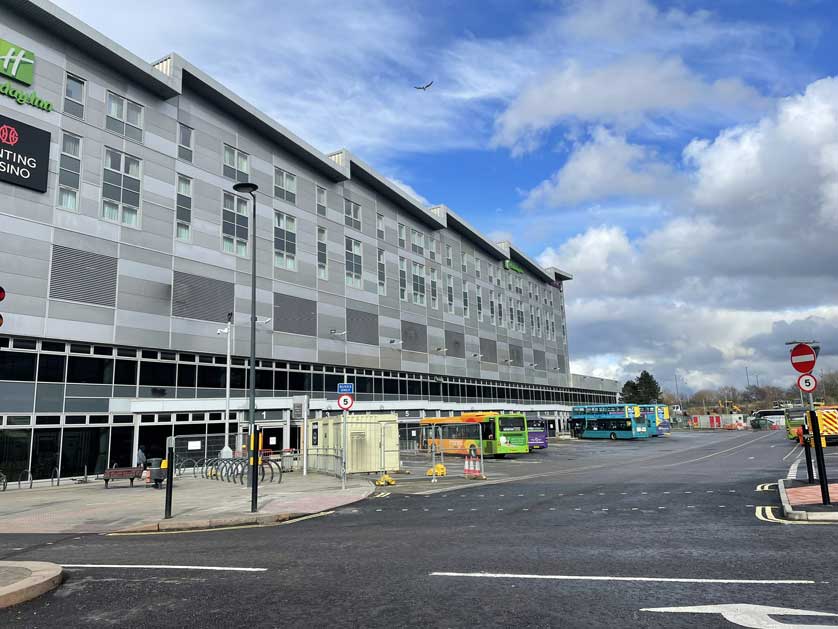
National Express buses depart from Riverlights Bus Station (Derby Bus Station) from bays 25 - 29. The skylink Derby bus connects Derby and Leicester via East Midlands Airport and runs 24/7. The red arrow runs every 10 minutes non-stop down the A52 to Nottingham. The swift bus connects Derby, Ashbourne and Uttoxeter. The nines buses (9.1 & 9.3) run between Derby, Ripley, Alfreton and Mansfield.
The following buses stop at Derby Station: 1, 1A, 1C, 70A, 114, and U1 unibus.
Maps
Sports & Stadiums
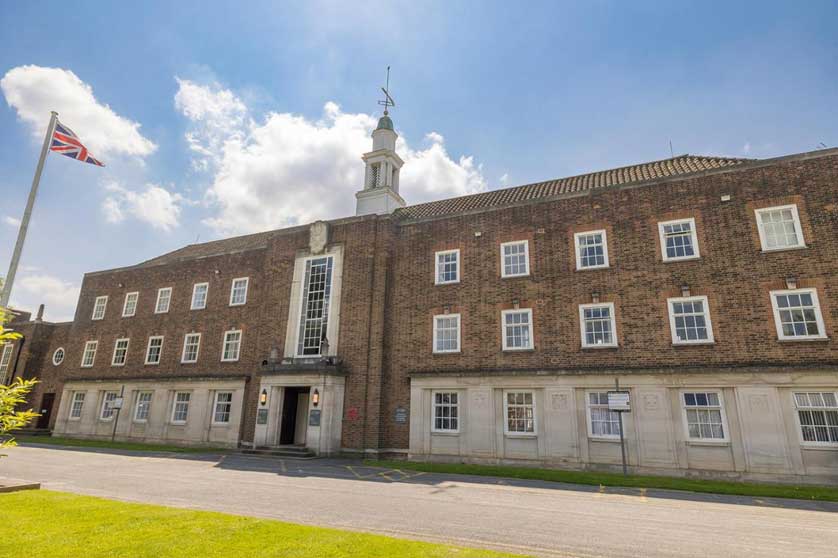
The city of Derby is home to Derby County FC who play their home games at the 32,956 capacity Pride Park Stadium not far from Derby Station. Opened in 1997, the stadium replaced the Baseball Ground, Derby's previous home ground from 1895.
Hotels
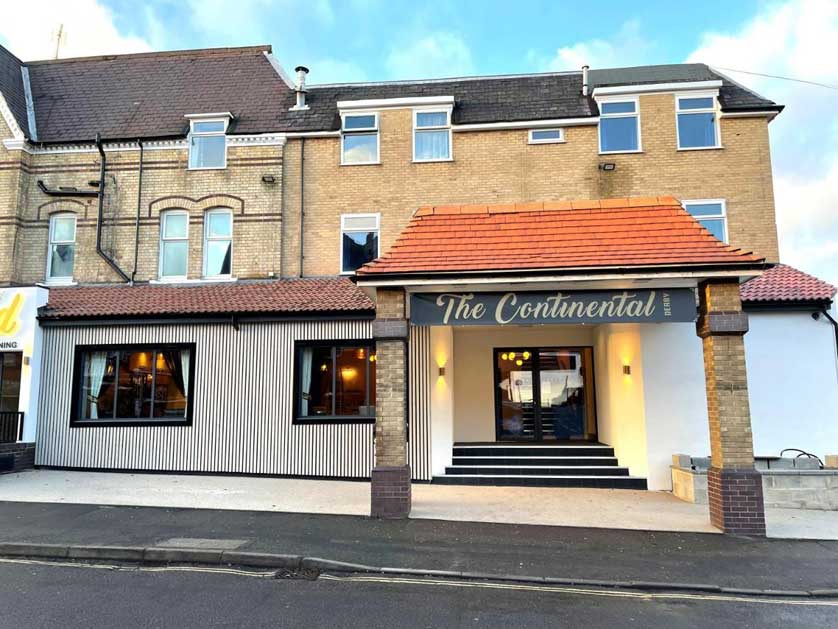
Within walking distance of the station is the 3-star Holiday Inn Express Derby Pride Park. The Leonardo Hotel Derby is a 4-star property and offers a bar, restaurant, and a 24-hour reception. Aston Court Hotel is directly opposite the station.
See here for a complete listing of hotel accommodation in Derby.
Hotels in the UK
Book Hotels in England - Booking.com
Find Accommodation in London - Booking.com
Search Hotels in Scotland - Booking.com
Hotels in Northern Ireland - Booking.com