Tate Britain
Tate Britain

Tate Britain in Millbank on the banks of the River Thames was formerly the Tate Gallery. It is one of several Tate galleries in Britain including Tate Modern, also in London, Tate Liverpool in Liverpool and Tate St Ives in St Ives, Cornwall.
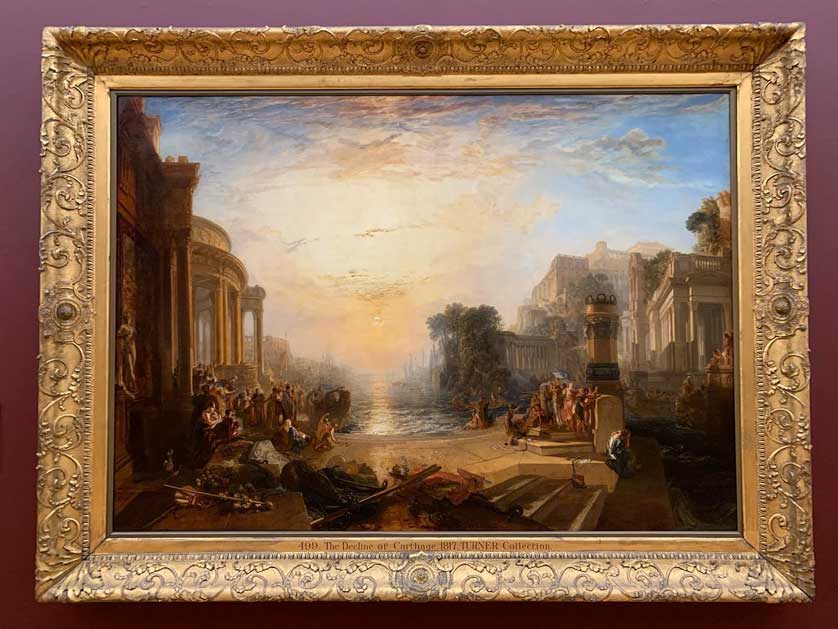
Tate Britain's collection focuses on mainly British art since the Tudor period. It has an extensive collection of the works of J. M. W. Turner who left his own collection on his death to the nation. The annual, usually controversial, Turner Prize hosted by the Tate is named in his honour.
The huge collection is rotated and includes work by such classical and contemporary artists as Francis Bacon, Peter Blake, William Blake, John Constable, Tracey Emin, Thomas Gainsborough, David Hockney, William Hogarth, Anna Lea Merritt, Henry Moore, Joshua Reynolds, Dante Gabriel Rossetti, John Singer Sargent, and James Abbott McNeill Whistler.


History
Tate Britain opened in 1897 as the National Gallery of British Art. From 1932 it became known officially as the Tate Gallery, after its founder Sir Henry Tate, the wealthy sugar merchant and philanthropist from Liverpool.
Tate funded the building of the original museum on the site of what had been Millbank Prison and also contributed much of his art collection.
The building is the work of architect Sidney R. J. Smith and is noted for its classical portico and dome.
The Clore Gallery was added in 1987 by Pritzker Prize winning architect James Stirling, and houses the J. M. W. Turner collection. Stirling also worked on Tate Liverpool (though now much changed) and the post-modern No 1 Poultry in London.
Exhibits
Tate Britain shows art made in Britain since 1545 up to the present day.
There are special galleries dedicated to to the sculptures of Henry Moore and the paintings of J. M. W. Turner.
Two rooms are dedicated to Moore and as well as his large-scale sculptures, there are drawings, film, maquettes and photographs by the artist.
Nine rooms contain the largest collection of works by Turner in the world along with the Seagram Murals by American artist, Mark Rothko, who greatly admired Turner.
Works by Turner on display include landscapes, seascapes, figures and painting produced in both Britain and Europe, where the artist traveled extensively. Turner was particularly drawn to Italy and returned on a number of occasions.
The rest of the huge collection is rotated thematically. At the moment visitors can enjoy the following free exhibitions.
The Walk Through British Art rooms take the visitor on a chronological journey through British art from 1545 to the present.
Spotlights is a series of regularly changing displays on specific artists or an artistic theme. At present the exhibits are in seven rooms and include in-depth views of John Singer Sargent, Vorticism, George Frederic Watts, and a photographic installation by Marie Yates.
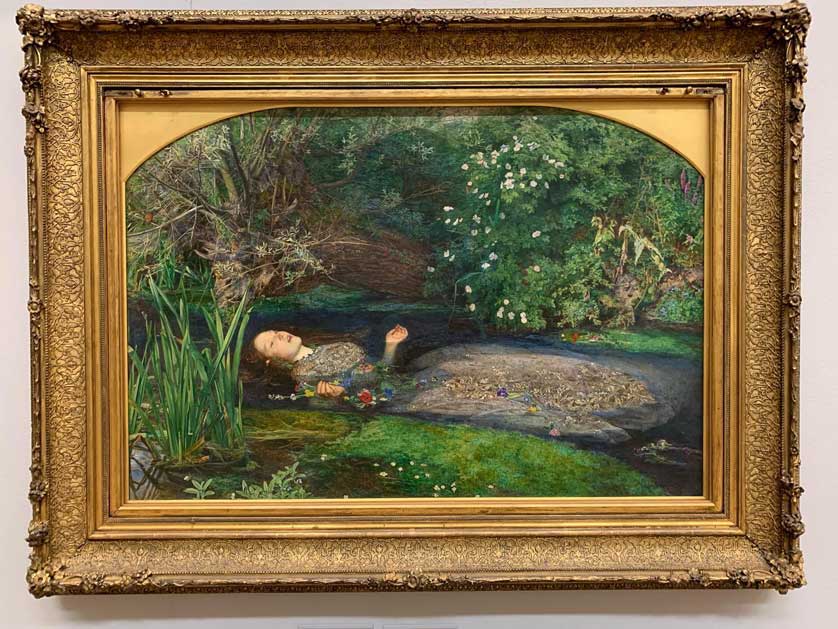
Other featured artists include Thomas Gainsborough, William Hogarth, Gwen John, and the pre-Raphaelites. More contemporary artists include David Hockney, Claudette Johnson and Chris Ofili.

Museum Access & Hours
Millbank
London SW1P 4RG
Tel: 0207 887 8888
www: tate.org.uk
Hours: Open 10 am to 6 pm every day.
Entry is free to the museum and permanent exhibition but charges apply to temporary exhibitions.
The Chelsea College of Art & Design is next door. Across Vauxhall Bridge are the Vauxhall Pleasure Gardens and The Oval cricket ground. The four-star The Westminster London, Curio Collection by Hilton is a nearby hotel.
The Djanogly Cafe (named after benefactor Sir Harry Arieh Simon Djanogly) serves homemade salads and pastries as well as locally sourced beer.



Access - Getting to Tate Britain
The nearest tube station to Tate Britain is Pimlico on the Victoria Line. It is 8 minutes on foot. Vauxhall, also on the Victoria Line, south of the Thames is a 10-minute walk. Victoria Station is a 20-minute walk.
The following London buses stop at the Tate Britain / Millbank Millennium Pier just outside Tate Britain: 87 and N87.
At the nearby Vauxhall Bridge stop the following buses all stop: 2, 36, 88, 185, 360, N2 and N136.
There are bicycle hire docking stations on Millbank Tower, Rampayne Street near Pimlico Tube Station, Vauxhall Bridge and Regency Street.
A high-speed boat from Millbank Millennium Pier runs along the Thames to Tate Modern enabling visitors to see both galleries in a day without having to take the tube.

Hotels in London
Book Hotels in London - Booking.com
Find Luxury Hotels in London - Booking.com
Budget Hotels in London - Booking.com
Find Hotels in England - Booking.com
London Offers
London Attractions Tickets - Tiqets.com