British Nature: British Uplands
Britain's Upland Areas
Mark Brazil

The seemingly crowded isles of Britain are home to some delightful landscapes offering opportunities for remote exploration. Foremost are the country's fifteen national parks (NP), ten in England, three in Wales and two in Scotland.
Together they protect a tremendous range of habitats including lowland wetlands, as in the Norfolk and Suffolk Broads NP, coastal cliffs as in the Pembrokeshire Coast NP, rolling green hills, chalk grassland and woodlands as in the South Downs NP, and dramatic uplands, moorland and mountains, such as in the Cairngorms NP.
History
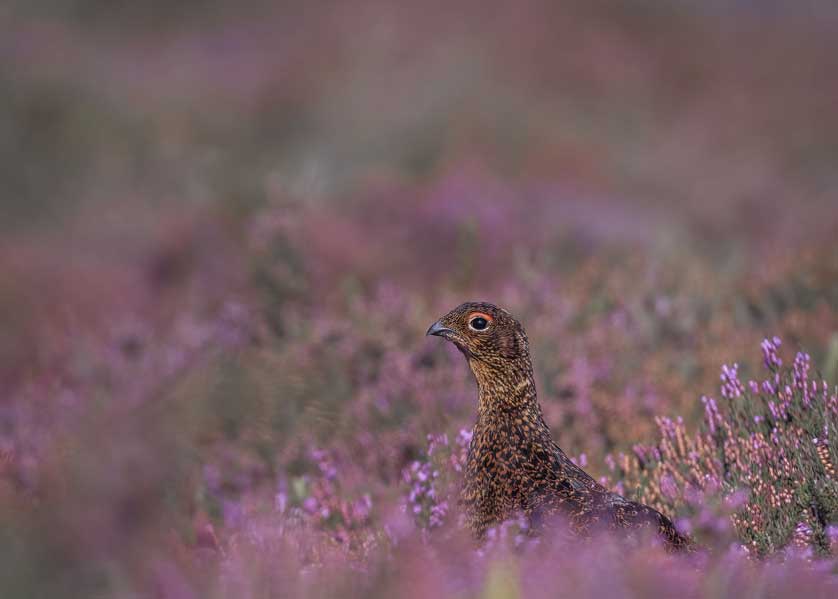
The purple haze of heather blooming across an upland landscape is not merely an eye-catching British scene, but also represents an extraordinary 'natural' habitat.
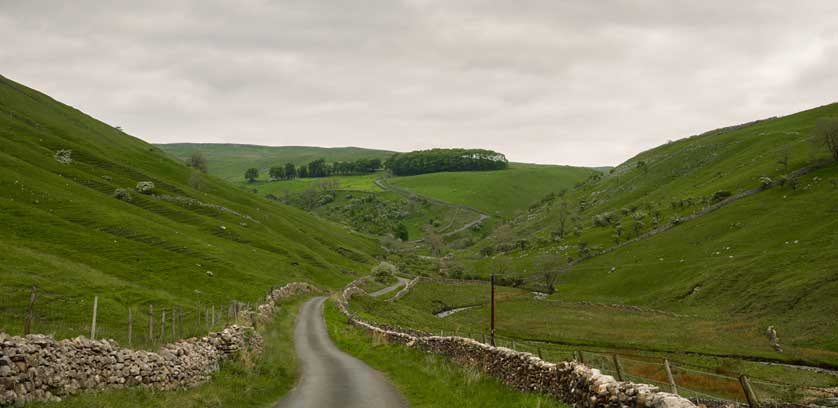
Wild-seeming, yet shaped by human activities, the origins of British heathlands and moorlands may be traced back several thousand years. As fire was used to clear woodland, first for hunting and then to produce areas for livestock grazing, the landscape was moulded by human needs, and some heathlands may date back 3,000 years, to the Bronze Age.

Soil & Plant Life
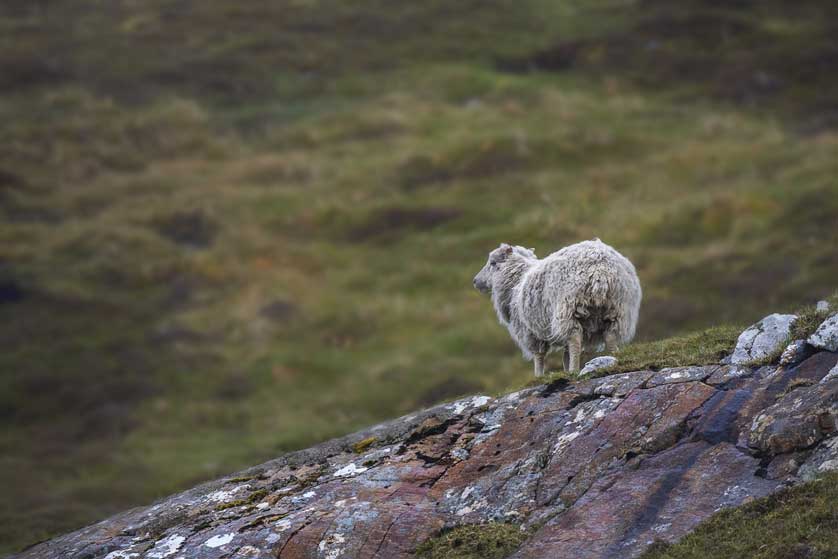
The removal of the trees growing on areas with infertile soils, combined with the grazing pressure initially from wild deer then from livestock, especially sheep, has reduced soil nutrients even further and has led to increased acidity.
Such conditions favour a suite of plants and animals more typical of cliff tops, rugged coasts and high mountain sides. Continued use, disturbance, and burning, maintain a habitat that would otherwise revert over time to woodland.
The plant life of these upland and moorland areas is distinctive and appealing, yet subtle and low-growing. Some species are so attractive that they are also widely cultivated, such as the Calluna and Erica heathers, while other moorland and upland species, such as those in the genera Empetrum, Vaccinium and Arctostaphylos (the crowberries, bilberries, cowberries, cranberries and bear berries) produce such rich crops of small edible fruits that they are popular with a wide range of animals, birds and of course people.
I have seen Red Fox, Whooper Swans, thrushes and even shorebirds gorging on these autumnal berries, and can personally vouch for the jams made from them too.
Birds
While the extent of heathland or moorland that exists today in Britain may have its roots in human activity, and depend on continued modification, the species that live there are entirely natural and wild.
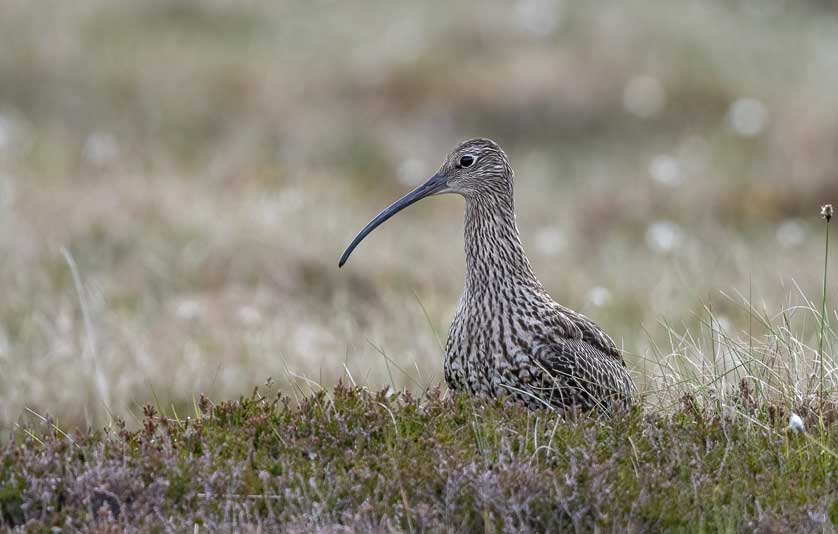
Birds such as the Northern Lapwing, Eurasian Curlew, Whimbrel, Golden Plover, Merlin, Ring Ouzel and Meadow Pipit all benefit from heather moorland.
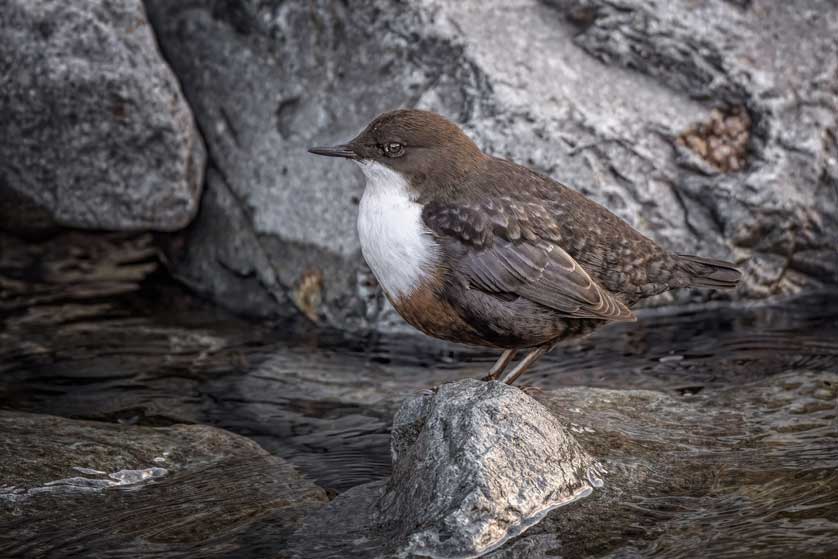
A typical approach to the uplands is along a river or stream valley, where the cool, fast-flowing water is the domain of the semi-aquatic White-fronted Dipper. This dapper bird is not merely at home in flowing freshwater, but completely dependent on it for its prey.
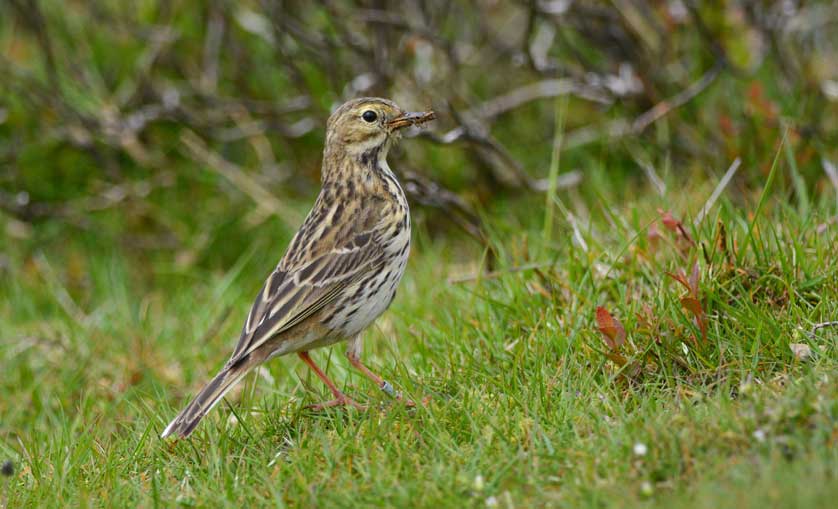
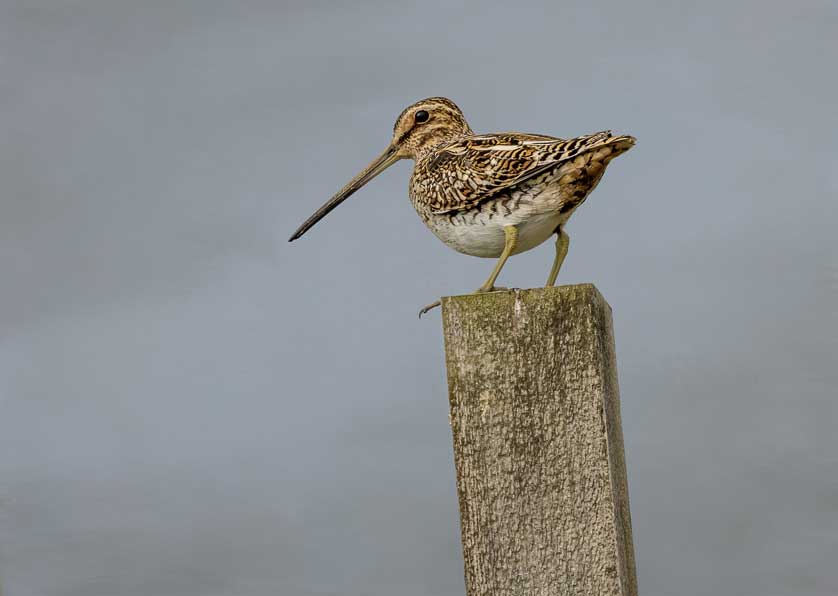
An early morning summer ramble across a moorland is to an accompaniment of Meadow Pipit song, curlews giving their bubbling courtship calls, and Common Snipe in their impressive display flights overhead.
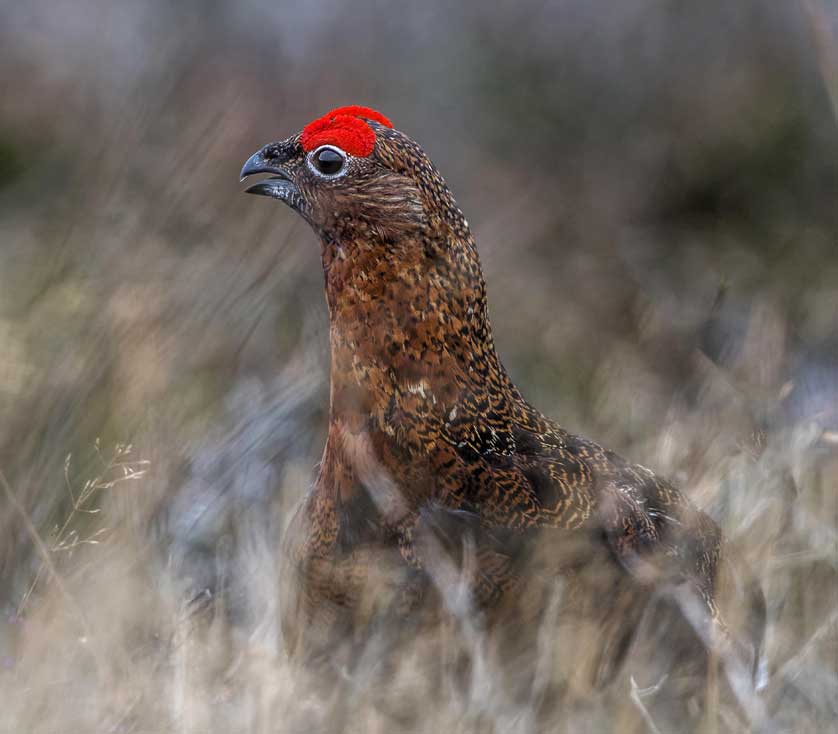
Red Grouse
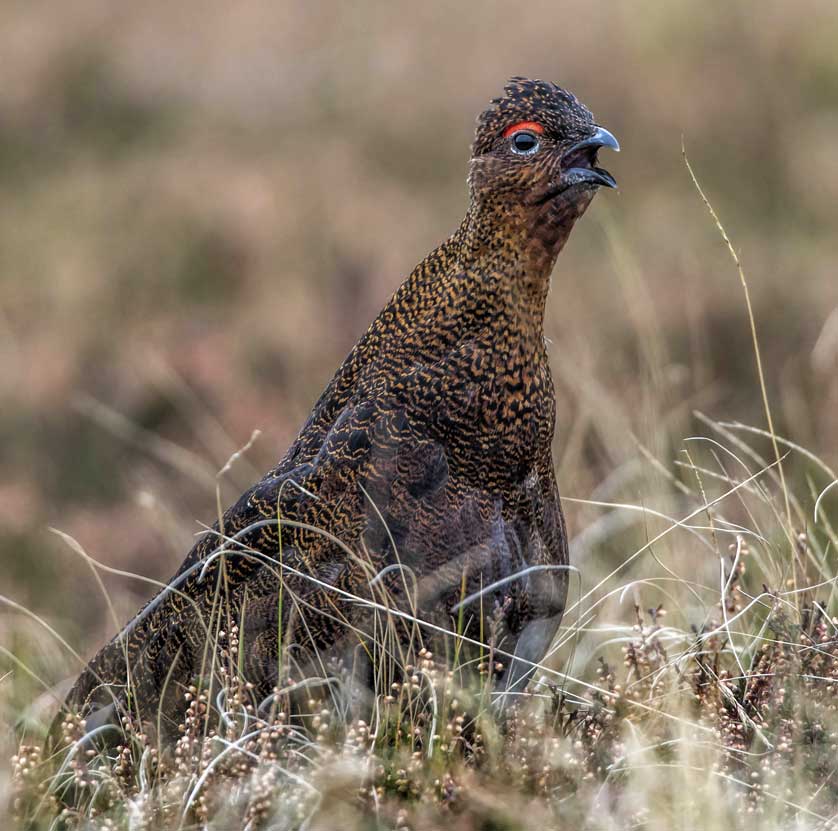
Once up on the moorlands you enter the realm of another dependency. One bird above all others is dependent on heather, and that is the Red Grouse. This bulky grouse is herbivorous and depends on the shoots, flowers and seeds of heather for almost all of its food, though it occasionally also takes the berries of other plants, and sometimes even insects.
There is no mistaking a grouse as no other bird of the uplands is portly (they weigh up to 750 g), short-billed and short-tailed, with reddish-brown plumage and a bright red wattle above its eyes.
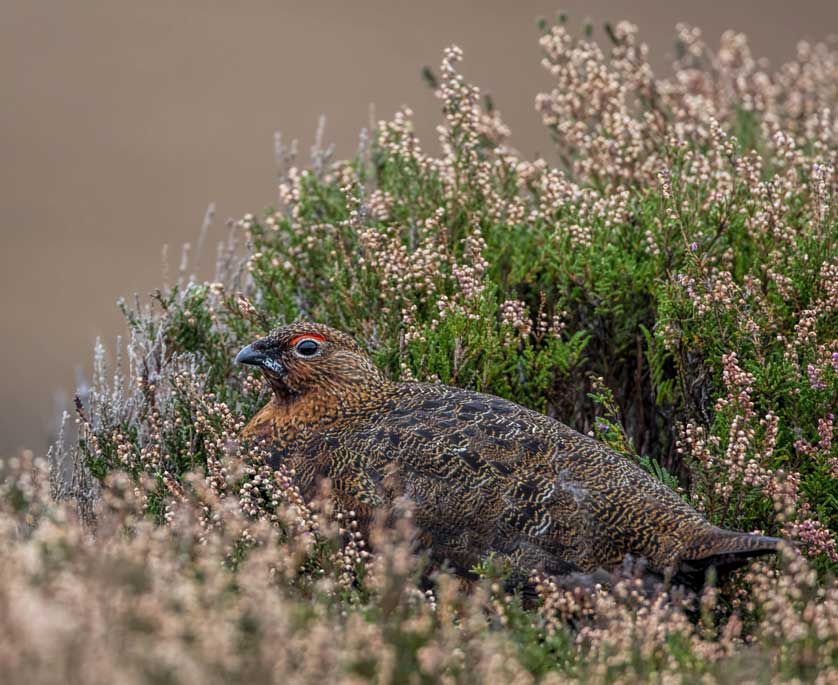
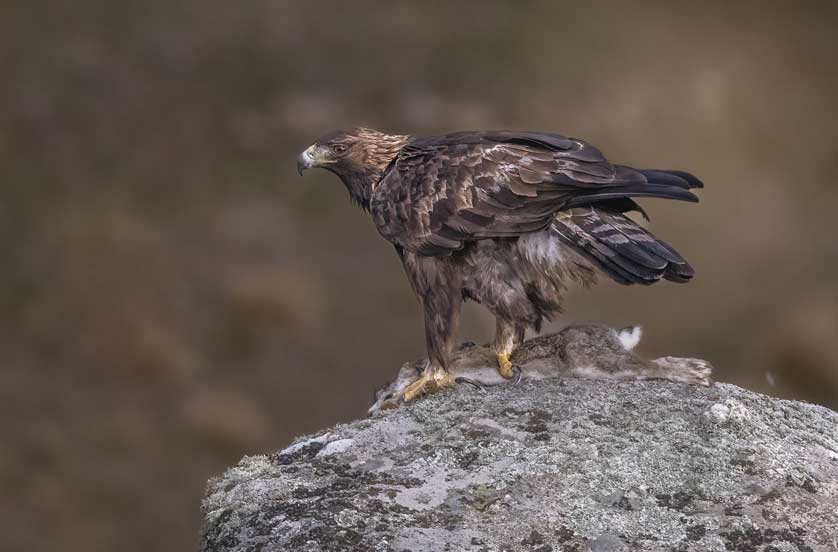
Grouse are mostly terrestrial, foraging as they wander amongst low-growing vegetation and avoiding flight unless absolutely necessary, but they burst suddenly from amongst the heather when disturbed, perhaps by a rider, a hiker, or a bird of prey such as an eagle passing nearby.
Witnessing a grouse breaking from cover can be truly startling, especially if the bird launches itself into the air when close by. It rises briefly on rapidly flapping and noisily whirring wings that span almost 66 cm, then seems to exhaust itself and intersperses long glides between rapid flaps as it continues onwards to its destination, often giving agitated calls as it goes.
The distinctive, guttural 'song' of the male Red Grouse consists of an accelerating series of nasal coughs, ending with a rolling rattling call, that can be transliterated as "go-back, go-back, go-back; grrrrrrrrrrrrr". This call is as much a sound of heather moorland as is the ever-present wind.
Footpaths
Easy access to the British countryside is made possible thanks to an extensive network of local and long-distance footpaths and trails that also extend through the national parks.
Walking is the ideal way of experiencing the nation's varied habitats including its miles of hedgerows and the special wildlife that call these protected areas home.
To experience the rugged uplands and brooding moorlands of Britain there are no places better than the Peak District NP, at the southern end of the Pennine Range, the world-famous Lake District NP (of William Wordsworth (1770-1850) and Alfred Wainwright (1907-1991) fame), with its almost alpine scenery and glacial lakes, Snowdonia NP in the northwestern corner of Wales, with glacial valleys and rugged peaks and mile-after-mile of paths along ridges and across moorland, or, the largest of them all, the spectacular Cairngorms NP of the Scottish Highlands.
Gallery
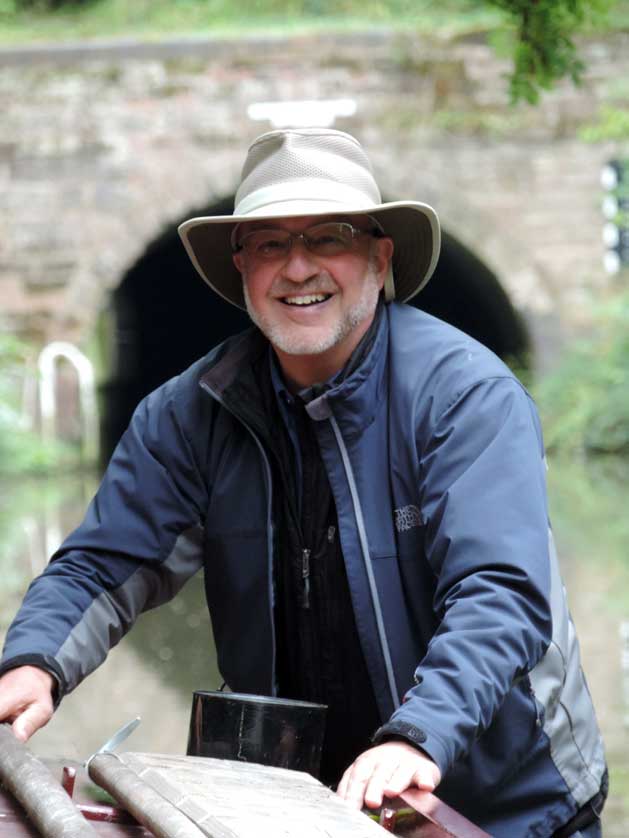
Mark Brazil, naturalist, author and expedition leader, grew up in the landlocked county of Worcestershire, but has lived in Staffordshire, Stirlingshire, Hertfordshire and Norfolk.
Among his favourite places he include the coasts and offshore islands of Britain, especially the remote isles of Scotland. Between leading international expeditions he currently resides in east Hokkaidō, Japan. His most recent book Wild Hokkaidō: A Guidebook to the National Parks and Other Wild Places of Eastern Hokkaidō was published in summer 2021.
Hotels in Britain
Book Hotels in Edinburgh - Booking.com
Find Hotels in Glasgow - Booking.com
Search Hotels in Orkney - Booking.com
Hotels in The Shetlands - Booking.com