UK Museums: Cardiff & South Wales Museums
Museums in Cardiff & South Wales
Cardiff is the capital of Wales and its largest city. As befits its status and size, Cardiff has a number of excellent museums.
The nearby Roman site of Caerleon, close to Newport, also has several museums dedicated to its Roman heritage.
See a listing of museums in and around Cardiff.
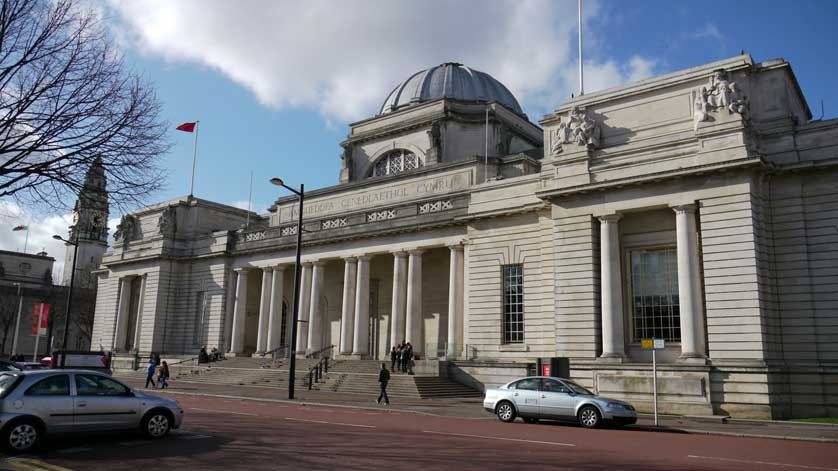
National Museum Cardiff
The National Museum Cardiff houses Wales's national archaeology, art, geology and natural history collections. Visitors can discover the history of humankind in Wales beginning with the Neanderthals in the archaeology gallery, 'Origins: in search of early Wales'.
The art collection is one of Europe's finest with five hundred years of magnificent paintings, drawings, sculpture, silver and ceramics, including one of Europe's best collections of Impressionist works. Visitors can also encounter dinosaurs and woolly mammoths and find out how life evolved in Wales.
One of the sculptures exhibited at the National Museum Cardiff is the 'Jenkins Vase'. The body of the vase is made from a round Roman altar that was transformed into a vase in the eighteenth century. The reliefs on the vase show the marriage of Paris, son of Priam of Troy, to Helen. Thomas Jenkins (1720-1798) probably bought this work in Naples in 1769.
Cathays Park, Cardiff CF10 3NP
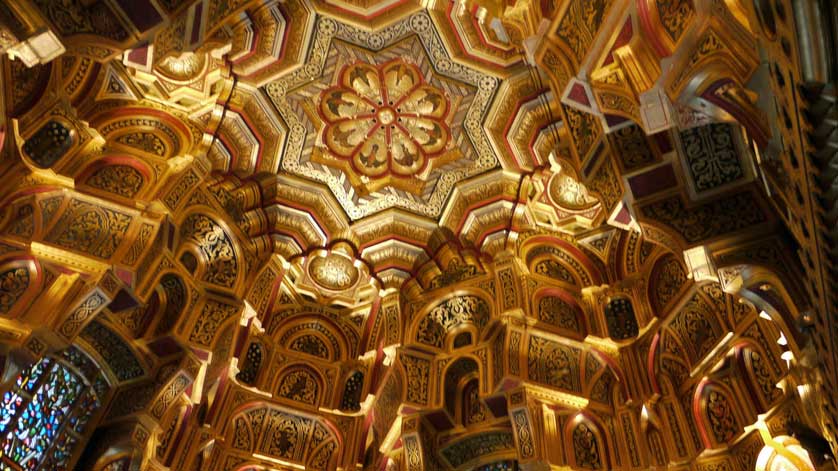
Cardiff Castle Apartments
From 1866, the 3rd Marquess of Bute employed the architect William Burges to transform the Castle Apartments at Cardiff Castle.
Inside the Gothic house, he created lavish interiors using murals, stained glass, marble, gilding and elaborate wood carvings. Each room has its own theme including Mediterranean, Italian and Arabian decoration.
William Burges is also responsible for the design of Cardiff Castle's Clock Tower.
Visitors to the Castle Apartments can tour the Banqueting Hall and Library which were designed and built by Burges on the site of the old medieval hall. The Banqueting Hall is the largest room in the castle. The Banqueting Hall has a lovely timber vaulted ceiling and the walls are painted with brightly coloured shields and murals depicting scenes from the Civil War.
The ornate ceiling of the Arab Room is a particularly impressive bit of wood carving and gold gilding.
Castle Street, Cardiff CF10 3RB
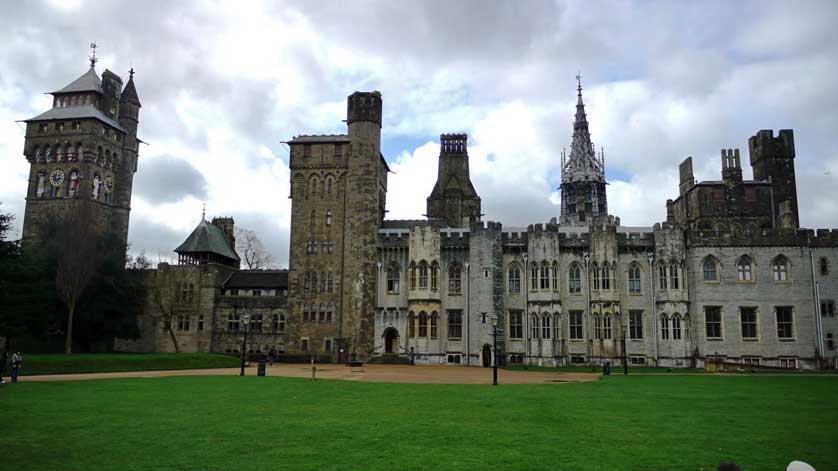
Cardiff Castle, Wales
Cardiff Castle is one of Wales' leading historical sites. Located in central Cardiff, the capital of Wales, the castle has a 2,000 year history.
The earliest history of Cardiff Castle dates to a Roman fort which was probably established on the site at the end of the 50's AD. The castle grounds were then a strategic site that afforded easy access to the sea. This fort was the first of four that occupied the present site. Remains of the Roman wall can be seen today.
After the Norman conquest, the Castle's keep was constructed on the site of the Roman fort. The first keep on the motte (probably built of wood) was erected by Robert Fitzhamon, the Norman Lord of Gloucester.
Cardiff Castle then passed through the hands of many noble families, and in 1766, it passed to the Bute family. The 2nd Marquess of Bute turned Cardiff into the world's largest coal exporting port. The Castle and fortune was inherited by his son John, the 3rd Marquess of Bute, who by the 1860's may have been the richest man in the world. The 3rd Marquess died in 1900 having transformed the Castle into a Welsh Victorian Camelot.
The Cardiff Castle Museum contains The Firing Line dedicated to The Queen's Dragoon Guards and The Royal Welsh. There are original photographs, uniforms (some of which you can try on) and weapons on display. The hands on museum follows the Welsh soldier from the battlefields of Waterloo, Rourke's Drift to more recently Iraq and Afghanistan.
Castle Street, Cardiff CF10 3RB
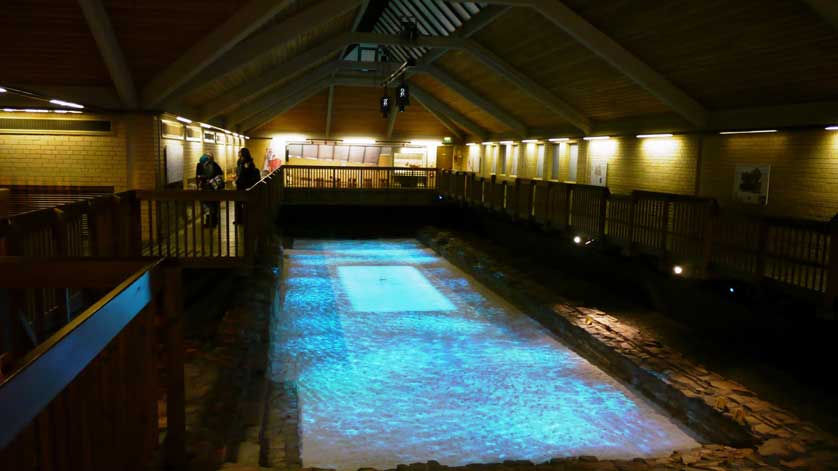
Caerleon Fortress Baths
Caerleon in Wales is the site of the Roman fortress of Isca. As part of that fortress, the Romans built a bath house and exercise facility. The ruins of these can be seen by visitors at the excellent Roman Baths Museum in Caerleon.
On entry visitors encounter the natatio (outdoor swimming pool) used by the Roman Second Augustan Legion. A projection system has been used to recreate the water and swimming Romans. The Fortress Baths exhibition also includes interactive computer games.
Other areas of the bath house including the apodyterium (heated changing rooms) and frigidarium (cold plunge pools) are also on view.
High Street Caerleon, Newport NP18 1AE

National Roman Legion Museum
The National Roman Legion Museum in Caerleon was built in 1850 and features exhibitions and artefacts showing how the Romans lived, fought, worshipped and died.
Wales was the furthest outpost of the Roman Empire in 75 AD, and the Romans built a fortress at Caerleon, Isca, that would guard the region for over 200 years. Caerleon was one of just three permanent fortresses in Roman Britain. The other two were in York and Chester. The museum lies inside what used to be the fortress.
Admission to the National Roman Legion Museum in Caerleon is free and the visitor is treated to a treasure trove of artefacts from Roman times. These include a mosaic floor and a reconstruction of a Roman barracks.
High Street, Caerleon, Newport NP18 1AE
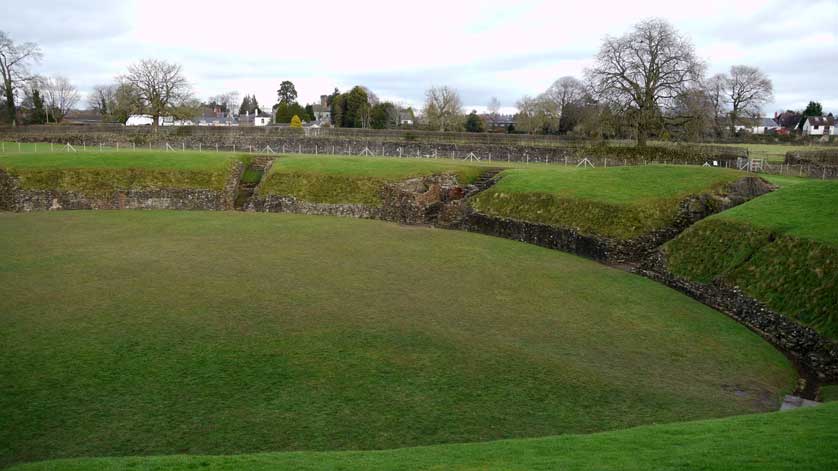
Caerleon Amphitheatre
The Caerleon Amphitheatre is the only fully excavated Roman amphitheatre in Great Britain. The amphitheatre was built in 90 AD and was maintained until its abandonment in the 3rd century when the Second Augustan Roman Legion departed to protect what remained of the diminishing Roman Empire.
The Roman Amphitheatre in Caerleon was built just outside the Isca fortress defenses.
The Caerleon Amphitheatre boasted eight vaulted entrances, a shrine possibly to the goddess Nemesis, and seating for up to 6,000 spectators.
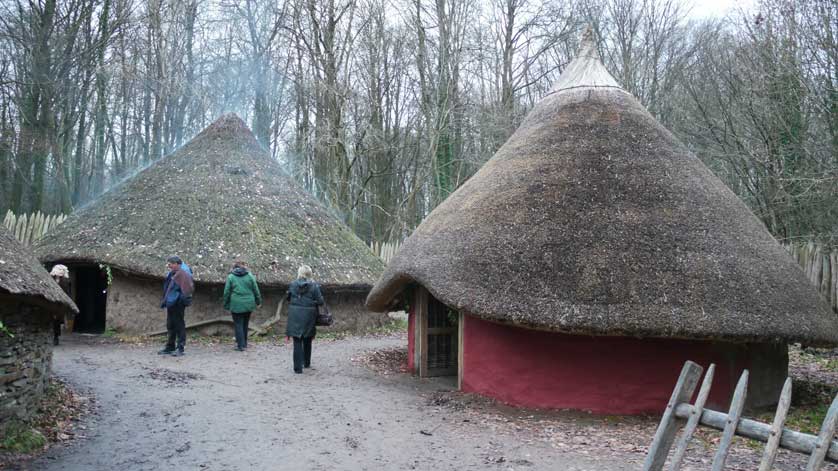
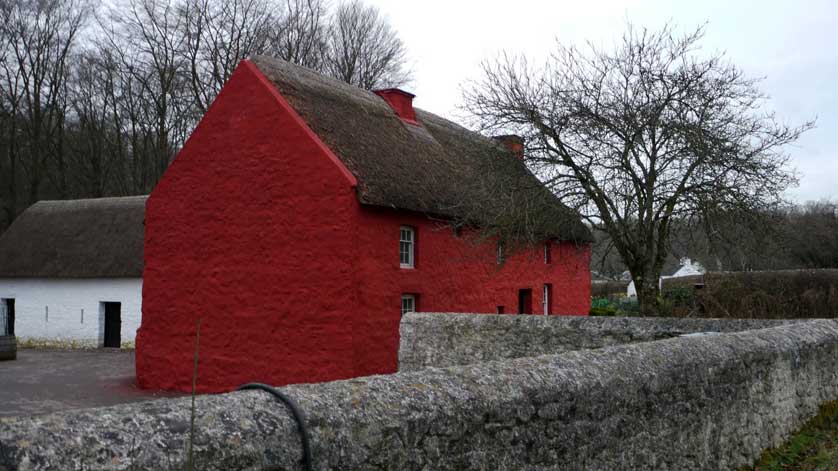
Museum of Welsh Life (St Fagans National Museum of History)
The Museum of Welsh Life (Sain Ffagan: Amgueddfa Werin Cymru) is also known as the St Fagans National History Museum. Open since 1948, the museum occupies the grounds of St Fagans Castle and gardens, a late 16th-century manor house donated to the people of Wales by the Earl of Plymouth.
Over the last fifty years, more than 40 buildings from different historical periods have been re-erected on the grounds of the museum. These structures include houses, a school, a farm, a church and a remarkable Workingmen’s Institute.
Another highlight is a replica of a Celtic village. Based on archaeological evidence uncovered in Wales, Celtic round houses have been recreated. The houses contain reproductions of Celtic furniture and the surrounding land showcases agricultural methods of that period.
Cardiff CF5 6XB
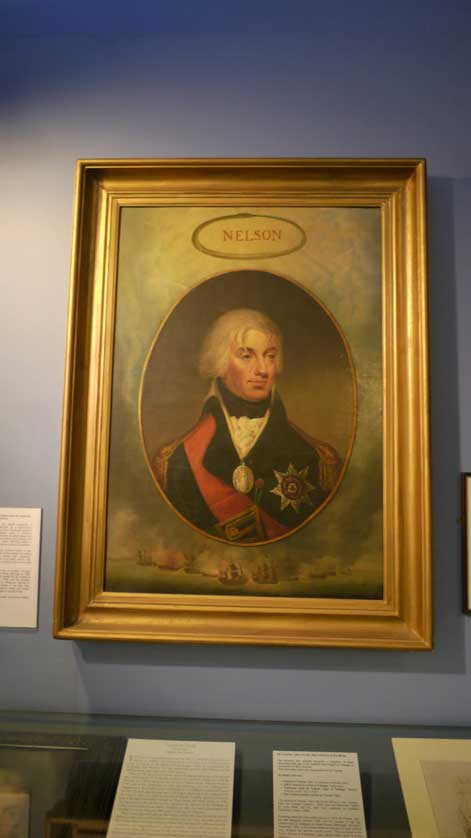
Monmouth Museum
The Monmouth Museum is a combination local history museum and Lord Nelson museum. The two museums were combined in their present location in 1969.
The local history museum celebrates well-known local figures such as Charles Rolls (of Rolls-Royce fame) and King Henry V, the victor of the Battle of Agincourt in 1415.
The centrepiece of the museum is the fourteenth-century Abbey Barn. The barn and the surrounding farm buildings as well as the courtyard contain displays which showcase local rural activities such as mud horse fishing, peat digging and cider making.
The Nelson collection at the museum features a fine selection of Lord Nelson memorabilia (including Nelson’s fighting sword) and outrageous forgeries such as Lord Nelson’s glass eye.
Market Hall, Priory Street, Monmouth NP5 3XA
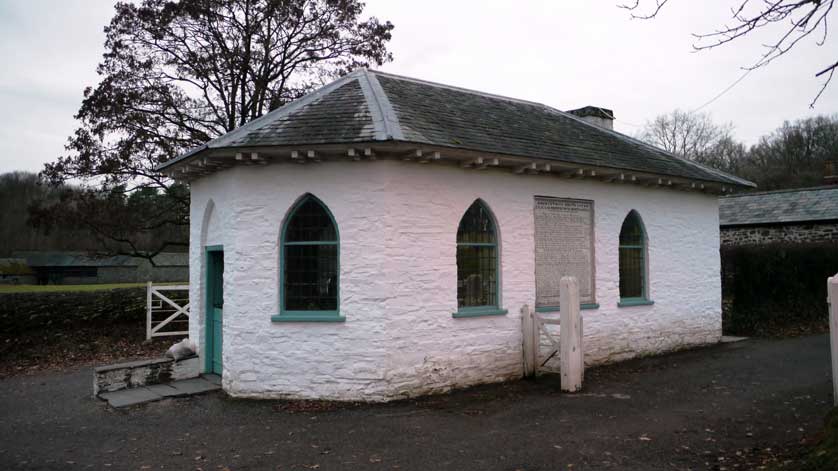
Tolldy Tollhouse
Until the late 18th century, Wales was notorious for the poor quality of its roads. In the late 18th century, local gentry began building private roads which charged tolls.
The Tolldy Tollhouse was built for the collection of tolls on one of those roads. The Tolldy Tollhouse was built in 1772 at Penparcau, Aberystwyth, Dyfed and belonged to the Aberystwyth District of Cardiganshire.
The tollhouses were very unpopular with travellers, especially with farmers who used them to carry lime to their fields, and this resulted in the Rebecca Riots of 1839-1843.
The Tolldy Tollhouse is on display at the Museum of Welsh Life.
Cardiff CF5 6XB

Norwegian Church Arts Centre
The Norwegian Church Arts Centre is a church built on Cardiff Bay for the many Norwegian sailors that visited Cardiff in days gone by.
Cardiff Port was once the world's largest exporter of coal in the world and ships from a range of countries came to pick up their cargo of coal.
The Norwegians built a church like one back home that is now an arts center and cafe with great views over the water.
The church has a Roald Dahl connection as Dahl's Norwegian parents held their son's baptism here.
Harbour Drive, Cardiff Bay, CF10 4PA
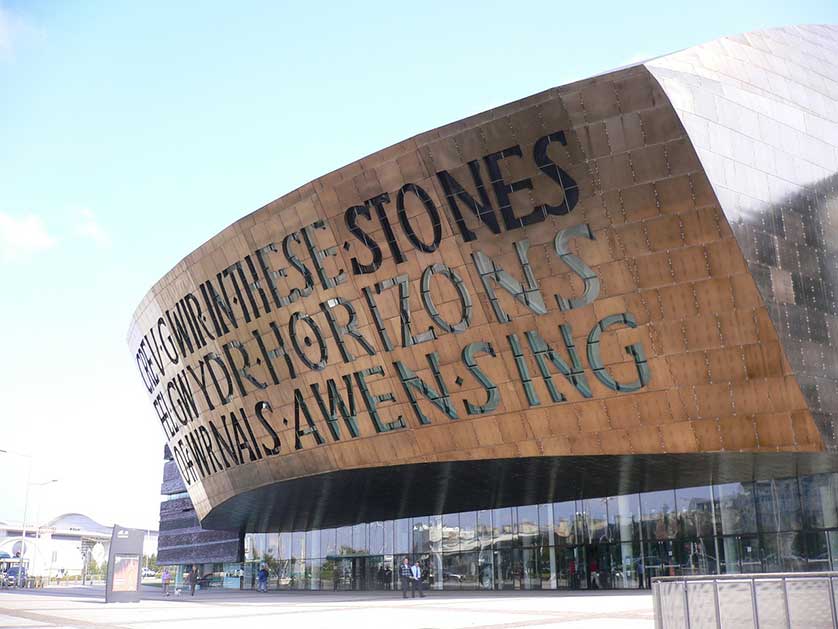
Wales Millennium Centre
Also in the Cardiff Bay area is the Wales Millennium Centre. It is is the major art centre in Wales and home to 8 resident organizations. These are the BBC National Orchestra & Chorus of Wales, Hijinx, Literature Wales, National Dance Company Wales, Touch Trust, Tŷ Cerdd, Urdd Gobaith Cymru (The Welsh League of Youth) and the Welsh National Opera.
Visitors to the Wales Millennium Centre can enjoy blockbuster West End musicals, opera, ballet and contemporary dance, hip hop and stand up comedy, art exhibitions, workshops, training days, free daily foyer performances, bars and restaurants. There are also regular behind-the-scenes backstage tours and more specialist technical and architectural tours.
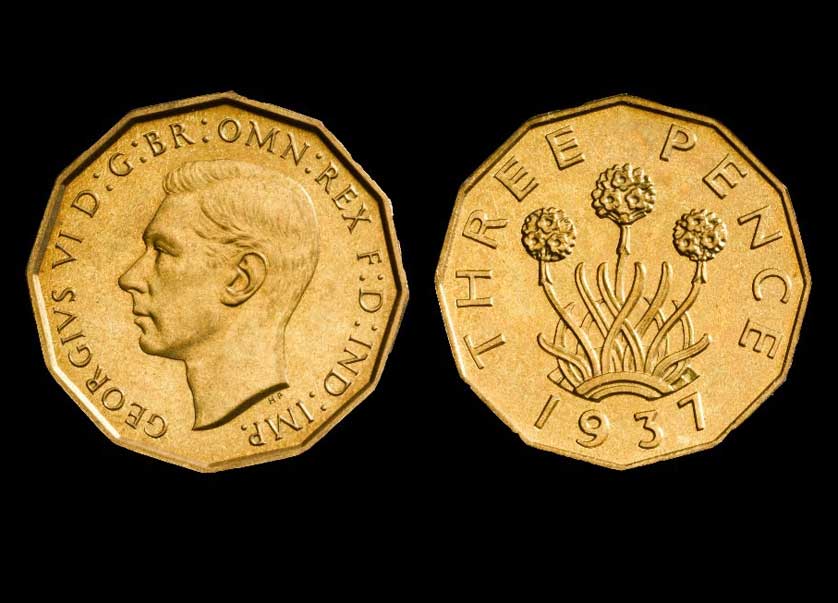
Royal Mint Museum
The Royal Mint Museum in Llantrisant, Pontyclun 14 miles northwest of Cardiff is an interesting resource on the history of money in Britain. It has a superb collection of coins from many different ages and different countries. Altogether the museum has a collection of around 80,000 coins from ancient Greece and Rome to the present day as well as coining presses and Olympic medals from the 2012 Olympic Games in London. It is located at the Royal Mint in Llantrisant.
Related
Stay in Wales
Book Hotels in Cardiff - Booking.com
Find Hotels in Swansea - Booking.com