UK Museums: London Museums & Art Galleries
Museums in London
London has some of the best and most famous museums and art galleries in the world.
One of the reasons visitors from all around the globe flock to the British capital is to see the British Museum, the National Gallery, Victoria & Albert Museum, Tate Britain and Tate Modern.
The city also has scores of other, less famous museums and art galleries which are also worthwhile depending on your particular interests.
See a listing of museums and art galleries in and around London.
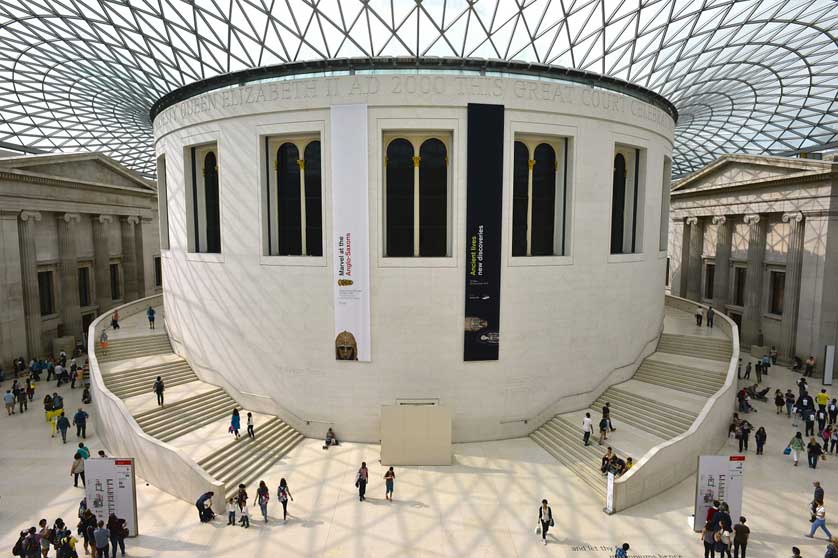
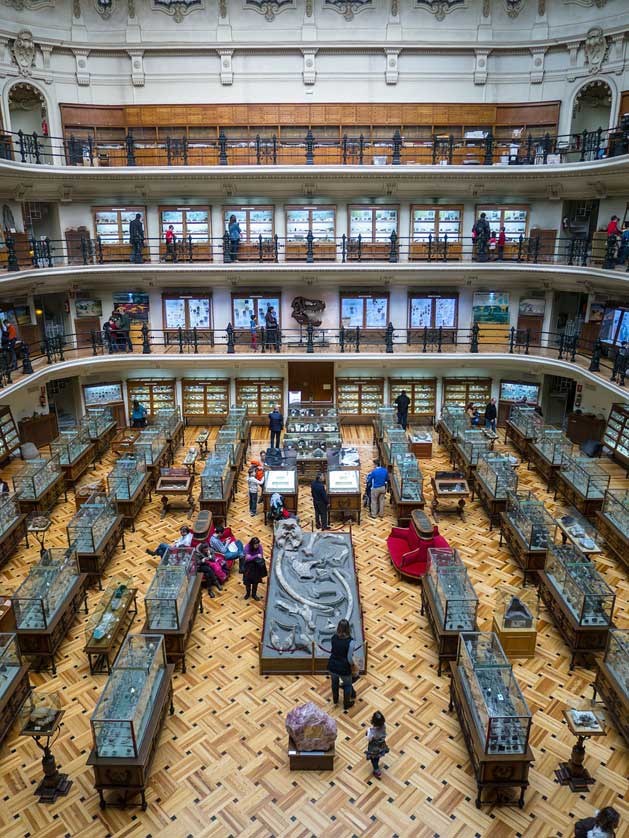
British Museum
The British Museum is one of London's most popular attractions and draws thousands of visitors from all over the world each day, with total visitors over 6 million a year.
A visit to the British Museum and its treasures is a must for most foreign and domestic visitors to the capital and the British Museum is also visited by thousands of UK school children on school trips each year.
The British Museum has its origins in the collection of Sir Hans Sloane (1660-1753), the Irish physician and collector who also founded the excellent Chelsea Physic Garden and after whom Sloane Square and Sloane Street in London are named.
The basic collection of manuscripts, books, natural history specimens and antiquities was increased by gifts, purchases, and arguably imperial theft and loot from Britain's empire over the following centuries.
The British Museum is the oldest public museum in the world and was founded in 1753. The Ashmolean Museum in Oxford is older but was begun as a private, university collection.
The main building and famous facade of the British Museum was designed by architect Robert Smirke (1780-1867) and now contains the Great Court designed by Sir Norman Foster and the Reading Room where Karl Marx, Mahatma Gandhi and George Bernard Shaw sought inspiration, read and wrote.
Collections at the British Museum include the popular Egyptian collection with its mummies and the Rosetta Stone, the Greek and Roman Collection, which contains the Portland vase and the controversial Parthenon Sculptures (Elgin Marbles) brought to Britain by Lord Elgin from the Parthenon in Athens and purchased by the British government in 1816. They are controversial as the Greek government would like to see them returned to Athens.
Other collections are the Asian Collection with many Hindu and Buddhist works of art, Chinese ceramics and Japanese wood block prints, Coins and Medals, the Enlightenment, the Middle Eastern Collection with the world famous Assyrian reliefs from Nineveh and two 7th century BCE human-headed bulls from Khorsabad, the Europe Collection (Lindow Man & the Sutton Hoo Ship Treasure), the African Collection (Benin Bronzes seized by the British in 1897), the Americas Collection and the World Collection.
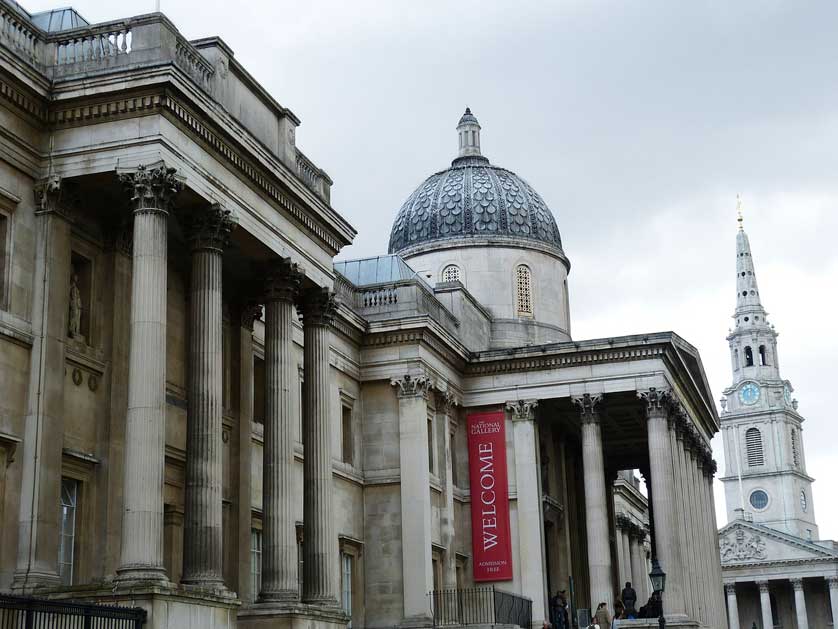
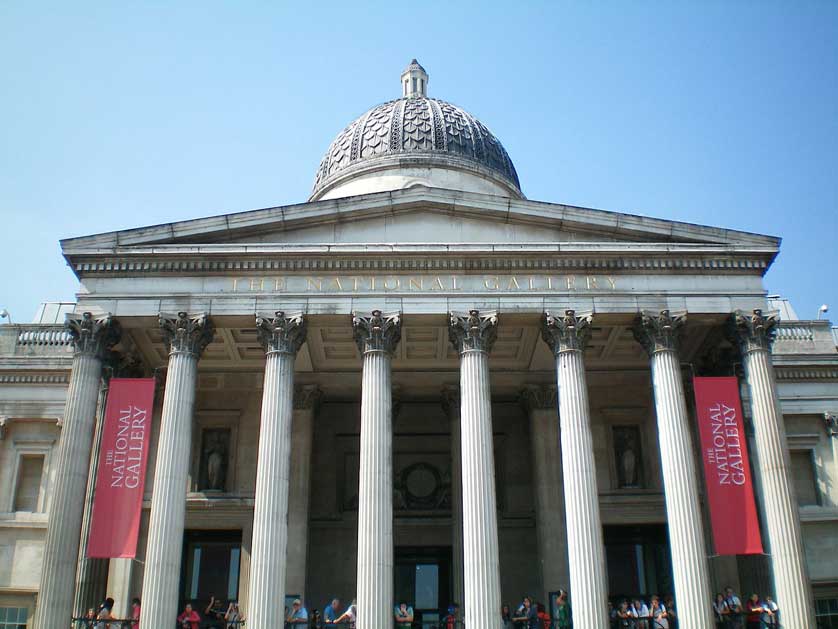
National Gallery
The National Gallery, along with the nearby British Museum, is one of London's richest repositories of classical art.
Located on the north side of Trafalgar Square in the center of London, the National Gallery holds over 2,300 paintings dating from the mid-13th century to the early 20th century.
The National Gallery was founded in 1824 when the British government of the day purchased the 38 painting collection of the businessman John Julius Angerstein (1732-1823) on his death. Later private donations added to the size of the collection and gifts account for two thirds of the paintings on display or in storage.
The building on Trafalgar Square was designed by William Wilkins and constructed between 1832 and 1838. Only the façade is original from this time as the National Gallery underwent a series of demolitions, renovations and extensions over time including the Neoclassical Barry Rooms by Edward Middleton Barry and central staircase and entrance hall designed by James Taylor in the late 19th century.
Collections at the National Gallery cover the period between the mid-13th century to the early 20th century with all the major traditions of Western European painting represented from religious art of the 13th-15th centuries to Renaissance Italy to the French Impressionists.
The paintings of the 13th to 15th century include works by Bellini, Botticelli, Dürer, Mantegna, Memling, Lippi, Uccello and van Eyck. The 16th century is represented by paintings by such great painters as Bruegel, Holbein, Leonardo da Vinci, Michelangelo, Raphael and Titian. Caravaggio, Poussin, Rembrandt, Rubens, Van Dyck and Velázquez and Vermeer are some of the artists representing the 17th century. Works from the 18th to early 20th century are by such artists as Canaletto, Cézanne, Constable, Degas, Goya, Monet, Turner and Van Gogh.
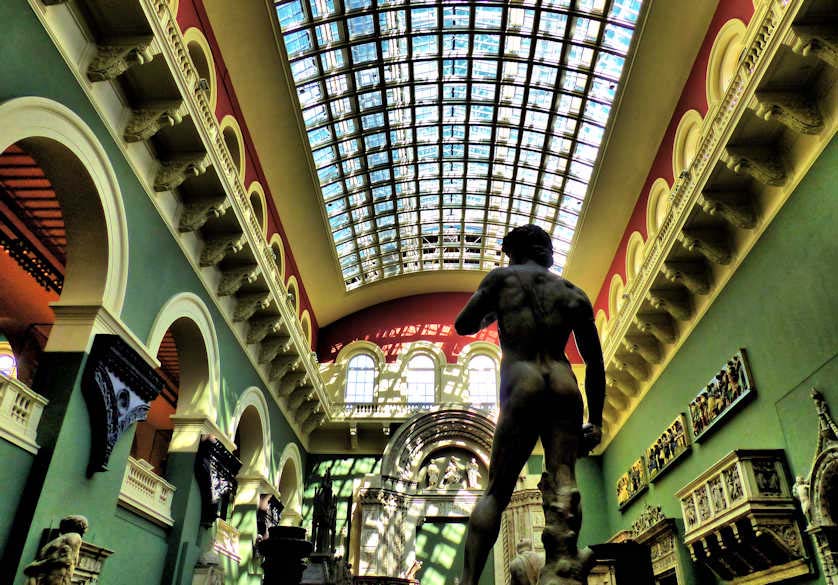
Victoria & Albert Museum
The Victoria & Albert Museum in Kensington is quite simply one of the best museums anywhere in the world.
It is also one of the biggest art museums around with a collection of more than 2.27 million objects.
Covering more than 12 acres, if you were to spend just 5 minutes in each of its 145 galleries it would take you more than 12 hours to see everything, which is why it is best to plan on at least a day for a visit, if not more.
The focus of the museum's collection are on applied and decorative arts and sculpture. It tries not to overlap too much with other major collections, for instance objects from the classical world of the West and the Ancient Near East will be found at the British Museum, and Western paintings will be at the National Gallery.
The exhibitions cover all of history from 5,000 years ago up until contemporary times, and cultures from most parts of the globe are included.
Best of all it's free though donations are welcome.
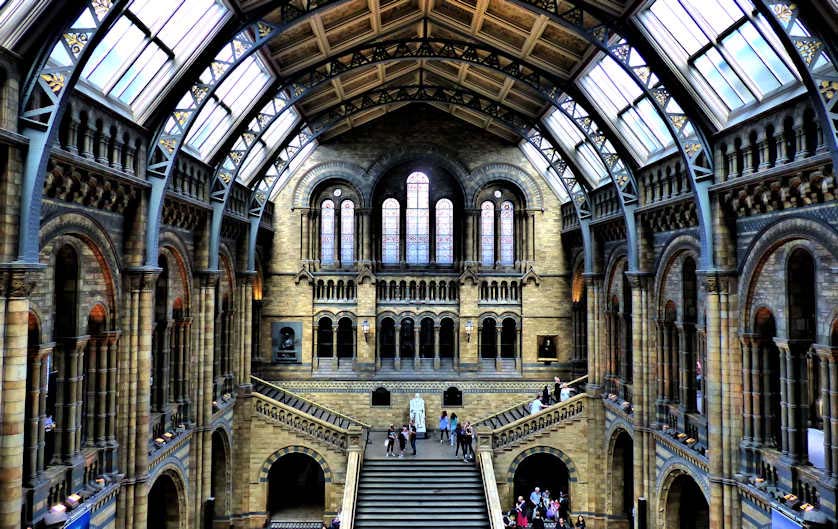
Natural History Museum
The Natural History Museum is a must see destination for people of any age but especially for those with kids.
Originally the Natural History department of the British Museum, the department's collections outgrew its space and a new building was called for.
Alfred Waterhouse (1830-1905) ended up designing the building we see now which is a combination of architectural styles including Romanesque and Neo-Gothic. The building is particularly known for its carved terracotta tiles and bricks.
Waterhouse was also the architect of Manchester's Town Hall and the Manchester Museum.
In 1963 the museum officially separated from the British Museum but did not change the name to Natural History Museum until 1992.
In 1976 the museum expanded by absorbing the neighboring Geological Museum which is now renamed the Earth Galleries with the original Waterhouse museum renamed Life Galleries.
Parts of the museum are fairly traditional, with display cases of specimens, but many exhibits are modern and utilize the latest technology to make for more interactive experiences.
The museum covers five major life sciences, botany; the science of plant life, entomology; all about insects and creepy crawlies, mineralogy; a part of geology, paleontology; all about fossils, and of course zoology, the study of animals of all kinds.
The layout of the museum is divided into four zones with a bit of an overlap in content. From the vast reaches of space and the origin of our earth down to the microscopic organisms that make up our world, there is no part of our natural world, including ourselves, that is not covered in the many thematic exhibitions.
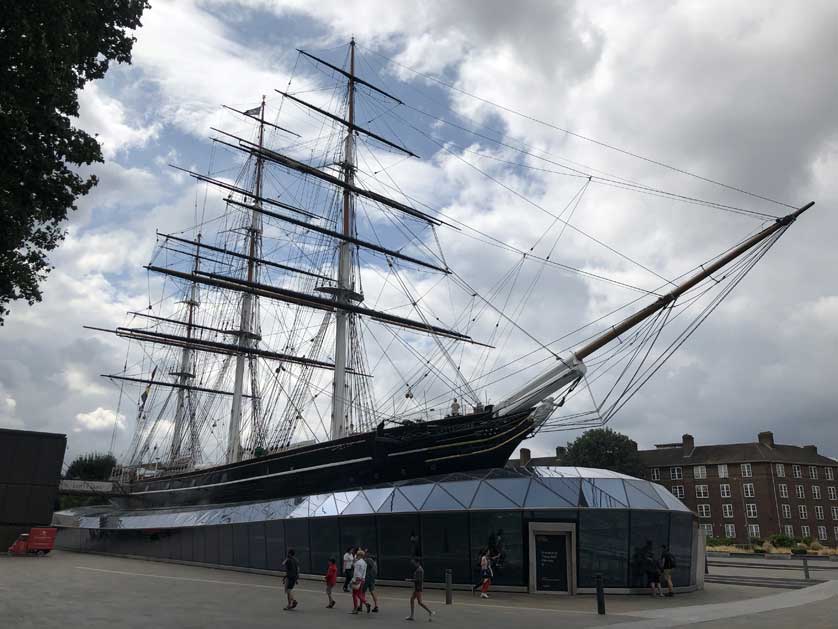
Cutty Sark
The Cutty Sark in Greenwich was one of the fastest clippers in the world when it was launched in 1869 once making the trip from China carrying tea in just 107 days and from Australia, transporting wool, in a mere 83 days.
After a long and varied career, the vessel was placed in dry dock in Greenwich in 1954.
Since the Cutty Sark reopened in April 2012, visitors can now enjoy exploring her decks, visit the cargo hold and partake of refreshments in the Even Keel Café.
Dr Samuel Johnson's House
Dr Samuel Johnson's House near St Paul's Cathedral and across the River Thames from the Globe Theatre is now a museum dedicated to the great man of English letters and the first lexicographer of the English language.
It was in the garret of this house that Samuel Johnson (1709-1784) compiled his great comprehensive dictionary of the English language.
The house, which is believed to have been built in 1700, has been fully restored and includes period furnishings, paintings, wood panels and a pine staircase. Dr Johnson's House offers educational workshops to students from primary school to university.
Freemasons' Hall
Freemasons' Hall in the Covent Garden area of central London is the HQ of the United Grand Lodge of England. A lodge has been present on Great Queen Street since 1775. The present building is the third to stand on the site and was built between 1927-1932 to honour the over 3,000 freemasons killed in the First World War.
Freemasons' Hall was designed by British architects Henry Victor Ashley and F. Winton Newman. It is a Grade II Listed Building and considered an art-deco jewel of London's architecture.
Freemasons' Hall contains the Grand Temple and 23 other masonic temples, all of them done in differing styles of decoration. The building also holds a library and museum which hosts frequent exhibitions. The building has often been used in the making of TV dramas and films.
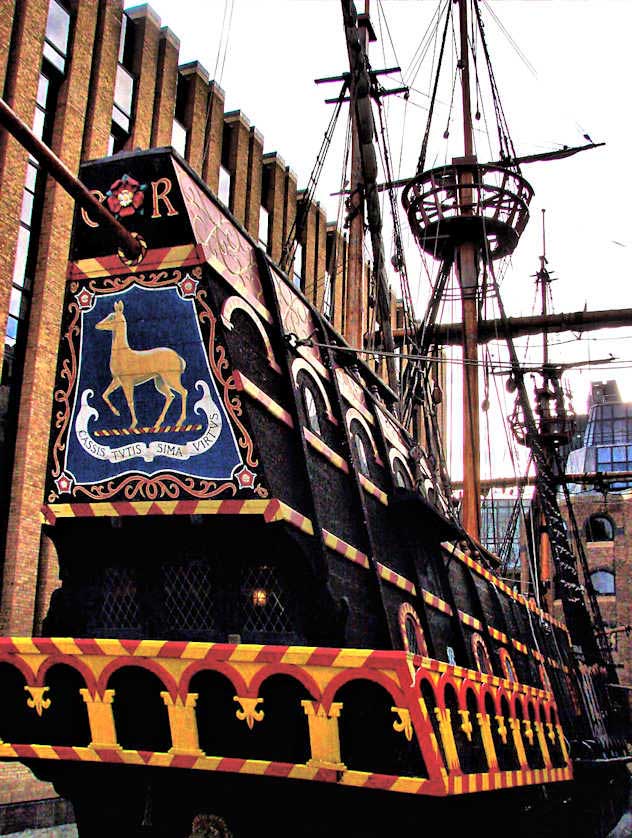
Golden Hinde
The Golden Hind was an English galleon known mostly for its circumnavigation of the globe from 1577 to 1580 captained by Sir Francis Drake.
Since 1996, a full-size replica called the Golden Hinde has been moored at St. Mary Overie Dock in Southwark, and is open to the public. She was constructed between 1970 and 1973 and was built using traditional methods.
The vessel is fully seaworthy and in fact, has sailed more than 140,000 miles including a complete circumnavigation of the globe.
For a very reasonable price, you can either wander and explore the ship by yourself or take a guided tour. Staff dressed in period costume explain the functions of the various parts of the ship, recount tales from her voyages, and explain what life aboard such a wooden vessel was like.
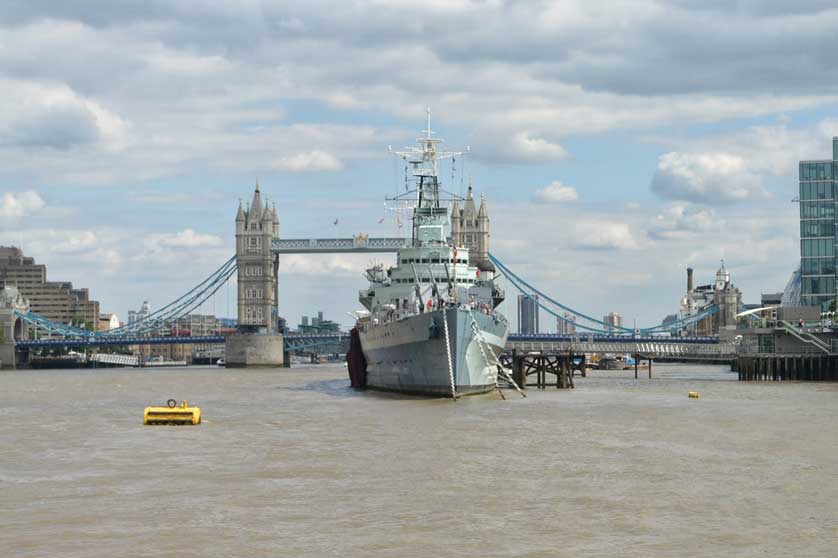
HMS Belfast
HMS Belfast on the River Thames is a preserved Royal Navy warship near Tower Bridge. HMS is part of the Imperial War Museum which has three facilities in London (Imperial War Museum London, HMS Belfast and the Churchill War Rooms), one at Duxford in Cambridgeshire and the Imperial War Museum North in Manchester.
HMS Belfast is a cruiser that was launched from the Harland and Wolff shipyard in Belfast (home of the Titanic) in 1938. The warship saw action in World War II in both the Atlantic and Pacific theaters as well as the Korean War in the 1950's.
Due to a private initiative by the HMS Belfast Trust the ship was saved from the wrecker and was opened to the public in 1971, becoming part of the Imperial War Museum in 1978.
Nine decks aboard the 187 metre-long ship are open to the public and give an idea of what life was like for the 950 sailors on HMS Belfast.
The ship's mechanical systems below the waterline can also be seen as well as the upper deck including the bridge, gun platform, and the main operations room. The horsepower of the mighty ship is equal to around 1,000 private cars.
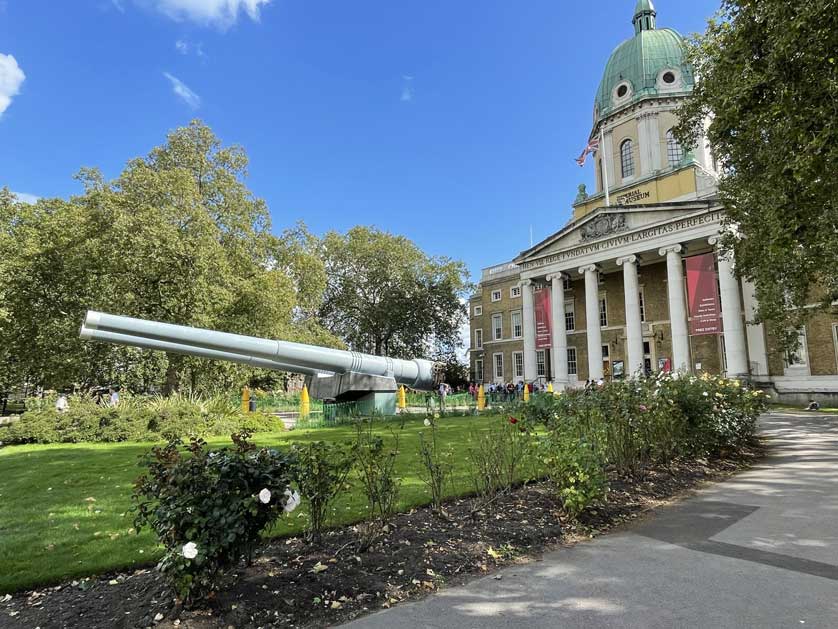
IWM London
The Imperial War Museum London is a national museum dedicated to the history of conflict from World War I to the present day involving involving British and Commonwealth forces. The museum incorporates interactive displays and multimedia technology to engage visitors and provide a deeper understanding of the impact of war on individuals and societies.
The vast collection is grouped in eight permanent galleries. These displays are Witnesses to War, the Holocaust Galleries, Peace and Security: 1945 - 2014, First World War Galleries, Second World War Galleries, the Lord Ashcroft Gallery: Extraordinary Heroes, the Blavatnik Art, Film and Photography Galleries and Turning Points: 1934 - 1945. On display are weapons, uniforms, vehicles, and artwork. The IWM London also features an impressive collection of photographs, letters, and personal testimonies that provide insights into the experiences of individuals during wartime.
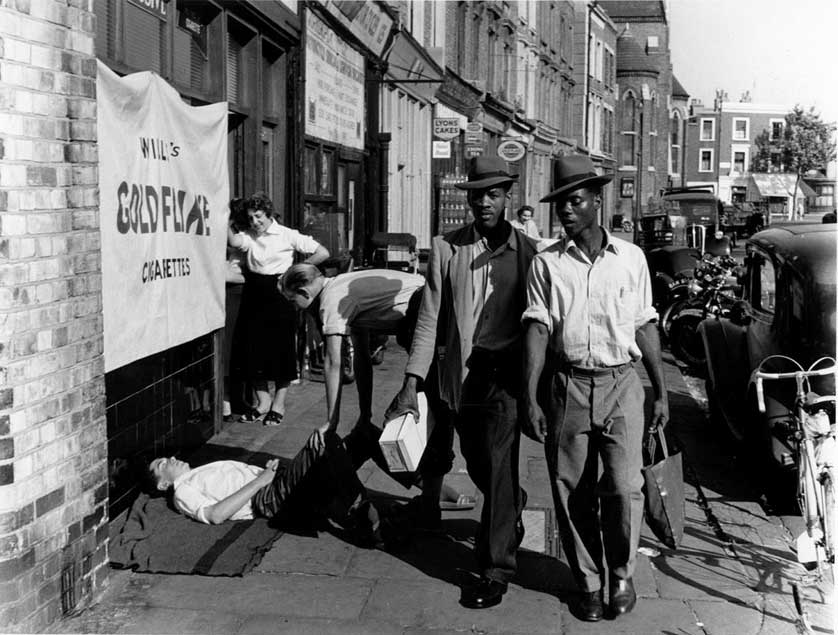
Museum of London
The Museum of London near the Barbican Centre is a huge, free to enter museum devoted to the history and culture of the UK's capital city from pre-historic times to the present day. The museum has something on offer for all members of the family and is particularly aimed at school children and young adults. The museum will be moving in 2024 to a new site in West Smithfield. The present structure will be demolished and replaced by a concert hall to house the London Philharmonic Orchestra. The museum has a collection of more than 6 million objects making it the largest collection of urban history in the world. Inside are a number of permanent galleries.
The Museum of London Docklands is housed in a 19th-century Grade I listed warehouse near Canary Wharf on the Isle of Dogs. The museum focuses on the history of London as a port from its origins as a Roman trading station to, at one time, the world's biggest port.
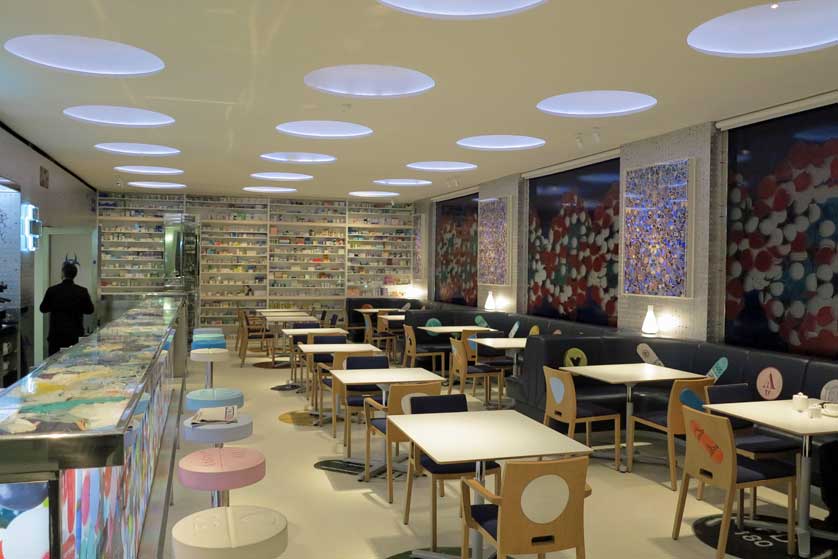
Newport Street Gallery
Newport Street Gallery is the brainchild of British artist Damien Hirst. It opened in 2015 in a former carpentry and scenery workshop for London's theatres in Vauxhall, south of the river.
The building was redesigned by the architectural firm Caruso St John and won the the RIBA Stirling Prize in 2016. The gallery is spacious, minimalist and on two levels.
The gallery showcases Hirst's private art collection as well as staging temporary exhibitions. Hirst's Murderme collection has over 3,000 works including many pieces of what became known as "Britart". These include pieces by such artists as Francis Bacon, Banksy, Tracey Emin, Richard Hamilton, Jeff Koons, Sarah Lucas, and Haim Steinbach.
The Pharmacy 2 bar was designed by Hirst and is a revival of his Pharmacy restaurant that was once a hip eatery in the Notting Hill of the 1990's.

Royal Academy of Arts
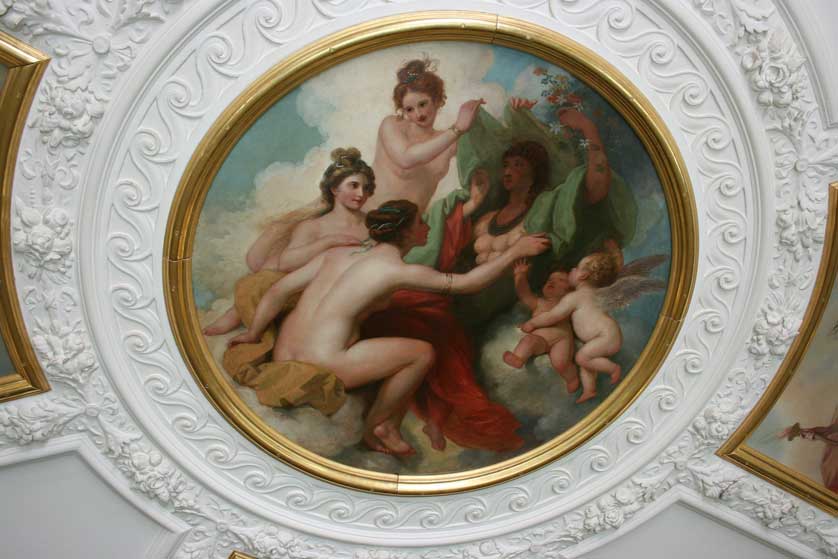
The Royal Academy of Arts was founded in 1768 and is situated in Burlington House, where it relocated a century later in 1868.
Dedicated to the visual arts, the Royal Academy was the brainchild of sculptor Henry Cheere.
As well as displays of both modern and classical art, the Royal Academy holds regular lectures and debates on art, architecture and design.
Its temporary and summer exhibitions of mainly contemporary art draw thousands of visitors. One of the most famous and controversial was "Sensation" back in 1997 showcasing the art of Young British Artists owned by Charles Saatchi.
Royal Museums Greenwich
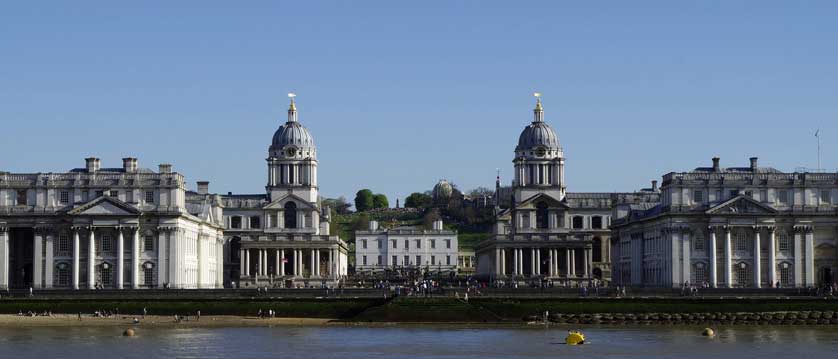
In 2012, the National Maritime Museum, the Queen's House, the Royal Observatory and the Cutty Sark joined together under a new name: Royal Museums Greenwich. The former, the world's largest maritime museum, presents visitors with inspirational stories and breathtaking accounts of discovery and adventure connecting Britain's maritime past with life today.
Royal Observatory
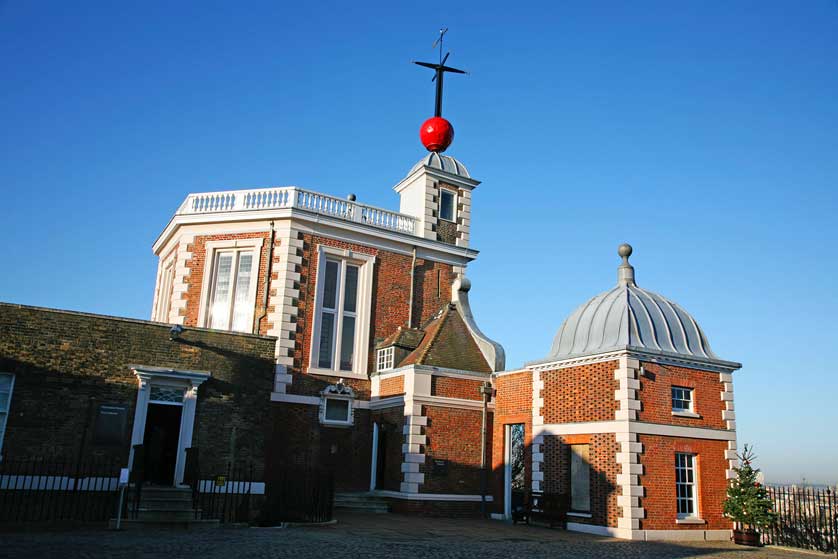
For many years Greenwich lay at the forefront of maritime and scientific innovation. Situated on a hill in Greenwich park, with great panoramic views of the River Thames and Canary Wharf, the Royal Observatory played a major role in the history of astronomy and navigation.
This led to the adoption of the Greenwich Meridian - a line of longitude which encircles the Earth at 0° - and Greenwich Mean Time being adopted as world standards. While the scientific work of the observatory was relocated elsewhere in the first half of the twentieth century, the site is still maintained as a tourist attraction.
While an admission charge applies to parts of the Royal Observatory site, including the Meridian Line Courtyard, some areas are still free of charge, including six astronomy galleries, a science and astronomy education centre, and the Peter Harrison Planetarium.
Among the exhibits are a 4.5-billion-year-old meteorite and a bronze cone, part of the building, tilted at 51.5 degrees (the latitude of Greenwich) that points to the North Star. Separate admission charges apply to the excellent daily shows in the only public planetarium in the UK, which include "Sky Tonight Live," a tour of that night's sky with a Royal Observatory astronomer.
The Saatchi Gallery
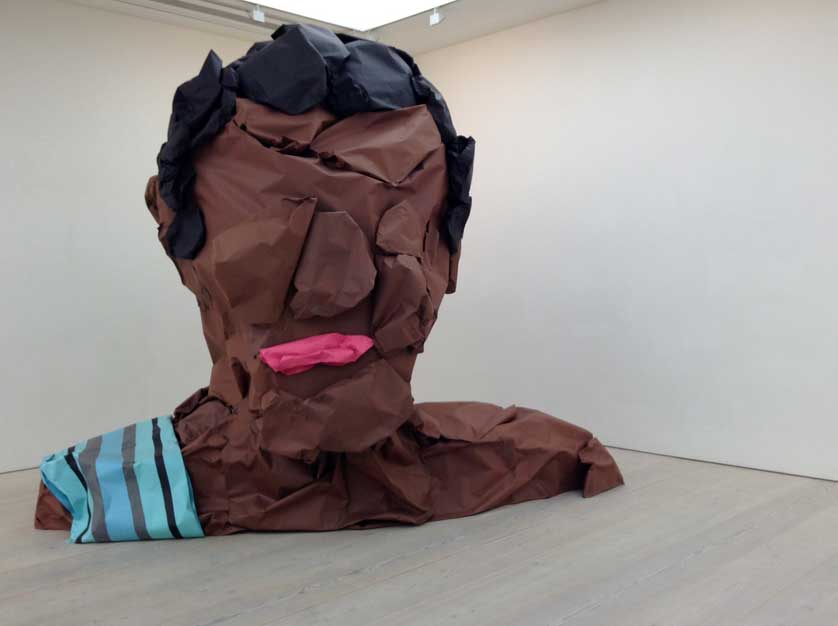
The Saatchi Gallery in Chelsea was opened by the collector Charles Saatchi in 1985 to display his superb collection of contemporary art to the public.
Saatchi's collection is now housed in Chelsea in part of the 19th century Duke of York's Headquarters. The original Saatchi collection began in St John's Wood. It moved to the County Hall on the South Bank before relocating to its present site in 2008.
The Saatchi Gallery has a reputation for exhibiting unknown or little-known artists and is at the forefront of the contemporary art scene in the UK. Many of the artists shown at the Saatchi gallery often go on to enjoy international fame.
The gallery is free to visit and is open 7 days a week from 10 am-6 pm.

Science Museum
The Science Museum is a huge, free to enter, museum devoted to science and technology suitable for all members of the family. It is visited by more than 3 million people a year, making it the most-visited science museum in Europe. Though located in an early 20th century building, the interior is sleek and modern. It is located on Exhibition Road in South Kensington, just a stone's throw from both the Natural History Museum and the Victoria & Albert Museum.
Serpentine Gallery
The Serpentine Gallery in London's Kensington Gardens/Hyde Park is dedicated to modern art.
The Serpentine Gallery opened in 1970 in a 1930's brick pavilion in Kensington Gardens.
The gallery has hosted exhibitions by some of the world's most famous contemporary artists including Andy Warhol, Paula Rego, Anish Kapoor, Damien Hirst and Gustav Metzger.
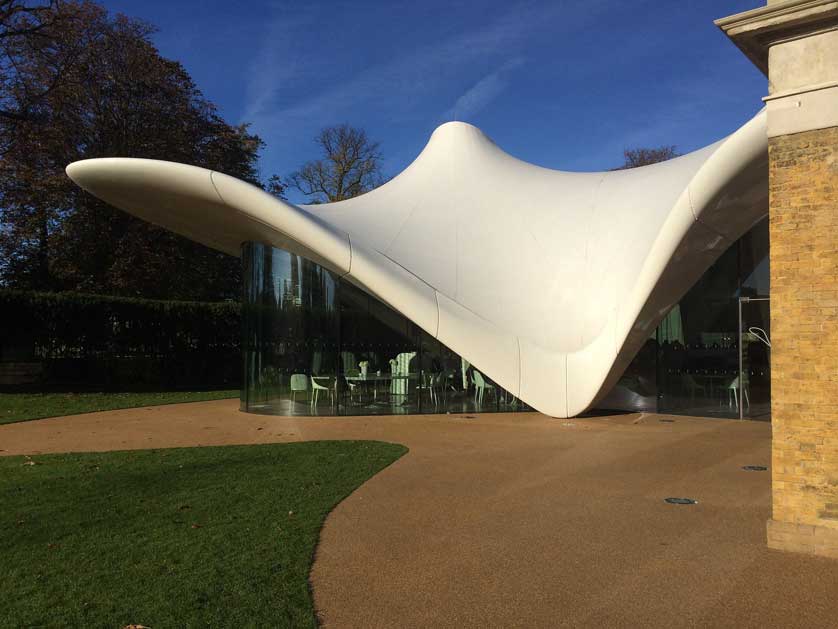
The Serpentine Gallery's lawn space hosts an annual architectural piece by a different architect each year.
The British artist and poet Ian Hamilton Finlay's memorial work dedicated to Princess Diana is located at the entrance to the Serpentine Gallery - a series of eight benches and a carved stone circle.
Serpentine Sackler Gallery
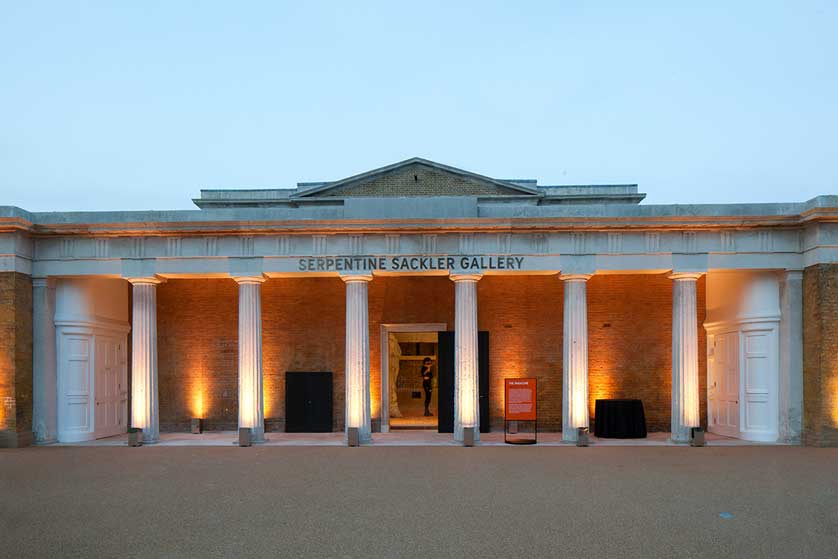
Five minutes walk from the Serpentine Gallery is the Serpentine Sackler Gallery.
With 900 square metres of new gallery, restaurant and social space, the eye-catching structure in Kensington Gardens is a popular cultural destination in the heart of the city. Designed by Zaha Hadid the gallery offers a mix of contemporary art, architecture, dance, design, fashion, film, literature, music, performance and technology.
Sir John Soane's Museum
The Sir John Soane's Museum in Lincoln's Inn Fields is a house built by John Soane (1753-1837) after he acquired numbers 12, 13 and 14 Lincoln's Inn Fields and extended his property to house his growing collection of art and antiquities.
The museum houses a research library containing Soane's collection of 30,000 drawings and 10,000 books as well as a small shop.
Sir John Soane was a leading British architect and art collector of his day. Born in Goring, the son of a bricklayer, Soane eventually came to study architecture at the Royal Academy, winning a scholarship which enabled him to travel and study in Italy.
The museum is open Tuesday - Saturday, 10 am - 5 pm; admission is free.
Tate Britain
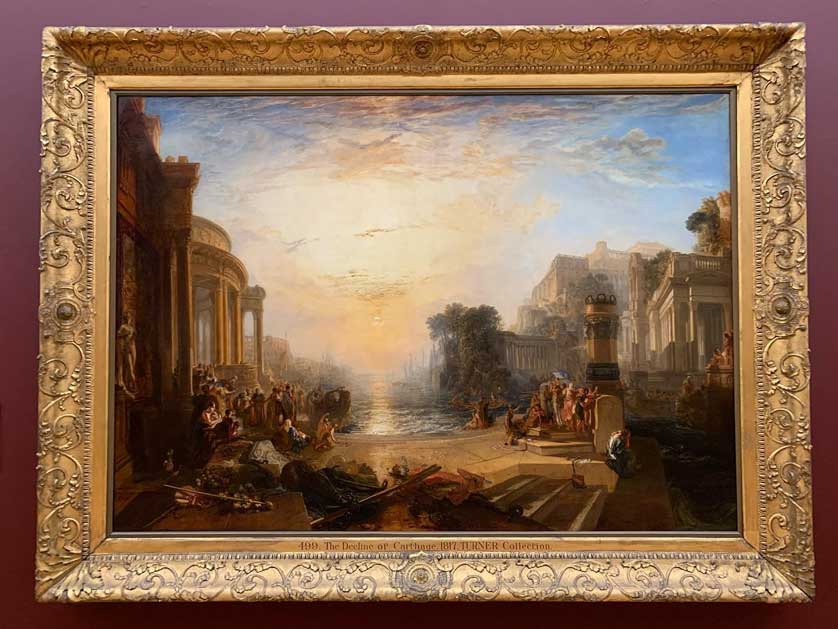
Tate Britain in Millbank on the banks of the River Thames was formerly the Tate Gallery. It is one of several Tate galleries in Britain including Tate Modern, also in London, Tate Liverpool in Liverpool and Tate St Ives in St Ives, Cornwall. Tate Britain's collection focuses on mainly British art since the Tudor period. It has an extensive collection of the works of J. M. W. Turner who left his own collection on his death to the nation. The annual, usually controversial, Turner Prize hosted by the Tate is named in his honour.

Tate Modern
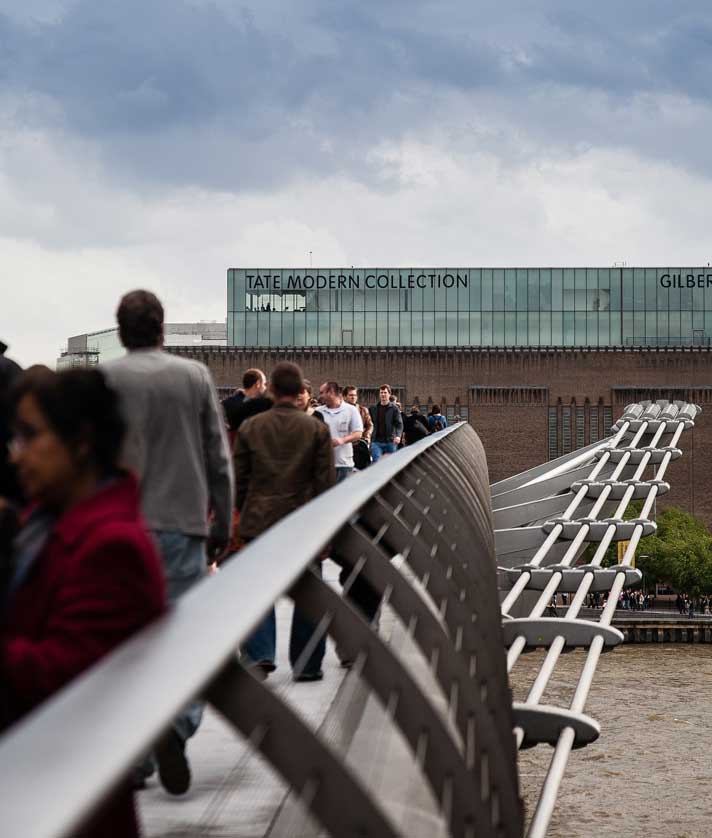
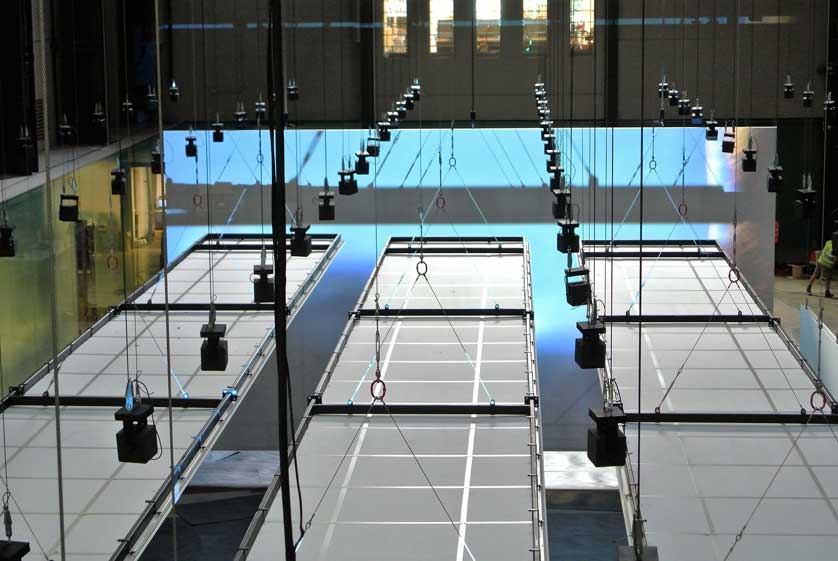
The Tate Modern is one of the UK's top three tourist attractions and provides around £100 million in economic benefits to London every year.
It is housed in the former Bankside Power Station designed by Sir Giles Gilbert Scott.
The Tate Modern showcases works of international modern and contemporary art dating from 1900 to the present.
The permanent collection is displayed on levels three and five of the building, while level four hosts larger temporary exhibitions and a smaller space on level two houses work by contemporary artists.
The Cartoon Museum
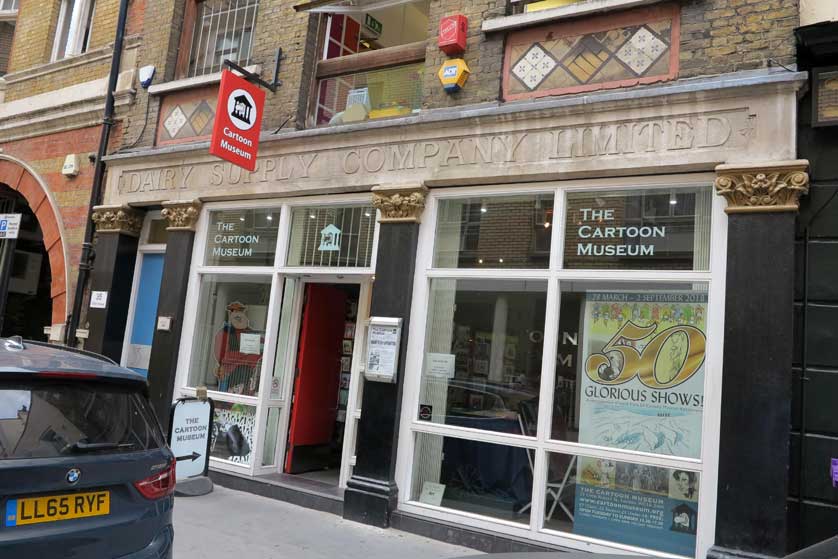
The Cartoon Museum in Fitzrovia has a huge collection of over 6,000 original cartoon and comic artworks, as well as a library of over 8,000 books and comics. The Cartoon Museum, a registered charity, also puts on frequent temporary exhibitions. In addition, the museum holds regular educational workshops for schools, colleges, and youth groups.
The collection includes both historic and more contemporary cartoons. It traces the history of comic art from around the mid-19th century when the word "cartoon" was first coined.

Tower of London
The Tower of London displays not only the Crown Jewels as part of its Royal Collection but also some superb examples of Medieval arms and armour. Visitors can even see the axe and chopping block used in executions at the Tower. There have been just seven.
The White Tower is the original Norman keep. Within the White Tower is the Royal Armouries with its superb collection of armour worn by British monarchs in the so-called Line of Kings. This displays the armour of Henry VIII, Charles I and James II. Also on display are suits of armour from other nations including samurai armour from Japan.
The Fusiliers Museum housed in a building originally built as officers' quarters is dedicated to the history of the Royal Regiment of Fusiliers since its formation in 1685. The regiment was based in the Tower for over 200 years. On display are original photographs, uniforms and weapons belonging to the regiment. Visitors can also see war diaries, soldiers' letters and other documents.
Related
Map of London
Hotels in London
Book Hotels in London - Booking.com
Find Luxury Hotels in London - Booking.com
Budget Hotels in London - Booking.com
Find Hotels in England - Booking.com