Town Halls, City Halls & County Halls in the UK
Town Halls and City Halls are the seat of local government administration in Britain's towns and cities.
The buildings houses the city or town council, and often the offices of the mayor. Local authorities also often built grand libraries to accompany their town halls and these are often located close by.
Town halls symbolize the power and authority of the local government and were built in architectural styles popular at the time of their construction.
The golden age of town hall construction was in the Victorian and Edwardian periods. Built as secular cathedrals, the great architects of the time designed both churches and their secular counterparts - town halls.
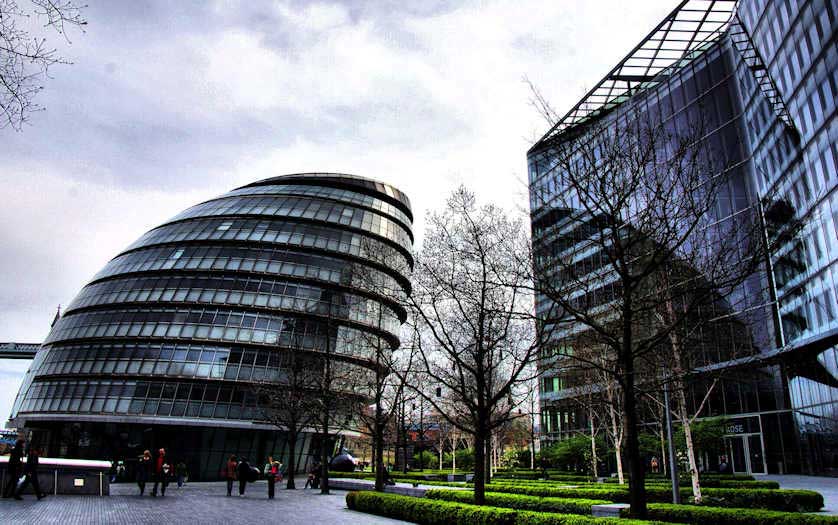
Britain has many fine town halls with some of the oldest dating back to the late 18th century. Some are more modern such as London City Hall in London.
Nowadays some town councils are moving out of their older, Victorian buildings to newer premises. These classic, historic buildings are finding new uses as concert, conference, and wedding venues and even film sets!
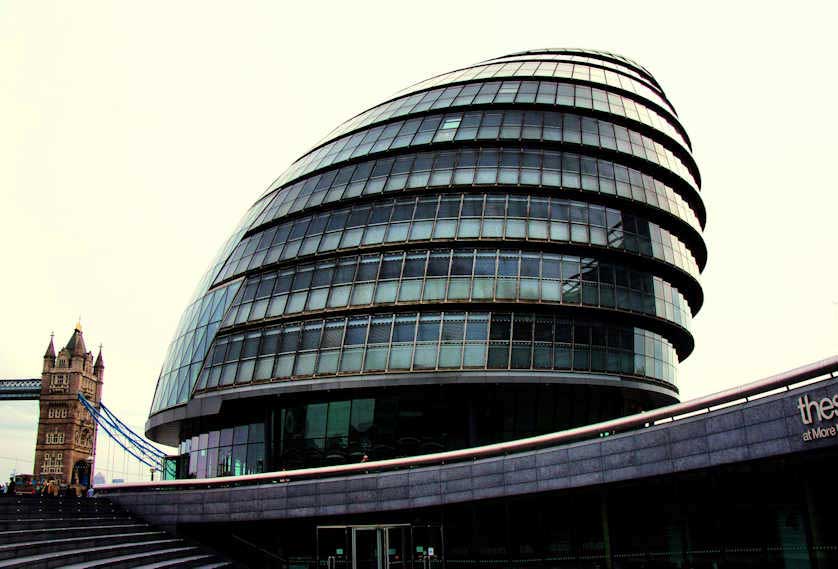
London City Hall
London City Hall is a strikingly unique building. Situated on the south bank of the River Thames, it is directly across the river from the Tower of London and near the southern end of Tower Bridge.
City Hall was designed by Norman Foster and opened in 2002. Foster and his firm are very prolific and have designed many major structures both in the UK and abroad.
The Gherkin, also in London, was designed by him, and almost adjacent to City Hall is another of his buildings commonly known as the Batman Building.
The interior of City Hall and its helical walkway will be familiar to many as it was the location for several scenes in the 2015 James Bond blockbuster "Spectre" where it was used to portray the interior of the fictional Centre for National Security, and where, near the end of the movie, one of the baddies, played by Andrew Scott falls to his death.
City Hall is not technically a city hall. It is the home of the Mayor of London's office, and of the London Assembly, two parts of the Greater London Authority.
However it has been decided to move to new premises at a new building called The Crystal located on Victoria Dock in east London. The move is planned to be completed by the end of 2021.
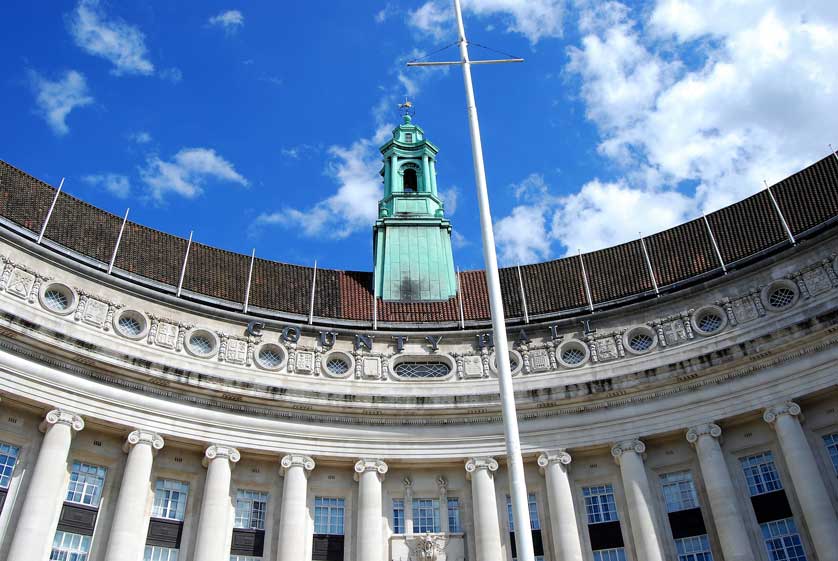
Former County Hall
The previous County Hall was directly across from the Houses of Parliament and Big Ben in Westminster.
It is now the Sea Life London Aquarium, Shrek's Adventure London, the luxury London Marriott Hotel County Hall and the Namco Funscape amusement arcade.
That building opened in 1922 and was designed by Ralph Knott. Its administrative functions ceased when then Prime Minister Margaret Thatcher abolished the GLC in 1986 after bitter political differences with the Labour-led administration of Ken Livingstone.
The London Eye also now stands outside the building on the South Bank.
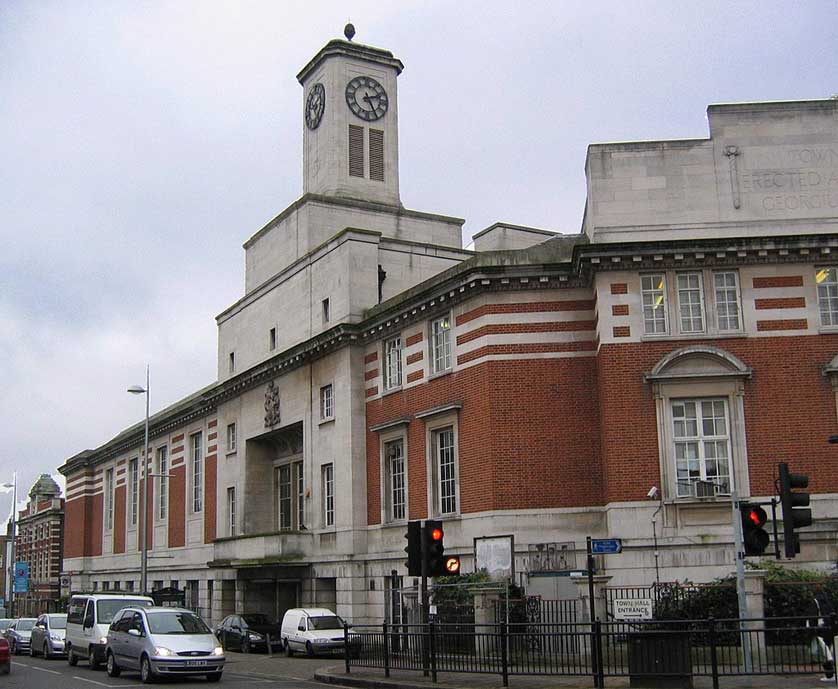
Acton Town Hall
On the High Street in Acton, West London, Acton Town Hall opened in 1910. It was extended in the 1930s. In 2018 it was converted to residential use with over 50 one-, two- and three-bedroom apartments. Acton Central Station is a short walk away.

Barking Town Hall
Barking Town Hall in East London was built in Neo-Georgian style and its design is based on that of Stockholm City Hall in Sweden. It opened in 1958 after delays due to World War II. It is now the seat of local government for the London Borough of Barking and Dagenham. Barking Station on the District, Hammersmith & City and Overground lines is a 5-minute walk away.
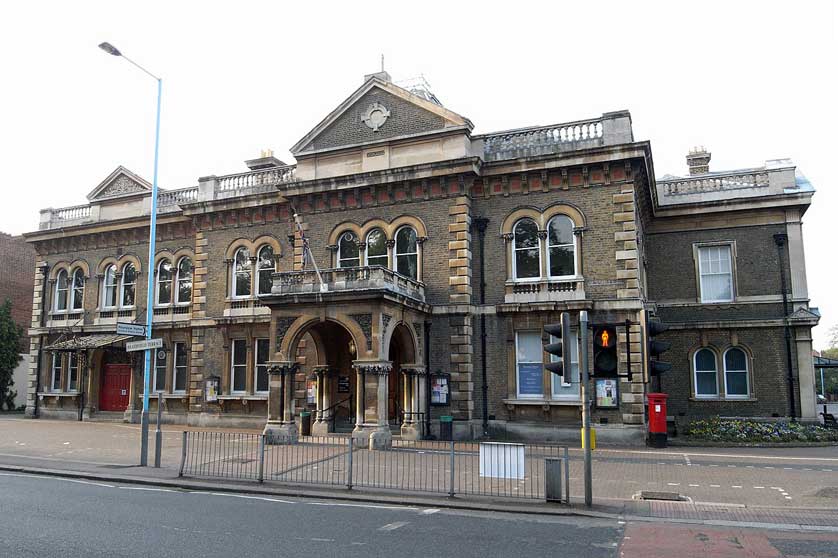
Chiswick Town Hall
Chiswick Town Hall in west London faces Turnham Green. The Grade II Listed Building opened in 1876 and is done in Italianate style. It is now mainly used for marriages and civil partnership ceremonies in the Main Hall and Hogarth Hall.
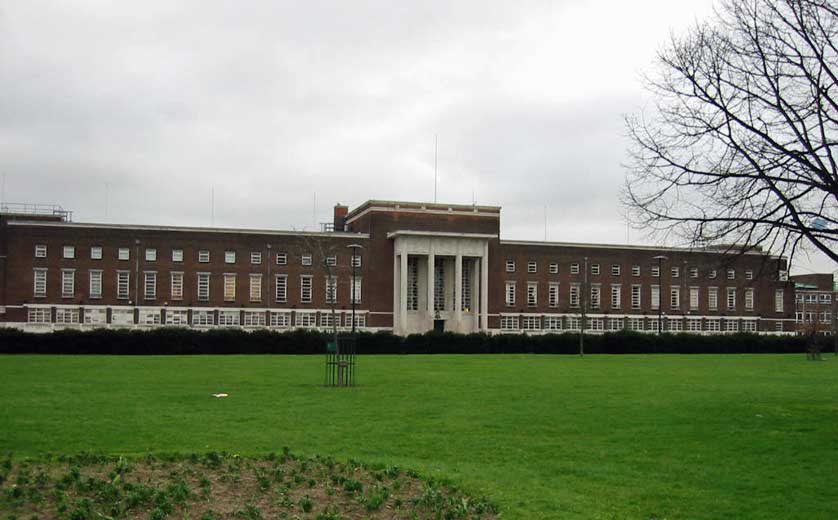
Dagenham Civic Centre
Dagenham Civic Centre in the London Borough of Barking and Dagenham in East London was opened in 1937. Designed in modernist style by architect Ernest Berry Webber it served as municipal offices until 2016 when it was leased to CU London, a new university with another campus in Greenwich. The interior which has several art deco features was extensively refurbished in 2003.
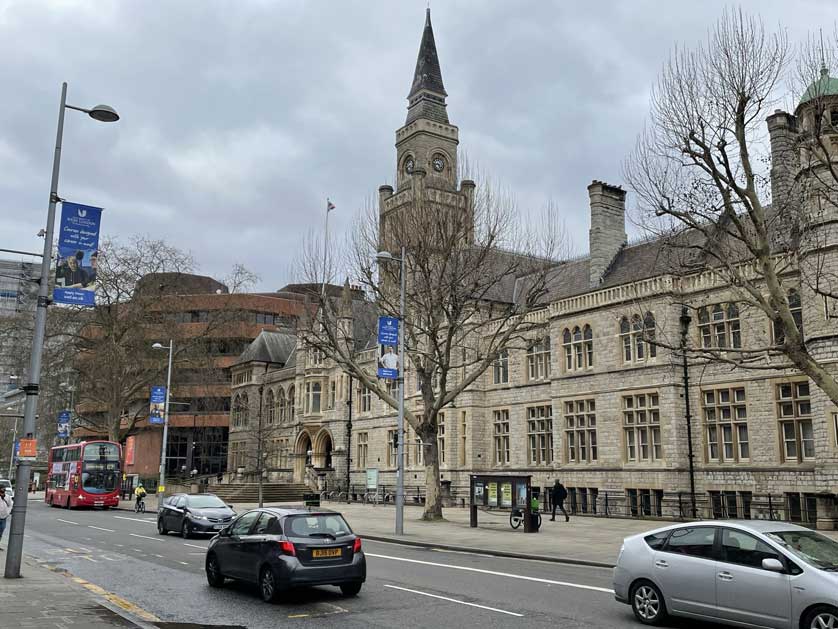
Ealing Town Hall
Ornate Ealing Town Hall dates from 1888 and was designed in the Gothic Revival style by Charles Jones, the council's surveyor, at a cost of £16,000. The building was expanded in 1930 and is Grade II listed. It is located near Ealing Broadway Station in west London. It serves as the local of seat of government of the London Borough of Ealing, though Perceval House in Uxbridge Road is also used for office space for council staff and their functions.

Havering Town Hall
Havering Town Hall in Romford in the London Borough of Havering is a Grade II Listed Building. It began as Romford Town Hall and opened in 1937. Restored and redecorated in 2017, the building is constructed in brick and stone with some wonderful oak-panelled chambers within.
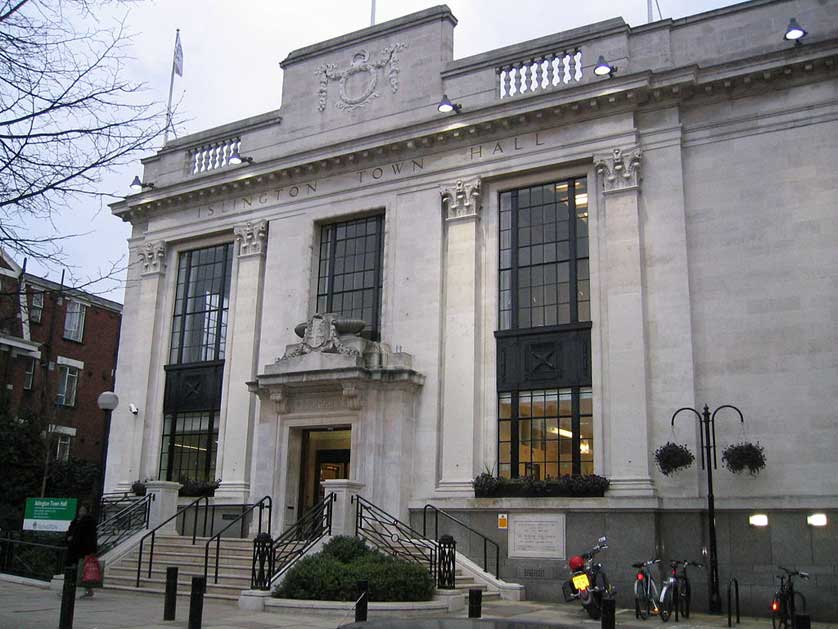
Islington Town Hall
Located on Upper Street, Islington Town Hall is a Grade II Listed Building and opened in 1930. The headquarters of Islington London Borough Council, it also is a wedding or civil partnership venue from Monday to Saturday. Four rooms are available for hire. Most council administrative functions nowadays are dealt with in a newer building across the street. Highbury & Islington and Angel are the nearest tube stations. Islington Assembly Hall is part of the Islington Town Hall building. It reopened as a live music venue and events space in 2010 after closing in the 1980s.
Town Halls Outside London
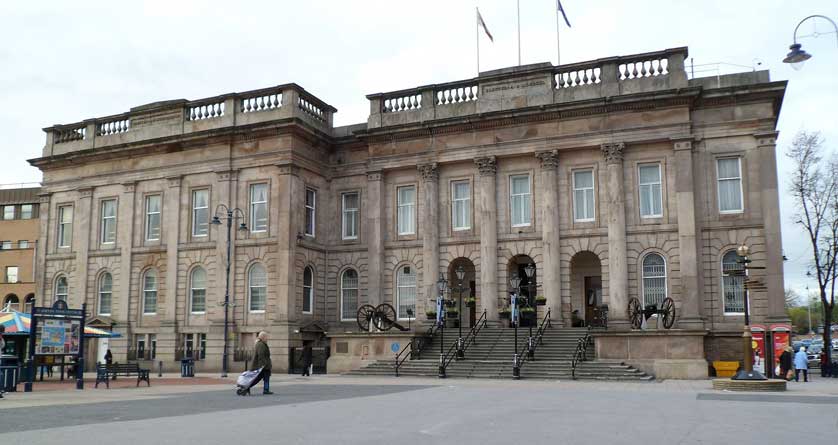
Ashton under Lyne Town Hall
Ashton under Lyne Town Hall in Ashton under Lyne in Tameside is a Grade II listed building. Built way back in 1840, the town hall lost its administrative functions with the creation of the Metropolitan Borough of Tameside. It is currently being refurbished.
The Town Hall had three rooms for hire for various functions - The Ballroom, The Medlock Suite and The Etherow Lounge.
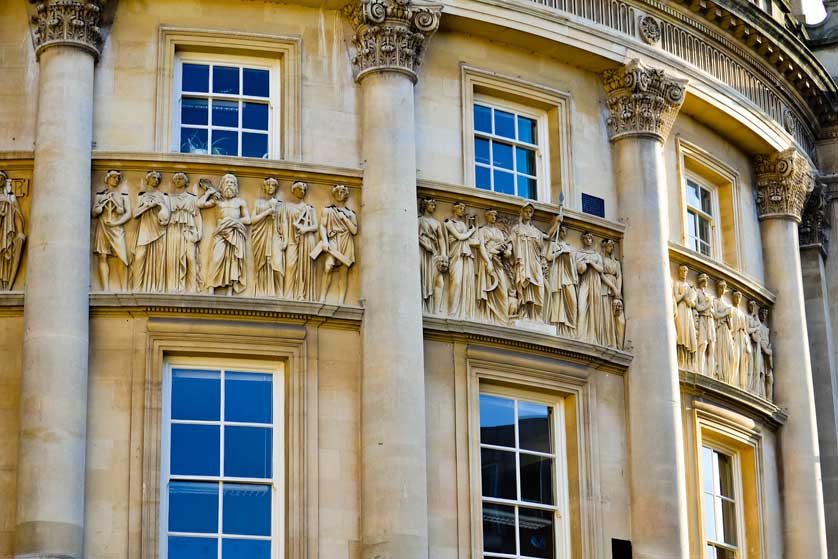
Bath Guildhall
Bath Guildhall in Bath in southwest England dates originally from 1775 and 1778. Its architect was Thomas Baldwin who was also responsible for Argyle Street and Great Pulteney Street in the city. It was later renovated and extended by John Brydon, who added its distinctive classical frieze in 1893.
The building houses the council chamber for Bath and North East Somerset Council and the register office for Bath and North East Somerset. Like many other town halls across the country, the Guildhall serves other purposes. It is a venue for the Bath International Music Festival, weddings and various cultural events.
The Mayor's Parlour is located in the Guildhall and is open to visitors during Heritage Open Week. On display are Mayor's Collar of Office. The collar was made in 1850 and is comprised of 4 portcullises which represent the gates to the city, the Elizabethan Tudor Rose, and the Bath Knot. Visitors can also view the pair of maces which Queen Elizabeth I authorized to be carried before the mayor in her charter of 1590 AD. The current maces date from 1706 and were purchased for about £60.
Bath Guildhall Market is located nearby on the High Street and a tunnel links the two buildings.

Bexhill Town Hall
Bexhill Town Hall in East Sussex is the administractive center of Rother District Council. It opened back in 1895. The design is by Henry Ward who was also the architect of Hastings Town Hall and several churches in the area.
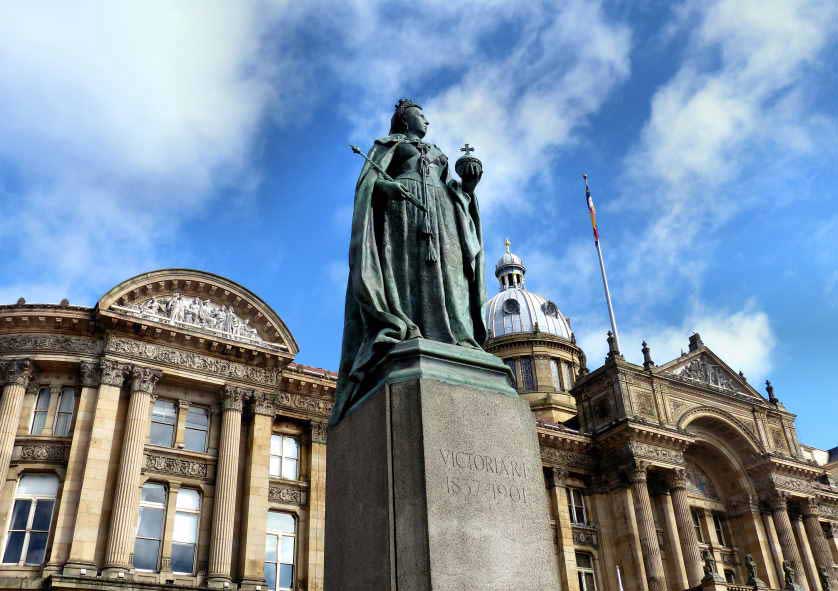
Council House Birmingham
The Council House in Birmingham houses Birmingham City Council and is the seat of local government in the city.
The building is in Victoria Square named after Queen Victoria, of course, so it is not surprising she has a statue here. The statue was unveiled in January 1901, just days before her death. The statue was carved in marble by Thomas Brock, however the current statue is a bronze casting of the original done by William Bloye.
Birmingham Museum & Art Gallery is within the same building facing Chamberlain Square.
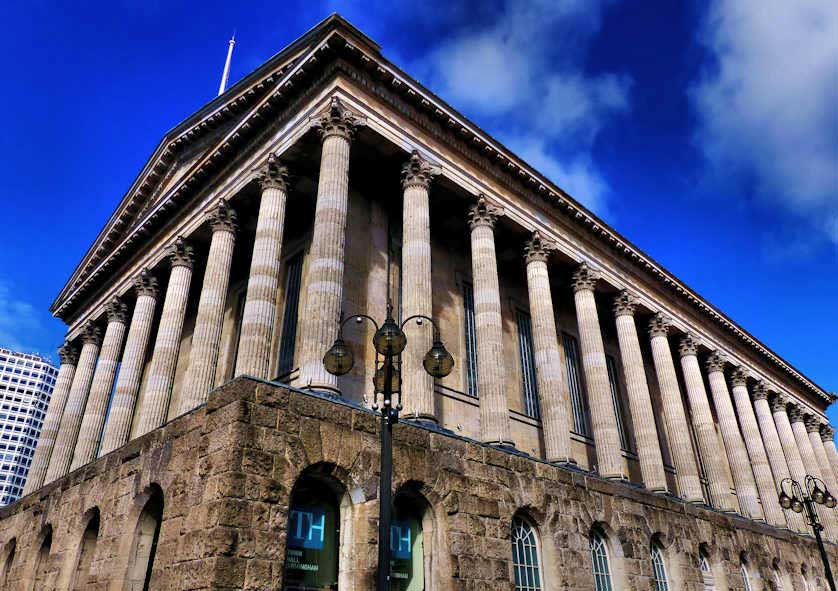
Town Hall Birmingham
Birmingham Town Hall is an iconic historical landmark in England's "second city". It was designed and built in 1832 as a site for concerts, readings, and other kinds of public assemblies, and is still used for that purpose today.
You might be forgiven for thinking you are in Rome or Greece as it was modeled on the Temple of Castor and Pollux in ancient Rome.
The building is a classic example of Corinthian architecture, the third and last style of ancient architecture from Greece and Rome. The Town Hall is considered an excellent example of, and the first major piece of, Roman Revival style architecture in the UK.
The architects were Edward Welch and Joseph Hansom, the latter being famous as the inventor of the Hansom Cab.
They both seriously under-estimated construction costs and went bankrupt. The building is constructed out of local brick faced with marble. The column topped with capitals divide the exterior into 14 bays north to south and eight bays east to west.

Bishop Auckland Town Hall
A Grade II Listed Building in Market Place, Bishop Auckland Town Hall is done in the Gothic Revival style and opened in 1862. Due for demolition in the 1980s, a public appeal saved it and now this fine building is home to the Eden Theatre (cinema), a public library, art gallery, cafe, and tourist information centre.
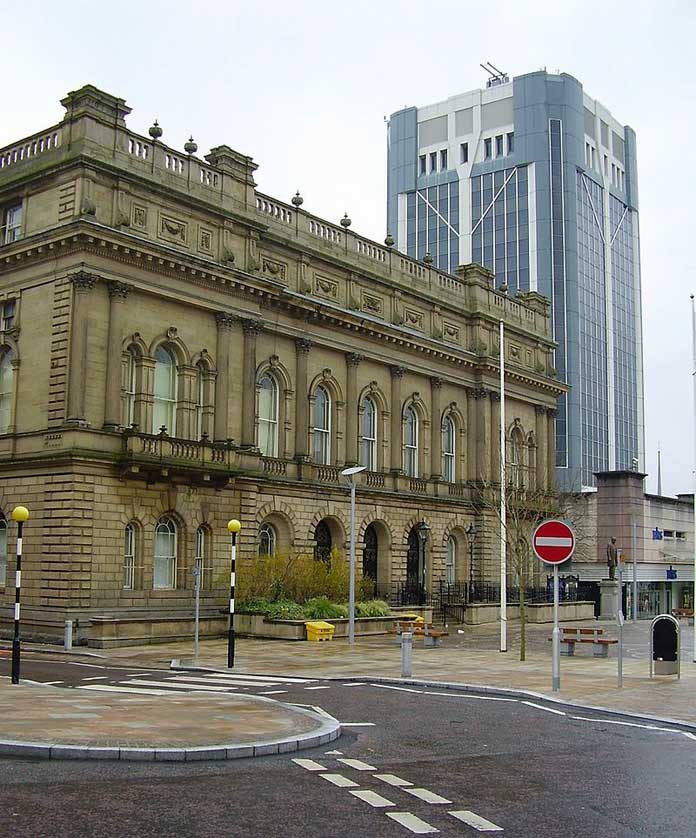
Blackburn Town Hall
The Town Hall in Blackburn is the administrative center of Blackburn with Darwen Borough Council. A Grade II Listed Building done in Italianate style, it opened in 1856. It is just south of the Blackburn Museum & Art Gallery.

Brighton Town Hall
Brighton Town Hall in Brighton on the south coast was built in 1832. The Greek Revival style building houses the Old Police Cells Museum as well as the city's register office. The Council Chamber, the Regency Suite, and the Fitzherbert Room can all be rented for wedding ceremonies. The Grade II Listed Building is a short walk south of Brighton Station and Royal Pavilion, close to the beach, Brighton Palace Pier, and the British Airways i360.

Bristol Old Council House
Bristol Old Council House in Bristol is constructed in pleasing Neoclassical style. It was built between 1824 and 1827 by Sir Robert Smirke who also designed the main block and façade of the British Museum. Nowadays the building is used as a local register office and contains several important works of art. The building can be hired for civil and wedding ceremonies. Bristol Temple Meads Station is a 15-minute walk away.

Buxton Town Hall
Buxton Town Hall in Market Place, Buxton, Derbyshire dates from 1889. It is close to a pleasant park, The Slopes and just a short walk from The Crescent, Pavilion Gardens and the excellent Scrivener's bookshop. Constructed in local millstone grit in the French style it somewhat resembles the Hôtel de Ville in Paris. The building also once housed the first free public library in Buxton. Outside the town hall is a 15th century market cross with only the vertical section still standing. The town hall is a meeting place of High Peak Borough Council.

Calne Town Hall
Calne Town Hall in Wiltshire is a beautiful Grade II Listed Building. The limestone Gothic building in a Franco-Flemish style dates from 1886 and was designed by the architect Bryan Oliver. Nowadays the building mainly hosts weddings, meetings, private parties and other family events.
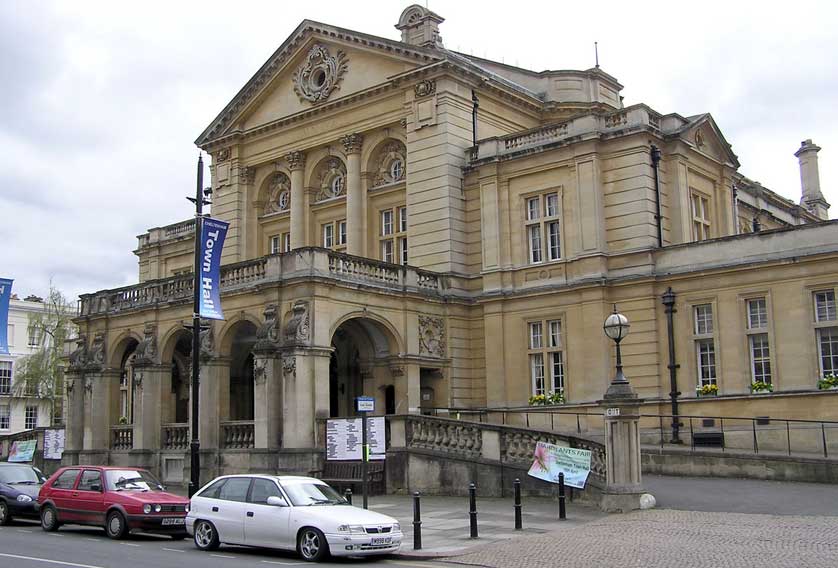
Cheltenham Town Hall
Cheltenham Town Hall in Cheltenham dates from the early 20th century. It is a public venue and not the seat of the borough council, which is housed in the Municipal Offices. The impressive edifice was designed by the local architect Frederick William Waller in the Classical style. It is used for balls, banquets, concerts, conferences, dances, and exhibitions, as well as being a major venue of the various Cheltenham Festivals.

Chester Town Hall
Chester Town Hall in Northgate Street opposite Chester Cathedral in the centre of Chester, Cheshire, was completed in 1869.
It is constructed in sandstone in the Gothic Revival style of architecture. The building is modelled on the design of the Cloth Hall in Ypres, Belgium. The distinctive central tower has a height of 49 metres.
Like many provincial town halls across the UK, various rooms are available for hire for such functions as weddings and film shoots.
Most of the administrative duties of Chester's town hall are now carried on in a modern building opposite Chester Castle.

Christchurch Town Hall
Christchurch Town Hall in Christchurch, Dorset includes a mayor's parlour and dates from 1859. The classical building is Grade II listed and noted for its distinctive cupola.

Colchester Town Hall
Colchester Town Hall in Colchester in Essex houses the offices of Colchester Borough Council and is a Grade I listed building. It was completed in 1902 and designed by architect John Belcher in the Edwardian Baroque style.
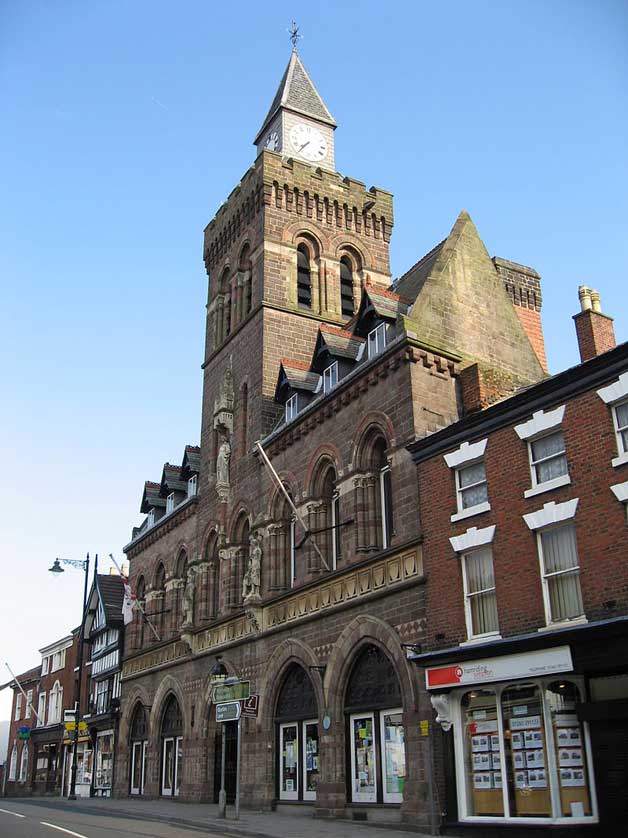
Congleton Town Hall
Congleton Town Council Town Hall in Cheshire was designed by Edward William Godwin and built in 1866. It is a Grade II listed building. Congleton Town Council created in 1980 has offices here. Located on the High Street, the building is a 20-minute walk from Congleton railway station. Congleton is a town of about 27,000 people midway between Manchester and Stoke.


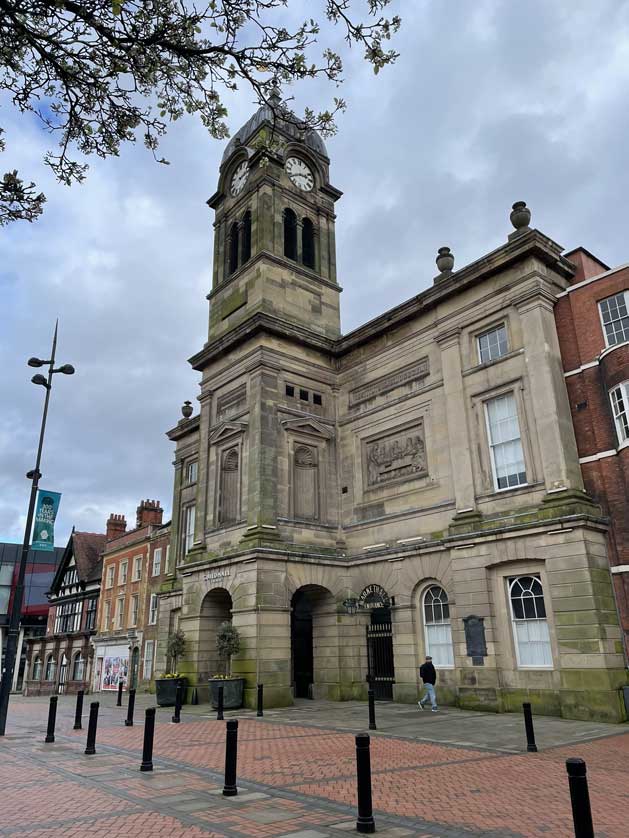
Derby Guildhall
Derby Guildhall in Market Place, Derby dates from the early-19th century and is a Grade II listed building. It is a restoration of the original building badly damaged by fire in 1841. The structure is notable for its clocktower and cupola. The building no longer serves any administrative purpose and was converted into a theatre for use by mainly amateur theatre groups. However, the building closed for renovations in 2019 and its long term future was in question. There are new plans in progress for the revelopment of the its Guildhall Theatre.

Dukinfield Town Hall
Dukinfield Town Hall in Tameside, Greater Manchester, is a large Gothic, Grade II Listed Building, that opened in 1901. It is the headquarters of Dukinfield Borough Council. A statue of Lieutenant Colonel Robert Duckenfield, a commander of Parliamentary forces in the English Civil War, has stood outside the building since 2010. The building also hosts weddings, civil partnerships and family celebrations along with various classes conferences, meetings and seminars.

Exeter Guildhall
Exeter Guildhall on the High Street in Exeter in Devon is said to be the "oldest municipal building in England still in use." It dates from the late 15th century with a portico added in the late-16th century. It was under the granite and Beer stone portico that Exeter's stocks used to be. Here too Judge Jeffreys held one of his infamous Bloody Assizes in 1685. The Victorian interior is lavish with wooden panelling, large classical paintings and chandeliers. A Grade I Listed building, the Guildhall is still in use as a civic office for meetings and official receptions.

Halifax Town Hall
Halifax Town Hall in Halifax, West Yorkshire was designed by renowned architect Sir Charles Barry, who also co-designed the Palace of Westminster. The building was completed in 1863 and is a testament to the town's prosperity during the Industrial Revolution. The Town Hall features an ornate clock tower, intricate stone carvings, and a grand interior with a magnificent staircase, wood paneling, and stained glass windows.

Hove Town Hall
Brutalist in design, Hove Town Hall dates from 1974 and replaced the earlier building that burnt down in 1966. Locally-born architect John Arthur Wells-Thorpe designed the building.

Leicester Guildhall
Leicester Guildhall in Leicester is a Grade I Listed medieval building, situated in the city centre, very close to Leicester Cathedral.
Both are within an historic preservation area which also now includes the King Richard III Visitor Centre with interactive exhibits on the king's life, death and the discovery of his grave.
The building was the town hall until the current one was constructed in 1876. The oldest parts of the timber-framed Guildhall date from the late 14th century. The building was originally the meeting place of the Guild of Corpus Christi and also a home for a priest at the nearby cathedral.
Over the ages the Guildhall in Leicester has served as town hall, library, police station and even a prison. William Shakespeare is said to have visited and performed here. The building was also attacked and looted by Royalists during the English Civil War in the 1640s. The museum within the building includes the Victorian police cells and has displays on the medieval history of Leicester.

Liverpool Town Hall
Liverpool Town Hall in High Street in Liverpool dates from 1754. It was designed by John Wood the Elder, known for his Georgian buildings in Bath. After a fire in 1795 it was almost completely rebuilt and the dome added.
The building serves as the Lord Mayor's parlour and Council chamber. Local government administration offices are at the nearby Municipal Buildings.


Manchester Town Hall
Manchester Town Hall in Albert Square, Manchester was completed in 1877 after nine years in construction and the laying of 1 million bricks. Manchester Town Hall was designed by architect Alfred Waterhouse in the Neo-Gothic style and is considered one of the finest such buildings in the UK in this genre.
The clock tower in the center of the building is 87 meters tall and is the town hall's most distinctive feature. In the entrance and Sculpture Hall there are statues and busts of such Manchester-linked luminaries as John Dalton, Richard Cobden, Sir John Barbirolli and James Prescott Joule.
To the right on entrance is a Victorian-style cafe looking into Albert Square and the monument to Queen Victoria's Consort.
Manchester Town Hall Extension was built between 1934 and 1938 by E. Vincent Harris, who also designed Manchester Central Library. It is the second-largest public library in England after the Library of Birmingham.
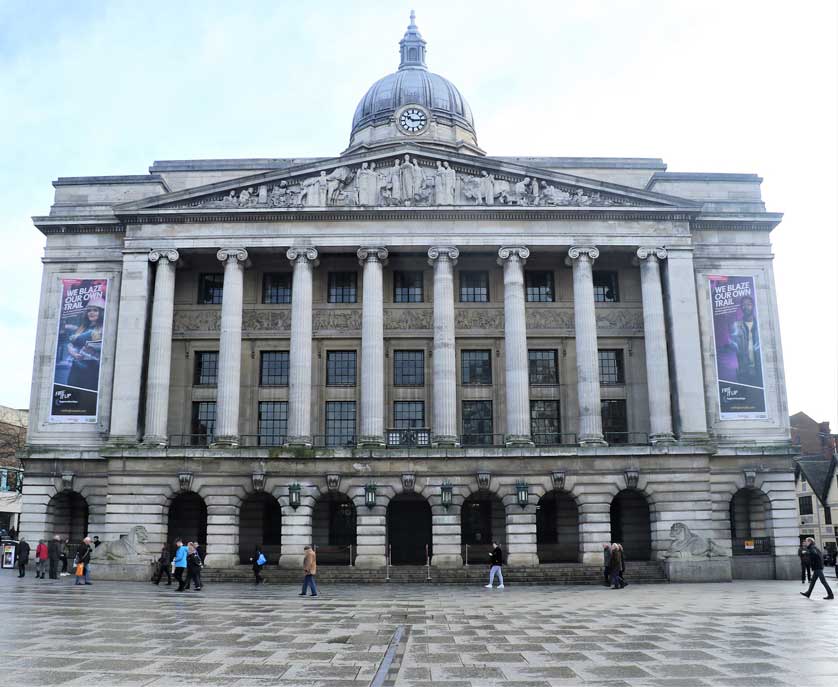
Nottingham Council House
Nottingham Council House in Nottingham is the centerpiece of Old Market Square. The Neo-Baroque structure dates from the late 1920's and is made from the same Portland Stone as St. Paul's Cathedral in London.
A Grade II Listed Building, the dome is 200 feet (61 m) high. The interior is very ornate.
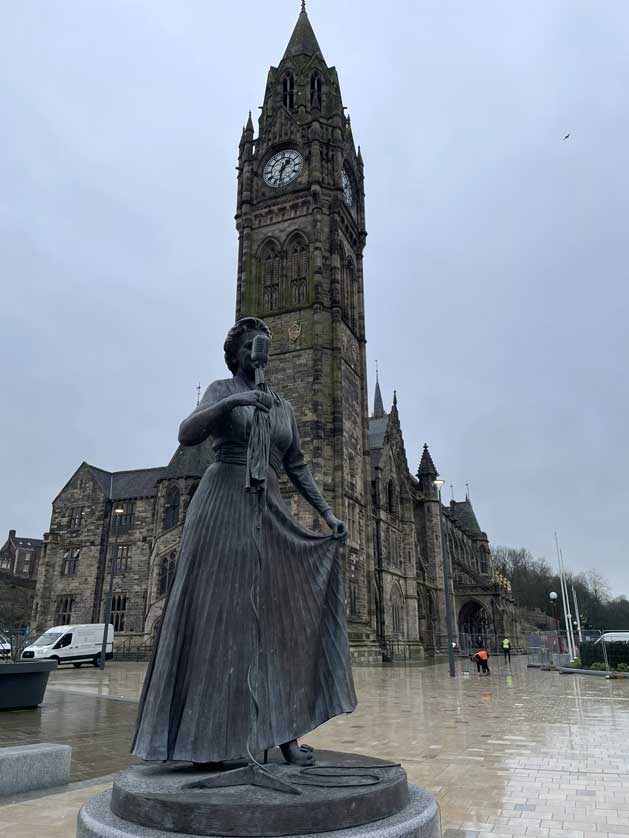
Rochdale Town Hall
The magnificent town hall in Rochdale, in Greater Manchester northwest England has recently reopened following a multi-million pound refurbishment. It is a Grade I listed building and recognised as one of the finest municipal buildings in Britain. Designed by architect William Henry Crossland in the Gothic Revival style it serves as the ceremonial headquarters of Rochdale Metropolitan Borough Council. The structure includes a 58 meter tall stone clock tower added after the original burnt down. The ornate interior features stained glass, murals and a fresco depicting the signing of the Magna Carta. Outside in the impressive square is a statue of local heroine Gracie Fields unveiled in 2016. She was once the world's highest-paid female actor in the 1930s.

Sheffield Town Hall
Sheffield Town Hall in Sheffield, South Yorkshire, dates from the late 19th century and was built in the Renaissance Revival style between 1890 and 1897. Queen Victoria officially opened the now Grade I listed building. The fine exterior is done in Stoke stone with several carvings by the prolific sculptor F. W. Pomeroy (1856-1924). Amongst his many works is the figure of Lady Justice (1905-1906) on the dome of the Old Bailey in London. The Grade I listed building stands in front of the Peace Gardens and Millennium Square. It reaches a height of over 60 meters and has six floors.

Stockport Town Hall
Stockport Town Hall in Stockport, northwest England, is geared nowadays more to weddings, conferences and ballroom and sequence dancing events rather than local administration, which largely takes place elsewhere, though Council and committee meetings continue to be held here.
Stockport Town Hall was officially opened in 1908 and is famous for its striking baroque facade of white Portland Stone, earning it the nickname of the "Wedding Cake Town Hall".
The architect Alfred Brumwell Thomas was something of a town hall specialist and was also responsible for the town halls in Belfast, Portsmouth and Woolwich.
It's possible to tour the interior with its marble staircases, stained glass windows, Wurlitzer organ, and ornate wood carvings through an appointment. The Stockport War Memorial Art Gallery is across the street (A6).

Swindon Town Hall
Swindon Town Hall in Swindon is the former municipal building in the town now the home of Swindon Dance and other entities. The Grade II listed building dates from 1891 and has an impressive 91 foot-tall clocktower. The building is a short walk from STEAM - Museum of the Great Western Railway.
Town Halls in Northern Ireland
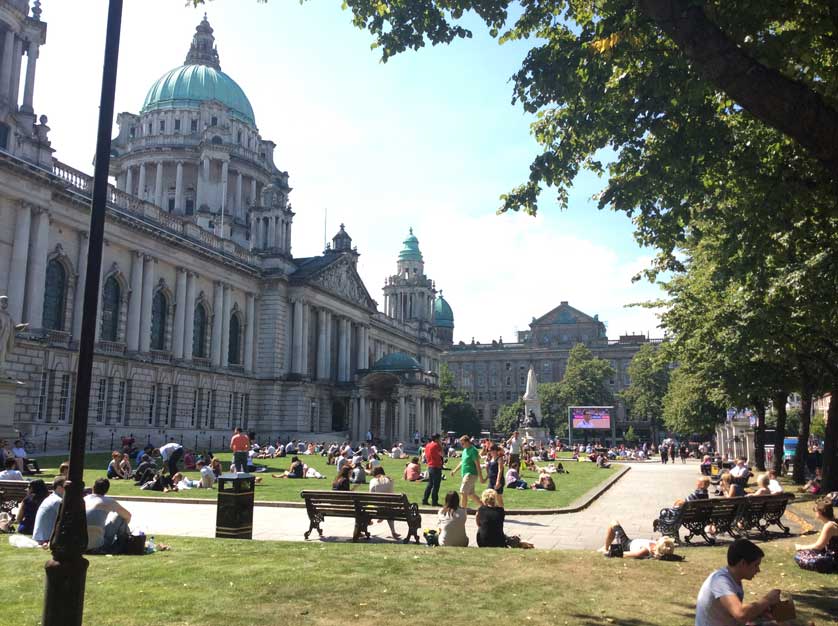
Belfast City Hall
The baroque Belfast City Hall in Belfast dates from 1906 and its pleasant gardens, full of Victorian and later statuary, are a popular place with local office workers at lunch time. At the height of the city's prosperity the building was designed by Sir Alfred Brumwell Thomas in the Baroque Revival style. It is built in Portland Stone. Interestingly, the city hall in Durban, South Africa, is almost an exact copy.
Town Halls in Wales

Cardiff City Hall
Cardiff City Hall in Cardiff was completed in 1904. The design was inspired by English and French Renaissance architecture, but Cardiff City Hall is also an Edwardian symbol of confidence from a time when Cardiff's coal-fueled prosperity was at its height. The building designed by Henry Vaughan Lanchester is dominated by the 194 foot high clock tower, and a Welsh dragon sits atop the dome. Cardiff City Hall is located on Cathays Park in central Cardiff. Visitors to Cardiff may also want to visit nearby Cardiff Castle and view the Clock Tower and Castle Apartments inside its grounds.
Town Halls in Scotland

Glasgow City Chambers
Glasgow City Chambers in Glasgow have been the seat of municipal government in the city since 1889. Like similar municipal buildings around the UK dating back to this time, it is an impressive structure, meant to impress with the authority that came with massive wealth created by commerce and industry. However, the exterior, imposing as it is, fails to indicate what you will experience in the interior of the building, which is best described perhaps as opulence.
You could be forgiven for thinking you were inside some kind of palace, and in fact film-makers would agree. The 1983 movie An Englishman Abroad featured scenes shot here that were meant to the interior of the Kremlin, and the 1986 movie Heavenly Pursuits similarly used the interiors to represent the Vatican.
The Glasgow City Chambers was designed by Scottish architect William Young (1843-1900) who won the competition that drew hundreds of entries.
Young had traveled in Rome and Italy and it shows. Entering the Chambers from George Square the visitor enters a long gallery with arches and vaulted ceilings.
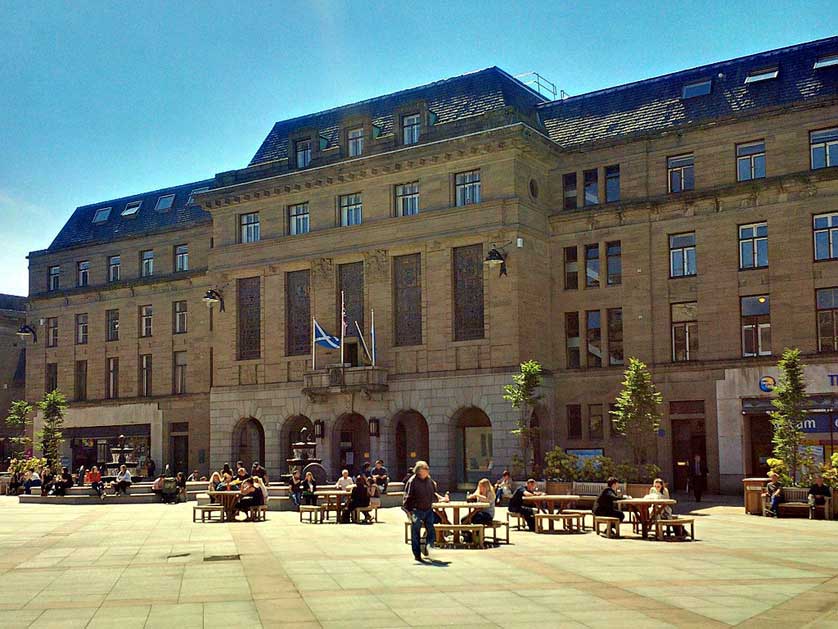
Dundee City Chambers
Dundee City Chambers in Dundee are in City Square adjacent to Caird Hall. They house the offices of Dundee City Council. Architect James McLellan Brown designed the building which opened in 1933. Of note is the stained class windows by Alex Russell depicting various Scottish heroes including Mary, Queen of Scots, Robert the Bruce and William Wallace besieging Dundee Castle.
Hotels in the UK
Book Hotels in England - Booking.com
Find Accommodation in London - Booking.com
Search Hotels in Scotland - Booking.com
Hotels in Northern Ireland - Booking.com