Saltaire Guide, near Bradford
Saltaire, Yorkshire
Jake Davies
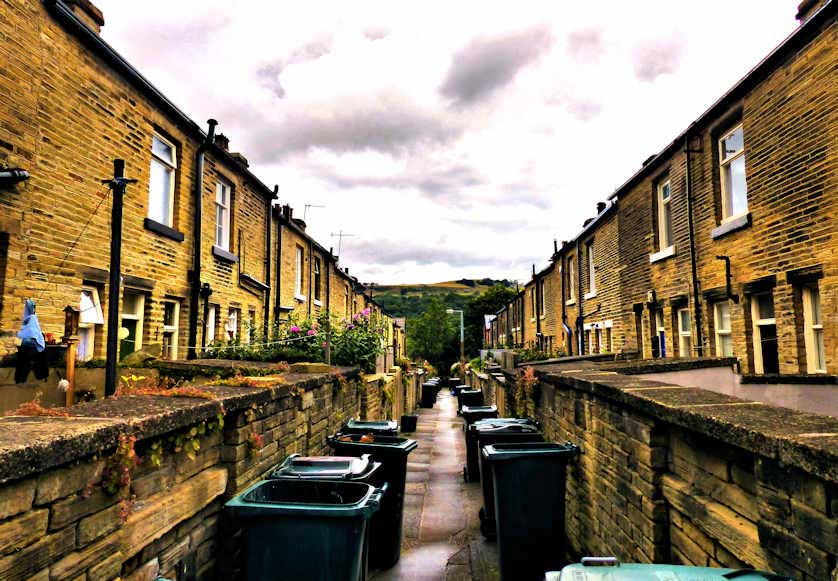
Saltaire, a small town in Yorkshire not far from Bradford, looks like many other such places with streets of small houses. These are mostly of the "two up two down" type typical of industrial towns of the late 19th and early 20th centuries, and yet Saltaire is registered as a UNESCO World Heritage Site.
The reason is that Saltaire was a "model” town, a somewhat revolutionary exercise in town planning that influenced future house designs and town layouts. Along with other model towns like Bournville in Birmingham, Port Sunlight in Merseyside, and Swindon Railway Village, Saltaire was built to provide a much healthier environment for factory workers and their families than the overcrowded, unsanitary, slums of the industrial towns and cities.
These model villages were built by enlightened industrialists who obviously were concerned about the lives of their workers and families, and often operated out of a humanitarian and Christian attitude. They were also very wealthy men who realized that healthy and happy workers were more efficient, however.
Titus Salt & Salts Mill
Saltaire was the biggest and grandest of these model villages built so far and was the brainchild of Thomas Salt (1803-1876), a textile magnate who operated five mills in Bradford. He bought the land a few miles outside of Bradford and constructed what was at the time the biggest factory in the world to rationalize his production.
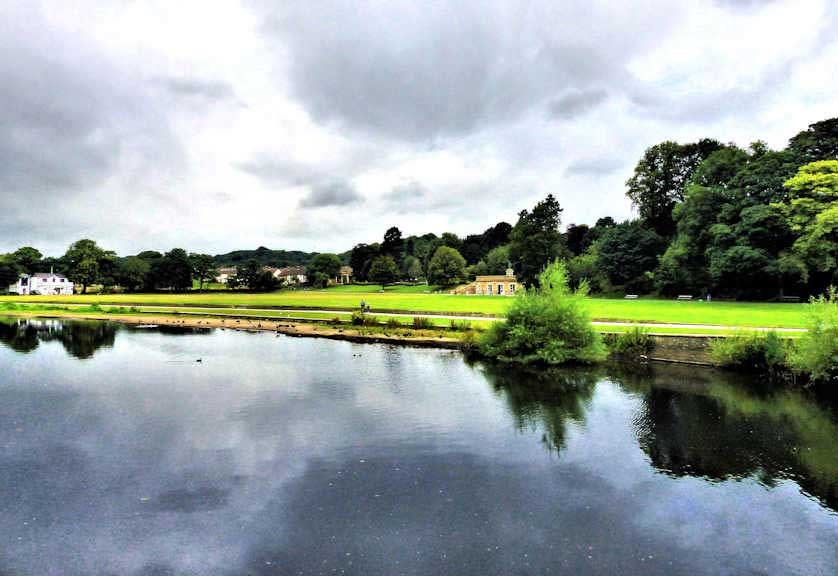
Salts Mill is also part of the World Heritage site and among the retail, cultural, and dining establishments within it is an information center and museum about the history of the town and mill with lots of information to help you understand the town. The name Saltaire was a combination of the founder's name, Salt, and the River Aire next to which the mill and town were built.
The Town & Its Housing
Salt started constructing the town after the mill, which opened in 1853, and Saltaire continued to be improved and expanded for decades. While the housing was being built the workers were brought in by special trains.
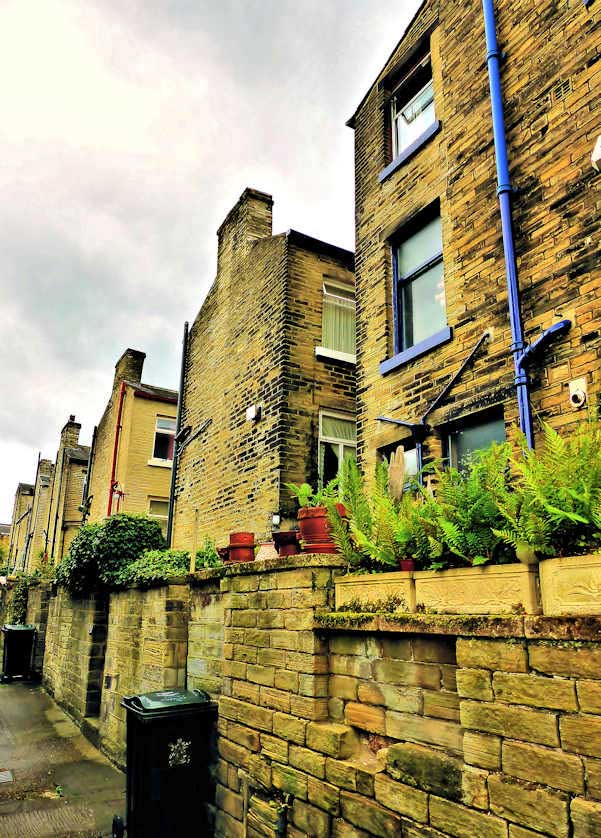
The majority of the houses were two rooms upstairs and two downstairs, with water and gas supplied to every house and each having an outside toilet.
There were larger houses, some built as lodging houses and some for the better paid managers. A number of shops were built, a butcher's, baker's, grocer's, ironmonger's etc but nowhere selling alcohol. Salt was a strict teetotaller. Allotments were provided for workers to grow their own food.
Public Buildings
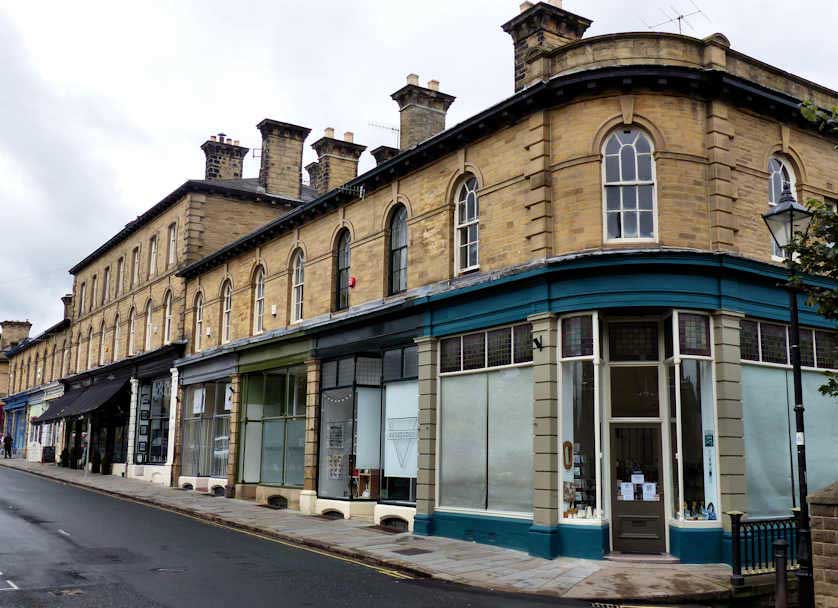
To provide for the material, spiritual, and mental wellbeing of the workers a wide range of public buildings were also constructed.
One of the first was the factory infirmary or hospital. Initially meant to provide medical aid to workers it did expand its services to other members of the community.
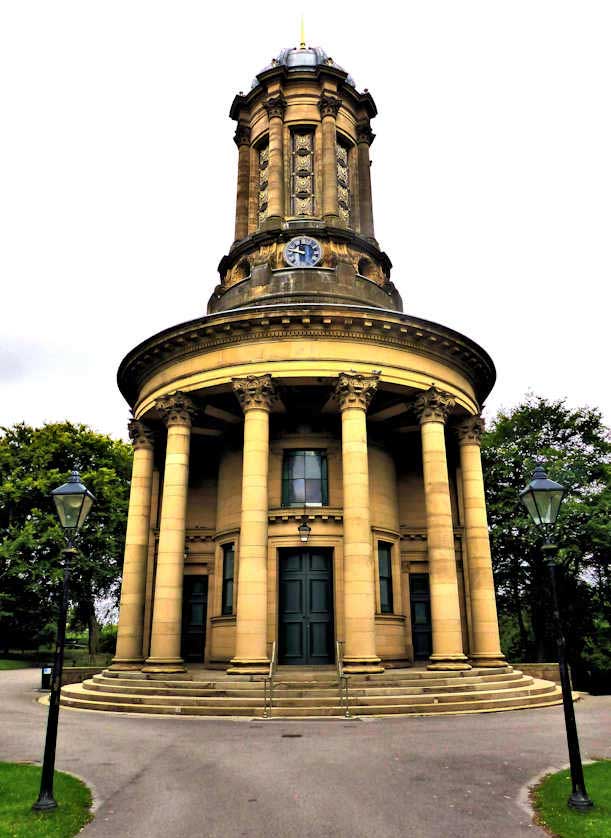
Another early project was the Congregational Church, now known as the United Reform Church. Salt was a deeply religious man, adopting the family motto "Everything is possible with God's help," and the church was quite an expensive build. Constructed, like most of the architecture of Saltaire, in Italianate style, it took three years to complete and opened in 1859. It is a Grade I listed building and the interior includes the Salt family mausoleum.
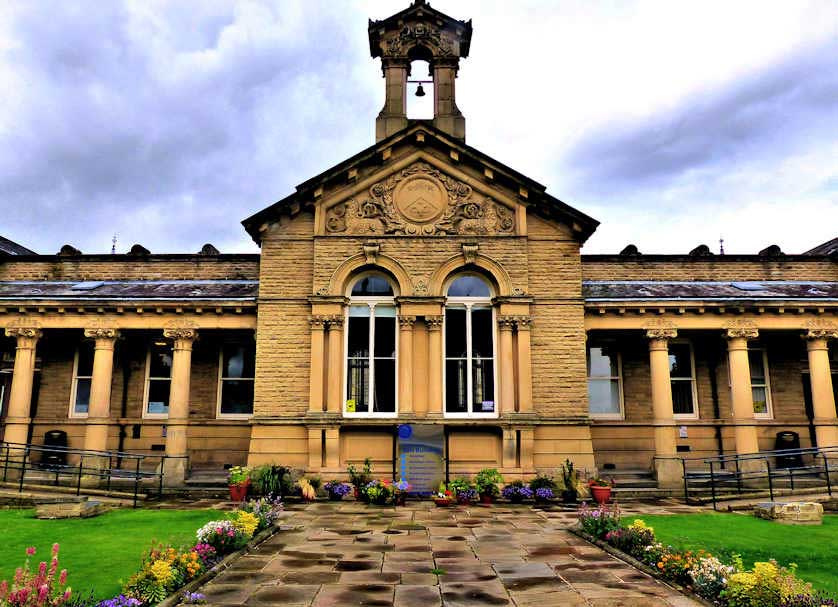
The school opened in 1869 and was designed for 750 pupils, children of the mill workers, though it should be noted that some of the children were also workers. The Education Act of 1833 said that child workers between 8 and 13 years old must have at least 2 hours of education a day, and these were known as "half-timers" at the school. The building is now part of Shipley College and was renovated in 1992 to remove all modern additions.
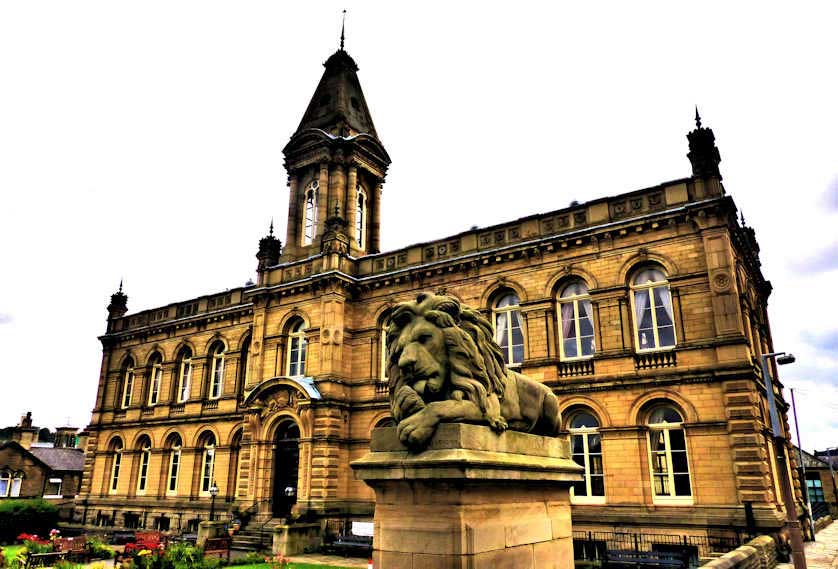
The most impressive of the public buildings in Saltaire is the Institute, now known as Victoria Hall. Opened in 1872, it was Salt's intention to provide the workers with all the advantages of a social club and educational institute without the evils of alcohol.
There was a newspaper reading room as well as a library, several classrooms and a concert/lecture hall for 800 people. There were studios and classrooms for the study of art, as well as laboratories for studying science. There were rooms for billiards, bagatelles, and for games such as chess and draughts, as well as a smoking room and meeting rooms of various sizes as well as a well-equipped gymnasium.
Other facilities provided by Salt for his town were almshouses for the poor, sick, and infirm, wash-houses, a park, and a boathouse on the river. He also instituted a pension scheme for his workers.
As a World Heritage Site the town is also a conservation area so pretty much everything has been restored to its original appearance and modern features have been removed. A few of the public buildings are open to visitors though obviously the housing is all private.


Access
Saltaire is served by Saltaire Station which has trains to Leeds (15 minutes), Bradford Forster Square (just 6 minutes) and Skipton. The station is just opposite Salts Mill.
By road, Saltaire is 4 miles north of Bradford and just 15 minutes from the M606 motorway.
Access - Getting to Leeds & Bradford
Bradford
Bradford Interchange and Bradford Forster Square are the two main railway stations in Bradford. Bradford Interchange is a combined bus and train station with trains to London King's Cross Station in the capital, Leeds, York, Hull, Halifax, Manchester Victoria, Preston and Chester. A number of buses run to destinations across the country including Burnley, Derby, Halifax, Huddersfield, Leicester, Slough and Southall.
Bradford Forster Square has trains to Skipton, Ilkley and to Leeds on the Leeds-Bradford Line.
Leeds
Leeds City Station is the station in Leeds and one of the busiest stations in England outside London with intercity and local Metro trains. Leeds Station is located just south of City Square.
There are First TransPennine Express trains to Newcastle, Manchester Piccadilly Station in Manchester, as well as Manchester Airport and Liverpool Lime Street. Other connections include trains to Hull and Middlesbrough.
Northern has trains to York Station in York, Blackpool North, Bradford, Manchester Victoria, Huddersfield, Selby, Sheffield, Carlisle and Ilkley.
East Coast has trains to King's Cross Station in London, Waverley Station in Edinburgh, Glasgow Central in Glasgow, Peterborough, Hull and Darlington.
There are CrossCountry connections to Nottingham, Birmingham New Street Station in Birmingham, and from there to Cardiff in Wales, and Exeter in Devon.
The National Express bus station in Leeds is behind Kirkgate Market.
Hire a car in Leeds. Compare the biggest brands in UK car hire to get the cheapest deal on a variety of vehicles from compact cars to estates to SUVs.
Yorkshire Attractions
Hotels in the North of England
Book Hotels in Bradford - Booking.com
Find Hotels in Hull - Booking.com