The Mill at Saltaire World Heritage Site, near Bradford
The Mill at Saltaire World Heritage Site
Jake Davies
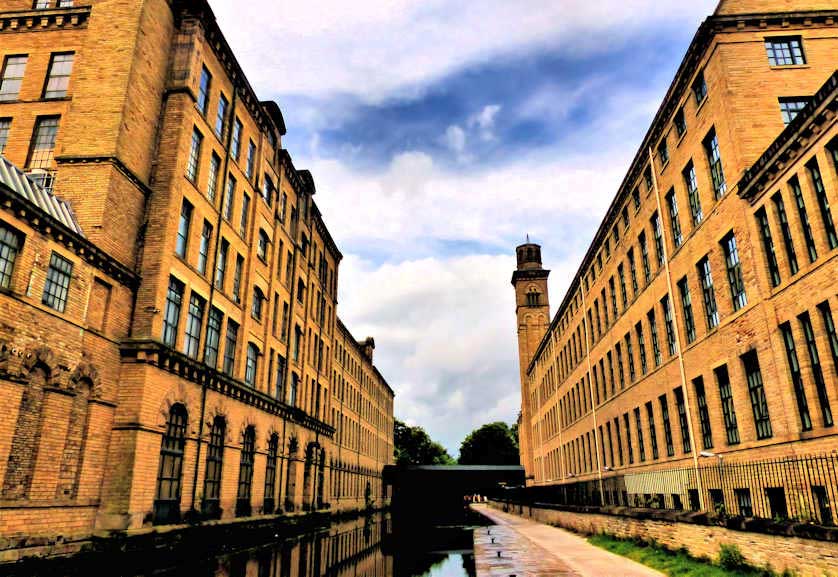
Saltaire is a village outside of Bradford in West Yorkshire that was created in the mid-18th century to house the workers for a massive factory constructed there. In 2001 the village and former mill were registered as a UNESCO World Heritage Site.
Saltaire's name is a combination of the founders name, Sir Titus Salt, and the River Aire, and was founded in 1851. Salt had inherited the family woolen textile business, but his innovative use of alpaca wool was what made his fortune and he ended up operating five mills in Bradford.
Titus Salt
As a youth Salt (1803-1876) had been interested in health. A teetotaler, he was also somewhat of a humanist, and thus was very concerned with the deplorable conditions that his workers lived in, namely the overcrowded and unsanitary slums of Bradford. He bought some land a few miles outside of the town and set about building a new factory and also a complete village for his workers and their families.
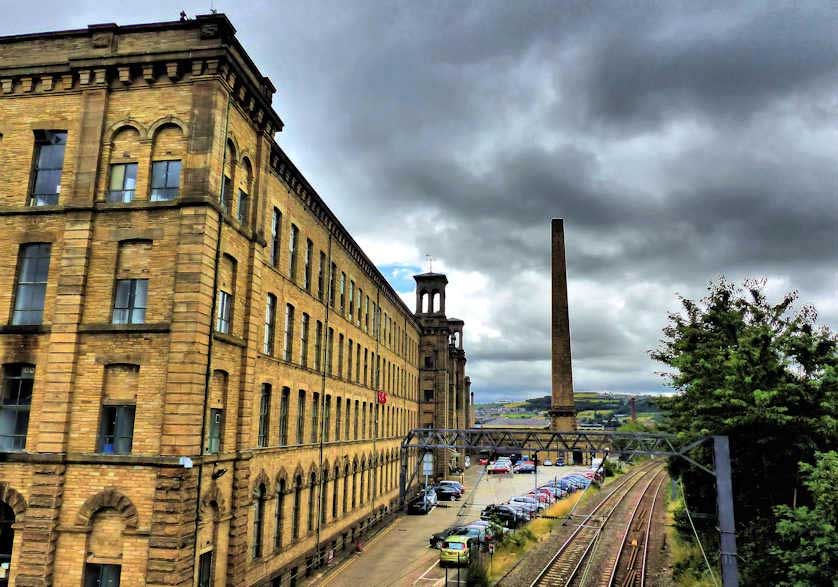
The site was on land along both the railway line and the Leeds & Liverpool Canal so was excellently situated to take advantage of both transportation systems.
He engaged architects Francis Lockwood and Richard Mawson to design the new factory but flatly refused their first design proposals as being too small.
The final design was truly massive and when it opened in 1853 it was the largest factory in the world in terms of floor space. It was one of the sites visited by the Japanese Iwakura Mission who came to the UK in the 1870s to study modernization and industrialization.
Design
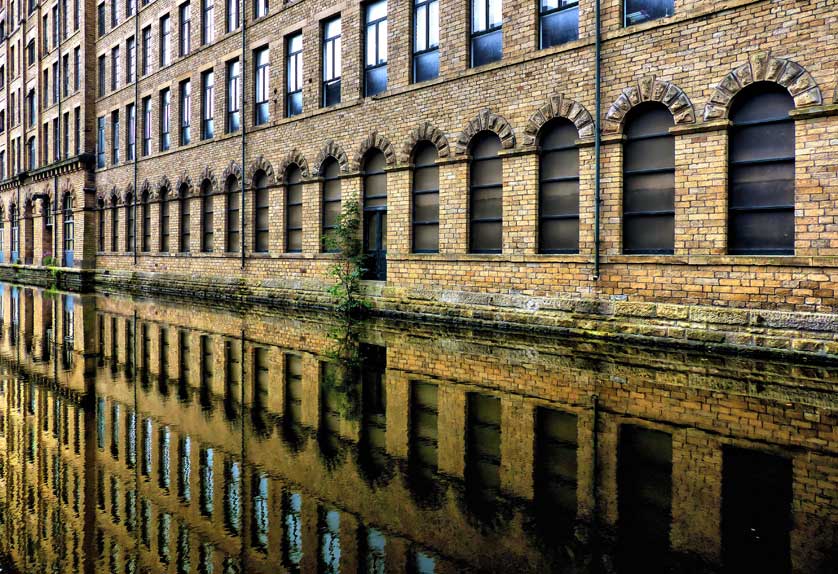
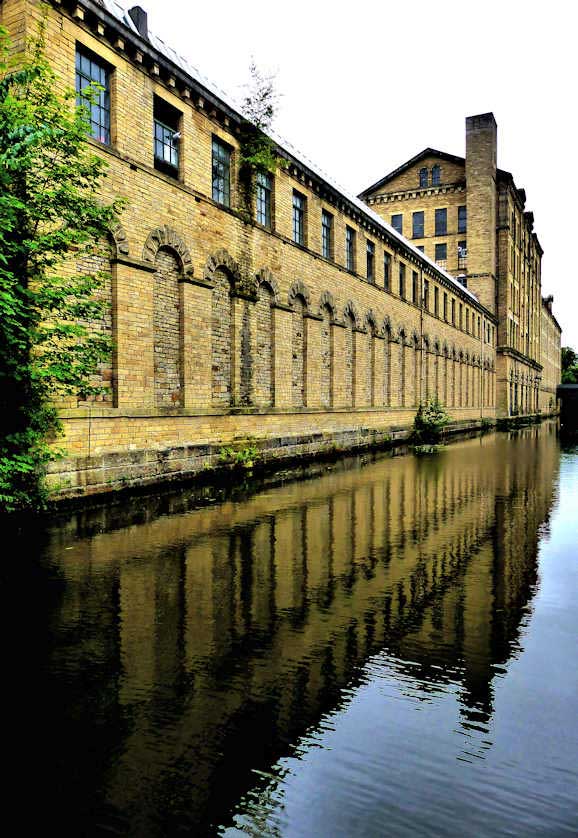
The design was in Italianate style and was somewhat grander than factories built up until this point and so it was nicknamed "Palace of Industry".
The internal structure was cast iron and brick to decrease the chance of fire, and the exterior is in local sandstone. The factory exterior contains many windows which not only made the interior light for safety reasons, but also well ventilated for the health of its workers.
The mill was powered by two huge Fairbairn Beam Engines using ten boilers and generating 1,250 horsepower. Unusually, a lot of the drive shafts and other moving parts were placed under the floor, yet another safety feature.
In 1986 Salts Mill closed down and was soon bought and a lengthy redevelopment began. The Mill is now home to a wide range of tenants including offices, residential, and light industrial.

1854 Gallery
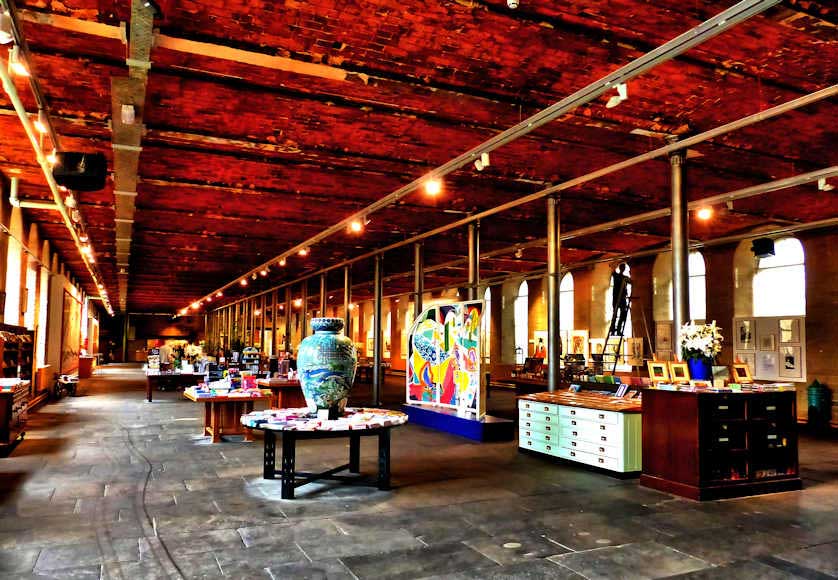
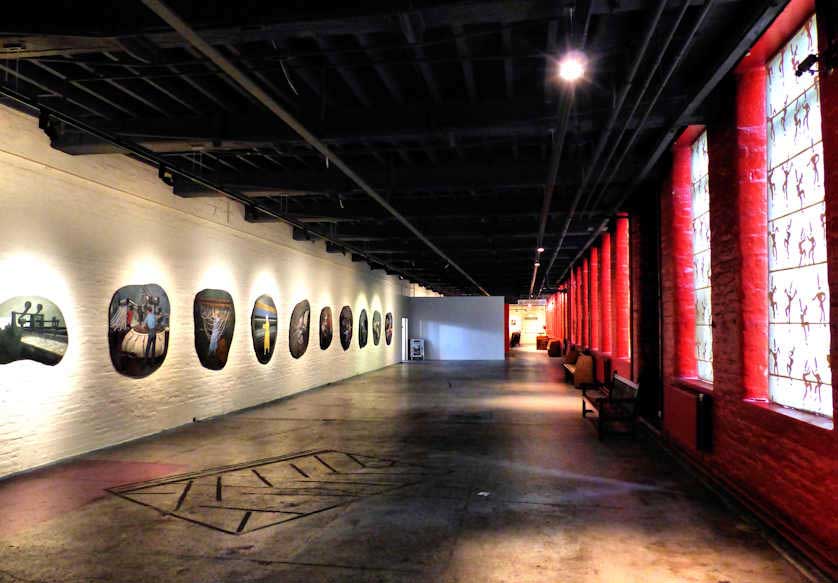
Several sections are of interest to visitors, most notably the 1854 Gallery, named after the year the mill was built, this free-to-enter gallery displays a wide range of works by David Hockney.
Born nearby in Bradford in 1937, Hockney is one of the most influential British artists of the twentieth century and came to the fore in the Pop Art movement of the 1960's. Working in a wide variety of media, including painting, drawing, and print making, the gallery is a wonderful opportunity to see a wide range of his works.
There are two other galleries inside the main building, one devoted to materials and objects that tell the story of Salts Mill and Saltaire, and another devoted to photographic works focusing on Salts Mill.
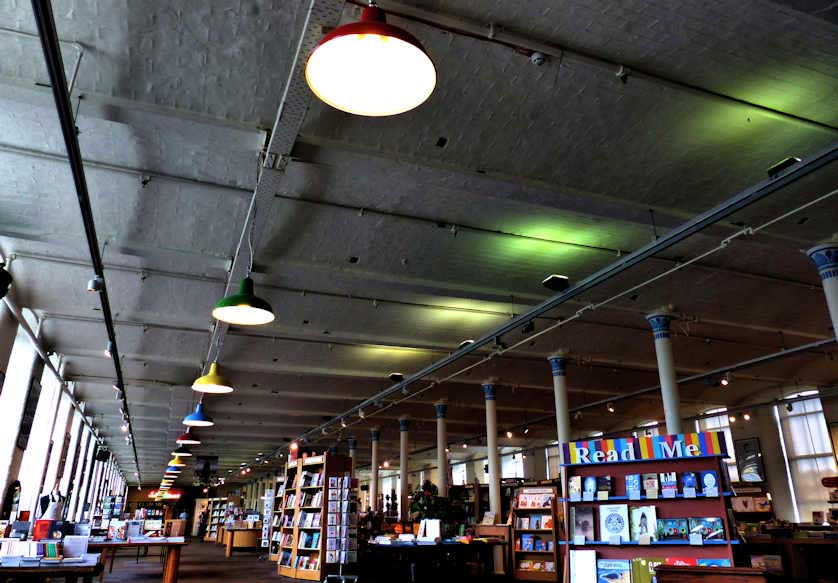
There are an eclectic mix of shops within the mill, leaning towards the arts, including a bookshop, a poster shop, art supplies, antiques, home furnishings, jewelry, as well as a cycle shop and an outdoors supplier and a shop selling early musical instruments.
For food and drink there is a diner, a cafe, and a coffee bar. Works by Hockney are also on display in these establishments.
The World Heritage Site also includes the town that Salt built next to the mill for his workers.

Access
Victoria Road
Saltaire
Shipley BD18 3LA
Tel: 01274 531163
www: saltsmill.org.uk
For opening times see the website above.
Saltaire is served by Saltaire Station which has trains to Leeds (15 minutes), Bradford Forster Square (just 6 minutes) and Skipton. It is just opposite the mill.
By road, Saltaire is 4 miles north of Bradford and just 15 minutes from the M606 motorway.
Access - Getting to Leeds & Bradford
Bradford
Bradford Interchange and Bradford Forster Square are the two main railway stations in Bradford. Bradford Interchange is a combined bus and train station with trains to King's Cross Station in the capital, Leeds, York, Hull, Halifax, Manchester Victoria, Preston and Chester. A number of buses run to destinations across the country including Burnley, Derby, Halifax, Huddersfield, Leicester, Slough and Southall.
Bradford Forster Square has trains to Skipton, Ilkley and to Leeds on the Leeds-Bradford Line.
Leeds
Leeds City Station is the station in Leeds and one of the busiest stations in England outside London with intercity and local Metro trains. Leeds Station is located just south of City Square.
There are First TransPennine Express trains to Newcastle, Manchester Piccadilly Station in Manchester, as well as Manchester Airport and Liverpool Lime Street. Other connections include trains to Hull and Middlesbrough.
Northern has trains to York Station in York, Blackpool North, Bradford, Manchester Victoria, Huddersfield, Selby, Sheffield, Carlisle and Ilkley.
East Coast has trains to King's Cross Station in London, Waverley Station in Edinburgh, Glasgow Central in Glasgow, Peterborough, Hull and Darlington.
There are CrossCountry connections to Nottingham, Birmingham New Street Station in Birmingham, and from there to Cardiff in Wales, and Exeter in Devon.
The National Express bus station in Leeds is behind Kirkgate Market.
Hire a car in Leeds. Compare the biggest brands in UK car hire to get the cheapest deal on a variety of vehicles from compact cars to estates to SUVs.
Yorkshire Attractions
Hotels in the North of England
Book Hotels in Bradford - Booking.com
Find Hotels in Hull - Booking.com